
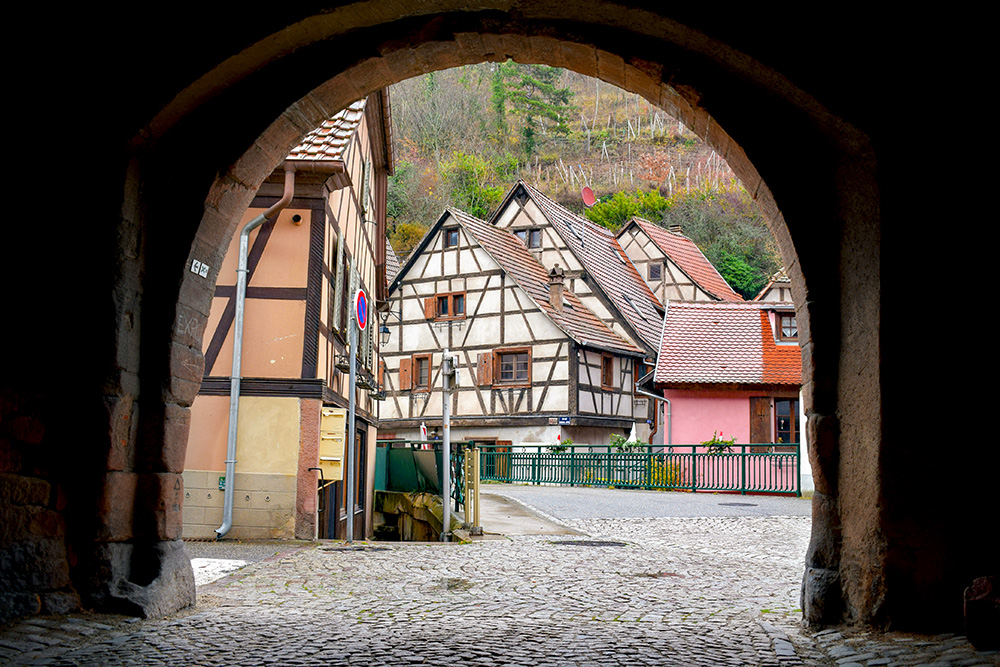

Andlau – tucked into the peaceful valley of the Andlau River in the heart of the Pays de Barr – is one of those delightful stops along the prestigious Alsace Wine Route that travellers often discover almost by accident.
Surrounded by vineyards and forested hills, Andlau offers everything that makes Alsace so captivating: half-timbered houses, a remarkable Romanesque church, a Renaissance fountain, and even the ruins of medieval castles hidden in the nearby woods.
But what truly makes Andlau memorable is a legend—an unusual one involving an empress, a miracle… and a bear.
Let’s explore this charming Alsatian village together.
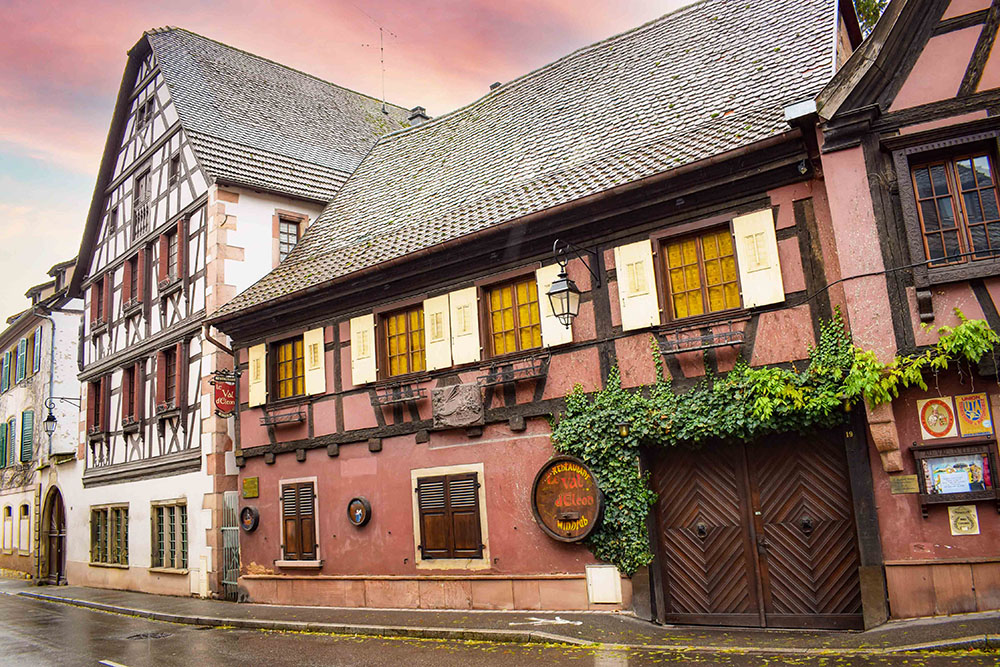
Table of Contents
The Legend of the Bear of Andlau
The story begins in the year 887.
For ten years, Richarde, the virtuous wife of the Western Roman Emperor Charles the Fat, had lived as empress. But suddenly she was accused by her own husband of committing adultery.
To prove her innocence, Richarde agreed to undergo the ordeal by fire, a medieval trial believed to reveal divine justice. Barefoot and dressed in a shirt coated with wax, she had to walk through flames.
Miraculously, she emerged from the fire without the slightest burn.
Her innocence proven, the empress was cleared of suspicion—but the ordeal left deep scars. Disillusioned, she decided to leave the imperial court and retreat into the forests of Alsace.
There, according to legend, an angel appeared to her. The heavenly messenger instructed Richarde to found a monastery at the place where a bear would show her.
Soon afterwards, at the entrance to the valley of Eléon, beside the rushing waters of the Andlau stream, she spotted the animal foretold by the angel. The bear was digging the earth to prepare a den for her cubs.
It was on this very spot that the Abbey of Andlau would rise.
Proud of this legendary origin, the abbey later developed an unusual tradition: travelling bear handlers passing through the region were given free lodging and food. At one point, the monastery even kept a living bear within its walls.
Quite a story, isn’t it?
When History Challenges the Legend
As charming as the legend may be, historical records tell a slightly different story.
In reality, Richarde had founded the Abbey of Andlau seven years before her repudiation by Charles the Fat. After the scandal, she simply chose the abbey as her place of retirement.
Richarde’s reputation for piety grew over the centuries, and in 1049 she was canonised by Pope Leo IX, himself originally from nearby Eguisheim.
The abbey became a powerful religious institution in Alsace. Interestingly, its noble-born canonesses lived under a relatively flexible rule: unlike many religious orders, they were allowed to leave the convent and marry. Only the abbess took permanent vows.
A Small Town Grows Around the Abbey
The abbey’s influence soon transformed the surrounding area.
A small settlement gradually developed around the religious complex, eventually becoming the village we know today. In 1364, the abbess granted the village as a fief to a local noble family: the Lords of Andlau.
This ancient Alsatian dynasty appears in historical records as early as 1141 and remains one of the oldest noble families in France.
By the 17th century, however, the abbey began to decline. The French Revolution eventually sealed its fate, bringing an end to centuries of religious life.
Today, only a few remnants of the once-powerful monastery survive.
Among them are:
- the 18th-century abbey gate
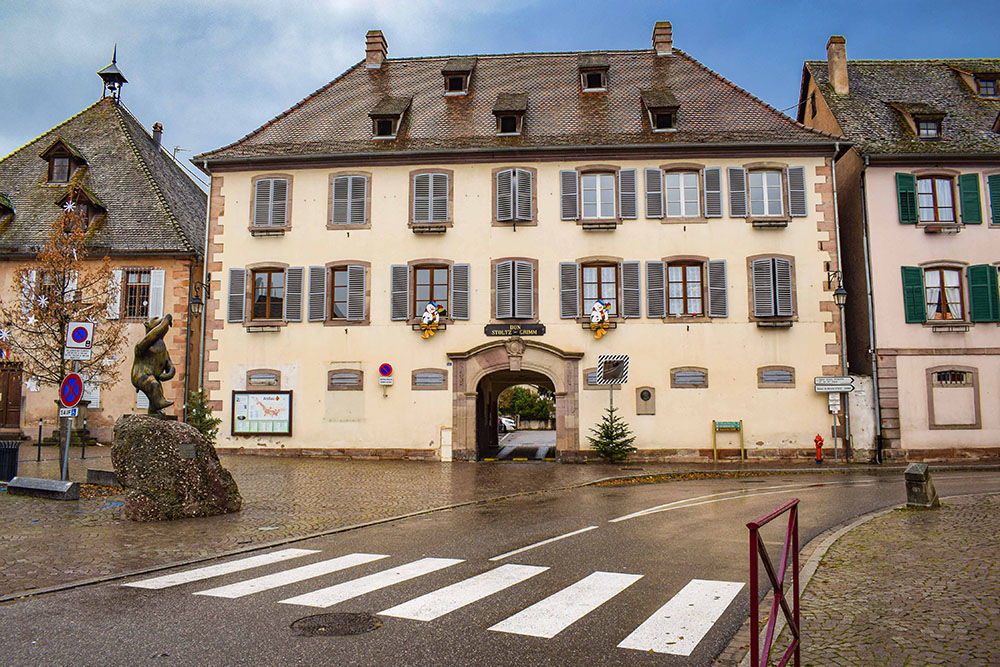
- the former abbess’s residence, later known as the Stoltz-Grimm hospital
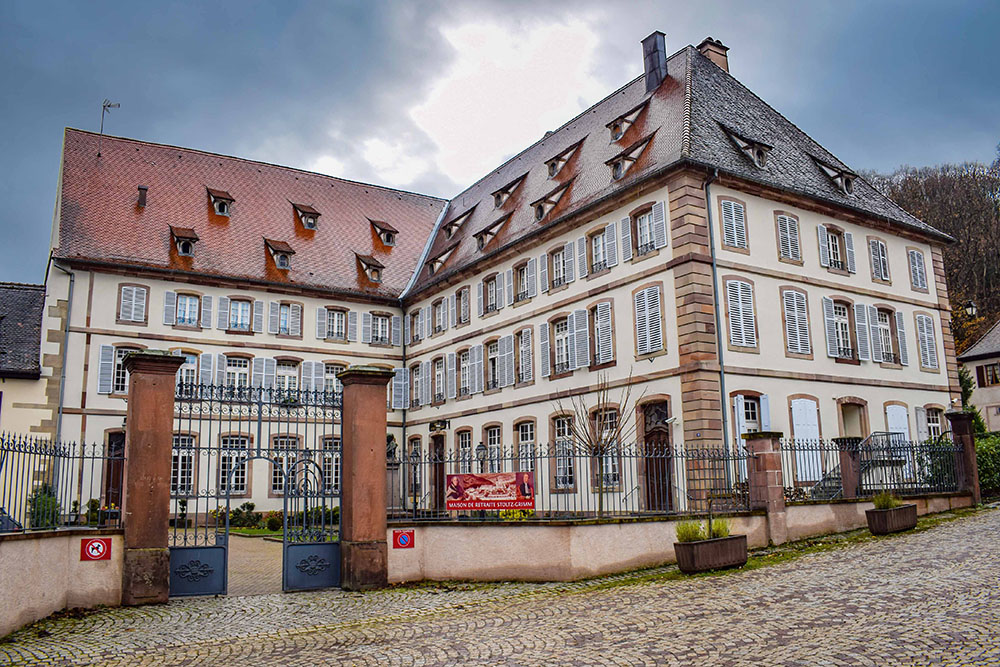
And what about the legendary bear?
You’ll still encounter it throughout the village—in sculptures, statues, and decorative motifs.
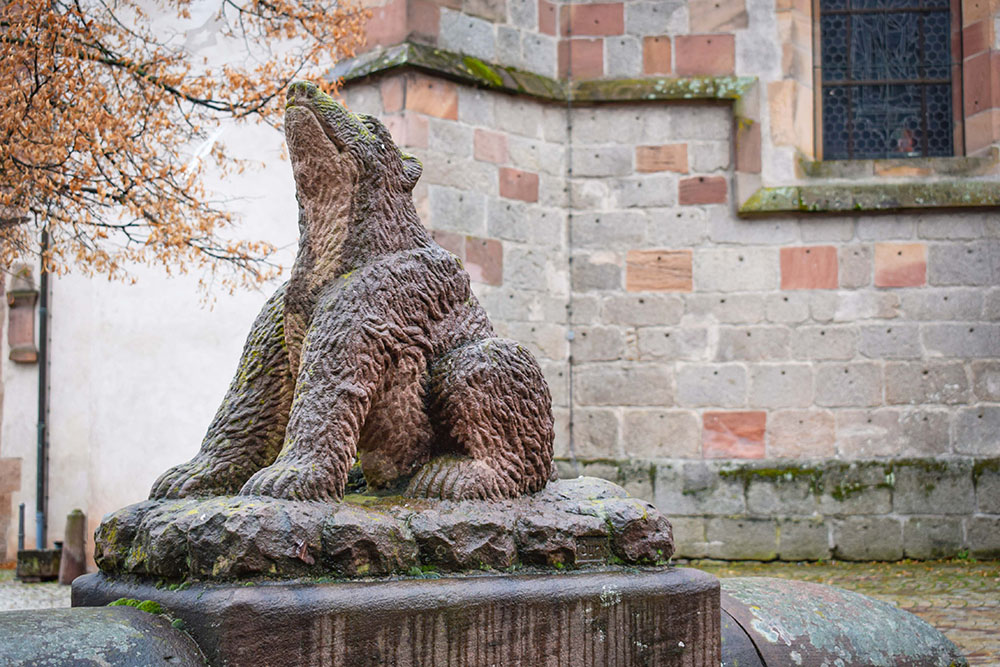
A bear appears beside the Sainte-Richarde well, and another statue stands proudly near the church.

In Andlau, the bear has never truly left.
Where to Stay near Andlau
Andlau lies along the famous Alsace Wine Route, in the heart of the Pays de Barr, roughly halfway between Sélestat and Obernai.
Because of this ideal location, visitors will find plenty of accommodation options in the surrounding villages and wine towns.
Click the link to explore places to stay in the area.
What to See in Andlau
Andlau lies halfway between Sélestat and Obernai, only about 4 km from the wine town of Barr.
The village centre is small—after all, this is still very much a village—but it contains a surprising number of historical treasures.
Visitors will discover:
- picturesque half-timbered houses
- a charming Renaissance fountain
- and above all, the remarkable Abbey Church of Saint-Peter-and-Saint-Paul
Beyond the village, the forest hides the ruins of two medieval castles, perfect destinations for a scenic hike.
Andlau even enjoyed a moment of national fame: in 2014, it finished second in the French TV competition “Le Village Préféré des Français”, just behind Cordes-sur-Ciel in southern France.
Not bad for a small wine village.
The Church of Saint-Peter-and-Saint-Paul
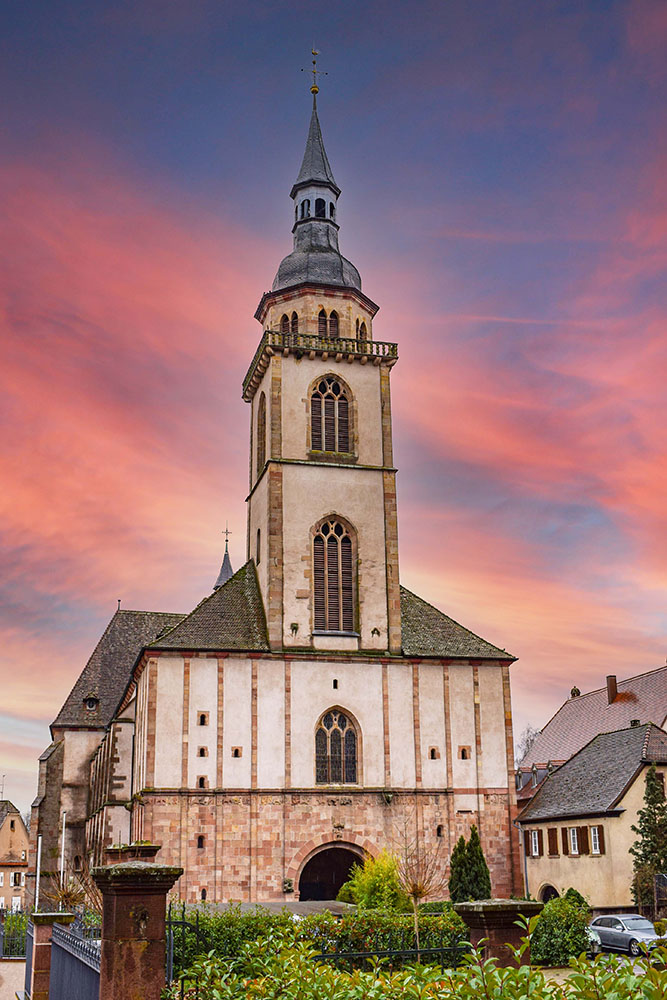
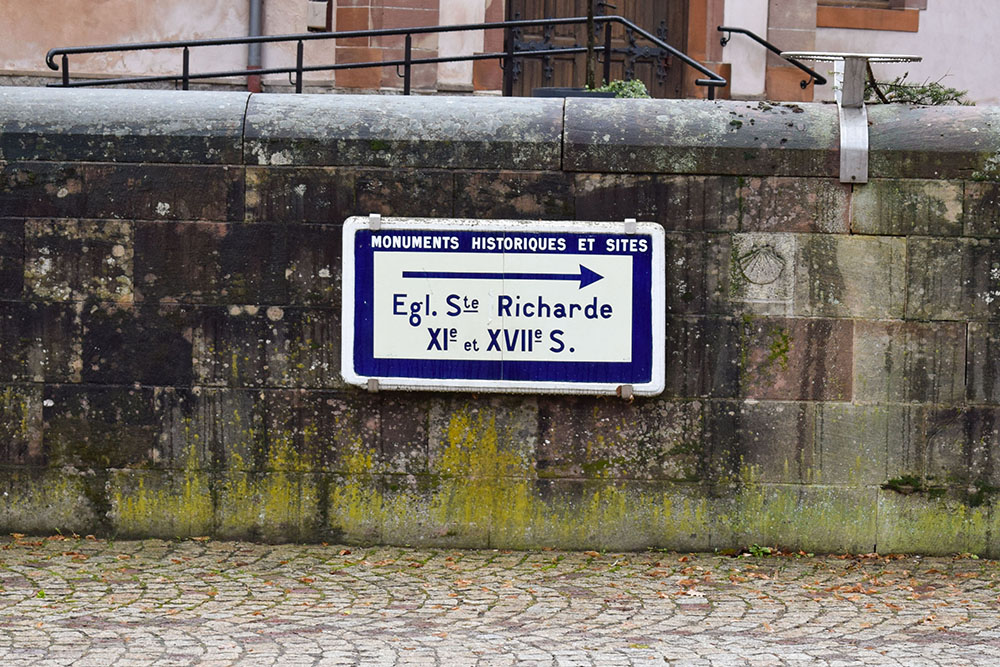
The undisputed highlight of Andlau is the Abbey Church of Saint-Peter-and-Saint-Paul, sometimes referred to as the Abbey of Saint Richarde.
Originally part of the monastery founded by the empress, the church we see today dates mainly from the 12th century, after an earlier building was destroyed by fire in 1045.
It is considered one of the finest Romanesque monuments in Alsace.
The Remarkable Sculpted Frieze
Running along the façade and the south side of the church is a striking 30-meter-long sculpted frieze.
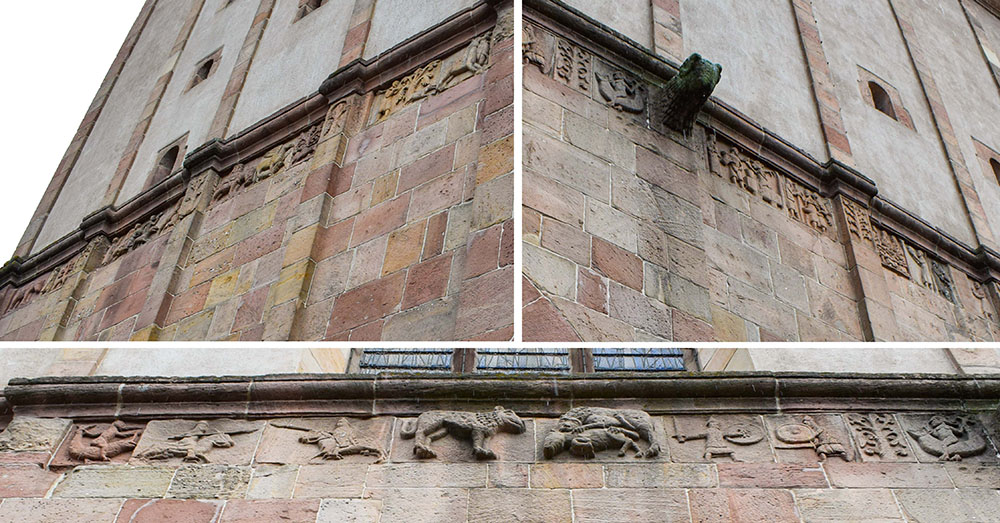
This decorative band, about 60 cm high, depicts a lively series of scenes:
- animals and fantastic creatures
- hunting scenes
- knights engaged in combat
- episodes from the life of Saint Richarde
It’s an extraordinary piece of Romanesque storytelling carved in stone.
The Romanesque Portal
The most impressive part of the church is undoubtedly the porch beneath the massive bell tower.
Here you will find some of the most remarkable Romanesque sculptures in all of Alsace.
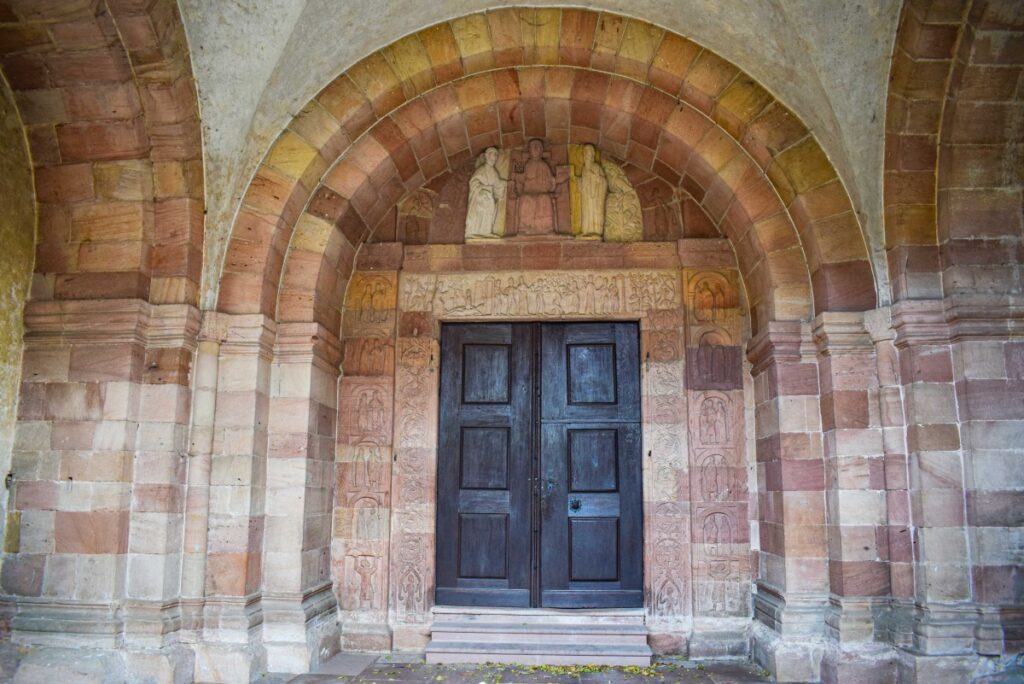
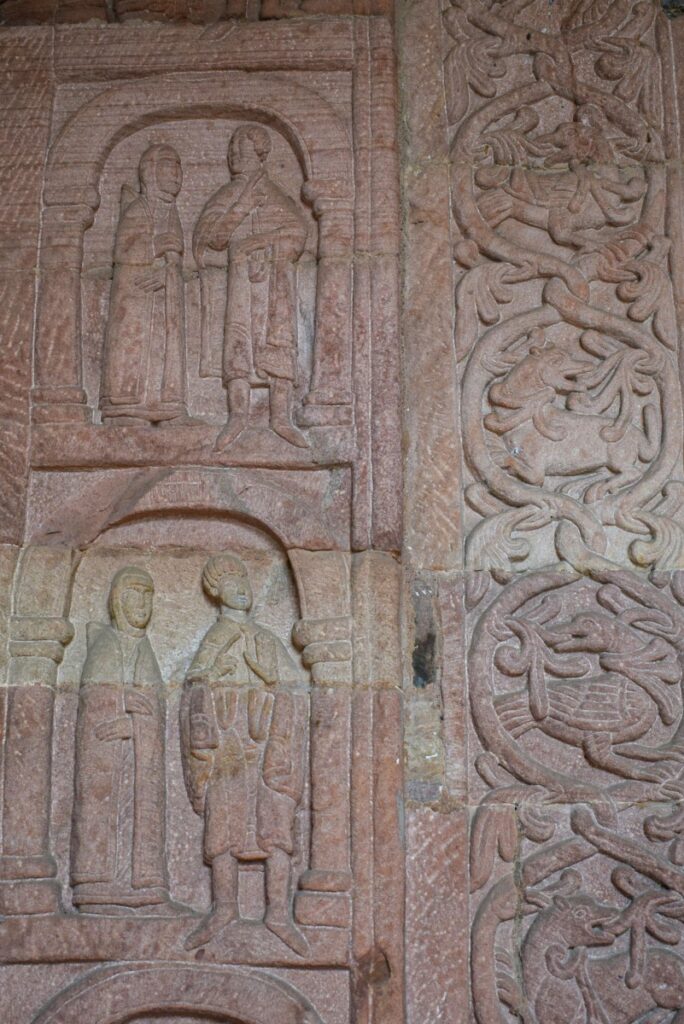
Every surface around the doors is covered with intricate bas-reliefs. Tiny human figures support curling vines that wrap around animals and mythical creatures.
Above them, a series of arcades contains sculpted couples believed to represent the abbey’s benefactors.
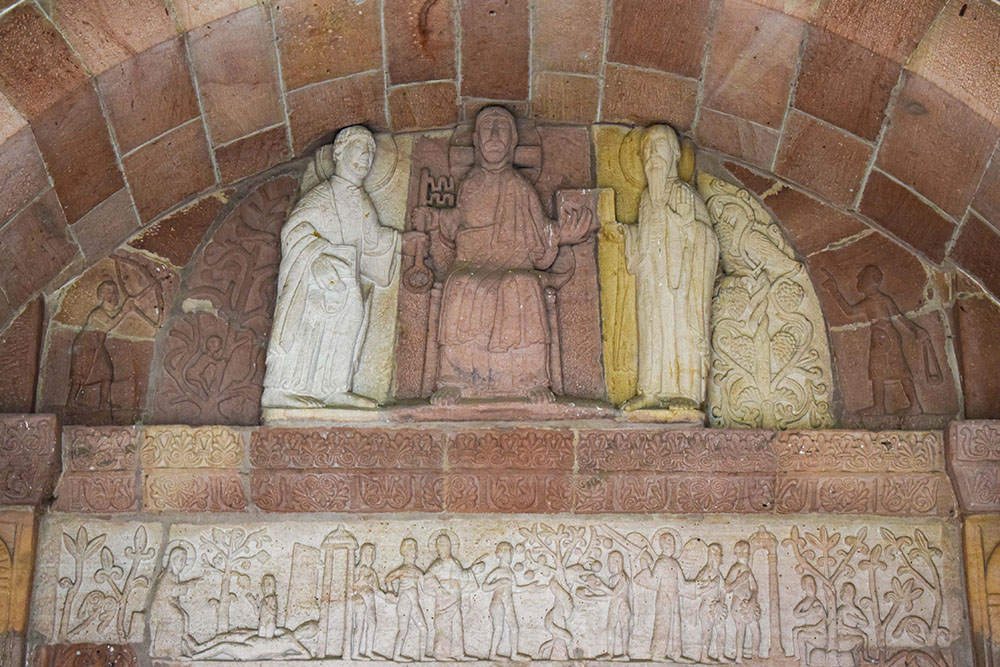
The lintel illustrates scenes from Creation and the Garden of Eden, while the tympanum shows Christ giving a key to Saint Peter and a book to Saint Paul.
The bell tower itself is later—it was added in the 17th century.
Inside the Church
Although the structure is Romanesque, the interior was largely remodelled during the 17th century.
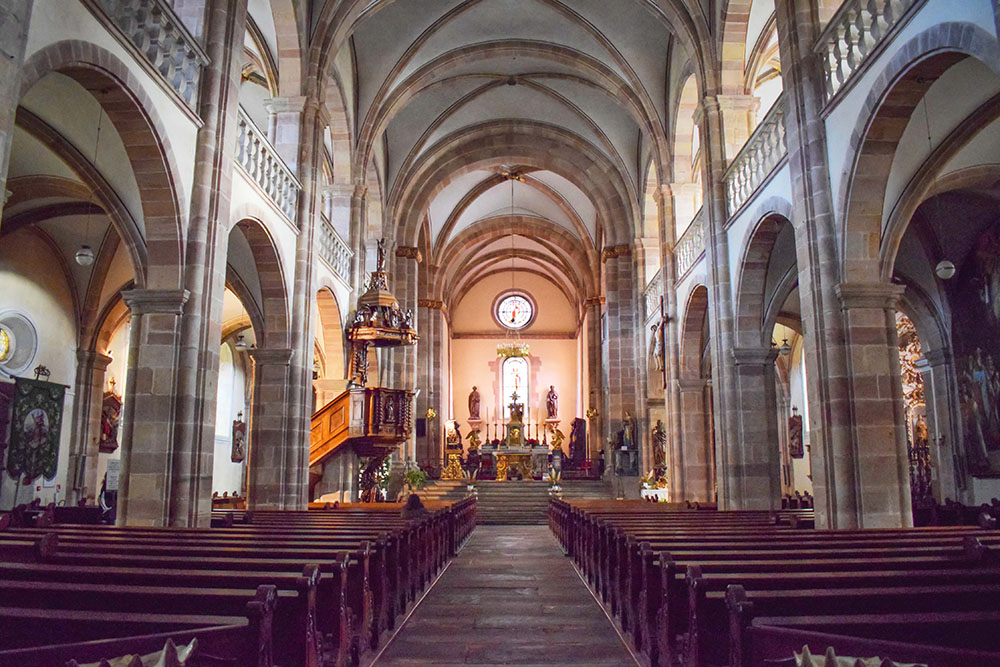
A few earlier features remain:
- the chapel above the entrance, dating from the 12th century
- the Flamboyant Gothic balustrades of the transept from the 15th century
The Baroque pulpit dates from the 18th century and rests on a striking sculpture of Samson, who appears to support the entire structure on his shoulders.
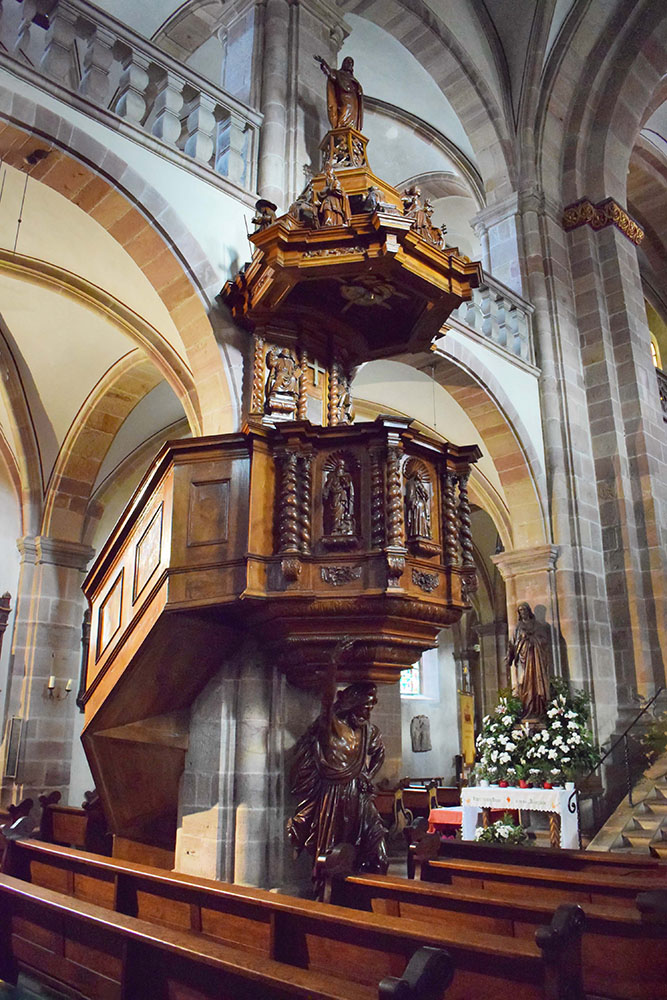
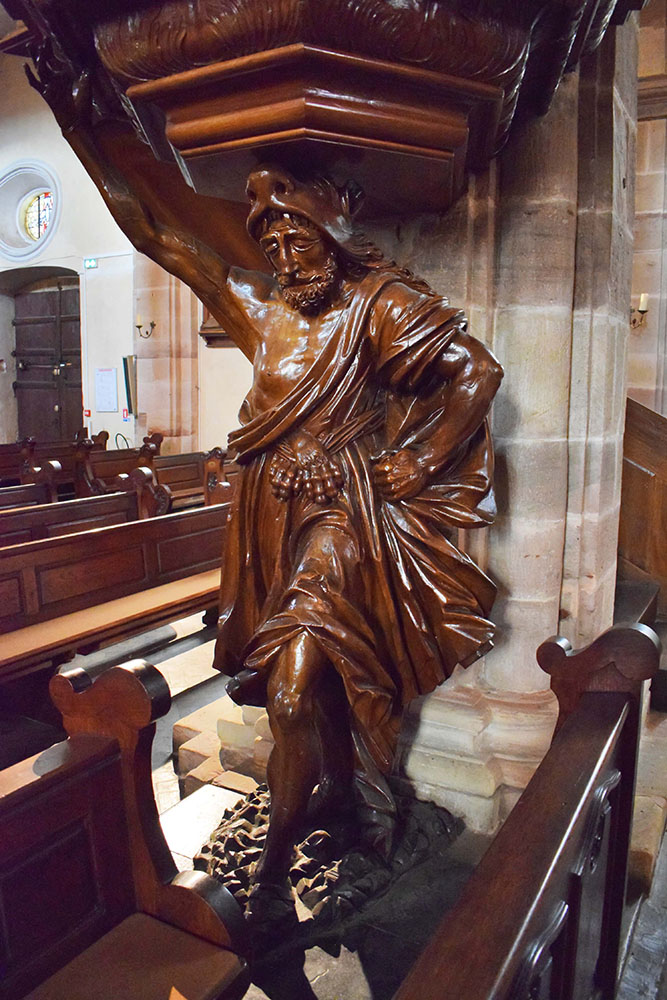
The choir is unusually elevated, revealing the presence of a crypt beneath it. Here you can see beautifully carved 15th-century choir stalls, and at the far end lies the reliquary shrine of Saint Richarde, dating from the 14th century.
The Crypt and the Bear
A staircase in the left transept leads down into the church’s crypt.
This vaulted underground chamber extends beneath the choir and the crossing of the transept. Tradition claims that the western section dates back to the time of Saint Richarde in the 9th century, although historians believe the crypt was more likely built in the 11th century.
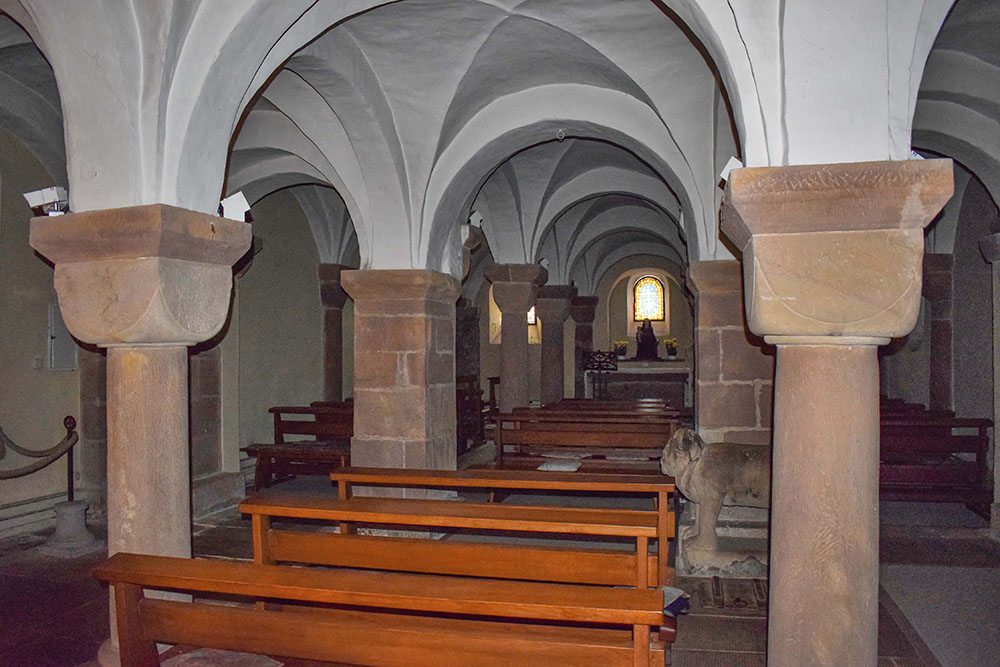
Look closely at the floor and you will notice a curious feature: a small cavity said to have been dug by the legendary bear.
Nearby stands a sandstone statue of a bear with an unusual history.
Long ago, every baker who came to sell bread at the Andlau market was required to donate a loaf to feed the abbey’s bear. After a tragic incident in which a child was reportedly killed by one of the animals, the monks decided it might be safer to replace the real bears with a stone sculpture.
A far more harmless solution.
The Sainte-Richarde Well
The Sainte-Richarde well once stood in the cloister of the monastery, which has now disappeared.
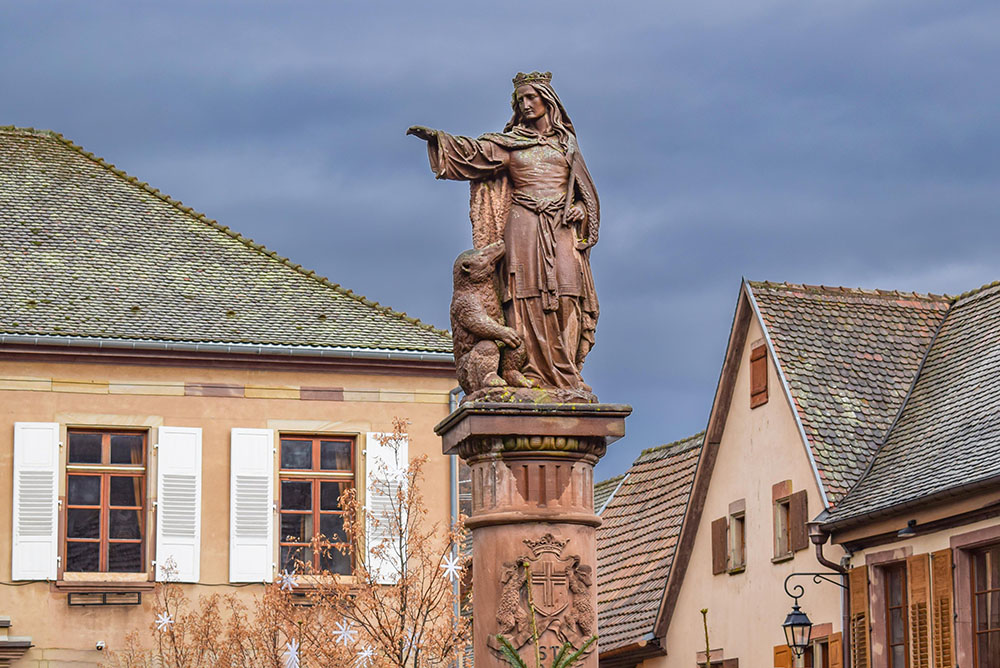
The sculpture shows Saint Richarde with hands joined in prayer, accompanied by the famous bear of the legend.
The well dates from 1513, during the abbacy of Cunegonde of Reinach, whose coat of arms appears alongside that of the Andlau family.
If you look closely at the saint’s robe, you’ll notice carved flames—a reference to the ordeal by fire that proved her innocence.
On Rue du Docteur Stoltz, in front of the town hall, stands the beautiful fountain of Saint Richarde, from 1828.
Half-Timbered Houses and Renaissance Charm
The village centre of Andlau contains many beautifully decorated half-timbered houses, especially along:
- Rue du Général-de-Gaulle
- Rue Deharbe, which leads to the church and the bridge over the Andlau River
Here you will also find traditional winstubs, the cosy wine taverns typical of Alsace.
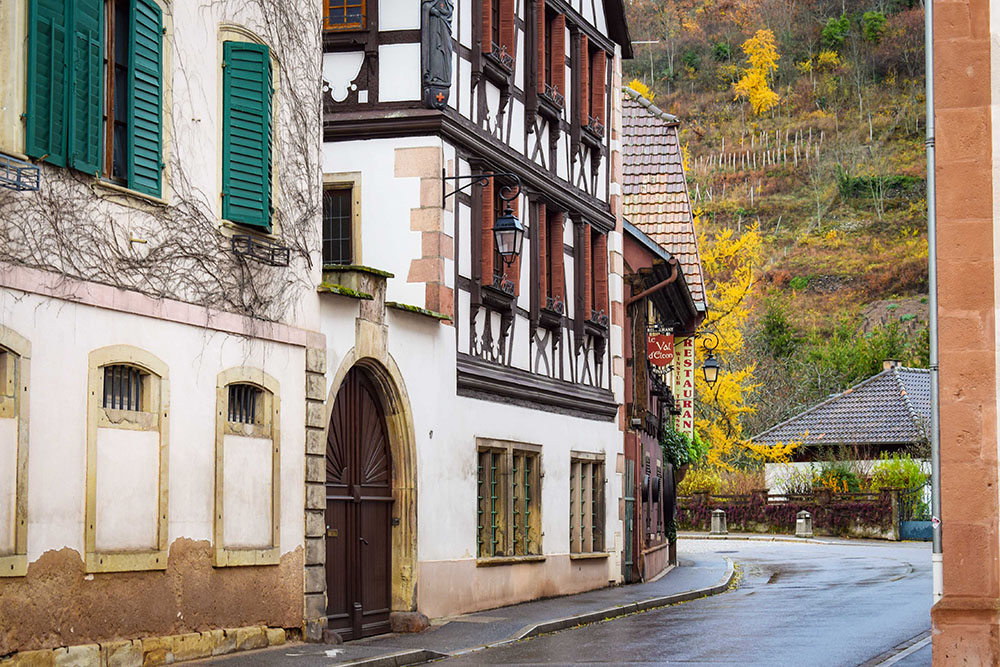
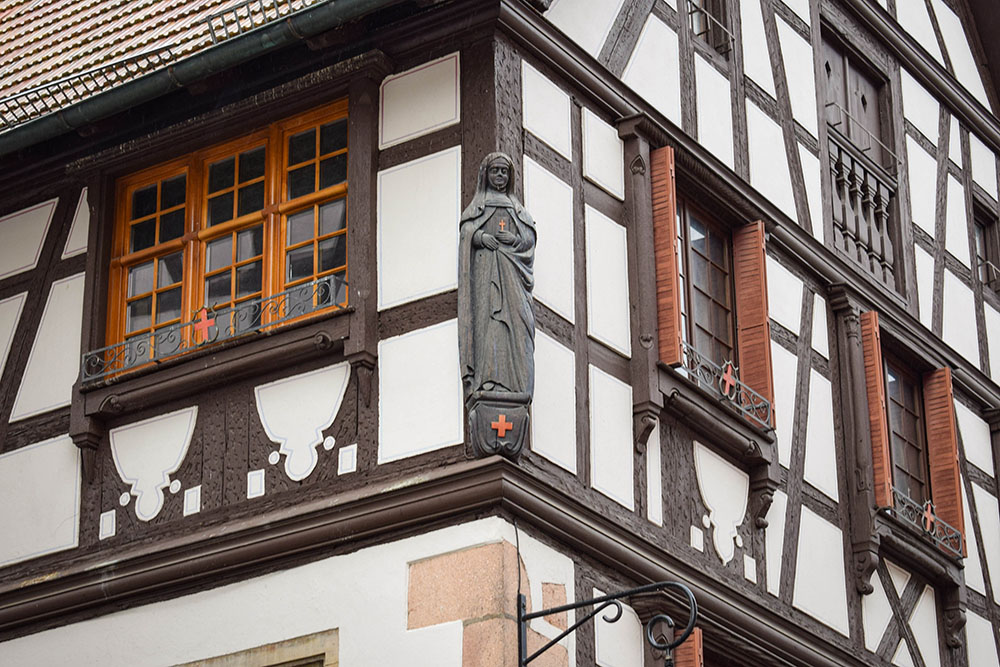
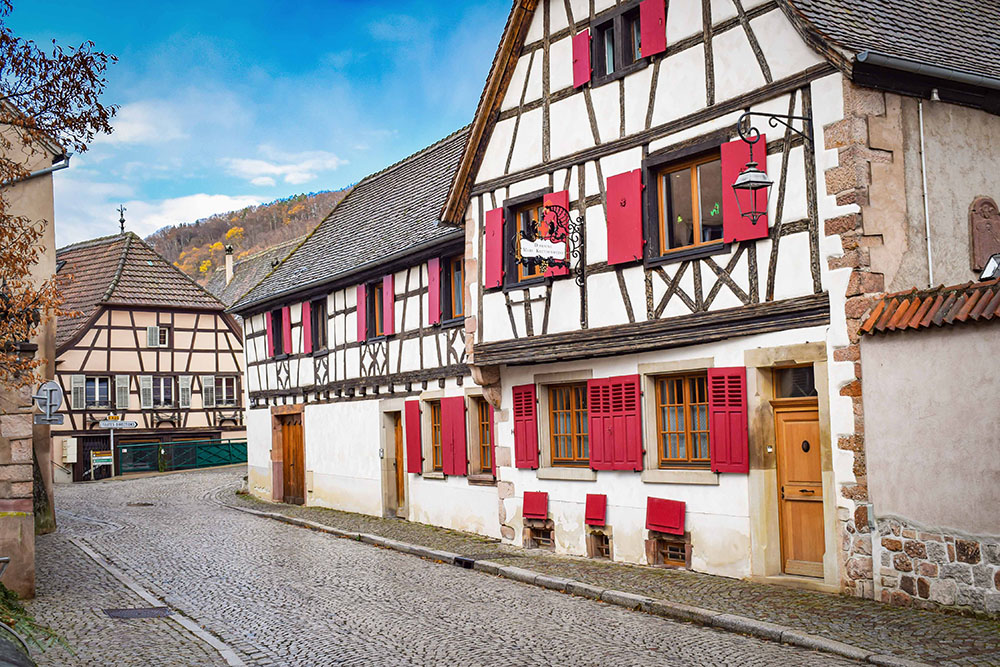
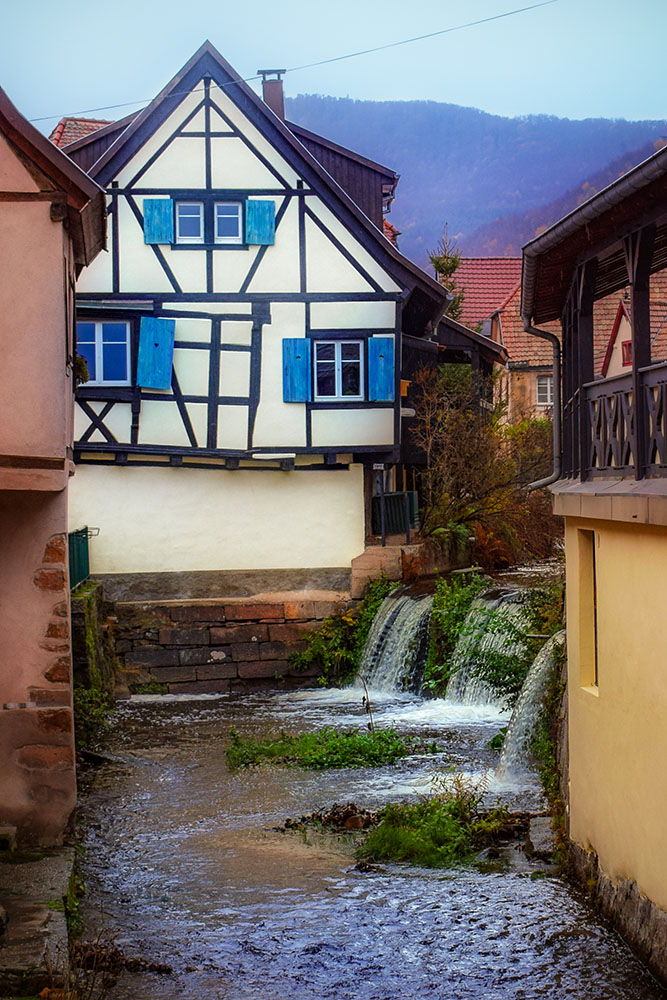
The Andlau River itself flows through the village like a lively mountain stream, adding even more charm to the setting.
Saint-André Chapel in the Vineyards
Just outside the village, surrounded by vineyards, stands the peaceful Saint-André Chapel.
Its distinctive octagonal tower dates back to the Middle Ages and offers a quiet glimpse into the region’s rural religious heritage.
The Castle of Haut-Andlau
High above the valley rise the ruins of Haut-Andlau Castle, easily recognizable thanks to its two cylindrical towers.
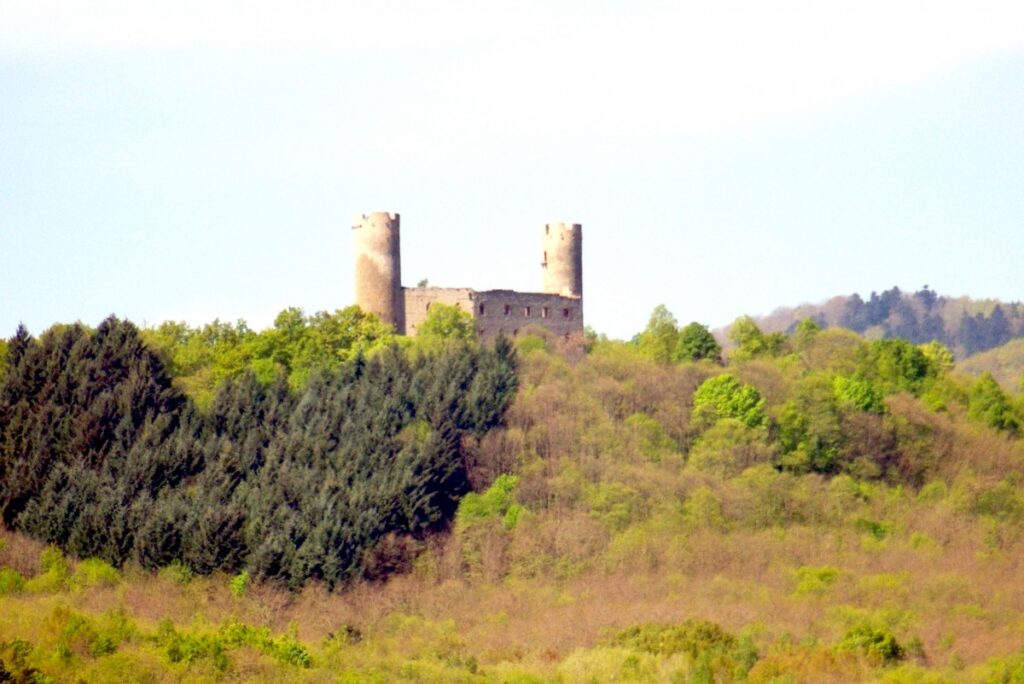
Construction began in 1246 and was completed less than twenty years later.
During the Thirty Years’ War, Swedish troops occupied the fortress, which surprisingly survived the conflict. But in 1678, French forces under Marshal de Créqui finally destroyed it.
Today, the castle stands in ruins on a narrow rocky ridge 451 meters above sea level. The remains include Gothic windows, pointed arches, and parts of the residential buildings.
Remarkably, the site still belongs to the Andlau family.
The Ruins of Spesbourg Castle
Not far away stands another ruined fortress: Spesbourg Castle, perched on a rocky spur 460 meters above the valley.
It was built between 1246 and 1250 by Alexander von der Dicka, military commander of Strasbourg and protector of the Abbey of Andlau.
When the von der Dicka family died out after the Battle of Sempach in 1386, the castle passed to the Counts of Andlau.
Today, the ruins are listed as a historic monument and offer wonderful views over the village, the valley, and the distant Alsace plain.
A Beautiful View of Andlau
If you want to admire Andlau from above, you have several options.
You can hike up to Spesbourg Castle, or wander through the steep vineyards north of the village along the Kastelberg road.
Personally, one of my favourite viewpoints lies at the crossroads of the D253 and D603 roads.

From there, you can take in the whole scene at once: the church tower rising above the half-timbered houses, vineyards climbing the slopes, and the forested hills where the castles keep watch.
A perfect Alsatian postcard.