


Visiting Colmar for the first time can feel like stepping into a postcard.
Colourful half-timbered houses lean over quiet canals. Window boxes overflow with flowers. Narrow streets twist between medieval buildings that seem almost untouched by time.
It is no surprise that Colmar is often called the “Little Venice of Alsace.”
But beyond the postcard views lies a town with a remarkable history, rich culture, and an atmosphere that rewards slow exploration.
Many travellers discover Colmar on a quick stop between Strasbourg and Basel, or as part of a journey along the Alsace Wine Route.
Yet the town reveals far more when you slow down, wander through its historic streets, and take time to notice the small details.
That is why visiting Colmar is about more than simply ticking off the famous photo spots.
It is about walking through centuries of history, admiring remarkable architecture, tasting traditional Alsatian dishes, and discovering one of the most charming towns in eastern France.
In this guide, you will find everything you need for visiting Colmar: practical travel tips, the most beautiful places to explore, the best photo locations, and a few insider suggestions that will help you experience the town beyond the usual tourist routes.
Table of Contents
Quick Travel Tips for Visiting Colmar
If you are visiting Colmar for the first time, a few practical tips can help you organise your trip and make the most of your time in this charming Alsatian town.
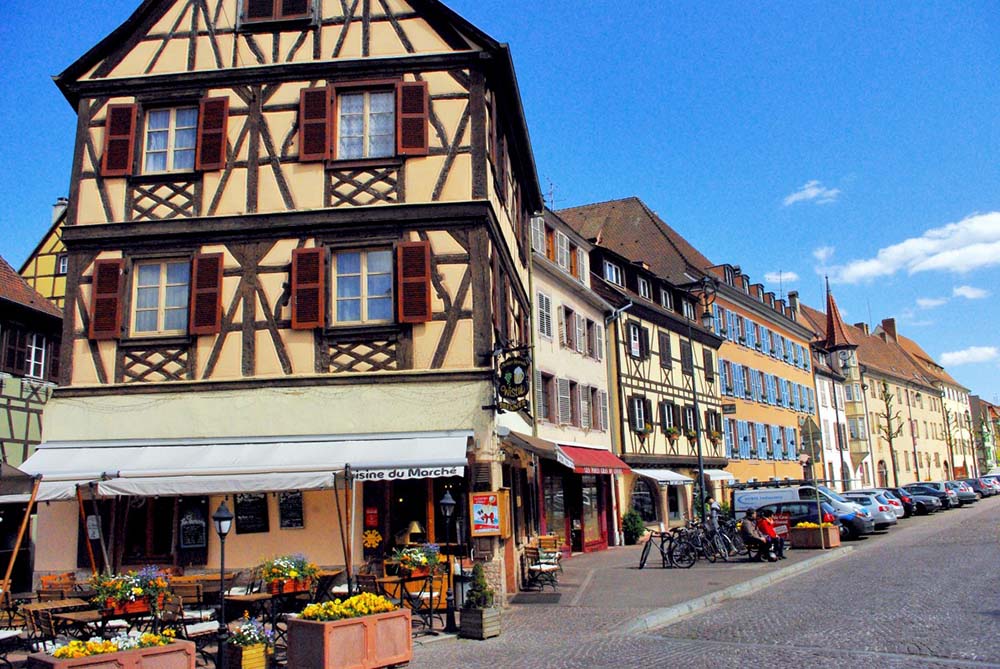
Here are some key things to know before you arrive.
📍 Location
Colmar is located in eastern France, in the historic region of Alsace, between Strasbourg and Basel, close to the German border.
🚆 Best way to get there
The easiest way of visiting Colmar is by train. The town sits on the main railway line between Strasbourg and Basel, with direct connections to Paris by high-speed TGV.
🚶 Distance from the station to the old town
Colmar railway station is about a 10–15 minute walk from the historic centre.
⏳ How long to spend in Colmar
Most visitors spend one day visiting Colmar, but staying two days allows time to visit museums and explore nearby wine villages.
📸 Famous for
Colmar is known for its colourful half-timbered houses, canals, medieval streets, and a picturesque neighbourhood called Little Venice.
🍷 Local specialities
When visiting Colmar, don’t miss traditional Alsatian dishes such as flammekueche (tarte flambée), choucroute, baeckeoffe, and kougelhopf.
🎄 Best time to visit
Colmar is magical all year round, but especially famous for its Christmas markets in December and spring decorations during Easter.
🛌 Where to stay
Here are some accommodation ideas to help you plan your stay in the capital of Alsace wines. Access the list of hotels, guest houses, cottages, campsites and other accommodation options.

Exploring the Historic Centre When Visiting Colmar
One of the great pleasures of visiting Colmar is how easily the town reveals itself on foot.
The historic centre is compact, largely pedestrianised, and wonderfully preserved. Within just a few minutes of walking, you move between centuries of architecture — medieval streets, Renaissance houses, and elegant squares that feel almost untouched by modern life.
The best way to explore Colmar is simply to wander.
Turn down small side streets. Cross little bridges over quiet canals. Pause in front of a building whose details catch your eye.
Very quickly, you realise that Colmar is not just beautiful — it is full of character.
Here are some of the most memorable places to explore when visiting Colmar.
Little Venice (La Petite Venise)
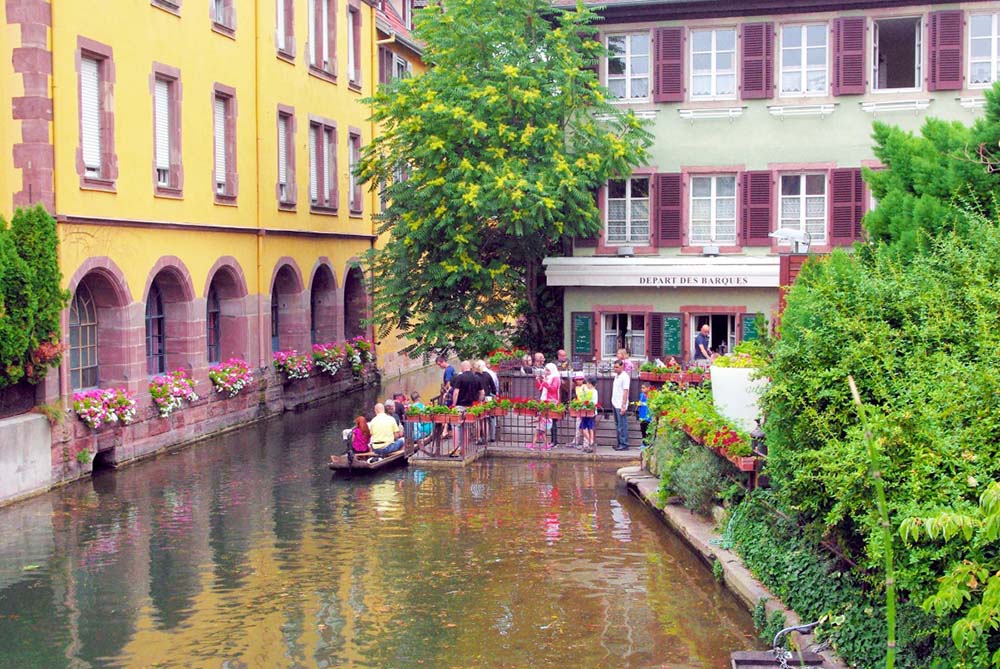
No visit to Colmar would be complete without seeing Little Venice, the town’s most iconic neighbourhood.
This picturesque area stretches along the Lauch River, where colourful half-timbered houses line the canal and their reflections shimmer in the water below.
It is easy to see why this part of the town has become the symbol of visiting Colmar.
The most famous viewpoint is from the Rue Turenne bridge, where you can admire a row of pastel-coloured houses overlooking the canal. It is one of the classic postcard views of Alsace.
But Little Venice is not just about one viewpoint.
Take time to walk along the canal, cross the small pedestrian bridges, and explore the quiet lanes nearby. Some of the most charming perspectives appear unexpectedly — a reflection in the water, a balcony full of flowers, or a narrow street opening onto the river.
Quai de la Poissonnerie
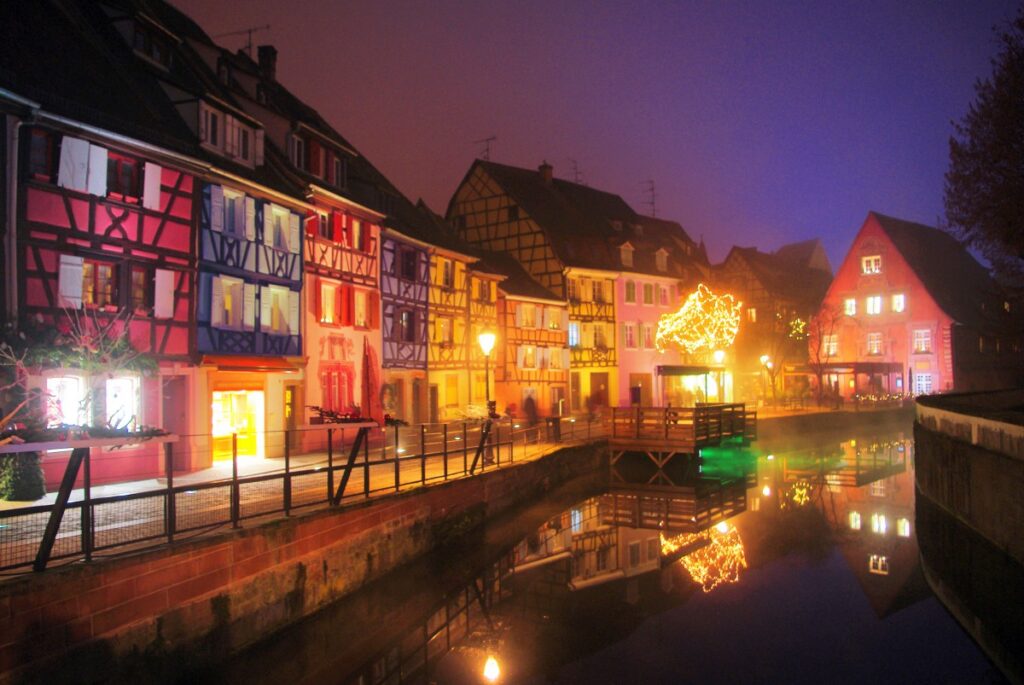
Just a short walk from Little Venice lies Quai de la Poissonnerie, another highlight when visiting Colmar.
Historically, this area was home to the town’s fishermen and fish merchants. Today, the colourful houses that line the canal create one of the most photogenic streets in the entire town.
The pastel façades — pink, pale yellow, soft blue — are beautifully reflected in the calm water of the Lauch.
It is also one of the best places to notice the small details that make Alsatian architecture so distinctive:
- carved wooden beams
- painted shutters
- flower boxes overflowing in summer
For photographers, it is an irresistible spot.
The Tanners’ Quarter
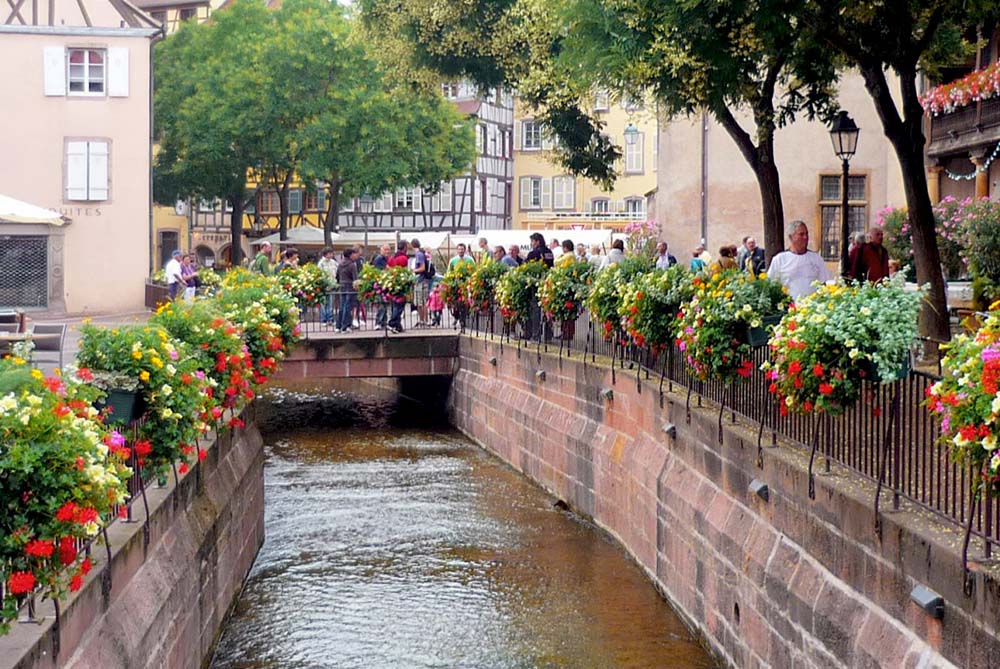
A little further north, you will find one of the most fascinating historic areas of Colmar: the Tanners’ Quarter.
The houses here look slightly different from the others in town.
They are taller, with large upper floors and wide attics.
This unusual design had a practical purpose.
During the Middle Ages, the tanners who lived here needed space to dry animal hides. The large open lofts allowed air to circulate and helped the leather cure properly.
Today, the restored houses form a striking row of white façades with dark wooden beams, giving the street a distinctive and almost theatrical appearance.
Walking through this quarter is like stepping into Colmar’s working past.
Pfister House
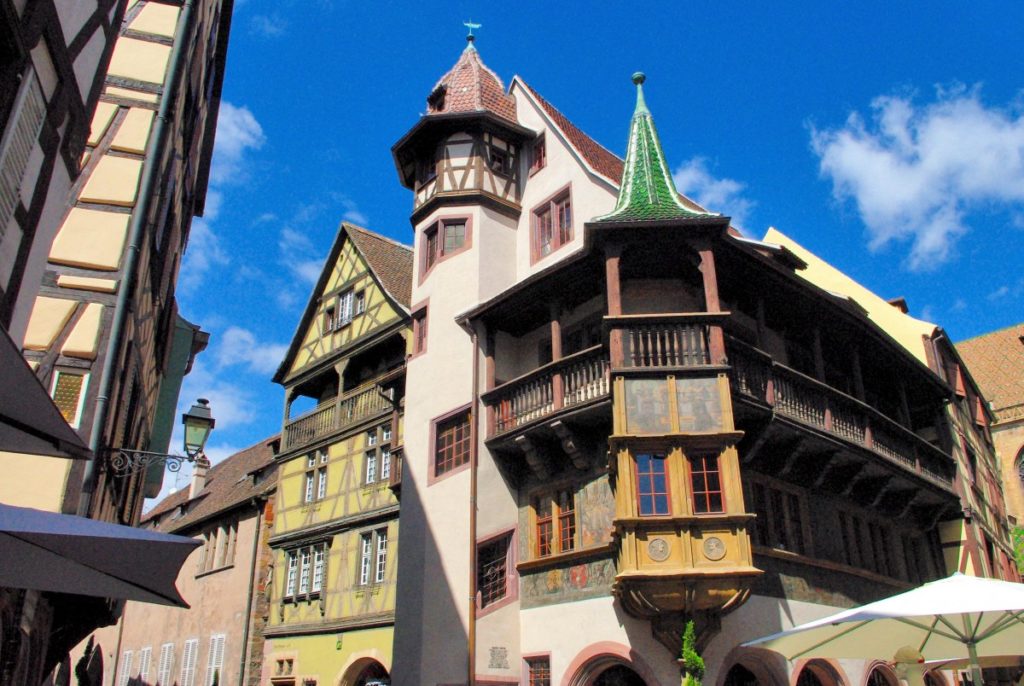
Among the many remarkable buildings in the old town, Pfister House is one of the most famous.
Built in 1537, it is a stunning example of Renaissance architecture in Alsace.
What makes it so distinctive is its combination of architectural features:
- a beautiful wooden corner oriel
- painted murals on the façade
- a carved wooden gallery wrapping around the upper floors
The house looks almost like something from a storybook.
When visiting Colmar, it is worth pausing here for a moment and looking closely at the details — the paintings, the woodwork, and the delicate decoration that has survived for centuries.
The House of Heads

Another curious landmark is the House of Heads (Maison des Têtes).
At first glance, it looks like a typical Renaissance building. But a closer look reveals something unusual.
The façade is decorated with more than one hundred sculpted faces.
These expressive masks — some serious, some grotesque — give the building its distinctive character and its memorable name.
It is one of those places that visitors often stumble upon unexpectedly while wandering the streets of Colmar.
The Koïfhus (Old Customs House)

Finally, one of the most important historic buildings in Colmar is the Koïfhus, also known as the Old Customs House.
Built in the late Middle Ages, it once served as the commercial and administrative heart of the town.
Merchants paid taxes here, trade agreements were signed, and goods passed through its halls.
The building is easy to recognise thanks to its beautiful roof of glazed tiles, a style typical of eastern France.
Today, it is used for exhibitions and cultural events, and it remains one of the key historic landmarks when visiting Colmar.
Cultural Highlights When Visiting Colmar
Beyond its colourful streets and picturesque canals, Colmar also has an impressive cultural heritage.
Many visitors come mainly for the postcard scenery. Yet visiting Colmar also offers the chance to discover remarkable works of art, historic churches, and one of the most important museums in eastern France.
These cultural landmarks reveal another side of the town — one shaped by centuries of religion, trade, and artistic influence.
Here are a few places you should not miss.
Saint Martin’s Church

Rising above the rooftops of the old town, Saint Martin’s Church is one of the most striking landmarks when visiting Colmar.
Although many people refer to it as Colmar Cathedral, it is technically a collegiate church rather than a cathedral.
Built mainly between the 13th and 14th centuries, the church is a beautiful example of Gothic architecture in the Rhine region.
The building is constructed from the warm yellow sandstone of the Vosges, which gives the façade a distinctive colour that glows softly in the evening light.
Inside, the atmosphere is calm and spacious. Tall columns draw the eye upward, while stained glass windows filter gentle light into the nave.
Even if you are only visiting Colmar for a short time, stepping inside for a few minutes offers a peaceful break from the lively streets outside.
The Dominican Church and the “Virgin of the Rose Garden”

A short walk from the main squares of the old town stands another historic religious building: the Dominican Church.
From the outside, it may appear rather simple.
But inside, the church contains one of Colmar’s greatest artistic treasures.
Displayed in the choir is the famous painting known as “The Virgin of the Rose Garden”, created in the 15th century by the artist Martin Schongauer.
The painting depicts the Virgin Mary and the Child seated among a delicate arch of roses, surrounded by angels.
Its soft colours and intricate detail have made it one of the masterpieces of Rhenish religious art.
For art lovers, this stop is often one of the most memorable moments when visiting Colmar.
Unterlinden Museum

For many travellers, the Unterlinden Museum becomes the cultural highlight of visiting Colmar.
The museum is housed in a former 13th-century Dominican convent, which already makes the visit special. Cloisters, courtyards, and historic galleries create a fascinating setting for the collections.
But the true reason the museum is internationally famous is a single extraordinary artwork.
The Isenheim Altarpiece.
Created in the early 16th century by Matthias Grünewald and sculptor Nicolas of Haguenau, this monumental altarpiece is considered one of the greatest masterpieces of Northern Renaissance art.
Its dramatic panels depict scenes from the life of Christ with intense emotional power.
Even visitors who are not usually interested in art often find themselves deeply moved when standing in front of it.
Beyond the altarpiece, the museum also displays:
- medieval sculptures
- Renaissance paintings
- modern art collections
Altogether, it makes Unterlinden one of the most important museums outside Paris.
The Statue of Liberty and Auguste Bartholdi
One surprising fact that many travellers discover while visiting Colmar is that the town is the birthplace of Frédéric Auguste Bartholdi.
Bartholdi is, of course, the sculptor who designed the Statue of Liberty in New York Harbour.
To celebrate this connection, a 12-metre-tall replica of the Statue of Liberty stands on a roundabout at the northern entrance to the town.
It may not be in the historic centre, but it is an interesting reminder of Colmar’s unexpected connection to one of the world’s most famous monuments.
In the old town itself, you can also visit the Bartholdi Museum, located in the sculptor’s former home.
Best Things to Do When Visiting Colmar
While wandering through the streets of the old town is already a pleasure in itself, there are also several memorable experiences that make visiting Colmar even more enjoyable.
Some of them are simple moments — a slow walk along a canal, a stop at a local market, or a quiet glass of wine on a terrace. Others offer a different perspective on the town and its surroundings.
Here are some of the best things to do when visiting Colmar.
Take a Boat Ride Through Little Venice
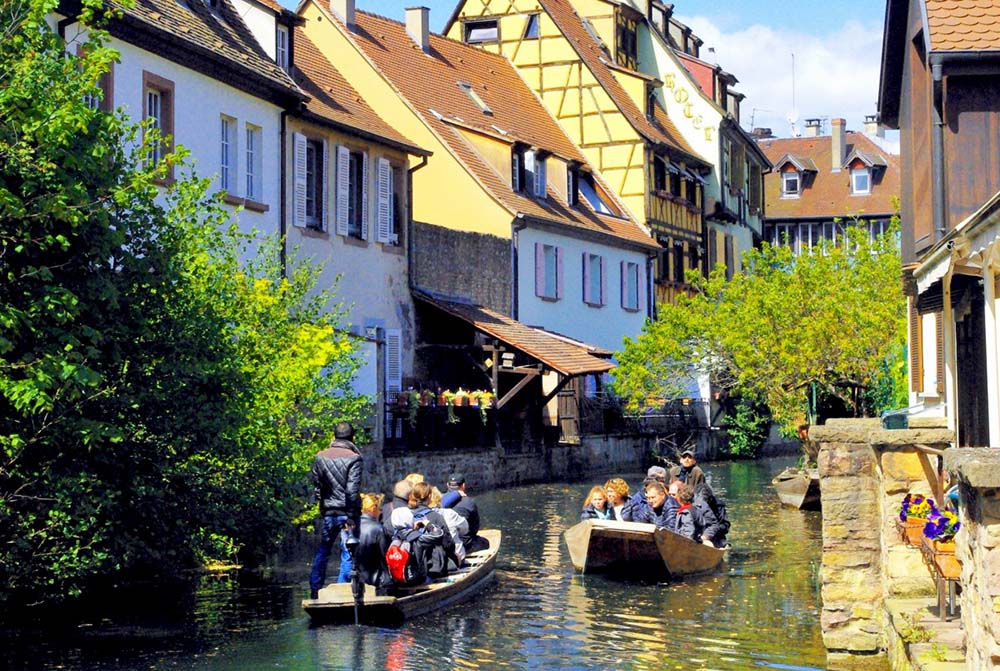
One of the most relaxing experiences when visiting Colmar is a gentle boat ride along the Lauch River.
Flat-bottomed boats depart from Pont Saint-Pierre, close to the heart of the Little Venice district.
The ride usually lasts about 30 minutes, and although it is short, it offers a completely different view of the town.
From the water, you can admire the colourful half-timbered houses from below, glide beneath small bridges, and notice architectural details that are easy to miss when walking through the streets.
The atmosphere is calm and peaceful — a pleasant contrast to the lively lanes of the old town.
Visit the Covered Market

Just a few steps from Little Venice stands Colmar’s Covered Market.
Built in the 19th century, this elegant market hall is one of the best places to discover local flavours when visiting Colmar.
Inside, you will find a variety of stalls selling regional products such as:
- Alsatian cheeses, including Munster
- cured meats and charcuterie
- fresh pastries and breads
- local wines from the Alsace vineyards
Many visitors enjoy buying a few specialities and sitting outside on the small terraces beside the canal.
It is a lovely way to pause during a day of exploring.
Walk Along the Canals of the Old Town

Although Little Venice receives most of the attention, canals appear in several parts of the historic centre.
Taking time to wander along them is one of the simplest pleasures when visiting Colmar.
Small bridges connect the narrow streets, and reflections of the colourful houses ripple softly in the water.
Early in the morning, the canals are especially peaceful. The water is often still, creating perfect reflections of the surrounding buildings.
In the evening, subtle lighting gives the old town a warm, romantic atmosphere.
Taste the Wines of Alsace
Colmar sits at the heart of one of France’s most famous wine regions.
Even if you do not have time to explore the entire Alsace Wine Route, you can still enjoy excellent wines while visiting Colmar.
Several wine cellars and tasting rooms in the town centre offer the chance to sample regional varieties such as:
- Riesling
- Gewürztraminer
- Pinot Gris
- Crémant d’Alsace
A relaxed tasting session is often the perfect way to end a day of exploring the town.
Explore the Alsace Wine Route Nearby
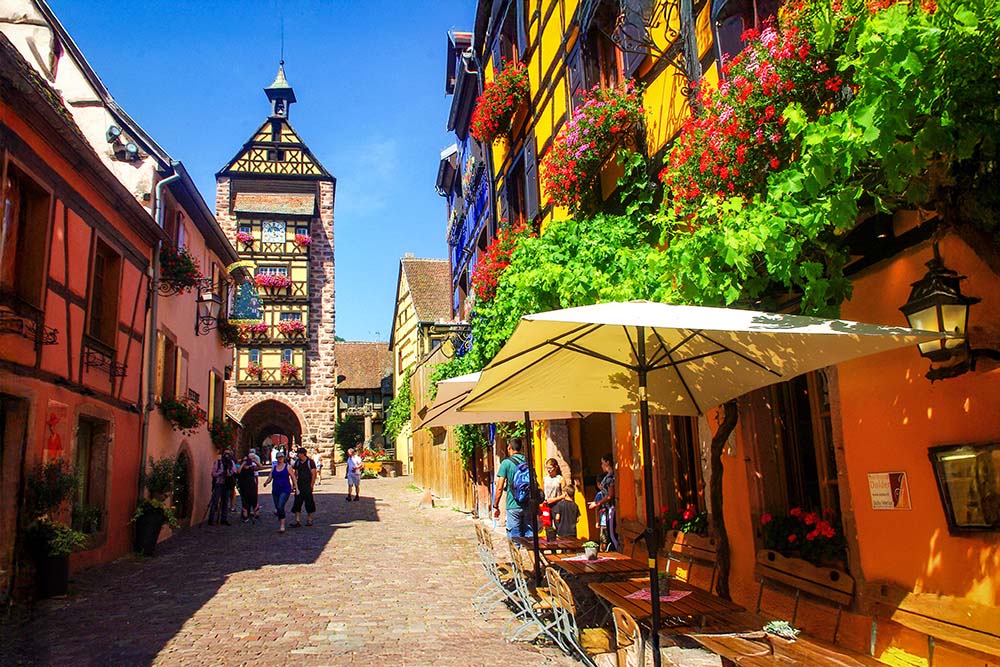
If you have more time, visiting Colmar can easily become the starting point for exploring one of the beautiful villages of the Alsace Wine Route.
Within a short drive, you can reach some of the most picturesque villages in the region, including:
- Eguisheim, often ranked among the most beautiful villages in France
- Riquewihr, a remarkably preserved medieval wine town
- Kaysersberg, with its charming streets and hilltop castle ruins
These villages, surrounded by vineyards and rolling hills, perfectly complement a stay in Colmar.
Alsatian Food to Try When Visiting Colmar
Food is an essential part of the experience when visiting Colmar.
Alsace has one of the most distinctive culinary traditions in France, shaped by centuries of French and German influence. The result is a cuisine that is generous, comforting, and full of flavour.
The best way to discover it is to step inside a traditional winstub — a cosy Alsatian tavern with wooden furniture, checked tablecloths, and a warm atmosphere.
Here are some of the dishes you should not miss when visiting Colmar.
Choucroute Garnie

Perhaps the most famous Alsatian dish is choucroute garnie.
At first glance, it may seem simple: sauerkraut served with sausages and various cuts of pork.
But a good choucroute is far more than that.
The cabbage is slowly cooked with white wine and spices, giving it a delicate flavour that perfectly complements the meats served alongside it.
It is hearty, satisfying, and deeply rooted in the region’s culinary tradition.
Baeckeoffe
Another classic dish you might encounter when visiting Colmar is baeckeoffe.
This traditional casserole combines three types of meat — usually beef, lamb, and pork — slow-cooked with potatoes, onions, and white wine.
The ingredients are sealed inside a ceramic dish and baked for several hours, creating a rich and comforting meal.
The name baeckeoffe literally means “baker’s oven,” referring to the old custom of bringing the dish to the village baker to cook slowly in the communal oven.
Flammekueche (Tarte Flambée)
If you are looking for something lighter while visiting Colmar, try flammekueche, also known as tarte flambée.
This thin, crisp flatbread is traditionally topped with:
- crème fraîche
- onions
- bacon
It is baked quickly in a very hot oven, giving it a wonderfully crisp texture.
Today you will find many variations, including versions with cheese, mushrooms, or even sweet toppings.
It is a perfect dish to share with friends over a glass of Alsatian wine.
Spätzle
Often served as a side dish, spätzle are small, soft egg noodles that accompany many traditional Alsatian meals.
Their slightly irregular shape gives them a rustic character, and they pair wonderfully with sauces and slow-cooked meats.
Although simple, they are an important part of the local culinary heritage.
Sweet Specialities: Kugelhopf and Gingerbread

No trip to Alsace would be complete without sampling its traditional desserts.
One of the most iconic is kugelhopf, a light brioche baked in a distinctive ring-shaped mould. It is usually flavoured with raisins and almonds.
Another regional favourite is pain d’épices — gingerbread rich with honey and warm spices.
You will find both in bakeries throughout the town when visiting Colmar.
Pretzels
Finally, keep an eye out for the famous Alsatian bretzel.
These golden, twisted breads are often sold at bakeries and market stalls, sometimes topped with coarse salt.
They make a perfect snack while wandering through the streets of the old town.
Best Time of Year for Visiting Colmar
One of the reasons Colmar is such a popular destination is that the town is beautiful in every season.
Each time of year offers a slightly different atmosphere, from festive winter markets to flower-filled summer streets.
Here is what to expect when visiting Colmar throughout the year.
Winter: The Famous Christmas Markets

Winter is perhaps the most magical time for visiting Colmar.
From late November until the end of December, the town hosts some of the most beautiful Christmas markets in Europe. Wooden stalls fill the squares of the old town, selling handmade gifts, mulled wine, and traditional Alsatian treats.
The historic streets are decorated with lights, garlands, and festive displays that transform Colmar into something that feels almost like a fairy tale.
However, this popularity comes with one downside: the crowds.
December weekends in particular can be extremely busy. If possible, try to visit during the week or early in the morning.
Spring: Easter Markets and Blossoms
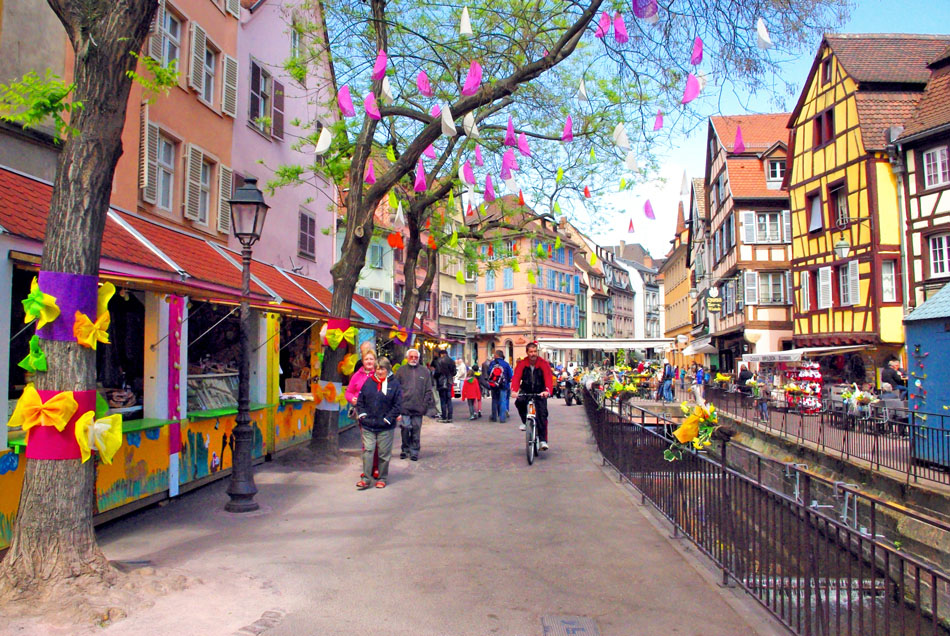
Spring is a lovely and often overlooked season for visiting Colmar.
Flower boxes begin to fill with fresh blooms, terraces reopen, and the atmosphere becomes relaxed and cheerful.
For travellers who prefer fewer crowds than the Christmas season, spring can be one of the best times to visit.
Summer: Flowers and Festivals
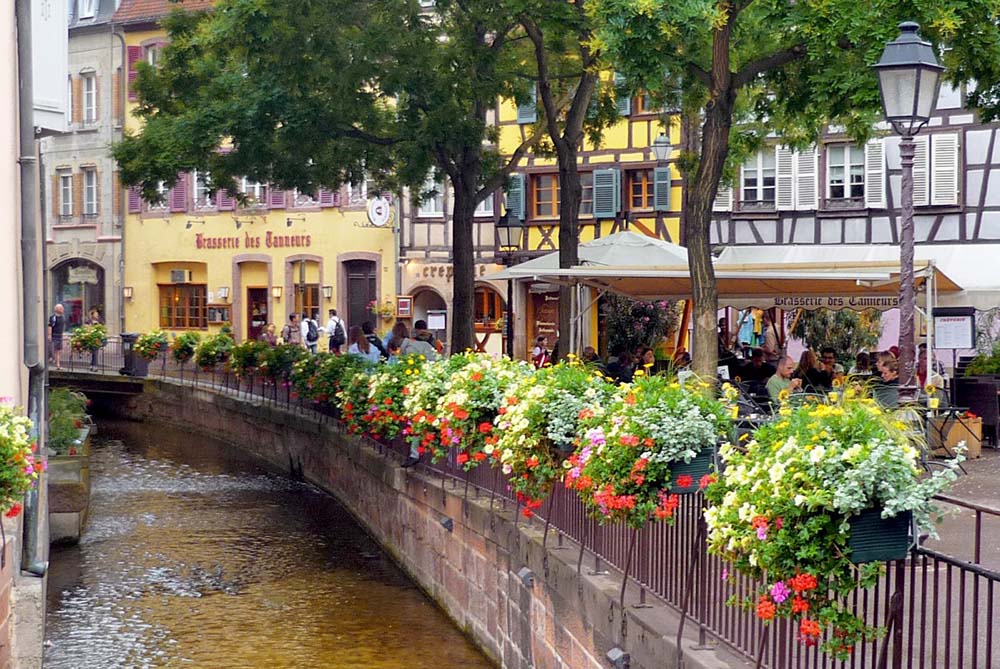
In summer, Colmar becomes vibrant and lively.
The half-timbered houses are decorated with abundant flowers, giving the town its most colourful appearance of the year.
Outdoor cafés fill the squares, and the warm evenings are perfect for strolling along the canals.
Summer is also a great season for combining visiting Colmar with exploring the nearby villages of the Alsace Wine Route.
Autumn: Vineyards and Warm Colours

Autumn is another beautiful time for visiting Colmar, especially for wine lovers.
The vineyards surrounding the town turn shades of gold and red as the harvest season begins.
Wine festivals and local events take place across the region, celebrating Alsace’s long winemaking tradition.
The atmosphere is calmer than in summer, making it an ideal time for relaxed exploration.
Practical Tips for Visiting Colmar
Colmar is easy to explore, but a few practical tips can make visiting Colmar even more enjoyable.
Start Early to Avoid the Crowds
Colmar is one of the most visited towns in Alsace.
To enjoy the streets at their most peaceful — and to take the best photographs — try to start your day before 9:30 in the morning.
Early morning light is also perfect for capturing reflections in the canals.
Explore in the Evening
Many day-trip visitors leave Colmar in the late afternoon.
That means the town becomes noticeably calmer in the evening.
Walking through the illuminated streets after sunset is one of the most atmospheric moments when visiting Colmar.
Look for Reflections in the Canals
The canals of Little Venice offer some of the most beautiful photographic opportunities in the town.
Early in the morning, when the water is still, the colourful houses reflect perfectly in the Lauch River.
It is one of the small but memorable details that make visiting Colmar so special.
Travel Light
If you arrive by train, it can be helpful to leave your luggage at the station before exploring.
Colmar’s old town is best discovered on foot, and the narrow streets and cobbled lanes are easier to enjoy without heavy bags.
Take Time to Wander
Perhaps the most important advice when visiting Colmar is simple: do not rush.
The town is not just about famous viewpoints or ticking off attractions.
Some of the best moments happen unexpectedly — discovering a quiet square, crossing a small bridge, or noticing a beautifully painted façade in a narrow street.
Colmar rewards curiosity.
Why Colmar Is One of the Most Charming Towns in France

At first glance, Colmar seems almost too picturesque to be real.
Colourful houses lean gently over quiet canals. Medieval streets wind between historic buildings that have stood for centuries. Flowers brighten every balcony.
But what makes visiting Colmar so memorable is not just its beauty.
It is the atmosphere.
The pleasure of wandering slowly through the old town. The sound of footsteps on cobbled streets. The reflections of half-timbered houses in still water.
And perhaps a glass of Alsatian wine enjoyed on a terrace as the evening light fades across the rooftops.
Colmar is not simply a place to visit.
It is a place to savour.
FAQ About Visiting Colmar
Is Colmar worth visiting?
Yes, Colmar is widely considered one of the most beautiful towns in France. Its colourful half-timbered houses, canals, historic streets, and Alsatian atmosphere make visiting Colmar a memorable experience. The town is especially famous for the picturesque district known as Little Venice and for its charming Christmas markets.
How many days do you need when visiting Colmar?
Most travellers spend one day visiting Colmar, which is enough to explore the historic centre and see the main highlights. However, staying two days allows more time to visit museums such as the Unterlinden Museum and explore nearby villages along the Alsace Wine Route.
What is Colmar famous for?
Colmar is famous for its well-preserved medieval old town, colourful half-timbered houses, and picturesque canals. The town is also known for Little Venice, the Unterlinden Museum with the Isenheim Altarpiece, and its festive Christmas markets.
When is the best time for visiting Colmar?
Colmar is beautiful throughout the year. Many visitors come in December for the Christmas markets, while spring and summer offer flowers, warm weather, and outdoor terraces. Autumn is also a wonderful time to visit because of the colourful vineyards surrounding the town.
Is Colmar walkable?
Yes, Colmar is a very walkable town. The historic centre is largely pedestrianised, and most attractions are located within a short walking distance of each other. Exploring the town on foot is the best way to discover its charming streets and hidden corners.
Can you visit Colmar as a day trip?
Yes, visiting Colmar as a day trip is very common. The town is easily accessible by train from Strasbourg, Basel, and even Paris. However, staying overnight allows you to enjoy the town in the evening, when the streets are quieter, and the historic buildings are beautifully illuminated.
