
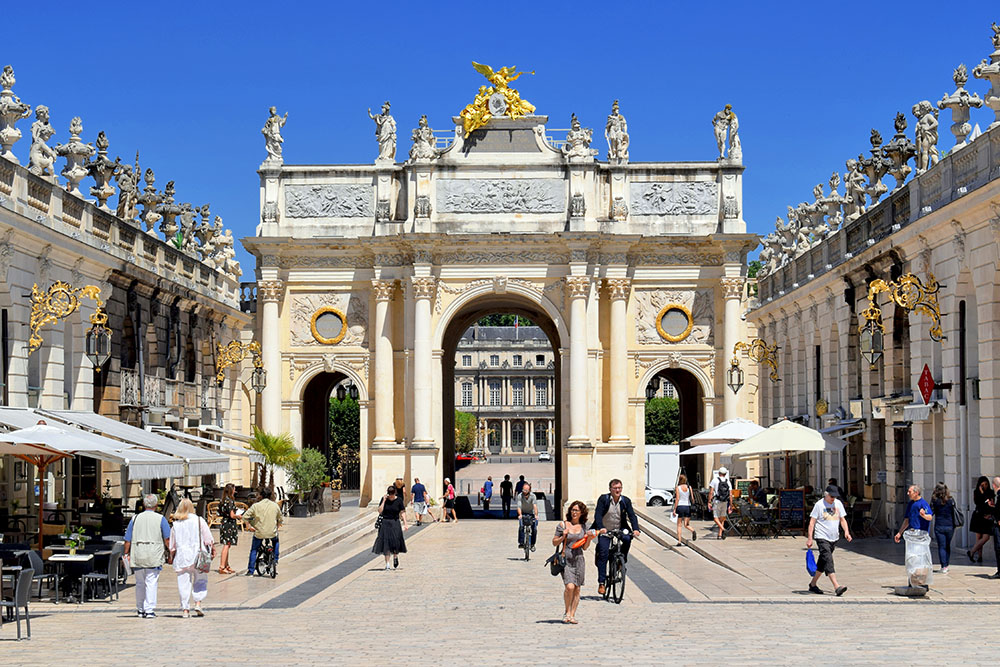

Arc Héré stands proudly at the northern edge of Place Stanislas, forming one of the most elegant architectural gateways in France.
At first glance, many visitors simply pass beneath it while moving between two of Nancy’s most beautiful squares.
Yet this triumphal arch is far more than a decorative passageway — it is a key element in one of the most remarkable urban compositions of the 18th century.
If you spend a moment observing the monument, its importance becomes clear.
The arch perfectly frames the transition between the dazzling spectacle of Place Stanislas and the long, graceful perspective of Place de la Carrière.
In doing so, it acts as both a physical and symbolic gateway within the historic centre of Nancy.
Built during the reign of Stanislas Leszczyński, the former king of Poland who became Duke of Lorraine, the arch reflects the refined architectural vision that transformed Nancy into a city of royal elegance.
Its classical design, inspired by the triumphal arches of ancient Rome, celebrates the power and prestige of the French monarchy during the Age of Enlightenment.
Today, Arc Héré remains one of the most photographed landmarks in the city.
Whether admired from the golden gates of Place Stanislas or approached from the tree-lined promenade of Place de la Carrière, it forms a monumental focal point that draws the eye and anchors the entire architectural ensemble.
Understanding Arc Héré means discovering how architecture, history, and urban planning came together to create one of Nancy’s most impressive UNESCO treasures.
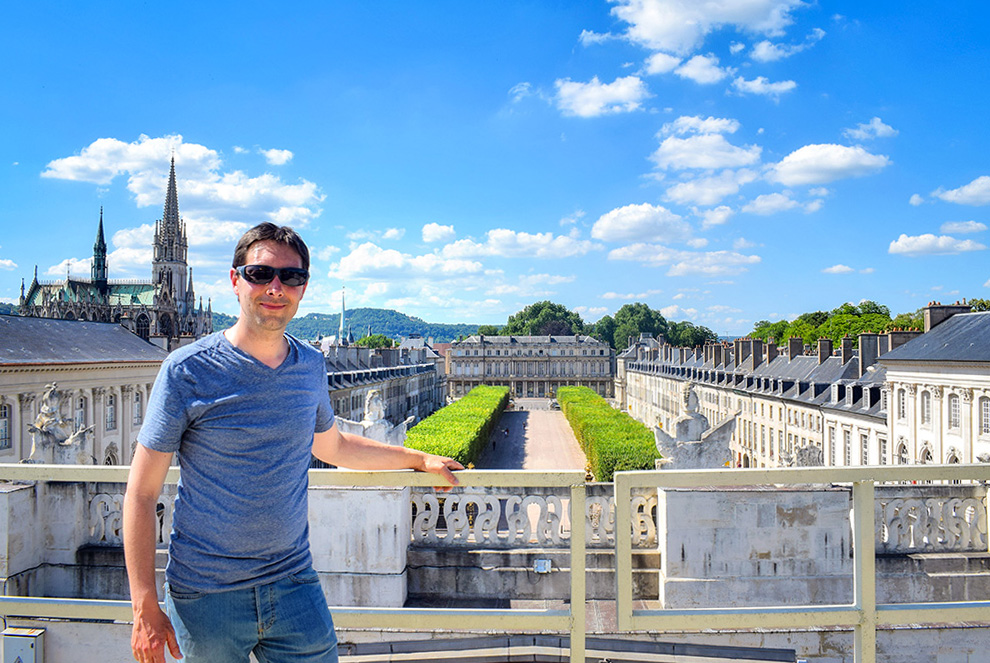
Table of Contents
Where Is Arc Héré in Nancy?
For visitors exploring the historic centre, Arc Héré is almost impossible to miss.
The monument stands exactly where two of Nancy’s most famous squares meet, creating a natural passage between them.
On its southern side lies the magnificent Place Stanislas, the grand royal square that has become the symbol of the city.
On the northern side stretches the long and elegant Place de la Carrière, a tree-lined promenade leading toward the old medieval quarter.
Arc Héré therefore occupies a strategic position within the urban layout of Nancy. Rather than being an isolated monument, it forms a carefully planned architectural hinge connecting different parts of the city.
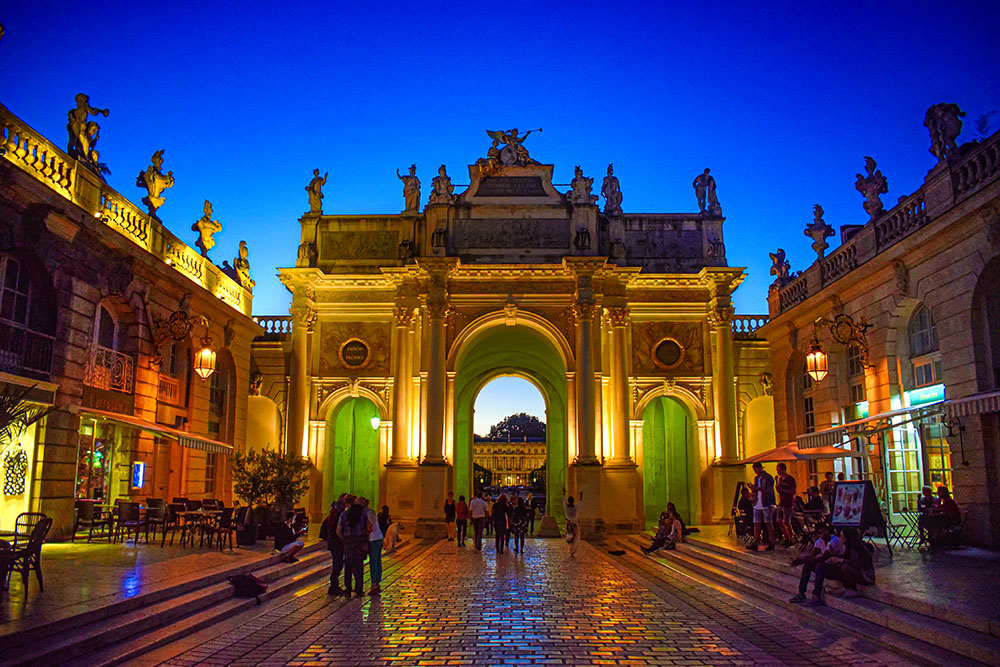
When the arch was designed in the mid-18th century, this placement was entirely deliberate. The goal was to create a visual axis linking several key spaces:
- Place Stanislas, the ceremonial heart of the new royal city
- Arc Héré, marking the transition between two squares
- Place de la Carrière, extending the perspective toward the old ducal quarter
This alignment produces one of the most beautiful urban perspectives in France.
Standing beneath the arch, visitors can look in one direction toward the golden splendour of Place Stanislas and in the other toward the calm elegance of Place de la Carrière.
Just a few steps beyond the northern end of the square begins the Ville Vieille, the historic old town of Nancy.
There, narrow streets lead toward the former Palace of the Dukes of Lorraine, reminding visitors that the city’s story stretches far beyond the 18th century.
Because of this unique position, Arc Héré plays a central role in the ensemble of squares that UNESCO recognised as a World Heritage Site in 1983.
It is not simply an ornamental structure — it is the architectural key that links Nancy’s most celebrated urban spaces.
The Vision of Stanislas: A Monument for a Royal Square
To understand why Arc Héré was built, it is essential to look at the remarkable figure behind Nancy’s 18th-century transformation: Stanislas Leszczyński.
Although he was not born in Lorraine, Stanislas would leave an extraordinary mark on the city.
His ambition, imagination, and political circumstances all combined to create the architectural masterpiece that visitors admire today.
Who Was Stanislas Leszczyński?
Stanislas Leszczyński had a life that could easily belong to a historical novel.
Born into a noble Polish family, he became King of Poland in 1704 during a turbulent period of European politics. However, his reign was short-lived. After losing the throne in 1709, he spent many years in exile.
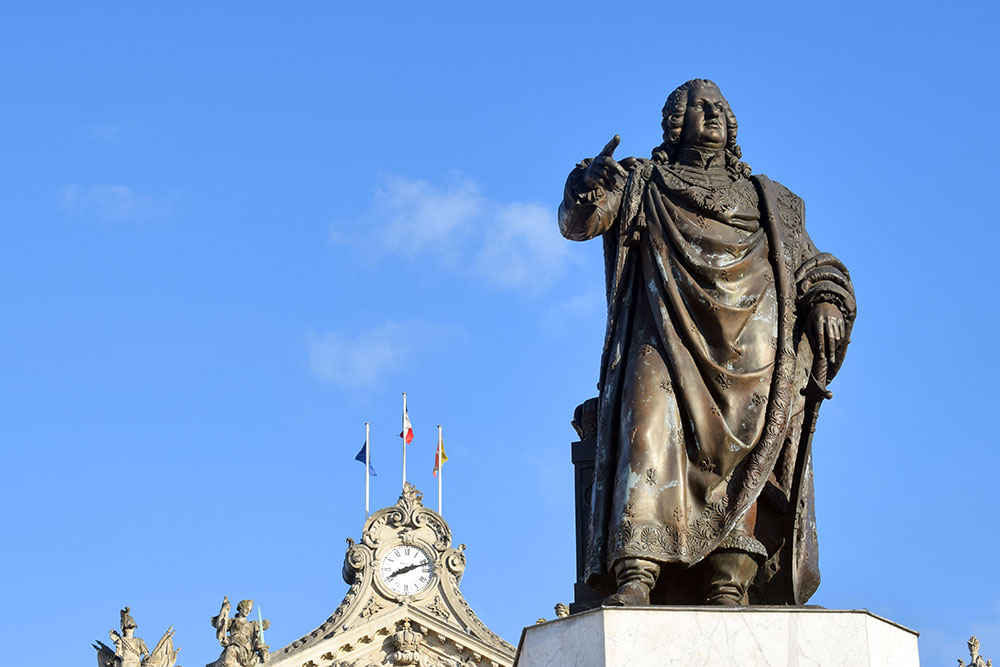
His fortunes changed through family ties. Stanislas’s daughter Marie Leszczyńska married King Louis XV of France in 1725, making Stanislas the king’s father-in-law.
When the Duchy of Lorraine became part of a diplomatic arrangement between European powers, Stanislas was granted the title of Duke of Lorraine in 1737.
Although it was understood that the duchy would eventually pass to France after his death, Stanislas ruled the region with remarkable energy and vision during his lifetime.
Rather than focusing on politics alone, he devoted much of his attention to improving the city of Nancy.
A Grand Urban Project for Nancy
In the mid-18th century, Nancy was divided between two distinct areas: the medieval ducal town, la Ville-Vieille, where the Dukes of Lorraine had ruled for centuries, and a newer district developed in the Renaissance period, la Ville-Neuve.
Stanislas wanted to unite these parts of the city through a bold architectural project.
To achieve this goal, he entrusted his architect Emmanuel Héré with the design of a grand new square that would symbolise the power and prestige of the monarchy. This square became the magnificent Place Stanislas, completed in 1755.
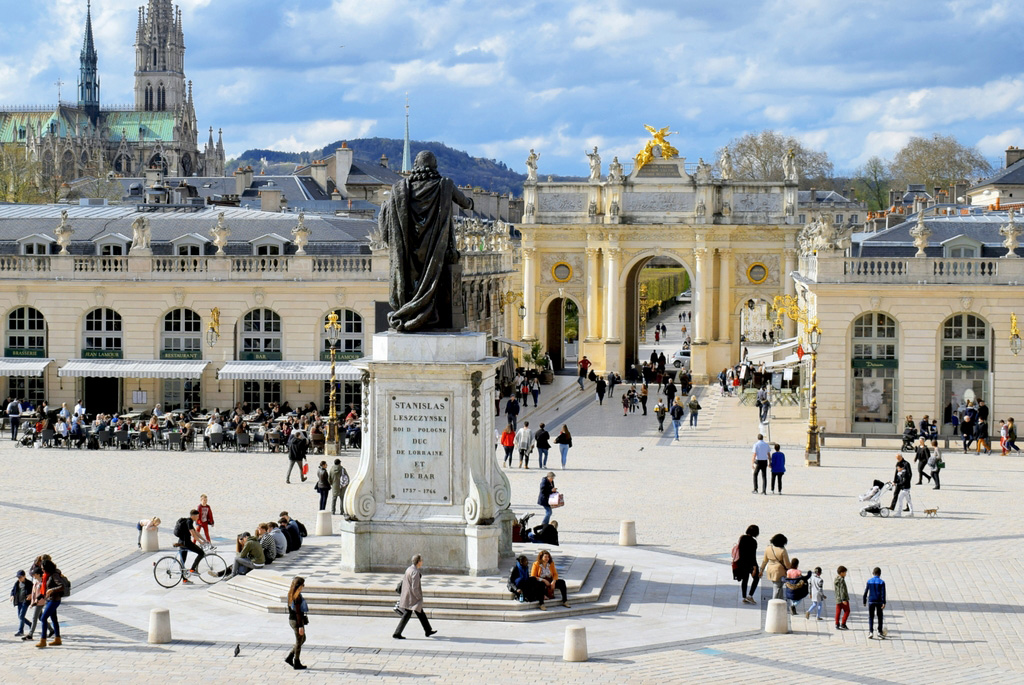
But the project did not stop there.
The urban plan extended beyond the square itself, creating a harmonious sequence of spaces that included Place de la Carrière and Place d’Alliance.
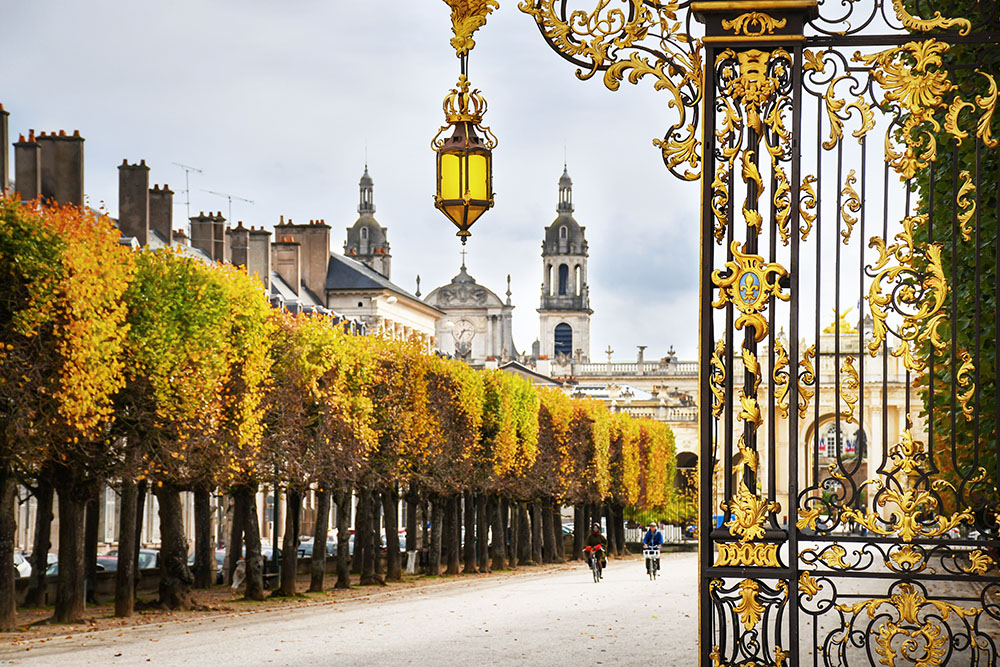
These squares were carefully arranged to form a coherent architectural ensemble — one that balanced grandeur with elegance.
Within this composition, Arc Héré played a crucial role.
Rather than simply building an open passage between the two squares, Héré designed a triumphal arch inspired by the monuments of ancient Rome.
This structure would mark the transition between the ceremonial splendour of Place Stanislas and the refined perspective of Place de la Carrière.
In doing so, the arch became both a decorative landmark and a symbolic statement — a monument celebrating royal authority and the new harmony of Nancy’s urban design.
Even today, when visitors walk beneath Arc Héré, they are passing through the very centre of Stanislas’s vision for the city.
The Architect Behind the Monument: Emmanuel Héré
While Stanislas Leszczyński provided the vision that reshaped Nancy, the task of turning that vision into reality fell to a talented architect: Emmanuel Héré.
It was Héré who designed the elegant squares, harmonious façades, and monumental perspectives that still define the city today.
His work transformed Nancy into one of the finest examples of Enlightenment urban planning in Europe.
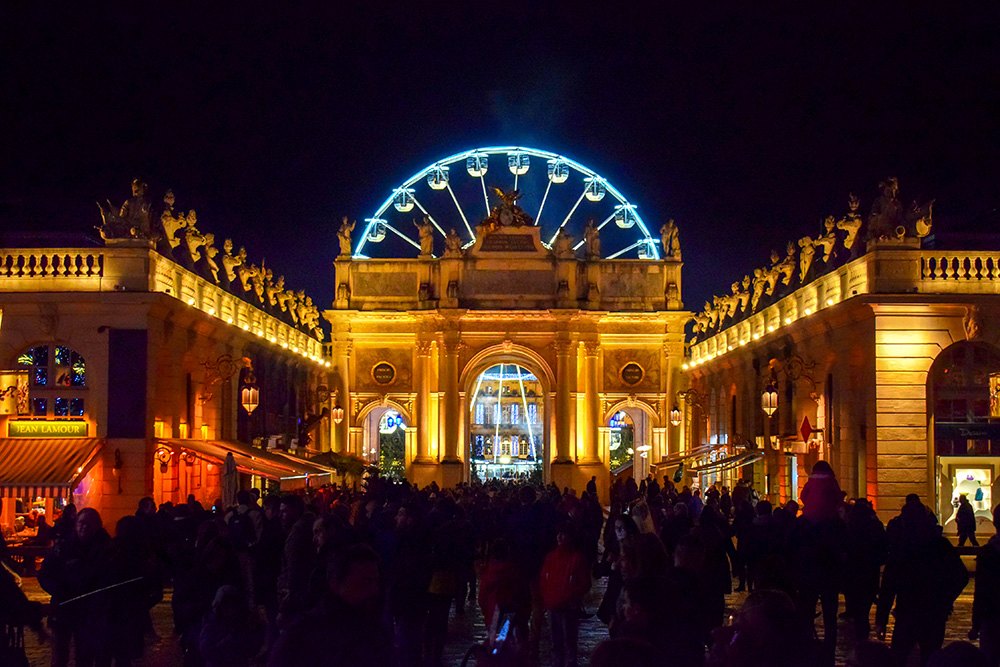
The Man Who Designed Nancy’s Royal Squares
Emmanuel Héré was born in Nancy in 1705 and became the official architect to Duke Stanislas.
Working closely with the duke, he played a central role in the ambitious architectural projects that would redefine the city during the 18th century.
Héré’s designs reflected the refined classical style that dominated European architecture at the time.
Influenced by ancient Roman models and French royal architecture, he sought to create spaces that combined symmetry, balance, and elegance.
His most famous achievement is undoubtedly the creation of Place Stanislas, a square that remains one of the most celebrated architectural ensembles in Europe.
Yet the success of the project depended on more than a single square.
Héré carefully planned an entire sequence of urban spaces that would guide visitors through the city.
This vision included Place Stanislas, Place de la Carrière, and Place d’Alliance, all connected through carefully aligned perspectives.
At the centre of this composition stood Arc Héré, designed to mark the transition between the two largest squares.
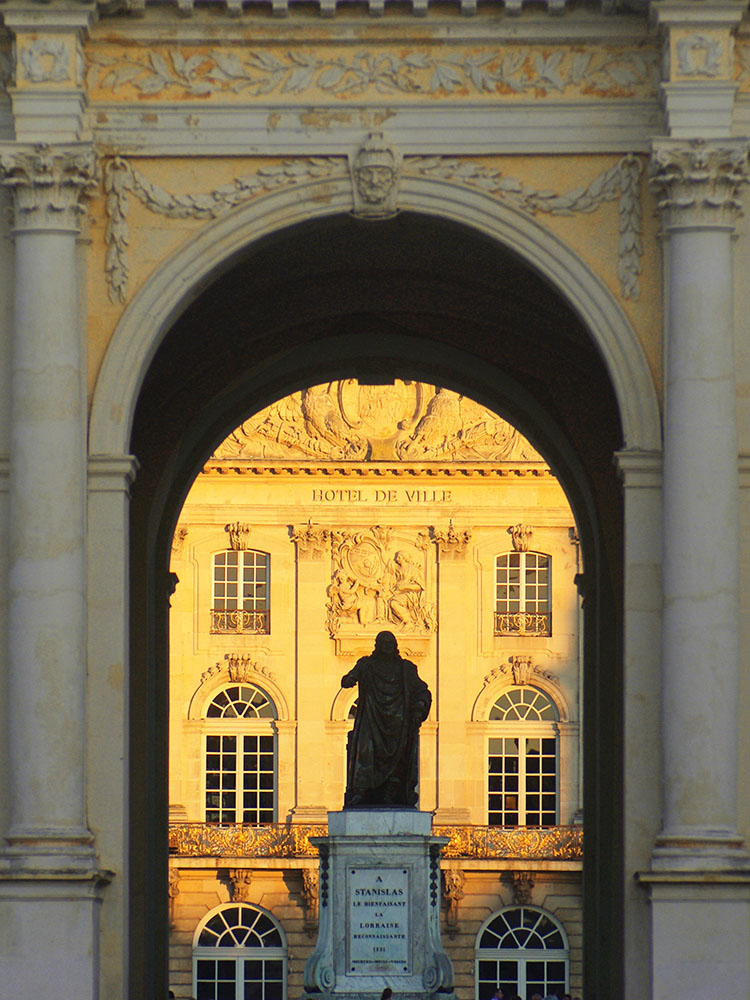
Inspiration from Roman Triumphal Arches
When Emmanuel Héré designed the monument, he turned to one of the most powerful architectural symbols of antiquity: the Roman triumphal arch.
In ancient Rome, such arches were built to celebrate military victories and honour emperors. They were monumental gateways, richly decorated with sculptures and inscriptions that told the story of imperial power.
Héré adapted this concept for Nancy, creating a triumphal arch that celebrated the glory of the French monarchy rather than a specific military triumph.
The resulting monument reflects the classical language of Roman architecture.
Its balanced proportions, decorative reliefs, and sculptural details evoke the grandeur of antiquity while fitting perfectly into the elegant urban composition imagined by Stanislas.
At the same time, the arch was designed to serve a practical role within the city. By framing the entrance to Place de la Carrière, it creates a visual transition between two different architectural spaces.
This dual function — both symbolic and architectural — is what makes Arc Héré such an important part of Nancy’s historic landscape.
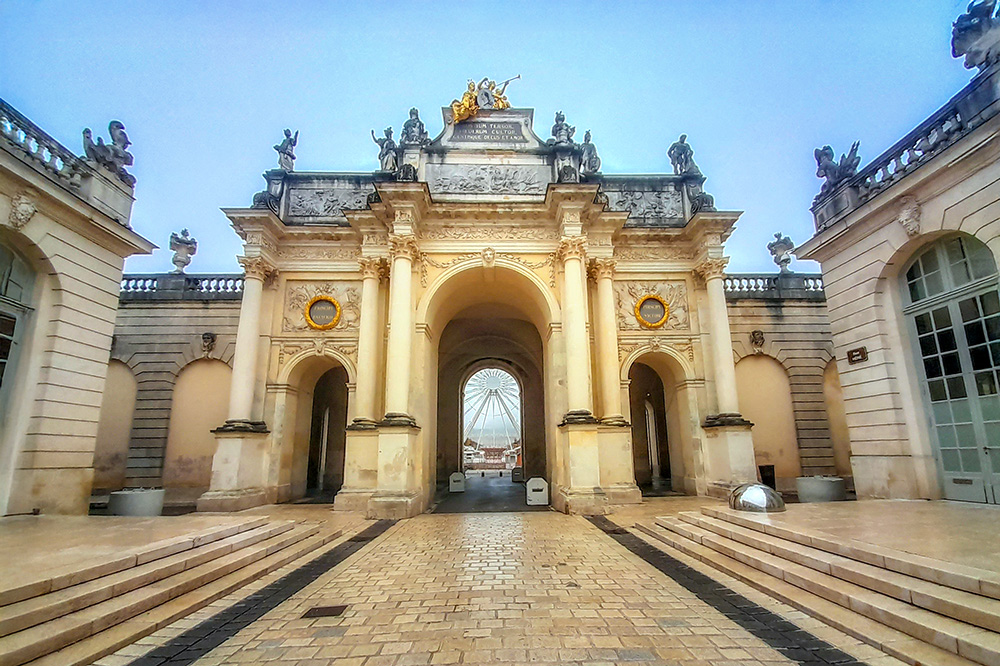
The Architecture of Arc Héré
Standing beneath Arc Héré, visitors quickly notice that this monument is far more than a simple passage between two squares.
Its proportions, sculptural decorations, and classical design give it the presence of a true triumphal arch — one that reflects both artistic elegance and royal symbolism.
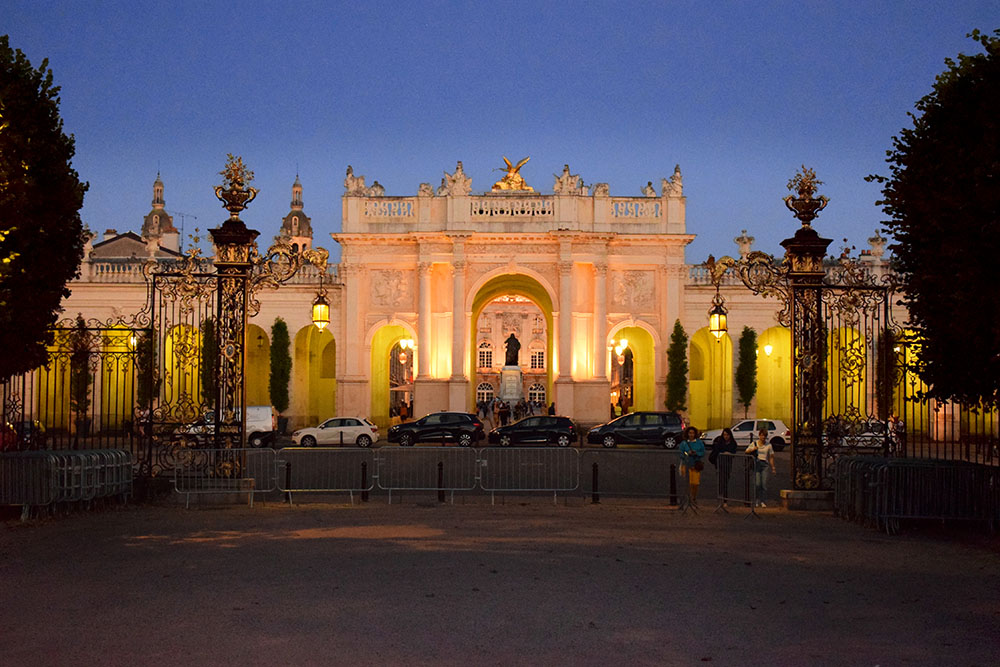
Although smaller than some of the great triumphal arches of Europe, Arc Héré achieves its impact through perfect balance and careful detailing.
Every element was designed to complement the surrounding squares while celebrating the authority of the French crown.
A Monument Inspired by Antiquity
As we mentioned above, the architectural language of Arc Héré clearly draws inspiration from the triumphal arches of ancient Rome.
The structure consists of a large central arch framed by elegant columns and decorative stonework. The archway itself is wide enough to frame the perspective between Place Stanislas and Place de la Carrière, creating one of the most beautiful visual alignments in Nancy.
Above the arch, a richly decorated attic level supports sculptural reliefs and inscriptions that emphasise the monument’s ceremonial character. The symmetry of the design reflects the classical ideals that dominated European architecture during the Enlightenment.
Yet Arc Héré was not intended to imitate Roman monuments directly. Instead, Emmanuel Héré adapted the classical style to fit perfectly within the refined urban composition of Nancy.
Rather than overwhelming the surrounding architecture, the arch acts as a graceful transition between two different spaces — the theatrical grandeur of Place Stanislas and the long perspective of Place de la Carrière.

Sculptures Celebrating Louis XV
One of the most fascinating aspects of Arc Héré lies in its sculptural decorations.
These reliefs were designed to celebrate the reign of Louis XV, whose authority extended over Lorraine after the death of Stanislas. The imagery reflects the political symbolism typical of royal monuments in the 18th century.
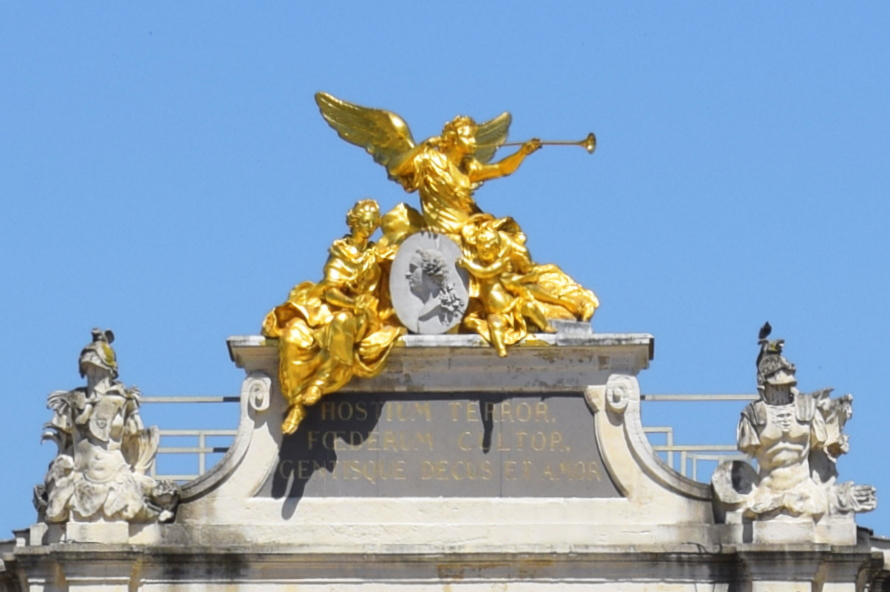
Mythological figures and allegorical representations appear throughout the decorative program. Such imagery was commonly used during this period to express ideals such as peace, prosperity, strength, and royal power.
Above the arch, sculpted panels illustrate scenes that honour the achievements of the monarchy. The figures are arranged in dynamic compositions that bring movement and energy to the monument.
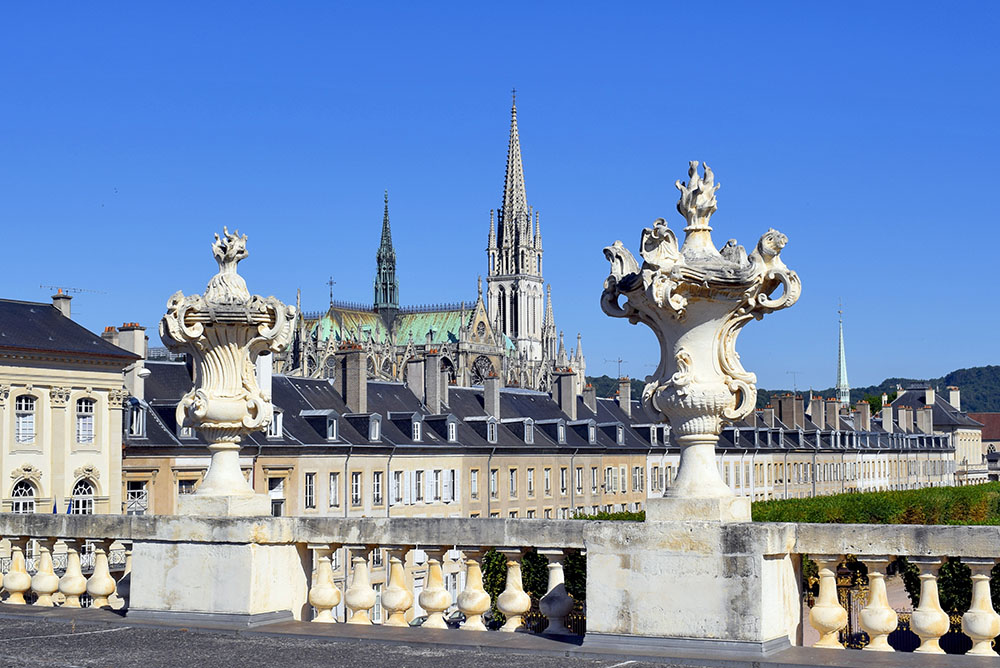
Although visitors today may admire the arch primarily for its aesthetic beauty, these sculptural details remind us that Arc Héré originally carried a strong political message.
It stood not only as an architectural gateway but also as a monument celebrating the prestige of the French kingdom.
Looking closely at these details reveals the artistic ambition behind the project — and the skill of the craftsmen who brought Emmanuel Héré’s vision to life more than two centuries ago.
Why Arc Héré Is More Than Just a Monument
At first glance, Arc Héré may appear to be simply a beautiful triumphal arch standing at the edge of Place Stanislas.
Yet its true significance becomes clear when you look at the role it plays in the urban design of Nancy.
Unlike many triumphal arches that function mainly as standalone monuments, Arc Héré was conceived as an integral element of a larger architectural composition.
Again, it acts as a gateway that connects two very different spaces while guiding the eye through one of the most elegant perspectives in the city.
A Symbolic Gateway Between Two Squares
Standing beneath Arc Héré, visitors find themselves at the meeting point of two remarkable squares.
Behind them lies Place Stanislas, the grand royal square created by Stanislas Leszczyński. With its golden gates, ornate fountains, and monumental scale, it is the dazzling centrepiece of Nancy.

Ahead stretches Place de la Carrière, a long, tree-lined promenade leading toward the city’s historic old quarter.
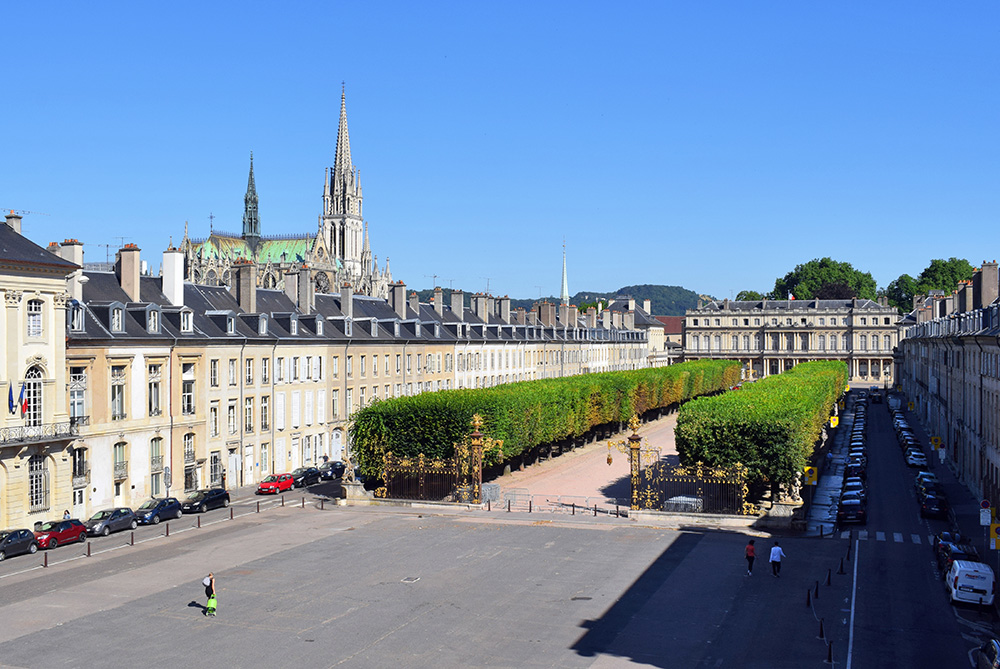
Arc Héré serves as the architectural hinge between these two spaces. Passing beneath the arch creates a moment of transition — almost like moving between two chapters of the city’s history.
On one side, the atmosphere is lively and theatrical. On the other hand, it becomes calmer and more reflective.
This subtle shift was entirely intentional. Emmanuel Héré designed the arch to frame the perspective and create a sense of progression through the city.
Framing One of Nancy’s Most Beautiful Views
One of the most striking aspects of Arc Héré is the way it shapes the view around it.
From Place Stanislas, the arch acts like a grand frame that draws the eye toward the elegant façades and tree-lined promenade of Place de la Carrière. The alignment of the buildings, the perspective of the square, and the arch itself combine to create a carefully orchestrated visual effect.
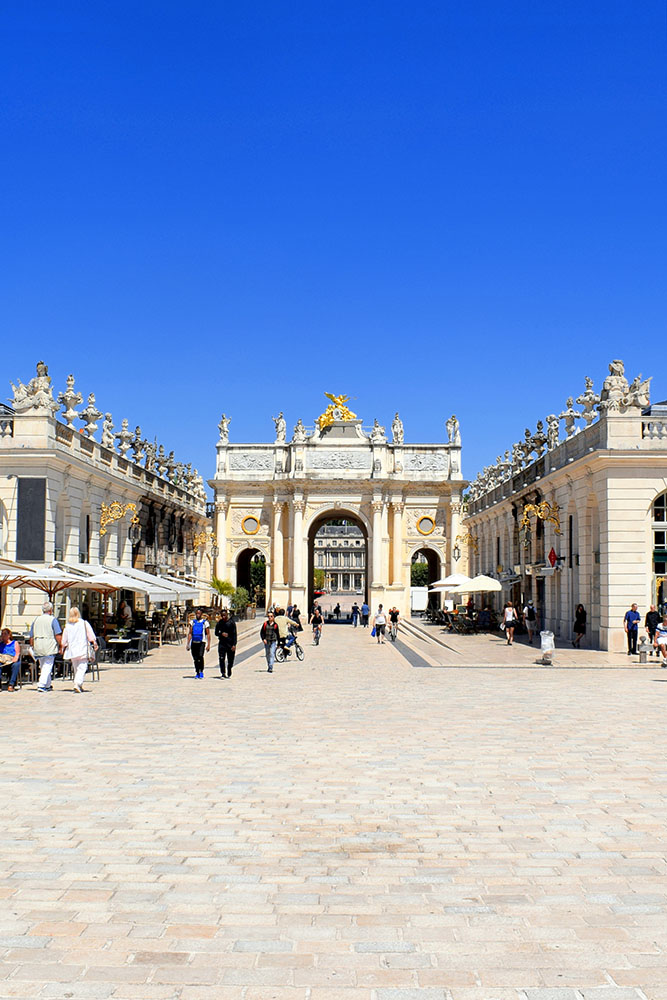
Standing on the opposite side, in Place de la Carrière, the view works just as beautifully in reverse. The arch frames the entrance to Place Stanislas, where the gilded gates and classical façades appear almost like a stage beyond the monument.
Few cities in Europe offer such a perfectly balanced architectural perspective within such a compact area.
For photographers and architecture lovers, this moment of alignment — when the arch frames the square beyond — is one of the most memorable scenes in Nancy.
It is also one of the reasons why the ensemble of the city’s squares was recognised by UNESCO as a World Heritage Site in 1983.
Arc Héré is therefore not just a monument to admire. It is the key element that ties together the entire composition of Nancy’s most celebrated urban spaces.
Why Arc Héré Is One of Nancy’s Most Elegant Landmarks
Among the many architectural treasures of Nancy, the Arc Héré holds a special place.
At first glance, it may seem modest compared with the great triumphal arches of Europe. Yet its true beauty lies in the way it integrates perfectly into the urban landscape.
Rather than dominating its surroundings, the arch enhances them.
Its elegant proportions, classical details, and carefully chosen position make it an essential part of the extraordinary ensemble that defines the historic centre of Nancy.
Without it, the transition between Place Stanislas and Place de la Carrière would lose much of its dramatic effect.
Arc Héré is therefore not simply a monument to admire — it is a key element in a carefully orchestrated architectural composition.
Visitors often discover this when they pause beneath the arch and look around. In one direction, the golden gates and fountains of Place Stanislas sparkle in the sunlight. In the other, the long tree-lined perspective of Place de la Carrière stretches gracefully toward the old town.
Few places illustrate the harmony of Enlightenment urban planning so clearly.
This unique balance between monument and cityscape is precisely what led UNESCO to recognise the ensemble of Nancy’s squares as a World Heritage Site in 1983.
For travellers exploring the city today, walking beneath Arc Héré is more than just passing through an archway. It is an experience that connects architecture, history, and urban design in a single moment.
If Place Stanislas is Nancy’s grand stage and Place de la Carrière its elegant promenade, Arc Héré is the magnificent gateway that brings the entire scene together.