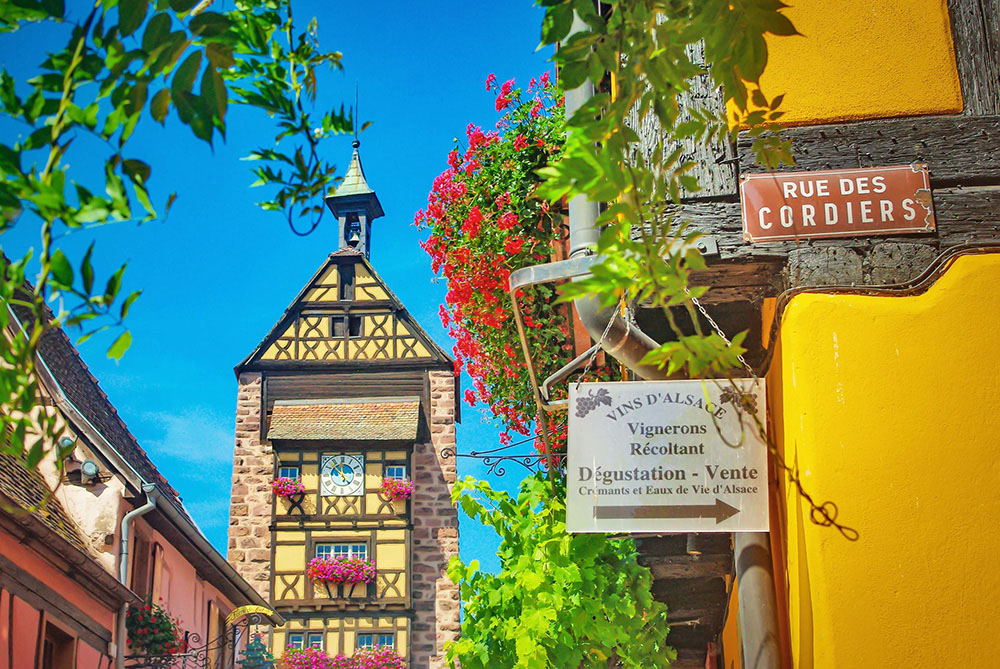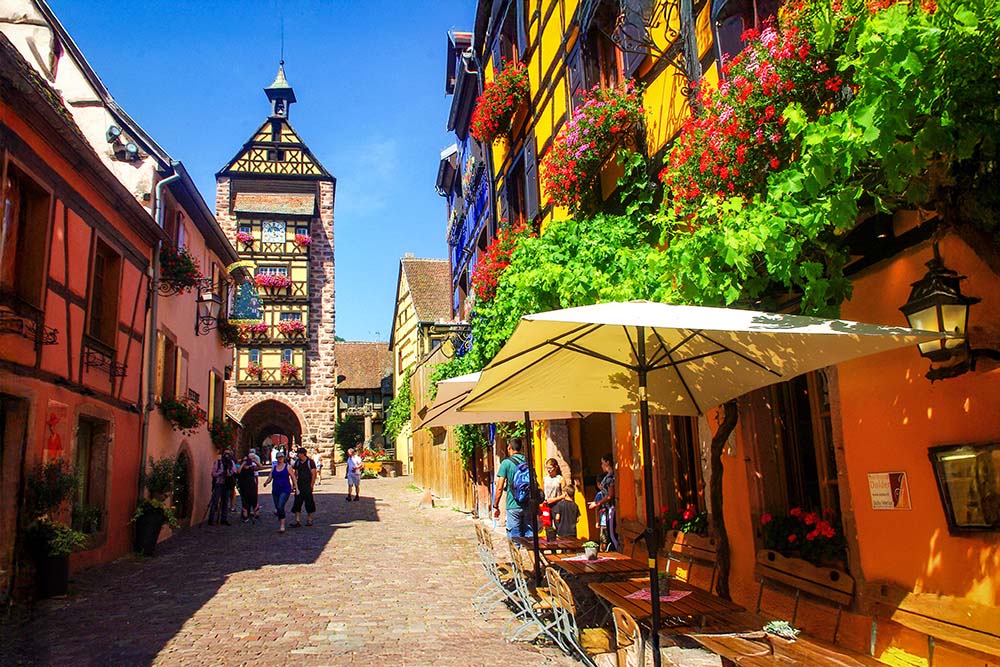

There are some places that seem almost too pretty to be real. Riquewihr is one of them.
Tucked among the vineyards of the Alsace Wine Route, about 15 kilometres from Colmar, this small historic village looks like it has stepped straight out of a storybook.
Timber-framed houses lean gently over cobbled streets, flower boxes brighten the façades, and vineyard-covered hills rise just beyond the old walls.
Yet Riquewihr is not simply a pretty backdrop for holiday photos.
It is also a historic wine village with medieval gates, ramparts, Renaissance houses and a long tradition of prosperity built on wine.
And that is exactly why Riquewihr deserves more than a quick stop.
Many visitors arrive, take a few pictures along the main street, buy a souvenir or two, and leave thinking they have “done” Riquewihr.
In truth, the village rewards those who slow down, wander into the side lanes, and look beyond the postcard view.
That is when its real charm begins to appear.
Table of Contents
Why Riquewihr is so special
Riquewihr is often described as one of the jewels of Alsace, and it is easy to see why.
The village sits right in the heart of Alsace wine country, surrounded by vineyards and close to other famous stops such as Hunawihr, Kaysersberg and Colmar.
It is also officially one of the “Most Beautiful Villages of France,” and despite having fewer than 1,200 inhabitants, it welcomes around two million visitors a year.
That contrast is part of what makes it so striking.
Riquewihr feels tiny, intimate and almost fragile at first glance, yet it has the presence of a place with a much larger history.
In the Middle Ages and the Renaissance, the village prospered through the production of Riesling, and its former wealth still shows in the architecture.
Behind the cheerful half-timbering and flower-filled windows are fortified gates, old defensive walls, elegant courtyards and richly decorated houses that speak of centuries of success.
It also has something many popular destinations lose over time: character.
Yes, Riquewihr is famous. Yes, it gets busy. But even with all that attention, it still feels unmistakably Alsatian.
What to see in Riquewihr
The Dolder
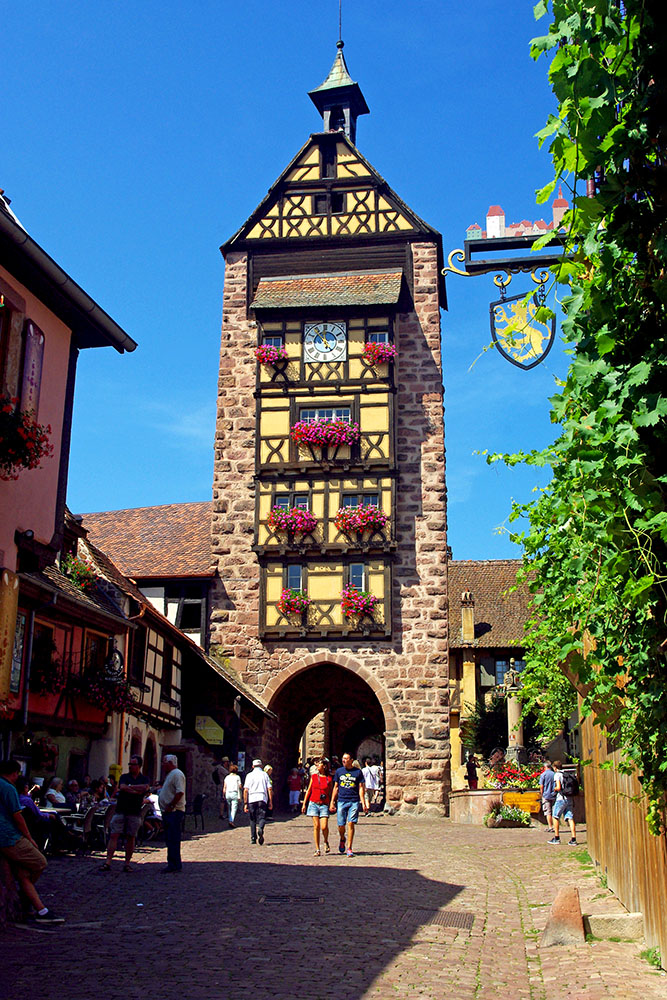
If there is one monument that defines Riquewihr, it is the Dolder.
Standing 25 metres high, this fortified gate dates back to 1291 and is the village’s most iconic landmark.
Seen from the main street, it is wonderfully theatrical, with its timber-framed upper levels and overhanging structure.
From the countryside side, however, it looks much more severe, which makes perfect sense: it was built not only as an entrance gate, but also as a watchtower and belfry, designed to impress — and intimidate — anyone approaching the village.
It is the kind of monument that immediately tells you this was once a place that had to defend its prosperity.
The main street
Like many first-time visitors, you will probably begin along the main street – Grande Rue, now called Rue du Général de Gaulle.
It runs through the village from west to east and links the Dolder to the town hall.
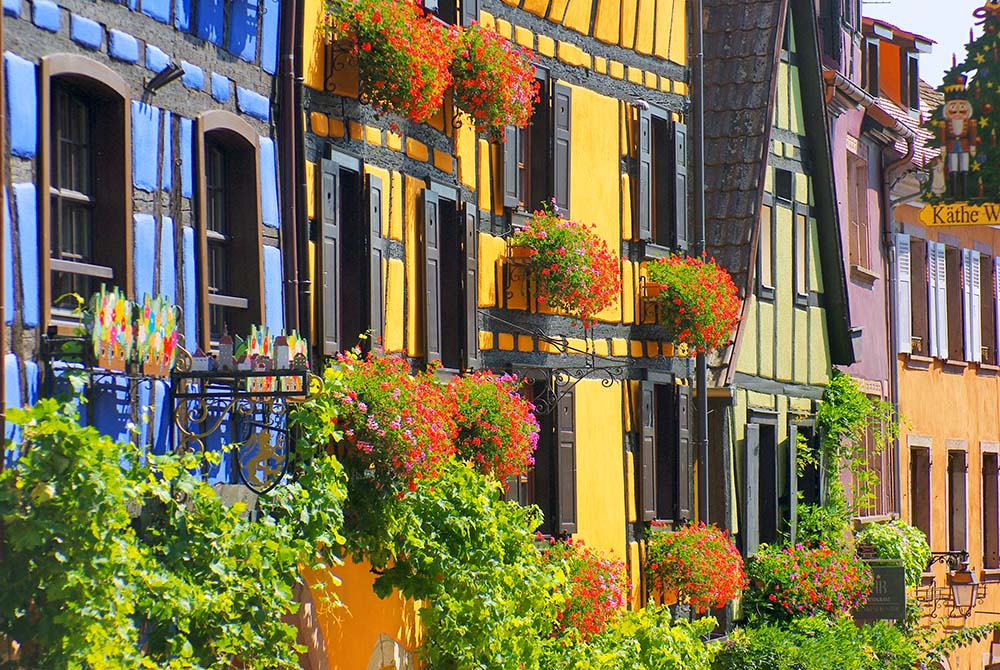
This is where Riquewihr serves up its most famous views: rows of magnificent half-timbered houses dating from the Renaissance to the 17th century, decorated with carved wooden windows, iron signs, corner posts and all the details that make Alsatian architecture so photogenic.
But this is not a street to rush through.
Pause. Look up. Notice the sculpted frames, the projecting bay windows, the heraldic symbols, the little details most people miss because they are already thinking about lunch.
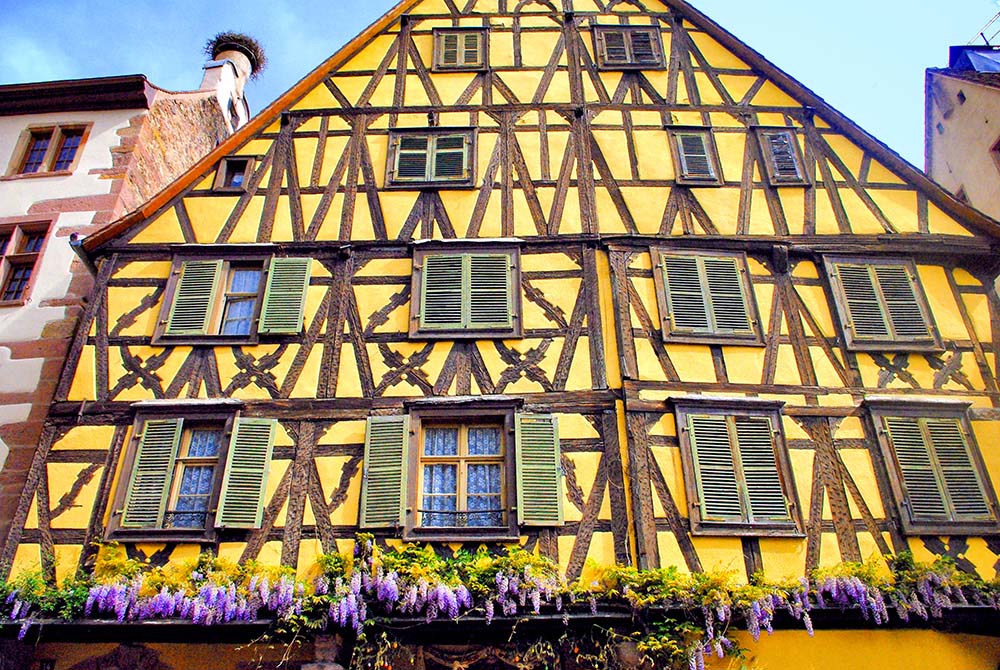
Hidden courtyards and quieter corners
This, to me, is where Riquewihr becomes truly memorable.
Behind the beautiful façades lie a number of interior courtyards that reveal the village’s former wealth.
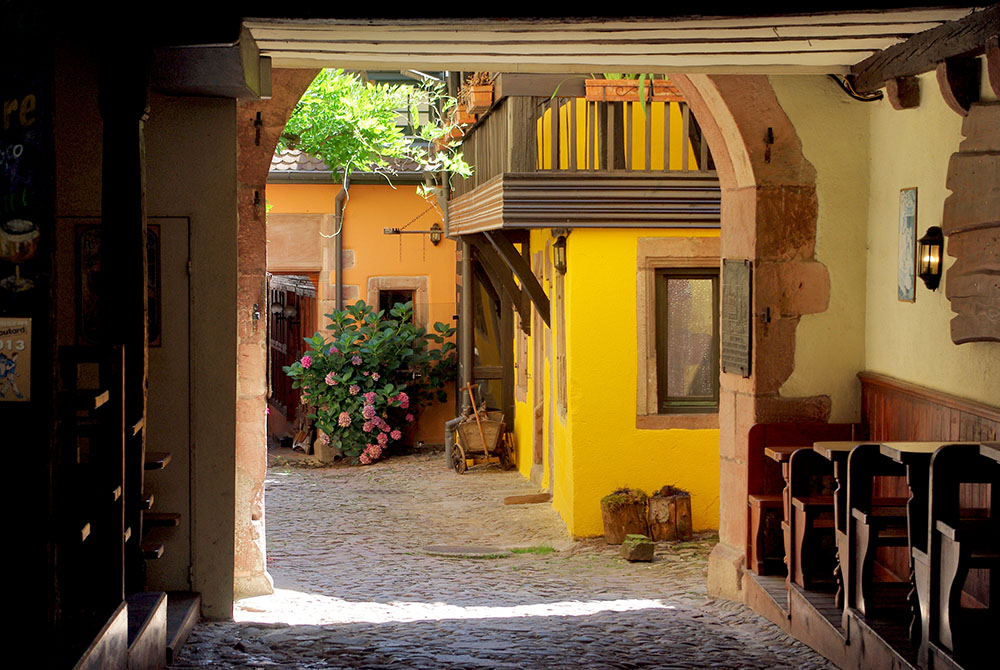
Among the most interesting are the Cour des Nobles de Berckheim, with its old mullioned windows and hexagonal tower; the Cour de Strasbourg, a former tithe court linked to the bishops of Strasbourg; and the Cour des Vignerons, a quieter courtyard associated with the local winegrowers’ guild.
These spaces feel more intimate and more revealing than the busy main street.
They let you glimpse the village from another angle — not just as a tourist destination, but as a place that was once prosperous, organised and deeply rooted in wine culture.
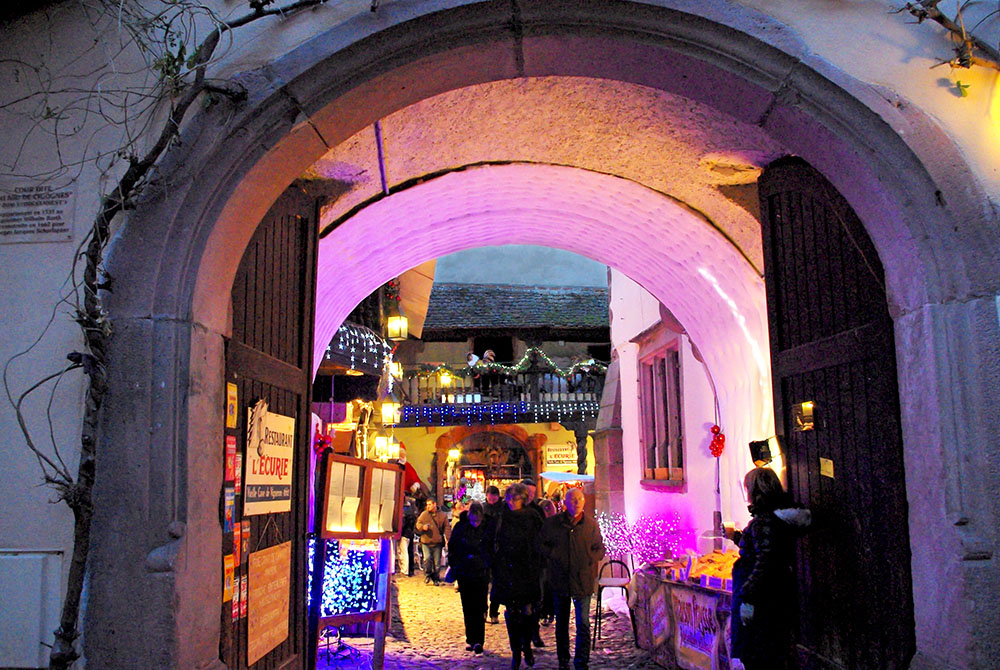
And then there are the side streets.
Rues such as Rue de la Couronne, Rue de la 1ère Armée, Rue du Cerf and Rue des Remparts are often much quieter than the main thoroughfare, yet they are lined with richly decorated Renaissance houses of their own.
If you only walk along the main street, you will see the prettiest façade. If you explore the side lanes, you will find the soul of the village.
The ramparts and the Thieves’ Tower
Riquewihr is not only pretty. It also has teeth.
Parts of the old ramparts, also dating back to 1291, can still be seen along the northern side of the village, especially around Rue du Steckgraben.
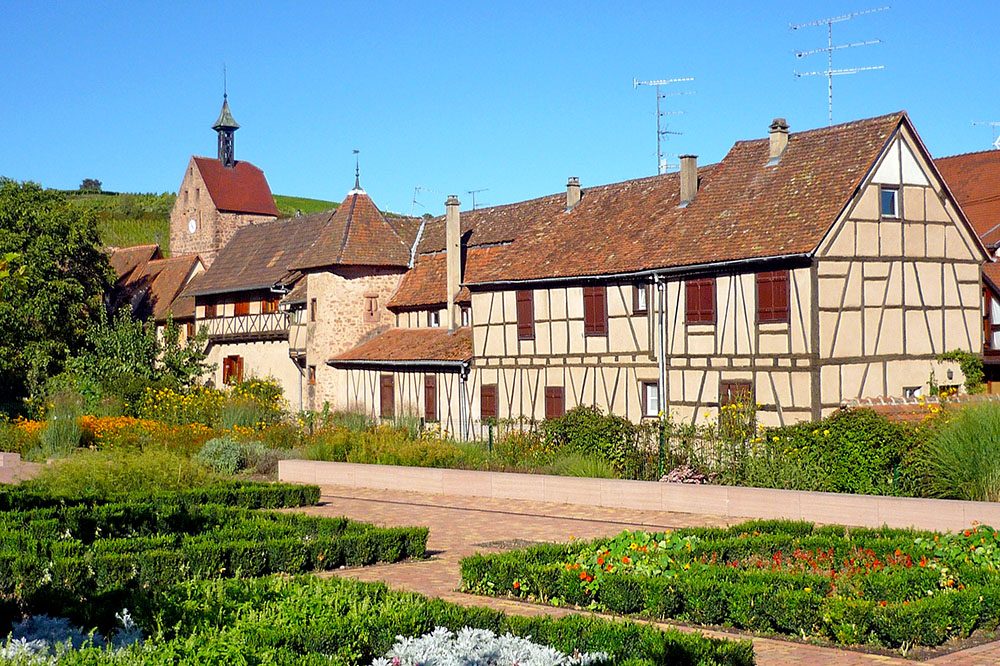
At the end of the street stands the massive Thieves’ Tower, built in 1550. Eighteen metres high, it once contained a torture chamber used for accused prisoners — a rather grim detail, admittedly, but one that reminds visitors that medieval beauty and medieval justice were not always equally charming.
The vineyards around the village
Riquewihr looks beautiful from within, but it is arguably even lovelier from above.
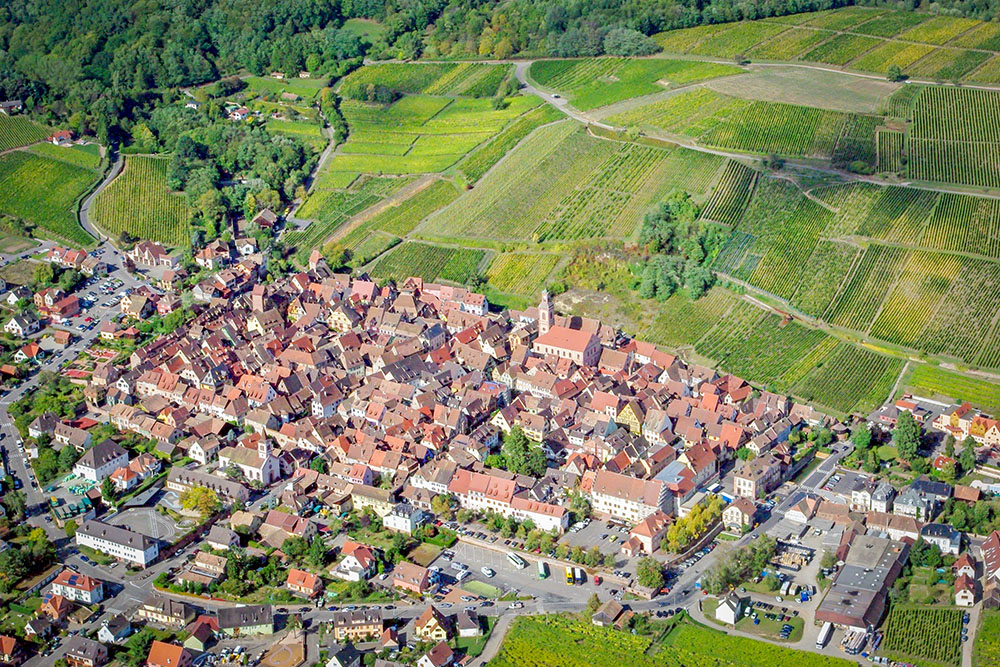
One of the best simple pleasures here is to leave the historic core for a short walk through the vineyards.
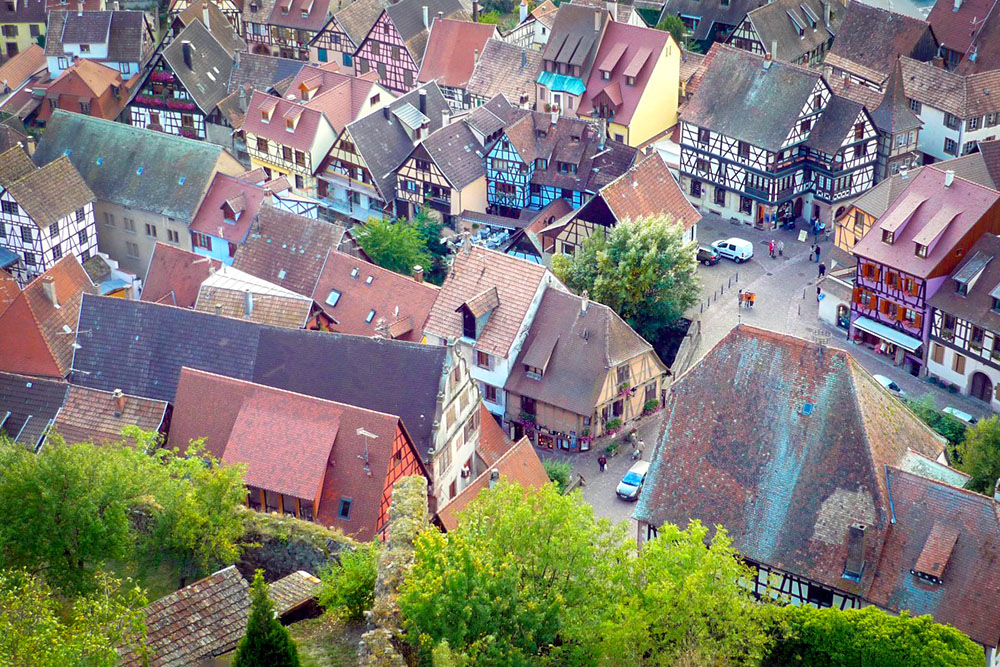
A route from Place des Charpentiers up towards the Chemin du Schœnenbourg offers fine panoramic views over the roofs of the village and the surrounding hills.
It is a lovely way to escape the busiest streets and remember that Riquewihr is, first and foremost, a wine village in a landscape shaped by vines.
Practical tips for visiting Riquewihr
Where to stay in Riquewihr
If you are tempted to linger a little longer, staying overnight in Riquewihr can be a wonderful choice.
Once the busiest part of the day is over and many visitors have left, the village often feels quieter, gentler and even more atmospheric.
It also makes an excellent base for exploring the surrounding vineyards and other villages along the Alsace Wine Route.
There is a good range of accommodation in Riquewihr, from hotels and guesthouses to holiday rentals and even a campsite.
Among the most charming options in and around the historic village are:
Best Western Hotel Le Schœnenbourg 3*
Gîtes Les Remparts de Riquewihr****
Camping de Riquewihr
To compare locations and find the option that suits you best, it is worth checking the full accommodation map before booking.
Go beyond the main street
This is the single best tip I can give.
Riquewihr is one of those places where many visitors unknowingly follow the same pattern: arrive, walk the central street, take photos of the Dolder, buy something festive, then leave.
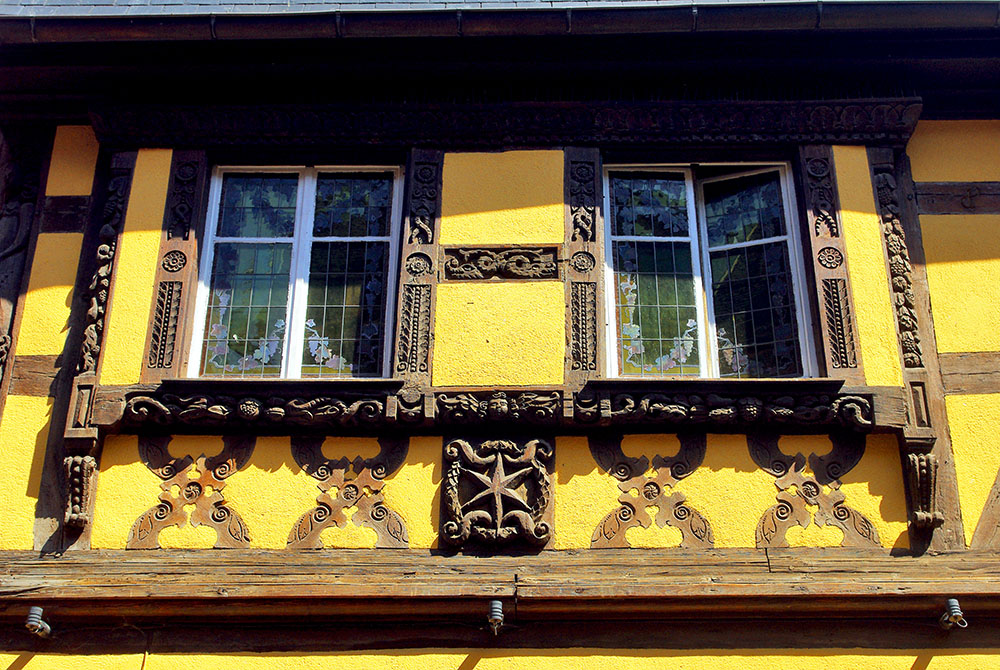
Resist that temptation. Walk into the courtyards when accessible. Turn into the perpendicular lanes. Circle towards the ramparts.
That small change will make your visit feel far richer and far less superficial.
Start at the tourist office
For a first visit, the tourist office is genuinely useful. It is located on Rue du Général de Gaulle at the corner with Rue de la 1ère Armée, and it offers a village map plus historical information on the main monuments. For travellers unfamiliar with Alsace, that is a very practical starting point.
Consider the little tourist train
Normally, I am a little suspicious of tourist trains. They can sometimes feel like a substitute for actually exploring a place.
Here, though, the idea is not without merit. The little white tourist train runs through the key parts of the village and gives first-time visitors a quick overview before they continue on foot.
According to your source article, it typically runs daily from late March to early November, from 10 a.m. to 6 p.m., with departures in front of the town hall.
Even if some practical details may change over time, the principle remains useful: it can be a smart introduction for visitors who want to orient themselves first.
Arrive early if you are driving
Riquewihr is hugely popular, and parking can be one of the least romantic parts of the experience.
There are several paid car parks around the historic centre, including near Rue de la Piscine, Rue du Steckgraben, Place des Charpentiers and Avenue Méquillet.
Free parking may sometimes be found farther away in residential streets, though some spaces are reserved for residents.
On summer weekends, arriving early is clearly the wisest move.
Think about timing
Riquewihr changes beautifully with the seasons.
Spring is one of the loveliest times to visit, especially before the heaviest tourist flows return; Easter decorations can add charm to the village.

Summer brings abundant flowers, especially geraniums.
Autumn is particularly atmospheric when harvest season is underway, and the vineyards turn golden.
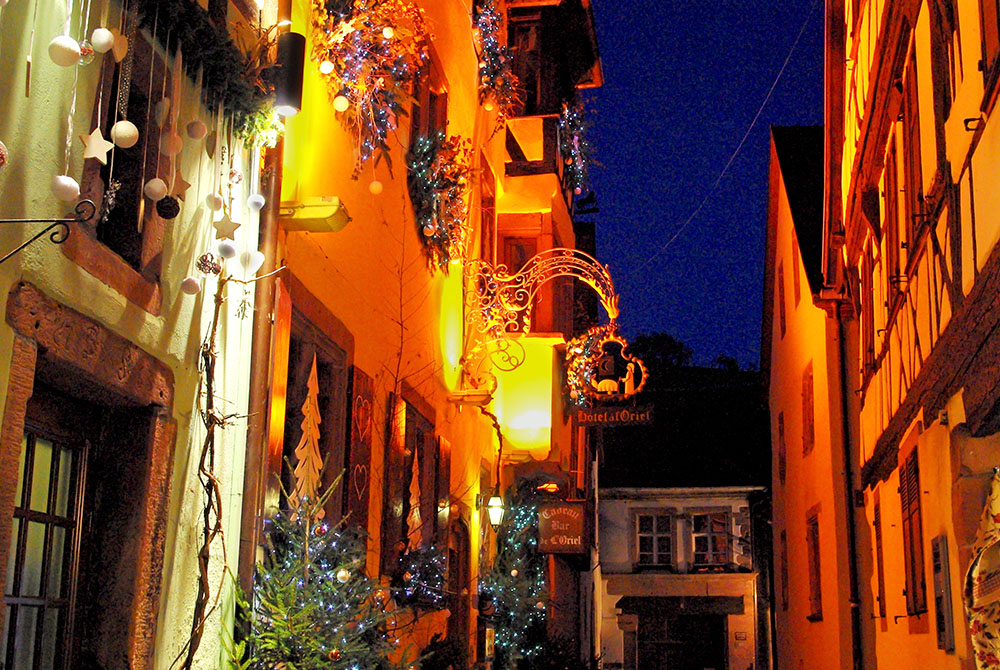
And in the run-up to Christmas, Riquewihr dresses itself in lights and festive decorations, with a Christmas market held near the town hall for several weeks.
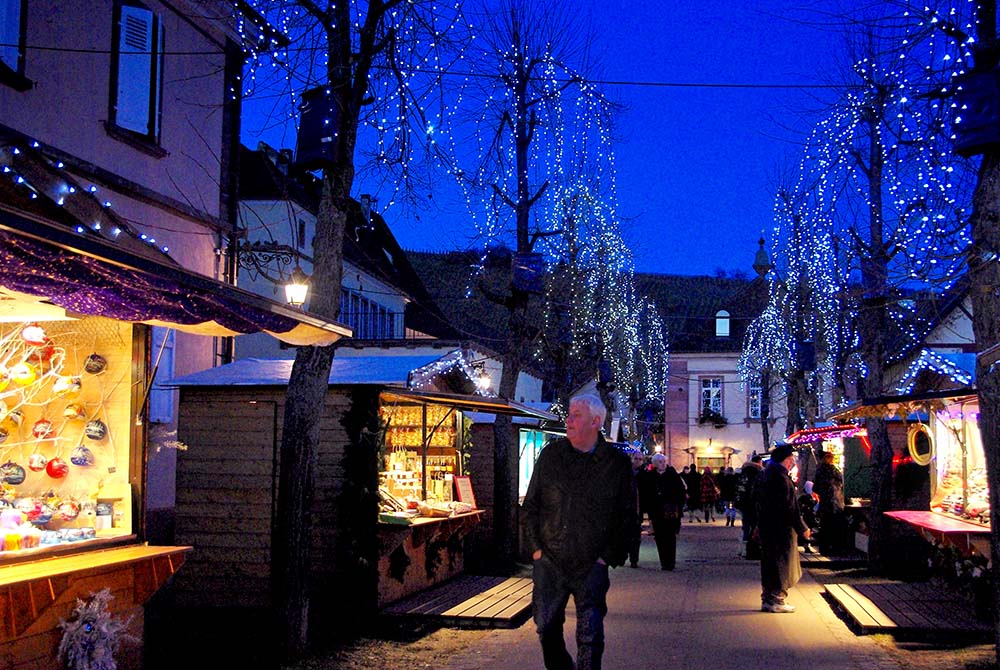
So when is the best time to go? That depends on what you want.
For fewer crowds, spring and autumn are excellent.
For festive magic, Christmas wins.
For flowers and classic postcard colour, summer does the job — provided you are ready to share it with everyone else.
Don’t overlook practical basics
Public toilets are available near Rue de la 1ère Armée, close to the tourist office, and along Avenue Méquillet by the ramparts.
It is not the most poetic of travel tips, I admit, but it is the kind of detail that can save time and unnecessary irritation once you are on site.
There are also around thirty restaurants in the village, along with tea rooms, sandwich shops and sweet treats for travellers who need a pause. In other words, you will not go hungry.
Is Riquewihr worth visiting?
Yes — absolutely.
For travellers discovering Alsace for the first time, Riquewihr delivers exactly what many hope the region will be: a wine village framed by vineyards, filled with historic houses, protected by old walls and blessed with that unmistakable Alsatian charm. But it is at its best when you treat it as more than a quick photo stop.
Come for the fairytale look, certainly. Admire the Dolder. Photograph the timber-framed houses.
But then do a little more. Step into the quieter lanes. Look into the courtyards. Walk toward the vineyards. Let the village unfold slowly.
That is when Riquewihr becomes unforgettable.
What to see near Riquewihr
One more advantage of visiting Riquewihr is its location. It sits close to many of Alsace’s most appealing destinations.
Within about 10 kilometres, you can also explore villages such as Beblenheim, Bergheim, Hunawihr, Kientzheim and Zellenberg, as well as larger favourites like Kaysersberg and Ribeauvillé.
Colmar is around 15 kilometres away, and Haut-Koenigsbourg Castle is less than 20 kilometres away.
So even if Riquewihr is your main stop, it fits very easily into a wider Alsace itinerary.
Final thoughts
Riquewihr is one of those villages that almost suffers from being too beautiful.
Its fame means people arrive with high expectations, cameras ready, and sometimes very little patience.
The irony is that Riquewihr really is as lovely as people say — but its greatest charm often lies just beyond the obvious view.
That is why I would not describe it simply as a fairytale village.
I would describe it as a place where beauty rewards curiosity.
And in Alsace, that is often the best kind of place to find.