
Remembrance in Alsace is not confined to museums, official ceremonies, or the anniversary dates that appear on a calendar.
It lives quietly in the landscape itself: in village cemeteries, in war memorials on small squares, in names carved into stone, and in the mountain sites where some of the fiercest battles of the 20th century once took place.
For visitors from abroad, especially from the United States, this can be one of the most moving aspects of travelling through Alsace.
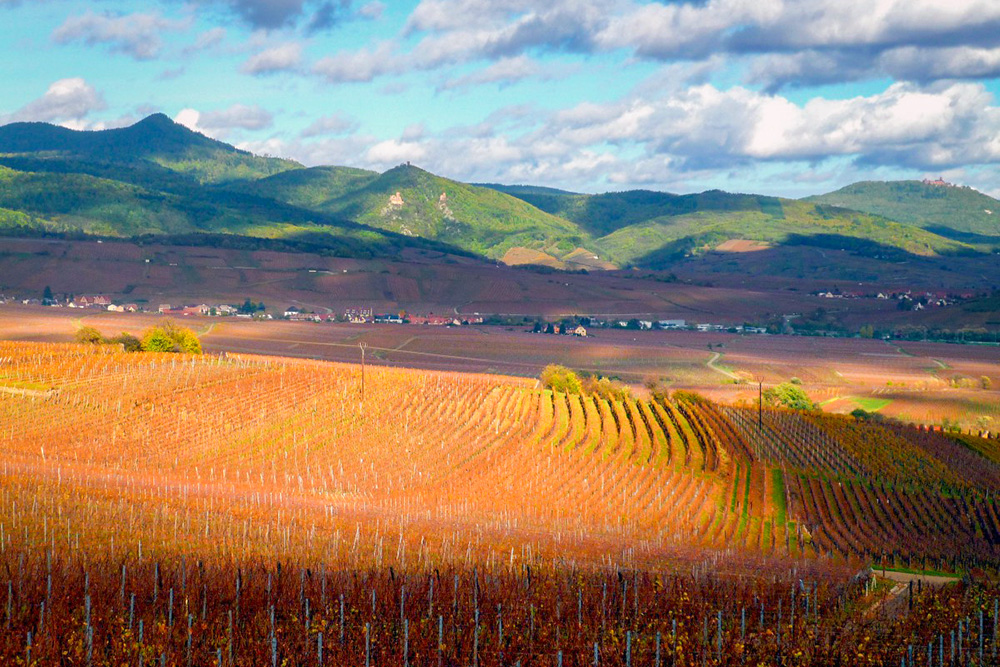
Beneath the postcard beauty of half-timbered villages, vineyards, and church towers lies a region deeply marked by memory.
This is also where a small clarification helps. In English, the word souvenir usually means something you bring home from a trip: a magnet, a postcard, a handmade object.
In French, however, souvenir also means memory or remembrance.
And in Alsace, remembrance is everywhere. It is personal, local, historical, and often deeply emotional.
To understand the region fully, you need to look not only at what is beautiful, but also at what has been remembered.
Table of Contents
Why remembrance in Alsace matters so much
Alsace is a borderland, and borderlands rarely have simple histories.
Over the centuries, this region has stood between French and German worlds, languages, and political identities.
That alone would have left its mark. But the wars of the 19th and 20th centuries, especially the two World Wars, gave Alsace a particularly complex relationship with memory.
For travellers from North America, where distances are vast, and many towns feel comparatively young, Alsace can be striking for another reason too: here, history often feels close at hand.
A village square may look peaceful, but just beside the church, you may find a memorial listing local men lost in war.
A cemetery may reveal family names repeated across generations. A mountain path may lead to trenches and battle scars that still shape the land more than a century later.
What makes remembrance in Alsace so powerful is that it is not hidden away. It is woven into ordinary life.
You do not need to seek out a grand museum to encounter it. You simply need to look carefully.
Village cemeteries: a quiet face of remembrance in Alsace
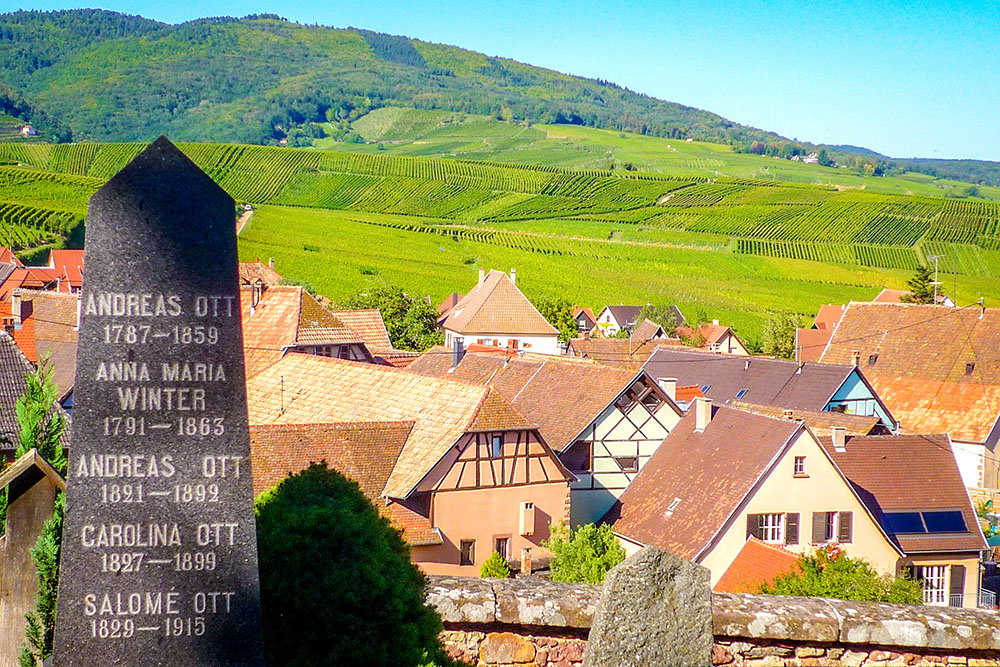
One of the most revealing places to begin is the village cemetery.
For many visitors, cemeteries are not obvious sightseeing spots. Yet in Alsace, they can offer a surprisingly deep insight into the region’s culture and history.
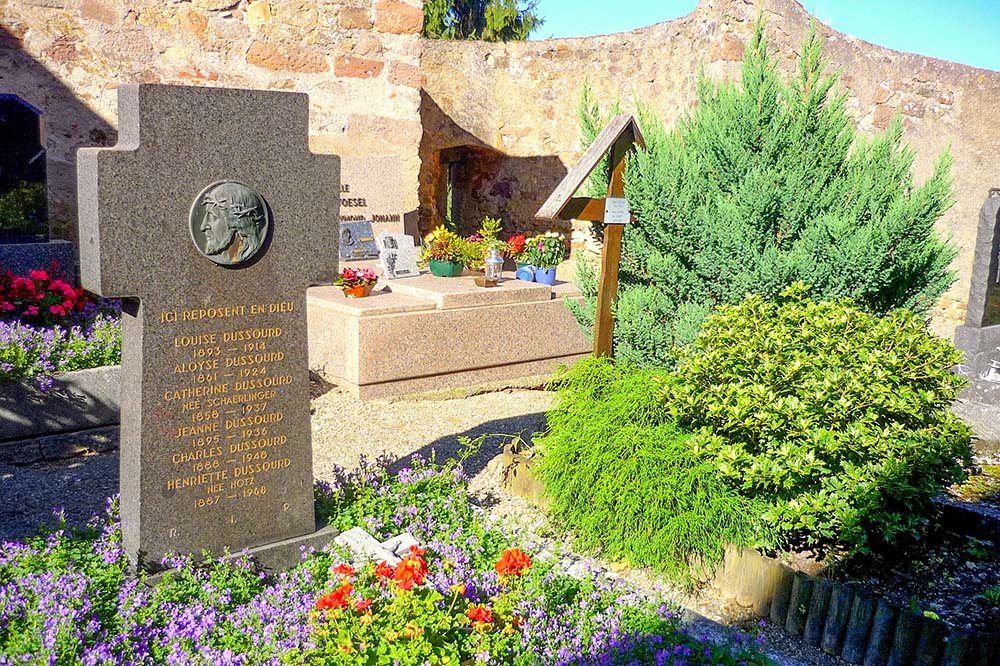
These are not only places of mourning. They are also places of continuity. Family names appear again and again. Gravestones reveal dates, occupations, religious language, and family bonds.
Some tombs are simple, others more elaborate, but together they form a kind of open-air archive.
They tell you who lived here, who stayed, who was remembered, and how communities chose to honour their dead.
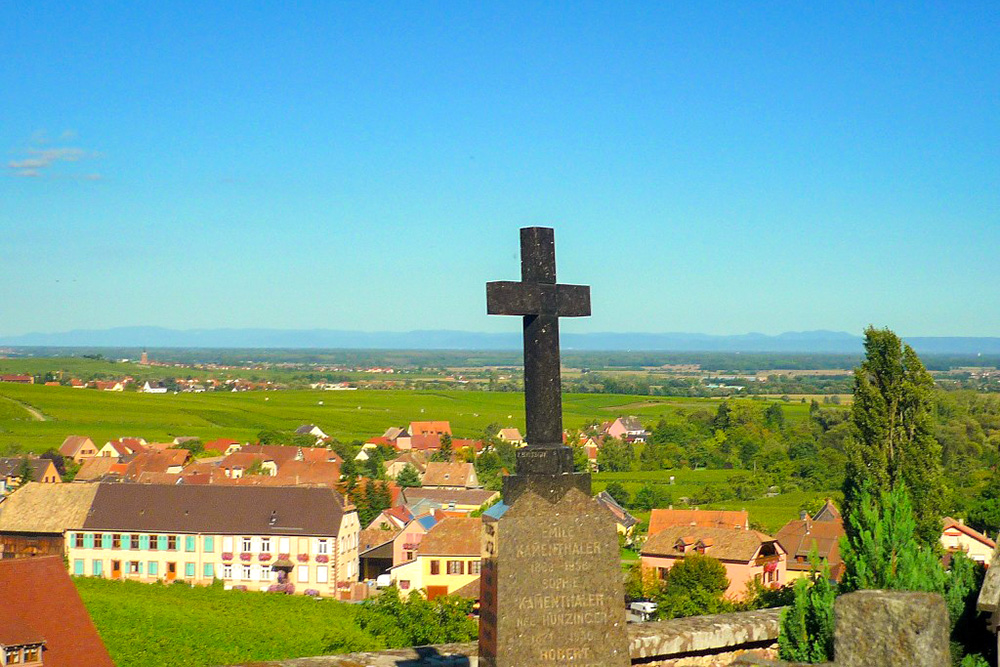
Many cemeteries in Alsace also feel visually connected to the villages they serve.
Some stand beside the parish church, others on the edge of the old settlement, others slightly above the houses with views across the fields or vineyards.
They do not always feel separate from daily life. Instead, they seem to belong to the rhythm of the place.
For an American visitor, this can be unexpectedly moving. In the United States, cemeteries are often visited with a clear purpose.
In Alsace, they can also be places of quiet reflection, part of a wider cultural landscape. You may enter out of curiosity and leave with a stronger sense of the generations that shaped the village around you.
Remembrance in Alsace and the tradition of All Saints’ Day
Although remembrance in Alsace is not limited to one season, All Saints’ Day (la Toussaint) remains one of the clearest expressions of it.
Around 1 November, families visit cemeteries, clean graves, and bring flowers. The atmosphere is not theatrical or sentimental. It is simple, calm, and deeply rooted.
For foreign visitors, this moment can reveal something essential about the region. Memory here is not only historical and public; it is also familial and lived.
The dead are not forgotten between anniversaries. They remain part of family life, part of local life, and part of the visible landscape.
Even if you visit in spring or summer rather than autumn, understanding All Saints’ Day helps explain this wider culture of remembrance.
It shows that memory in Alsace is not only about the great tragedies of war.
It also lives in ordinary acts of care: cleaning a headstone, tending flowers, pausing before a name, telling younger generations who lies where and why that person mattered.
In that sense, remembrance in Alsace begins with the family but does not end there. It opens naturally onto the wider history of the region.
War memorials and local memory across Alsace
Almost every town and village in Alsace has a war memorial.
You may notice one in front of the town hall, beside the church, or on a central square. At first glance, these monuments may seem familiar to travellers from Britain, the United States, or Australia. But in Alsace, they often carry an especially layered significance.
The region’s history has been shaped by shifting borders and contested identities. As a result, the names inscribed on memorials are not always simply part of a straightforward national narrative.
They belong to communities that lived through annexation, war, occupation, and liberation. In a place like Alsace, remembrance is rarely uncomplicated.
These memorials matter because they bring the scale of history back to human size. A battlefield may represent thousands of deaths, but a village memorial reminds you that war also meant the loss of sons, brothers, husbands, and neighbours.
Each name was part of a household, a street, a local story.
For visitors, these monuments are worth more than a passing glance. They are often the key to understanding the emotional geography of a place.
A beautiful square in Alsace is not only beautiful. It may also be a place where memory stands permanently in stone.
The First World War and remembrance in Alsace
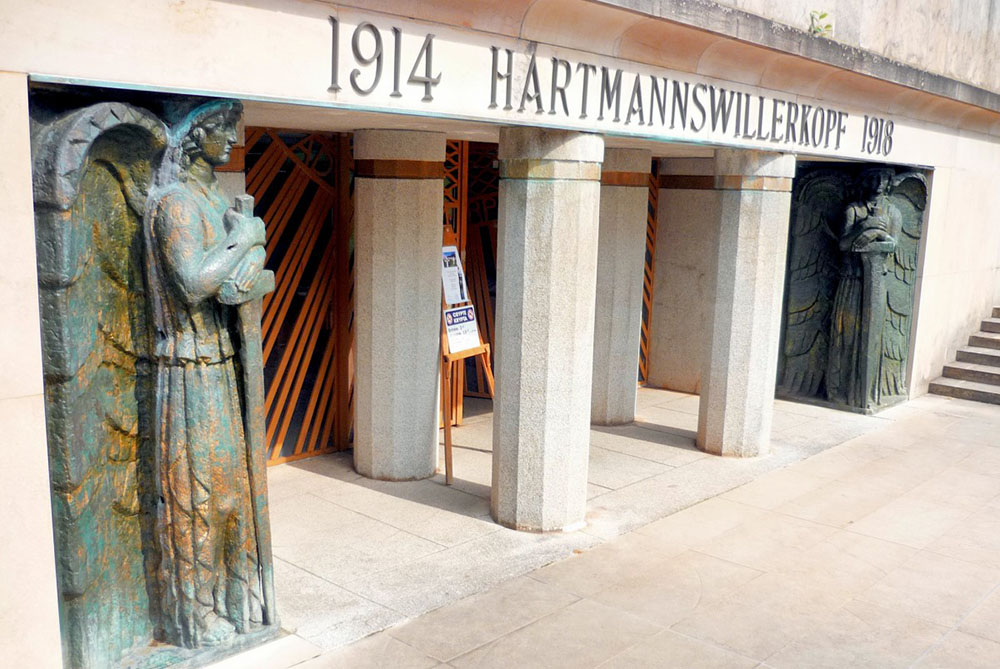
If village memorials reveal remembrance at the local level, the mountain battlefields of Alsace show it on a far larger scale. Two of the most important sites are Hartmannswillerkopf, also known as Vieil-Armand, and Le Linge.
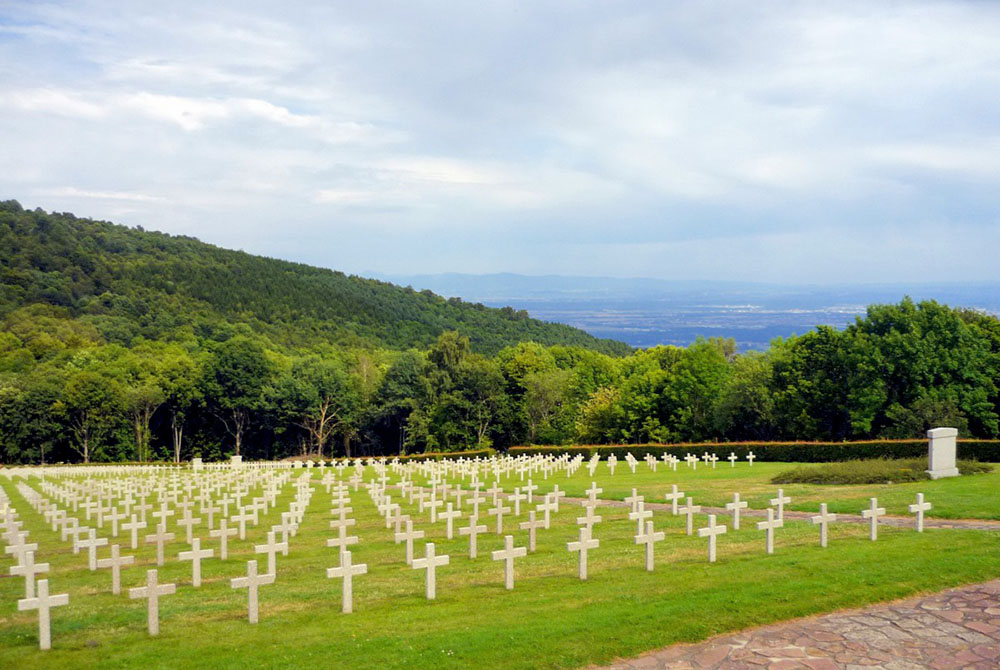
These are places that stay with you. The landscapes are beautiful: forested slopes, open views, shifting mountain light. Yet that beauty makes the memory of what happened there even more haunting.
During the First World War, these heights saw brutal fighting, and the terrain still bears the scars. Trenches, memorials, cemeteries, and preserved remains of the battlefield all remind visitors that this was once a place of intense suffering.
For American travellers, these sites can be especially powerful because they offer something beyond the museum experience.
Here, the land itself tells the story. You walk where soldiers fought. You see how exposed the slopes were. You understand, physically, how geography shaped violence.
Hartmannswillerkopf has become one of the great memorial sites of the war in Alsace.
Le Linge is equally sobering, particularly because of the ferocity of the fighting there. Neither place should be approached as a conventional tourist attraction.
They are places to visit slowly and respectfully, with time to read, to walk, and to absorb.
They also reveal an important truth about remembrance in Alsace: the region’s beauty and its pain are often inseparable.
Remembrance in Alsace after 1945: Sigolsheim and the Colmar Pocket
The memory landscape of Alsace does not end with the First World War.
The Second World War left its own deep traces, especially during the winter fighting of 1944–45 around the Colmar Pocket (la Poche de Colmar).
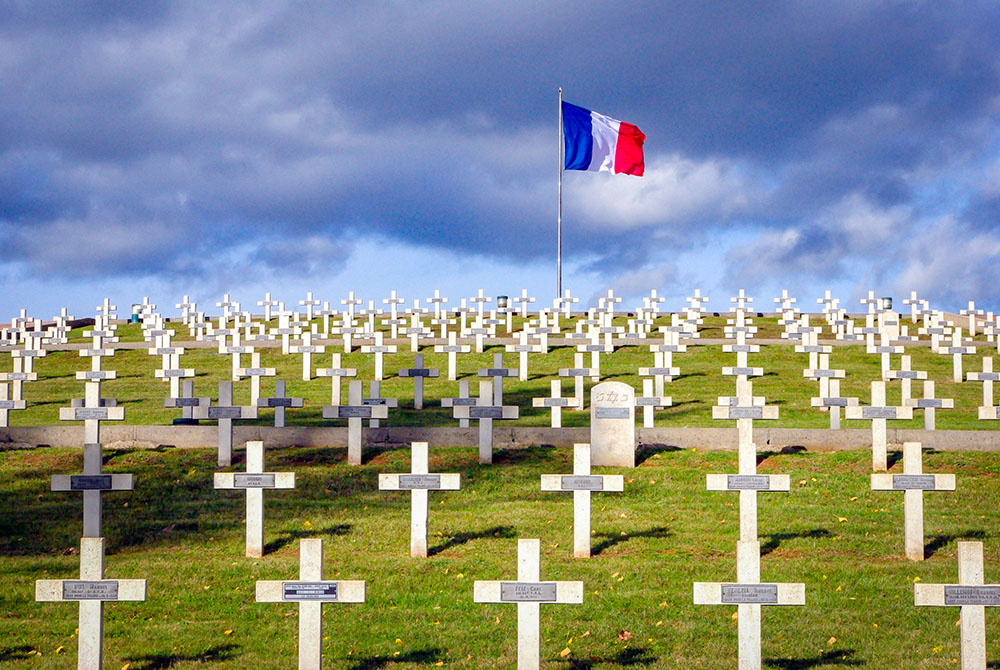
One of the most powerful places associated with this chapter is the national necropolis of Sigolsheim.
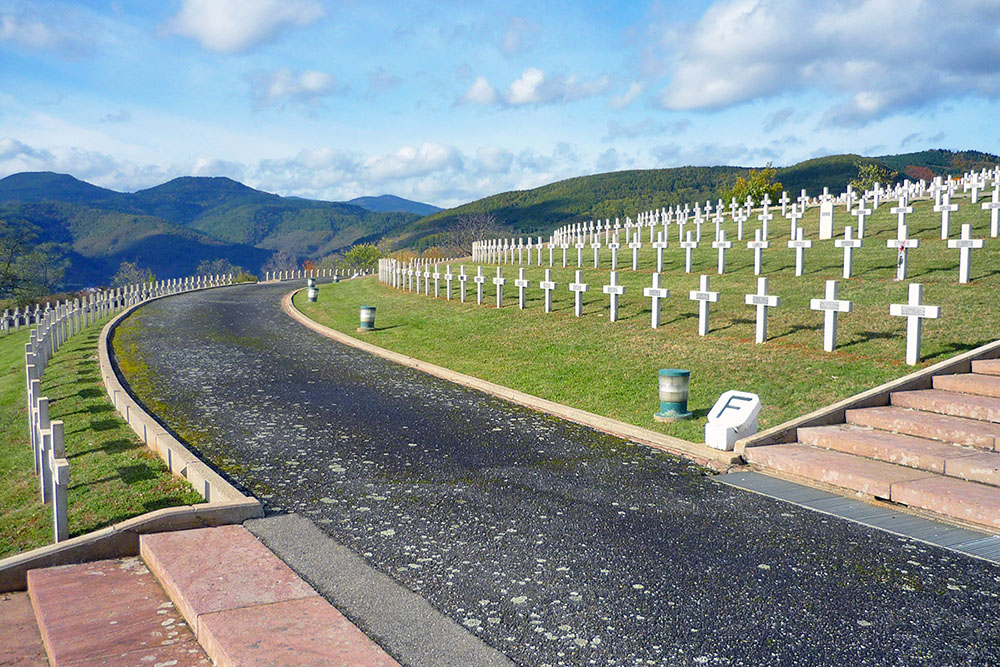
Set above the vineyards, it occupies a striking position in the landscape. The views are wide and peaceful, almost serene. Yet the rows of graves immediately change the mood. This is a place where beauty and grief coexist with unusual intensity.
For visitors unfamiliar with the history of eastern France, Sigolsheim offers a crucial reminder that the liberation of Alsace was not a simple or abstract event. It involved hard fighting, loss, and sacrifice.
The region that many travellers now know for wine villages and festive markets was also a battlefield in living memory.
This is why remembrance in Alsace feels so layered. It is not only about medieval churches, old customs, or family graves. It is also about the modern violence that reshaped Europe and left visible marks on this border region.
How to approach remembrance in Alsace as a visitor
For English-speaking visitors, especially those discovering Alsace for the first time, the key is not to separate remembrance from the rest of the journey. It belongs alongside the region’s churches, villages, wine routes, and mountain landscapes.
That does not mean turning every visit into a sombre historical tour. It simply means staying open to what the region is quietly telling you.
Pause at a village memorial. Step into a cemetery if it feels appropriate and respectful.
Visit one major memory site, such as Hartmannswillerkopf, Le Linge, or Sigolsheim, and give it enough time.
Read the names. Look at the landscape. Let the place speak.
Alsace rewards this slower attention. It is easy to admire the half-timbered houses of villages like Eguisheim, Riquewihr, or Kaysersberg. It is harder, but often more meaningful, to understand that these beautiful places also carry histories of absence, loss, and resilience.
For many American travellers, that is what makes Alsace unforgettable. It is not only charming. It is profound.
Remembrance in Alsace, from family memory to national history
What makes remembrance in Alsace so distinctive is the continuity between intimate memory and collective history. A family grave, a parish cemetery, a village monument, a mountain battlefield, a national necropolis: all belong to the same broad culture of remembrance.
This is not a region where the past has disappeared behind restoration and tourism. On the contrary, the past remains visible if you know where to look. It is present in the stones, in the names, in the silence of certain places, and in the way communities continue to honour those who came before.
That is why remembrance in Alsace matters so much for visitors. It deepens the journey. It reminds you that travel is not only about seeing attractive places. It is also about understanding what shaped them, what wounded them, and what they chose to remember.
Conclusion
To discover remembrance in Alsace is to discover another layer of the region: one that lies beneath the flowers, the vineyards, the timber-framed façades, and the famous views. It is a layer made of family memory, village continuity, war, grief, resilience, and quiet acts of respect.
For travellers from the English-speaking world, this understanding can transform a visit. Alsace is not only a beautiful destination. It is also a landscape of memory, where the past remains close to the present and where remembrance is still part of everyday life.
And perhaps that is what makes the region so moving. In Alsace, memory is not sealed away. It is still there, in plain sight, waiting to be noticed.