
There is something very special about Easter traditions in Alsace.
Perhaps it is the way spring seems to arrive here, not with a bang, but with little signs of quiet joy: a village fountain dressed with ribbons and eggs, blossom opening above half-timbered roofs, a market square brightened with flowers, a lamb-shaped cake waiting on the family table.
Or perhaps it is because Easter in Alsace is more than a date on the calendar.
It is a season, a mood, and for many families, a cherished thread between childhood memories, religious tradition and the return of warmer days.
If you visit Alsace around Easter, you will discover that this corner of eastern France embraces the season with a charm all its own. Here are seven Easter traditions in Alsace you will almost certainly fall in love with.
Table of Contents
1. The Easter Hare brings the eggs in Alsace
Elsewhere in France, children are told that the church bells fly back from Rome and scatter eggs across gardens and lawns. In Alsace, however, the story takes a different and rather more whimsical turn.
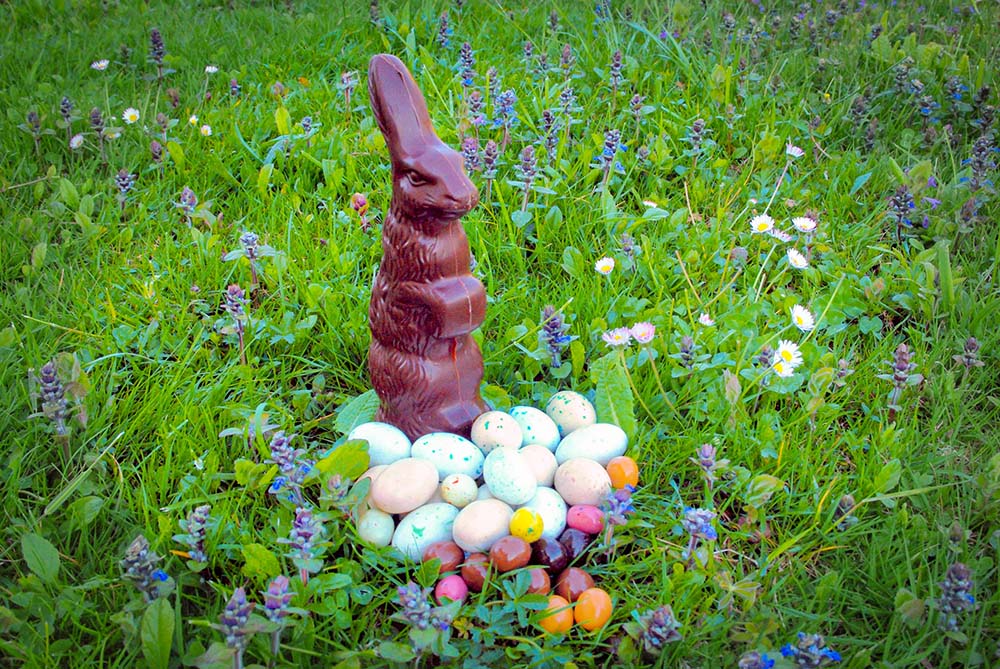
Here, Easter traditions in Alsace say the Easter Hare who brings the eggs.
That one detail changes the whole atmosphere. Easter traditions in Alsace feel a little more woodland-like, a little more rooted in the old Rhine world, where folklore and spring seem to walk hand in hand.
The hare is not just a cute symbol for shop windows.
It is woven into the imagination of Easter itself. In many families, children prepare for its visit with real excitement, and the image of the hare appears everywhere in the decorations of towns and villages.
Children make little nests in the garden for the Easter Hare rather than waiting for bells to do the job.
There is something lovely about that Alsatian version of Easter: more intimate, perhaps, and somehow more playful. Instead of looking to the sky, children look to the garden.
2. Villages dress up with eggs, flowers and Easter trees
At Christmas, Alsace shines. At Easter, it smiles.
This is one of the great joys of visiting the region in spring.
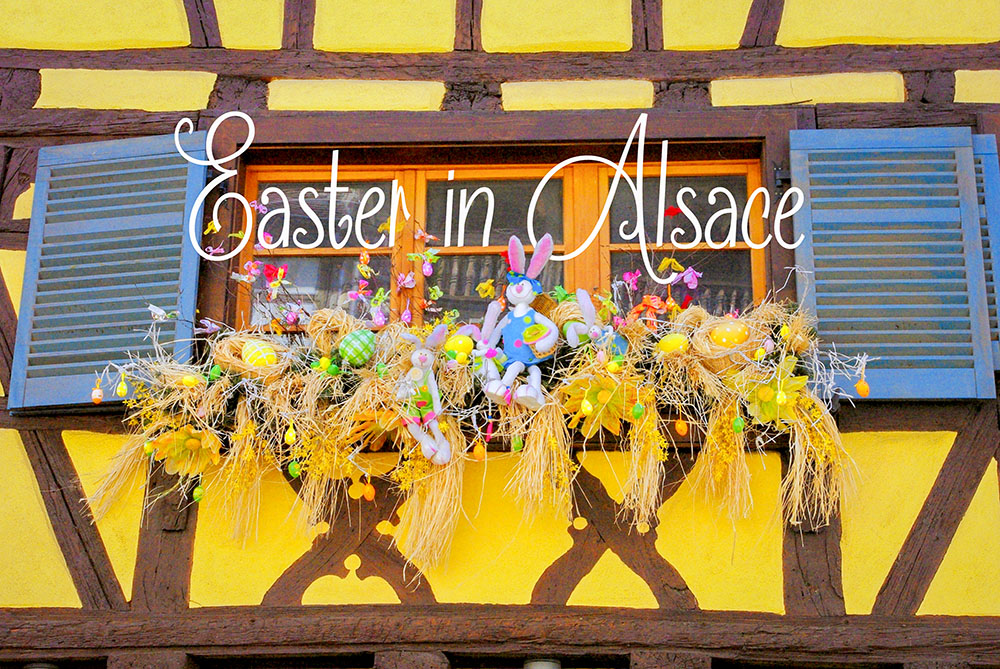
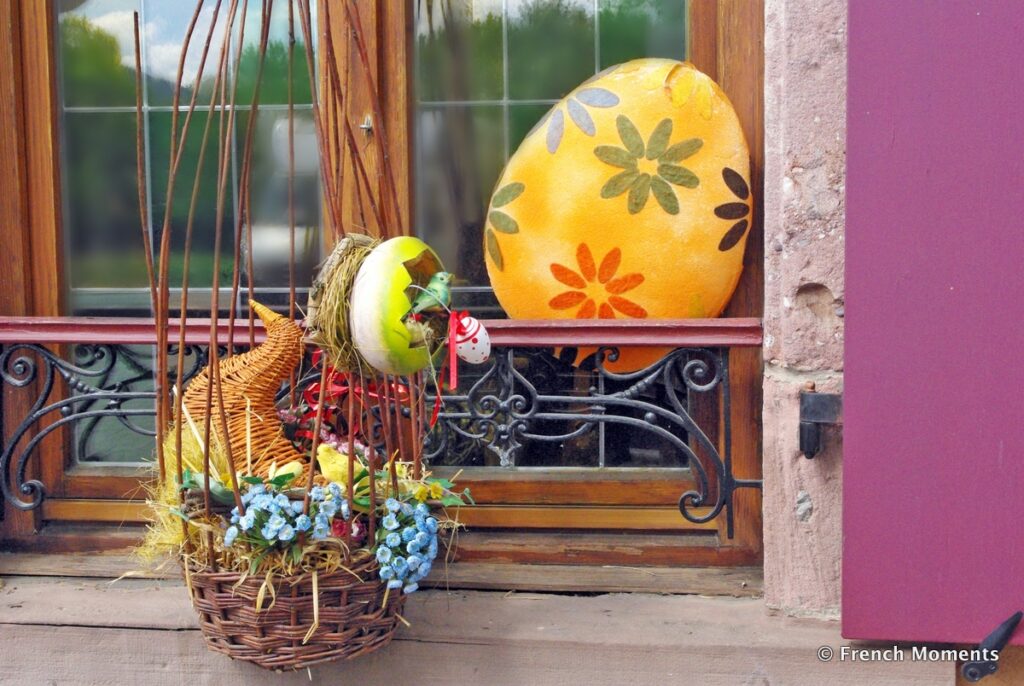
Villages along the wine route and beyond often decorate their streets, fountains and façades with coloured eggs, spring flowers and little hare figures.

In places such as Eguisheim and Riquewihr, Easter traditions in Alsace transform already beautiful streets into scenes that feel almost theatrical in their charm.
Villages are decorated with trees hung with eggs, flowers and hare-shaped ornaments.
And then there are the Easter trees.
If you have never seen one before, they are unforgettable in their simplicity: bare or budding branches adorned with painted eggs, standing at the edge of a doorway, near a fountain, or in the entrance hall of a home.
They seem to say exactly what Easter in Alsace is about — life returning, colour reappearing, winter stepping quietly aside.
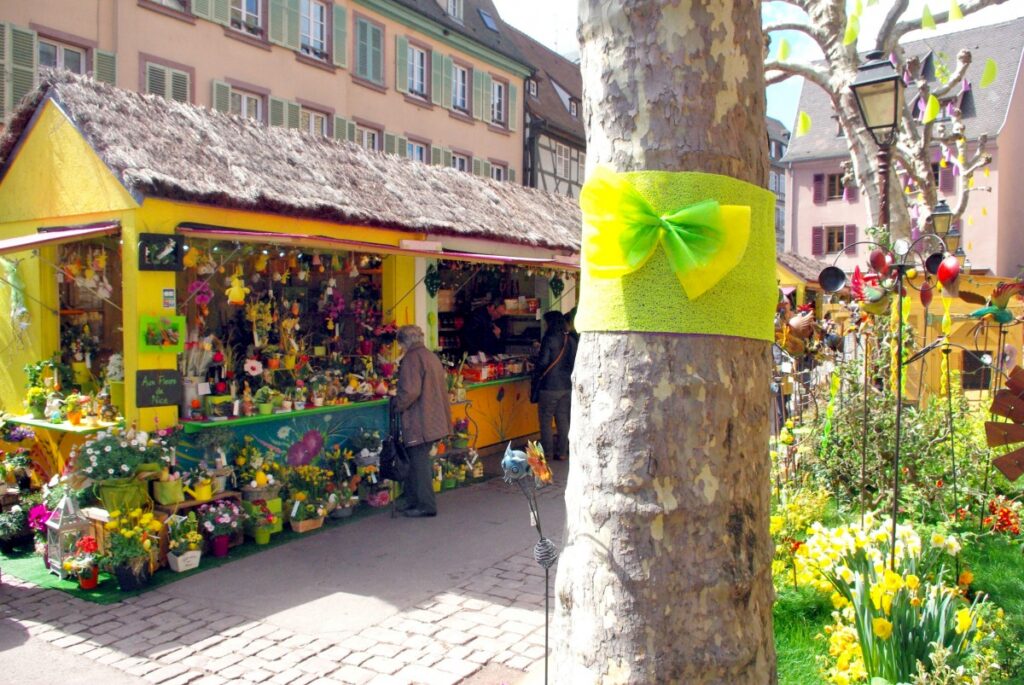
3. Colmar’s Easter market brings spring to life
If Christmas has made Alsace famous across the world, Easter offers a softer, more relaxed version of that same festive gift.
Colmar’s Easter market is perhaps the best example.
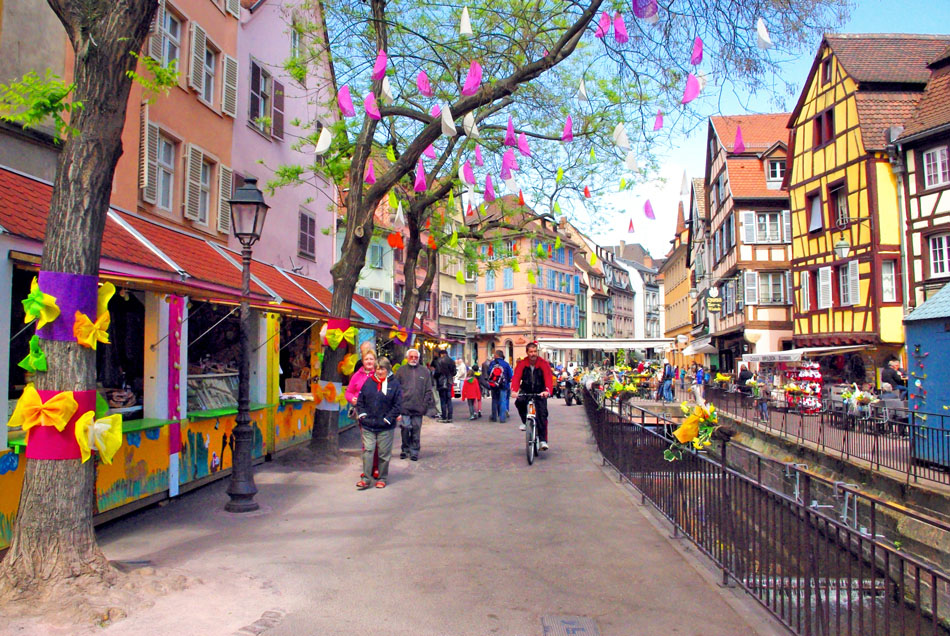
Held each year since 2010, it unfolds across two historic sites in the old town: Place des Dominicains and Place de l’Ancienne Douane.
Together, the two markets gather more than 70 exhibitors, with stalls selling spring decorations, decorated eggs, flowers and regional handmade goods.
What makes it so appealing is not simply the shopping. It is the atmosphere.
Easter in Colmar feels lighter than the December rush, gentler and more open to lingering.
The colours are pastel rather than golden, the air softer, the mood less crowded and more leisurely.
You stroll, you admire, you pause, you look again. Spring is not merely being celebrated here — it is being staged, delicately, in one of Alsace’s most photogenic towns. Thanks to the Easter traditions in Alsace.
4. Lammala is the Easter cake that tastes like childhood
Every festive season has its flavour, and in Alsace, Easter tastes of Lammala.
Lamala, Lamele, Lammala or Lammele is a traditional sponge cake, baked in the shape of a lamb and dusted with icing sugar, is one of the most endearing culinary symbols of the season.
It is a génoise-style biscuit made in a lamb-shaped mould and linked to the image of Christ as the Lamb of God.
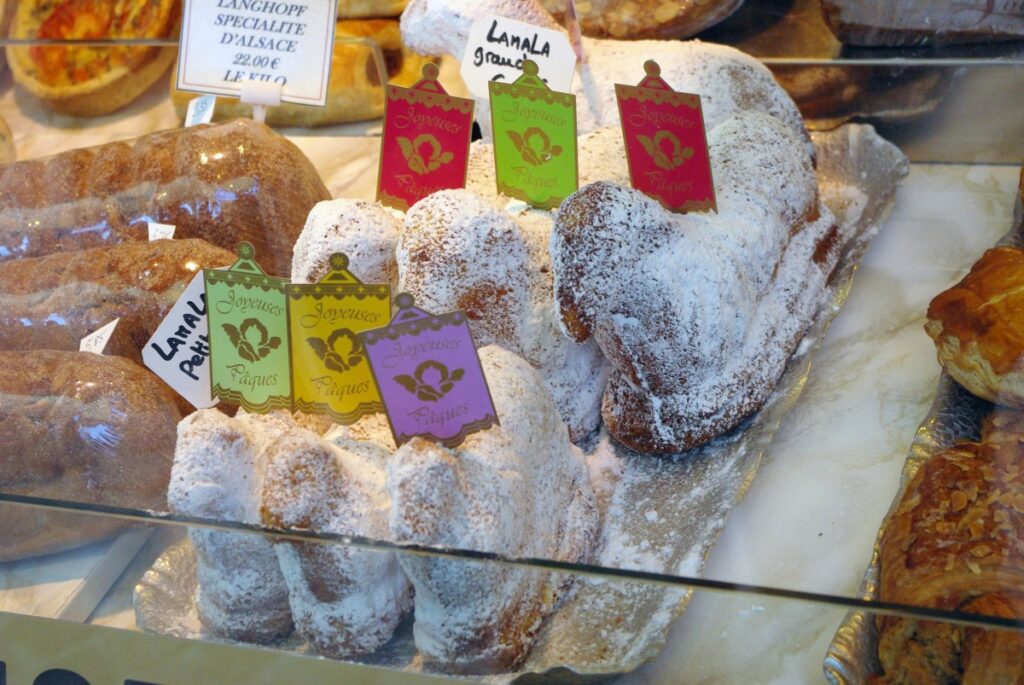
But beyond its symbolism, Lammala carries something else: memory.
Alsatians receive their little Easter lamb year after year, sometimes alongside chocolate figures and coloured eggs, sometimes as a quiet but essential part of the celebration.
One of my readers even confided that, although lamb did not appear on the table, it still appeared in pastry form with the lammala.
That is often the secret of Easter traditions in Alsace. They are not only seen; they are tasted, remembered and repeated.
Lammala is more than a cake. It is the kind of thing that immediately makes people say, “We always had one at Easter.”
5. Egg hunts turn gardens and orchards into treasure grounds
Few traditions capture the delight of Easter morning better than the egg hunt (la chasse aux œufs), and in Alsace, it often unfolds in a very particular setting: not just a garden, but sometimes a verger, an orchard, a patch of grass under fruit trees, or a corner of the garden carefully prepared the evening before.
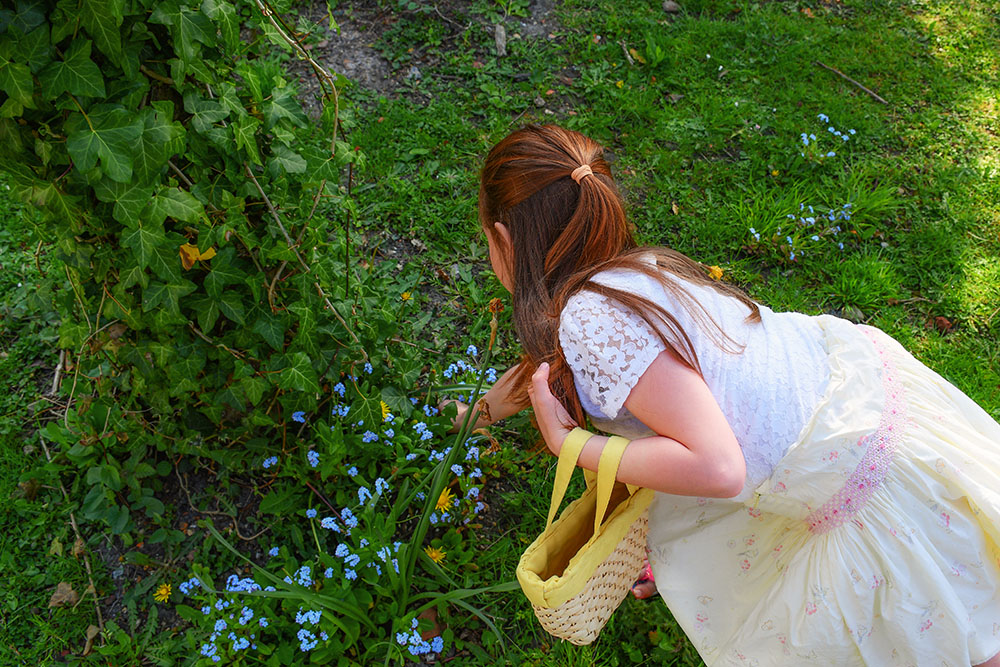
Children would make a nest from straw or wood shavings and leave lettuce leaves or a carrot for the Easter Hare.
For others, the nest is prepared with moss, herbs and flowers. By morning, it is filled with coloured hard-boiled eggs, little chocolates, a chocolate rabbit and even a small lammala biscuit.
Other memories describe eggs hidden among rhubarb, strawberries and beneath plum or mirabelle trees.
This is such a beautiful image of Easter traditions in Alsace because it feels deeply seasonal.
The children are not simply hunting for sweets. They are stepping into the garden at the exact moment when nature itself is starting up again.
Blossom, damp grass, soft morning air, a basket in hand — it all feels wonderfully old-fashioned in the best possible sense.
6. Holy Week gives Easter in Alsace a deeper meaning
For all its colour and sweetness, Easter in Alsace is not only about decorations and chocolate.
It also carries a strong religious dimension, especially in Holy Week.
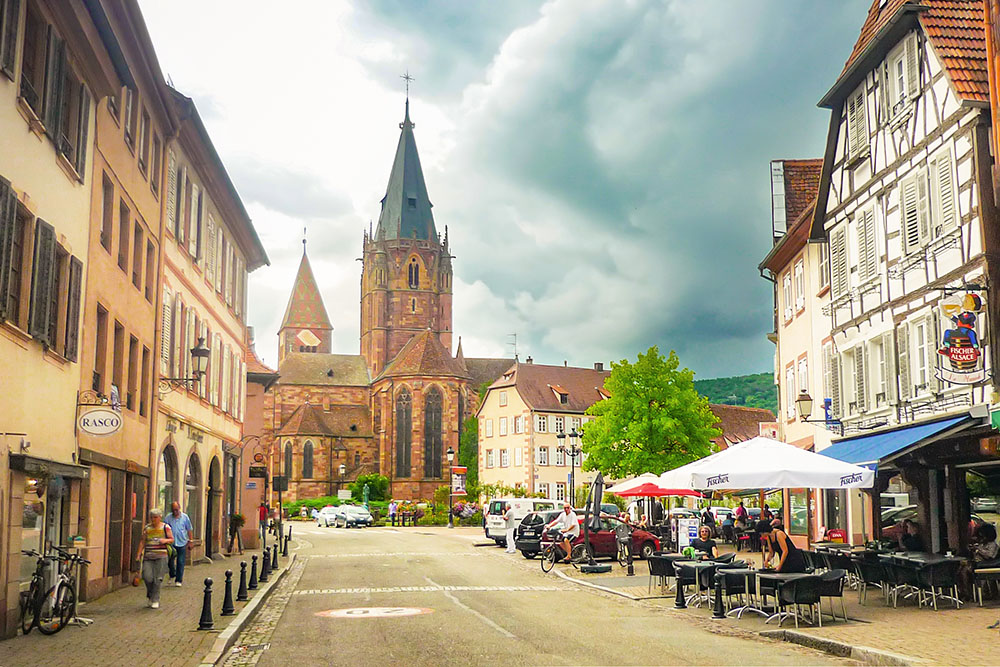
Several people in Alsace would observe Good Friday, eat a meat-free meal, attend services, and keep Easter closely tied to the Christian faith and resurrection.
For some, Easter is even more closely linked to faith than Christmas. And Good Friday remains important and is still observed.
This is one of the reasons Easter traditions in Alsace feel different from a purely commercial spring festival.
Underneath the cheerful displays and family rituals, there remains a more solemn rhythm — one shaped by abstinence, expectation and spiritual reflection before the joy of Easter Sunday.
That balance is part of the region’s character. Alsace knows how to decorate a window, fill a market square and delight a child. But it also remembers why the feast exists in the first place.
7. Spring itself feels like part of the celebration
Perhaps the most moving Easter tradition in Alsace is not a single custom at all.
It is the way spring itself becomes part of the feast.

The season is celebrated in a colourful, flower-filled setting, with the first sunshine, blooming villages and the visible end of Lent’s restraint. The whole region seems to join in.
And that may be why Easter feels so natural here. The symbols are already present in the landscape: eggs, blossoms, fertility, return, light, and life.
In Alsace, Easter is not simply marked. It is felt in the streets, in the homes, in the air, and in the countryside.
It lives in decorated branches, in sugar-dusted cake, in church silence, in children’s laughter, and in the first true softness of the year.
Final thoughts
To embrace Easter traditions in Alsace is to discover a season where folklore, faith and springtime beauty all seem to belong together.
You may come for the decorated villages, the market in Colmar or the famous Lammala. But what stays with you is often something less easy to define: the sense that Easter here still means something.
It still gathers people, still marks the turning of the year, and still wraps old customs in the gentle light of April.
And perhaps that is why Easter in Alsace remains so memorable. It is not only a celebration you observe.
It is one you quietly step into.