


Alsace Cities for Architecture are among the most rewarding places to explore in eastern France, where Gothic cathedrals, half-timbered houses, Renaissance façades and elegant market squares create urban landscapes full of beauty and character.
In this compact region near the German border, architecture is not confined to a few famous monuments. It shapes entire town centres, colours everyday streets, and gives each destination its own distinctive atmosphere.
That is precisely what makes Alsace so appealing for travellers who love historic cities.
Within a relatively small area, you can move from the soaring grandeur of Strasbourg to the intimate charm of Colmar, then on to the quieter architectural treasures of Sélestat and Obernai.
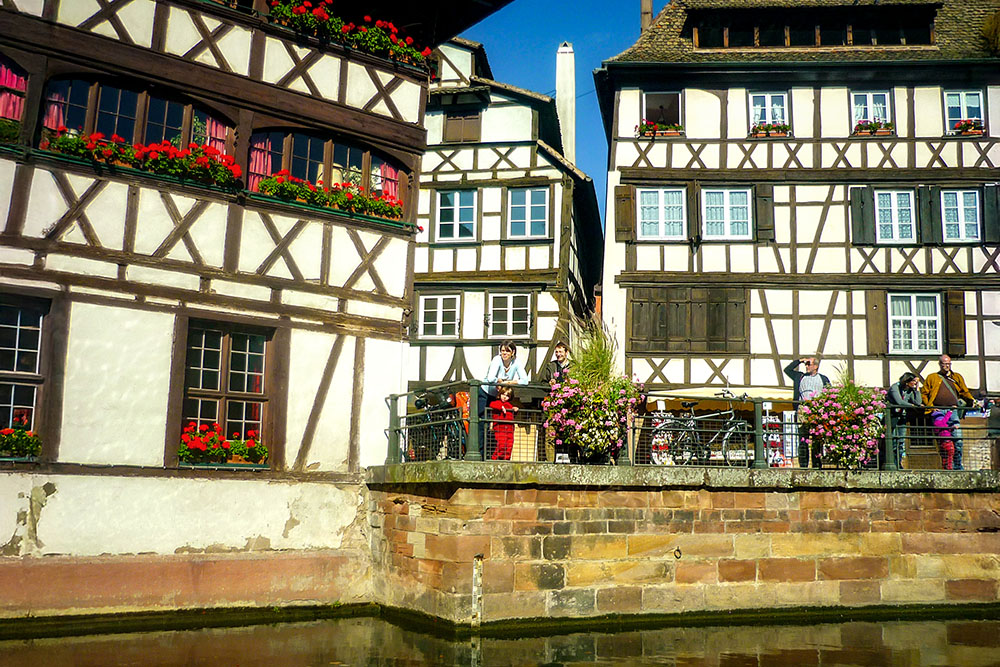
Each town reveals a different facet of the region’s past, from medieval power and religious influence to mercantile prosperity and local craftsmanship.
What I particularly love about Alsace is the way its architecture feels alive. These are not places where beauty sits behind barriers.
It is there in the carved beams above a doorway, in the rhythm of arcades around a square, in the steep roofs that catch the changing light, and in the churches that still dominate the skyline as they have for centuries.
For anyone drawn to cities with a strong sense of place, Alsace offers an architectural experience that is both rich and deeply atmospheric.
In this article, we will explore four of the most memorable Alsace cities for architecture lovers: Strasbourg, Colmar, Sélestat and Obernai.
Each one has its own personality, its own textures and proportions, and its own way of telling the story of Alsace through stone, timber and urban design.
Table of Contents
Strasbourg: one of the finest Alsace cities for architecture lovers
Among the many Alsace cities for architecture lovers, Strasbourg stands in a category of its own.
Grand, complex and instantly recognisable, it offers the kind of architectural richness that rewards both first-time visitors and those who return with a more attentive eye.
This is a city where power, faith, trade and urban ambition have all left visible marks on the landscape.
Walking through Strasbourg is not simply about admiring one famous monument after another. It is about understanding how an entire city was shaped over centuries by different influences, styles and visions.
Strasbourg Cathedral and the power of Gothic architecture
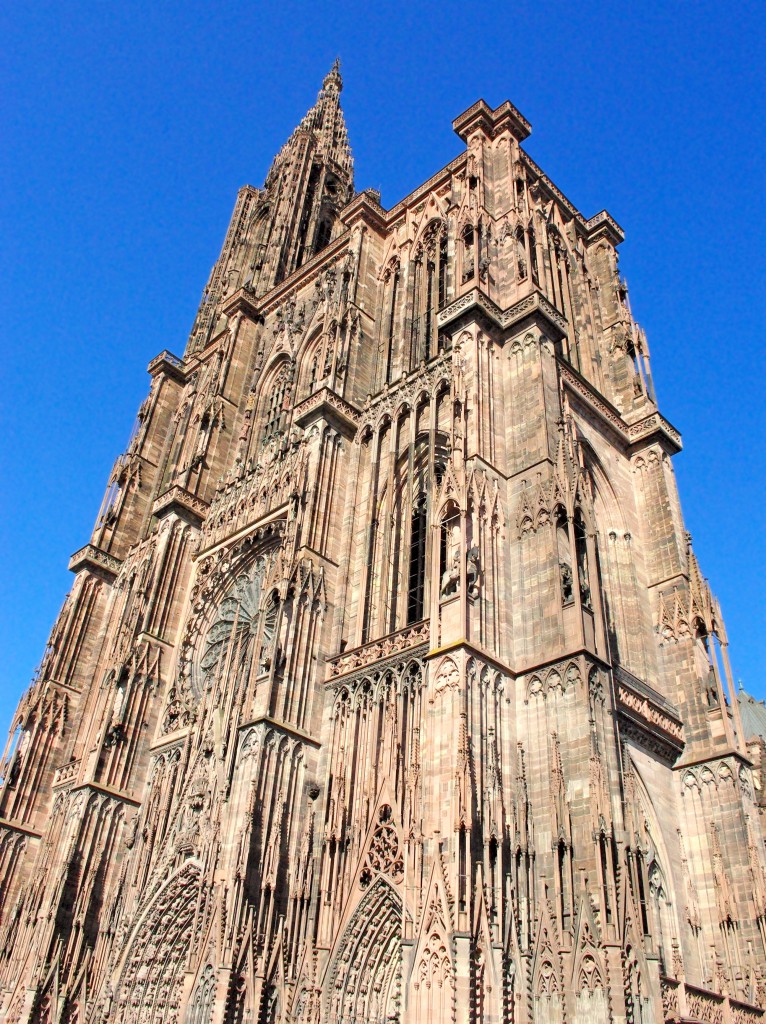
The obvious starting point is Strasbourg Cathedral, one of the great architectural masterpieces of Europe. Its vast Gothic silhouette rises above the old city with extraordinary confidence, drawing the eye long before you reach it.
Up close, the façade becomes even more impressive. It is a world of carved portals, delicate tracery, statues, arches and ornamental details that seem almost impossibly intricate. The cathedral is not just beautiful; it feels ambitious in the strongest sense of the word.
It was designed to inspire awe, and it still does. For anyone interested in Alsace cities for architecture, Strasbourg immediately justifies its reputation here.
The Grande Île and the richness of the historic centre
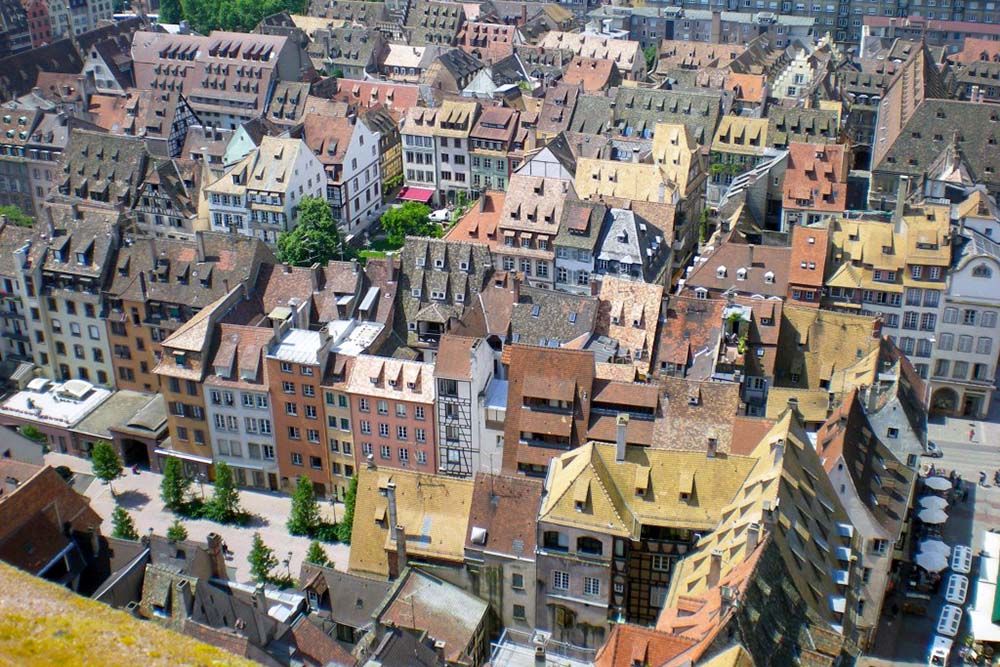
Yet what makes Strasbourg especially rewarding is that the cathedral is only the beginning.
Around it unfolds a historic centre of exceptional richness, particularly on the Grande Île, where streets, squares and canals create an urban setting that feels both intimate and monumental.
Timber-framed houses lean over narrow lanes, while elegant stone buildings speak of civic pride and prosperity.
The pleasure of Strasbourg lies in this constant variation. One moment you are admiring medieval forms and textures; the next, you are standing in a refined square where the architecture feels more ordered and classical.
La Petite France and its half-timbered charm
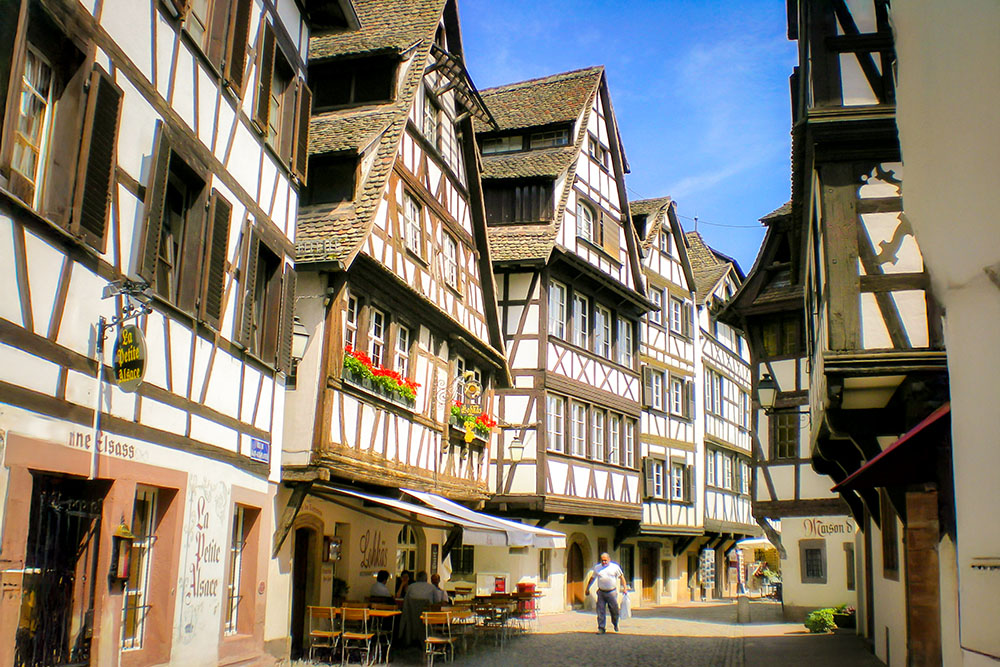
La Petite France adds another layer to the city’s appeal. This district, with its canals, bridges and rows of half-timbered houses, is among the most picturesque places in Alsace. But its charm is not merely decorative.
The buildings here reflect the working life of the old city, when millers, fishermen and tanners lived close to the water. Steep roofs, wooden frames and flower-filled façades give the area a warm and inviting character, while the reflections in the canals soften the whole scene.
It is easy to understand why so many travellers fall in love with this part of Strasbourg, yet its beauty is grounded in history rather than artifice.
The Neustadt and Strasbourg’s grand urban vision
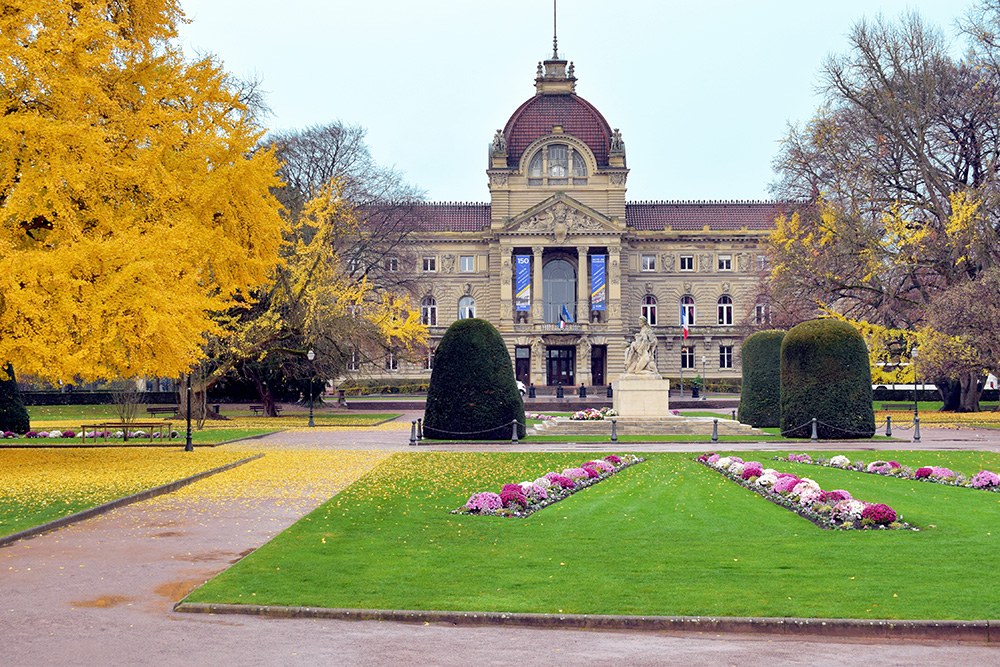
Strasbourg also surprises architecture enthusiasts with its Neustadt, the district developed during the German imperial period.
Here the mood shifts. Broad avenues, monumental public buildings and stately façades reveal a very different urban vision, one based on order, prestige and modern planning.
This part of the city may feel less romantic than the medieval centre, but it is no less fascinating. In fact, it is one of the reasons Strasbourg ranks so highly among Alsace cities for architecture enthusiasts.
Few places in the region show such a striking dialogue between medieval heritage and more formal, large-scale urban design.
Why Strasbourg stands out among Alsace cities for architecture
What I find particularly compelling about Strasbourg is this sense of architectural conversation across time. Gothic splendour, timber-framed intimacy, classical refinement and imperial urban planning all coexist here without cancelling one another out. Instead, they give the city depth and personality. Strasbourg is not frozen in one style or one period.
It is layered, expressive and full of contrasts, which is exactly what makes it such a memorable destination for anyone drawn to beautiful cities and meaningful architecture.
Colmar: among the most beautiful Alsace cities for architecture enthusiasts
Among the most beautiful Alsace cities for architecture enthusiasts, Colmar has a very special appeal. Where Strasbourg impresses with scale and grandeur, Colmar wins you over through intimacy, colour and detail.
It is the kind of place where architecture does not simply frame the visit but becomes the visit itself.
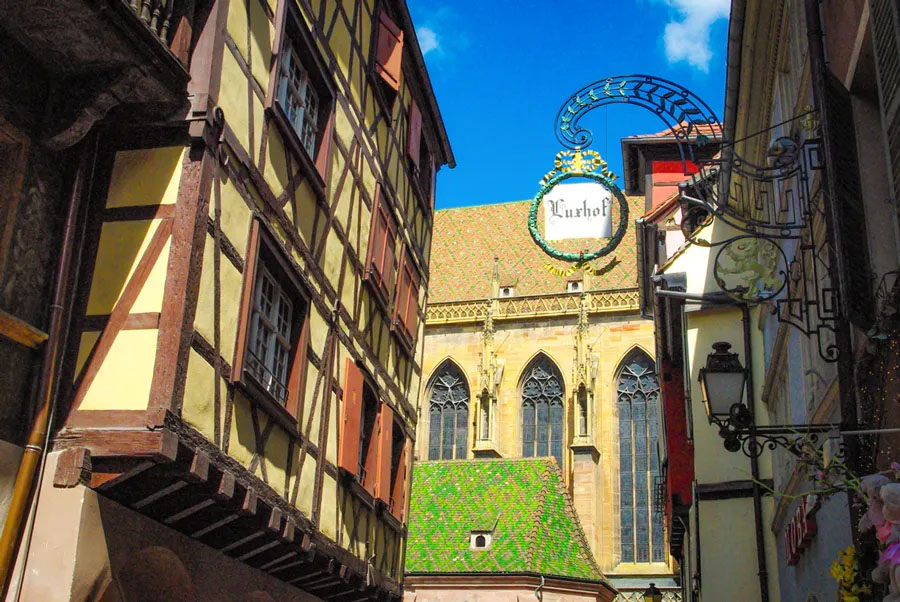
Every street seems to invite you to slow down, look up and notice something unexpected, whether it is a carved beam, a painted façade, a turret, a row of shutters or the curve of a roof catching the light.
What makes Colmar so rewarding is that its beauty feels both abundant and close at hand. You do not need to search for isolated landmarks hidden among modern streets.
The old centre itself is a continuous architectural experience, full of richly preserved buildings that reveal the prosperity, taste and craftsmanship of earlier centuries.
For anyone drawn to Alsace cities for architecture, Colmar offers one of the most visually satisfying urban walks in the region.
Timber-framed houses and the art of architectural detail

One of Colmar’s greatest pleasures lies in its domestic architecture. House after house presents a new arrangement of timber, plaster, colour and ornament.
Some façades are bright and theatrical, while others are softer and more restrained, but together they create a townscape of remarkable charm. The half-timbered houses here are not merely picturesque backdrops.
They speak of local traditions, practical building methods and a long history of urban life shaped by trade and craftsmanship.
What I particularly love in Colmar is the richness of small details. Wooden galleries, carved beams, projecting upper floors, decorative signs and painted walls all contribute to the feeling that the town was built by people who cared deeply about how their surroundings looked. Even modest buildings seem to possess personality. This attention to detail is one of the reasons Colmar deserves such a strong place among Alsace cities for architecture lovers.
Colmar’s Renaissance façades and mercantile elegance
Beyond its timber-framed charm, Colmar also reveals a more refined and prosperous side through its Renaissance architecture.
The town was once an important commercial centre, and that success can still be read in the elegance of certain houses and public buildings.
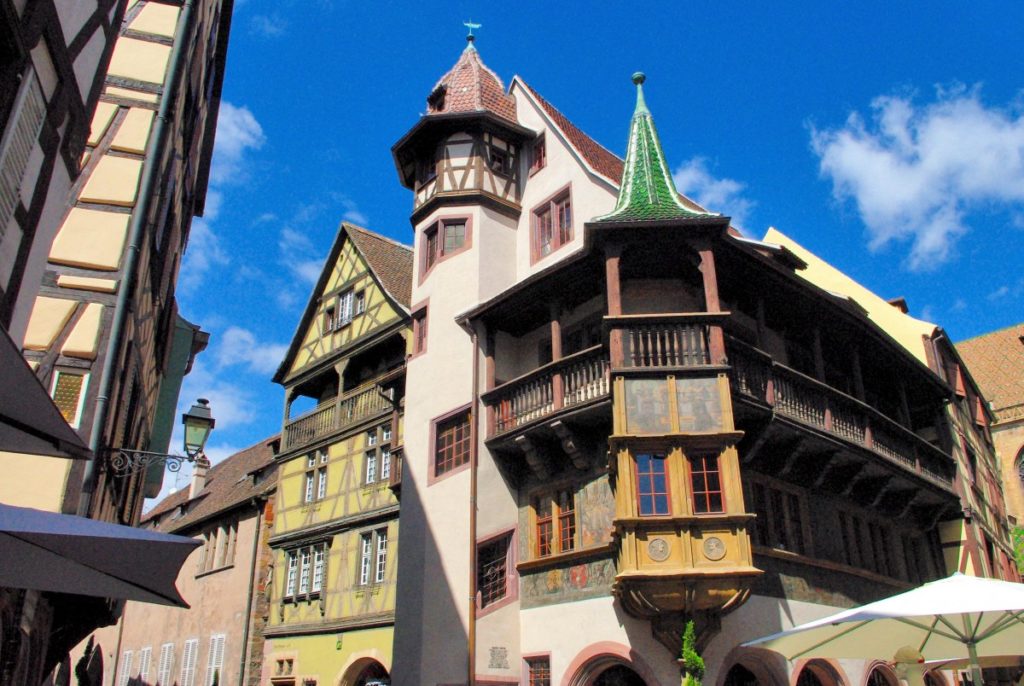
One of the finest examples is the Maison Pfister, whose wooden gallery, painted decoration and corner turret make it one of the most admired buildings in Alsace. It is the sort of house that immediately captures attention, but it also rewards a closer look, because every element seems carefully composed.
Nearby, the Koïfhus, the old customs house, adds another dimension to Colmar’s architectural character. It reminds visitors that this was not simply a pretty town but a place of activity, exchange and urban confidence.
Buildings like these give Colmar substance as well as charm. They show that behind the flowers and colours lies a town shaped by wealth, civic life and cultural ambition.
Little Venice and the poetry of canalside architecture
No portrait of Colmar would be complete without Little Venice, one of the most photographed quarters in Alsace. It would be easy to dismiss it as overly famous, but in truth the area is genuinely beautiful.

Here, architecture and water come together in a way that feels graceful rather than showy. Rows of colourful houses line the canal, their façades reflected in the water, while bridges and flower boxes add softness to the scene.
What makes this district so appealing is not monumental architecture, but harmony. The buildings are modest in scale, yet beautifully arranged. Rooflines, colours and reflections create a rhythm that makes the whole area feel almost painterly.
For travellers seeking Alsace cities for architecture and atmosphere, Colmar stands out because it offers both at once. Its canalside beauty is not detached from the town’s architectural identity; it is one of its most memorable expressions.
Why Colmar is a dream destination for architecture lovers
Colmar leaves such a strong impression because its architecture feels human, decorative and deeply rooted in place. It does not overwhelm through size, nor does it rely on one dominant monument.
Instead, it seduces through accumulation: one beautiful street after another, one façade after another, one detail after another. The experience is immersive rather than spectacular in a single dramatic moment.

For me, that is exactly what makes Colmar one of the finest Alsace cities for architecture enthusiasts. It invites you to experience architecture not only as heritage, but as texture, atmosphere and daily beauty.
In Colmar, the old town feels like a living composition shaped over centuries, and that gives it a lasting emotional power.
Sélestat: a hidden gem in Alsace for architecture and heritage
Among the lesser-known Alsace cities for architecture and heritage, Sélestat deserves far more attention than it usually receives.
Often regarded as the third richest city in Alsace for architectural heritage, after Strasbourg and Colmar, it may not attract the same immediate admiration as its better-known neighbours, yet that is part of its appeal.
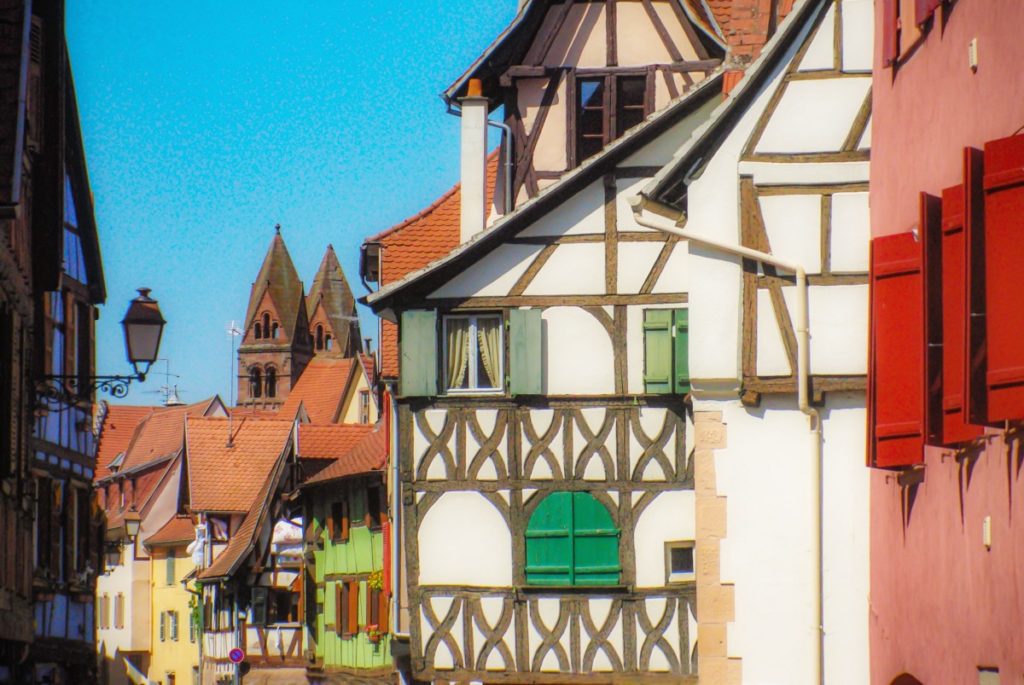
The City of Sélestat notes that the entire historic centre is a listed site and that 34 monuments are protected as Monuments Historiques, which helps explain that reputation. Rather than dazzling at first glance, Sélestat gradually reveals its architectural richness through churches, historic houses and streets that still carry the weight of centuries.
What makes Sélestat especially interesting is its sense of balance. It is neither too polished nor overly theatrical. Its architectural treasures feel rooted in the life of the town rather than arranged for effect.
For anyone interested in Alsace cities for architecture, this creates a more thoughtful kind of pleasure. Here, the joy comes not only from beauty but from discovery.
Sainte-Foy and the Romanesque soul of Sélestat

One of the most distinctive sights in Sélestat is the church of Sainte-Foy. This Romanesque building immediately sets the town apart from many other destinations in Alsace, where Gothic and half-timbered architecture tend to dominate the conversation.
Sainte-Foy has a very different presence. Its rounded arches, solid forms and balanced proportions create an impression of calm strength. The warm tone of the stone adds to that sense of age and permanence.
For architecture lovers, this church is especially rewarding because it offers something less expected in the region. It reminds us that Alsace was shaped by many phases of artistic and religious history, not just by the most famous postcard images.
Standing before Sainte-Foy, you feel a different architectural rhythm from the soaring verticality of later Gothic buildings.
The beauty here is quieter, more grounded, more serene. That contrast is one of the reasons Sélestat stands out among Alsace cities for architecture enthusiasts.
Saint George’s Church and the town’s Gothic legacy
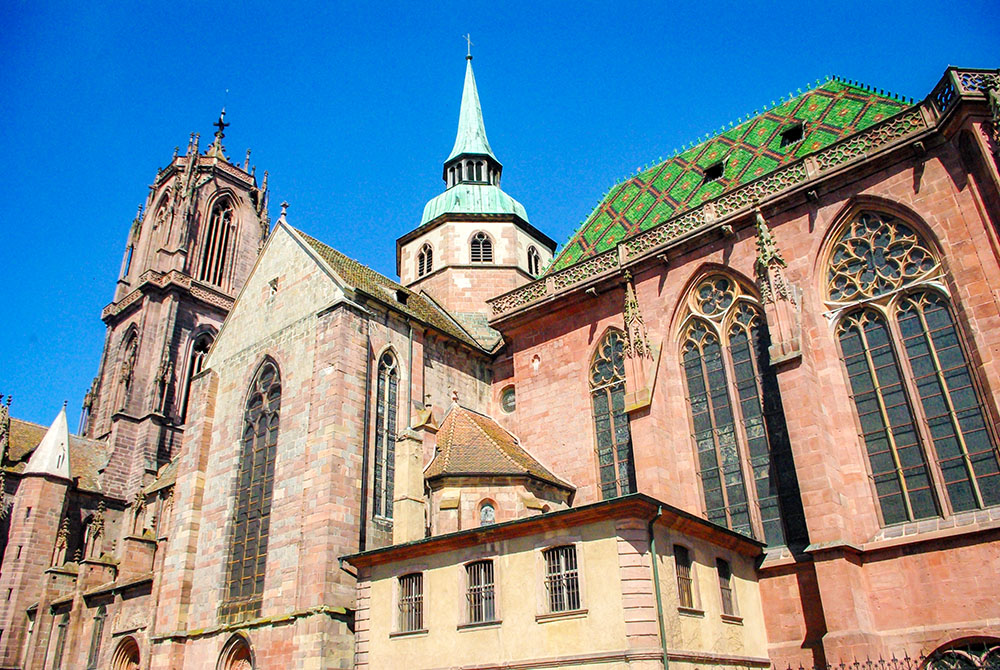
If Sainte-Foy gives Sélestat its Romanesque depth, Saint George’s Church introduces a more Gothic expression of the town’s architectural heritage.
Taller, lighter and more vertical in feeling, it reflects another important stage in the evolution of the town. Together, the two churches create a fascinating dialogue across time, allowing visitors to see how different styles shaped the same urban landscape.
Saint George’s Church brings a stronger sense of upward movement and spaciousness. Its Gothic character feels more in line with the great ecclesiastical traditions of the region, yet it still belongs fully to Sélestat’s more understated personality.
It does not dominate the town in quite the same theatrical way as Strasbourg Cathedral dominates its surroundings. Instead, it contributes to the impression of a town whose beauty lies in proportion, continuity and depth.
For anyone exploring Alsace cities for architecture and history, this pairing of Romanesque and Gothic architecture makes Sélestat particularly rewarding. It is a place where styles do not compete for attention but enrich one another.
Historic streets and the quiet beauty of the old town
Beyond its churches, Sélestat offers a historic centre full of subtle pleasures. The streets may feel less overtly picturesque than those of Colmar, but that is precisely why they are so satisfying.
Here, the beauty often lies in the details that reveal themselves slowly: an old doorway, a carved lintel, a half-timbered upper floor, a façade whose proportions suggest an earlier century. The town invites observation rather than instant admiration.

There is also something deeply appealing about the way historic architecture remains woven into daily life in Sélestat. The buildings do not feel isolated from the present. They still belong to the rhythm of the town, which gives the whole place a sense of authenticity.
For travellers who love Alsace cities for architecture but prefer somewhere less crowded and more reflective, Sélestat can feel like a real discovery.
Why Sélestat deserves more attention from architecture lovers
What I find most memorable about Sélestat is its restraint. It does not try too hard to charm, and that makes it all the more charming. Its architecture speaks in a quieter voice than that of Strasbourg or Colmar, but it says something just as meaningful.
Romanesque solidity, Gothic elegance and centuries of urban continuity all come together here in a way that feels natural and unforced.
Sélestat is, in many ways, the connoisseur’s choice among Alsace cities for architecture lovers. It may not be the most famous destination in the region, but it offers depth, historical texture and a rewarding sense of discovery. For those willing to look beyond the obvious highlights of Alsace, it is a town that leaves a lasting impression.
Obernai: one of the most charming Alsace cities for architecture walks
Among the most charming Alsace cities for architecture walks, Obernai has a special kind of appeal.
As the second most visited town in the Bas-Rhin after Strasbourg, Obernai is clearly no secret, yet it has managed to preserve the harmony and charm that make it so rewarding for architecture lovers.
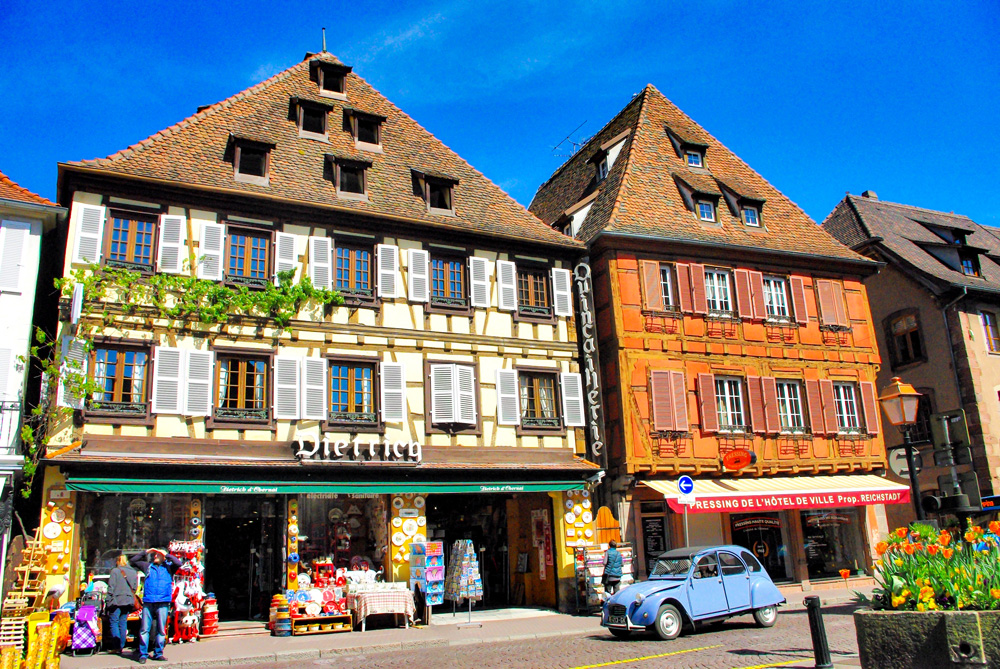
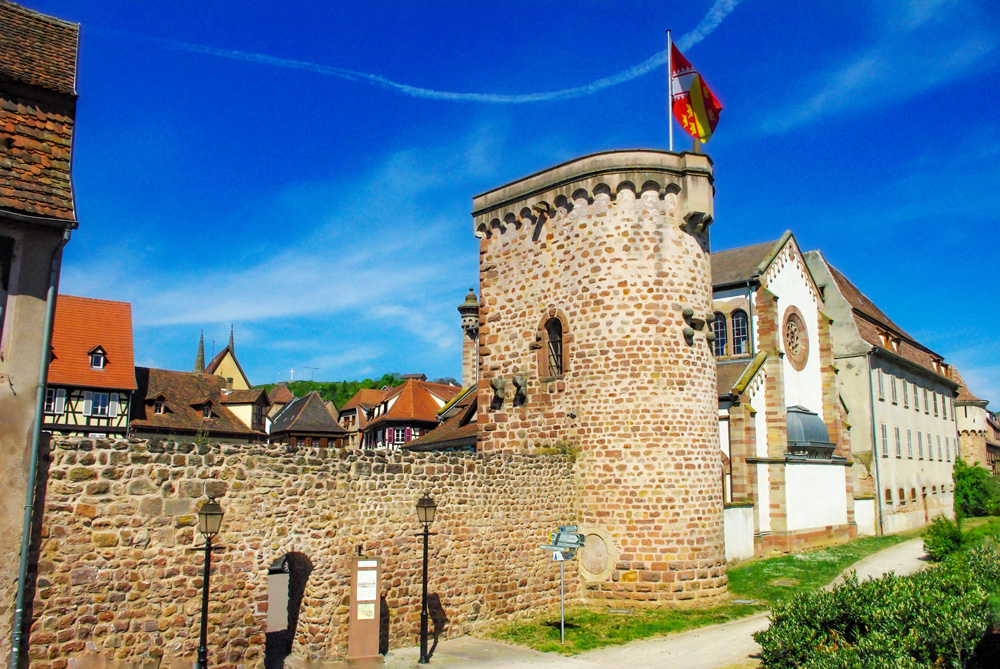
It does not overwhelm with monumental scale, nor does it rely on one spectacular landmark to make its impression. Instead, its beauty comes from harmony. Everything seems to be in proportion here: the market square, the half-timbered houses, the belfry, the church tower, the old ramparts and the quiet streets that connect them.
Obernai feels like a town that has grown gracefully over time, preserving the balance and character that make historic places so rewarding to explore on foot.
What I find especially attractive about Obernai is its coherence. In some towns, architecture is experienced in fragments, with beautiful buildings separated by less interesting spaces.
In Obernai, the historic centre feels like a complete composition. The materials, colours and proportions work together to create a setting that is warm, elegant and unmistakably Alsatian.
For anyone interested in Alsace cities for architecture, this makes Obernai a deeply satisfying destination.
A beautifully preserved historic centre
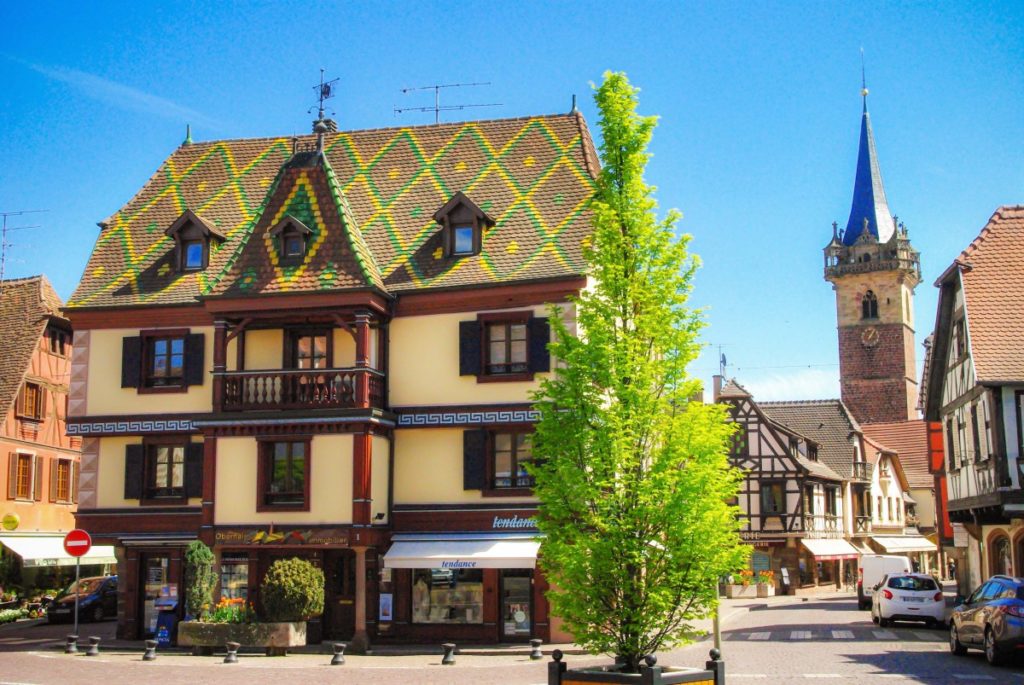
The old town of Obernai is one of those places where walking slowly feels essential. The streets are lined with half-timbered houses whose façades reveal the familiar Alsatian love of geometry, colour and craftsmanship. Wooden frames, sloping roofs, decorative details and flower-filled windows all contribute to the atmosphere, yet nothing feels excessive.
There is charm here, certainly, but also restraint. Obernai never gives the impression of trying too hard to be picturesque. Its beauty feels natural, lived-in and fully part of the town’s identity.
This sense of preservation is one of Obernai’s great strengths. The historic centre still feels legible as an old urban settlement, and that matters for architecture lovers. You are not simply admiring attractive façades; you are moving through a place whose structure still reflects its past.
Streets open onto squares in ways that feel organic, and each view seems carefully framed by the buildings around it. It is easy to see why Obernai deserves a place among the finest Alsace cities for architecture enthusiasts.
Market Square, belfry and medieval character
At the heart of Obernai lies its market square (Place du Marché), one of the town’s most pleasing spaces. Here, civic life and architectural beauty come together in a way that feels entirely natural.
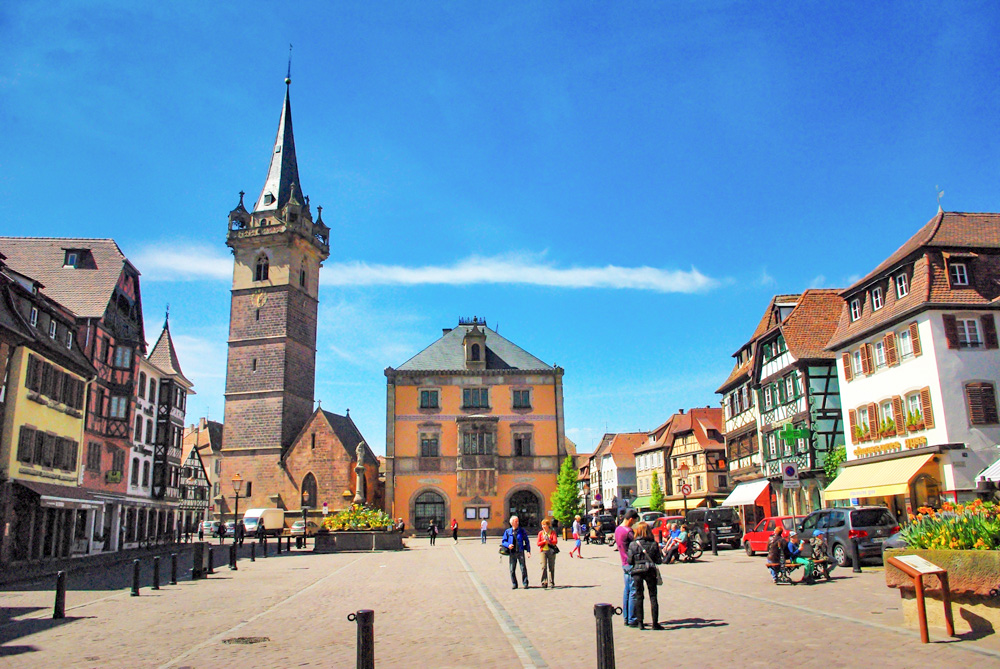
The surrounding houses create a lively but balanced ensemble, with façades that add rhythm and variation without disturbing the unity of the whole. Fountains, public buildings and shopfronts reinforce the impression of a town centre that has remained the true heart of local life for centuries.
The belfry is one of Obernai’s most recognisable landmarks, and it adds an important vertical accent to the townscape. More than just a visual focal point, it also reminds visitors of the town’s medieval history and former defensive role.
Nearby sections of ramparts and towers strengthen that impression. They help you understand Obernai not just as a collection of beautiful houses, but as a historic town with shape, boundaries and memory. For those exploring Alsace cities for architecture and heritage, this makes the experience especially rewarding.
The church and the balance of the skyline

Rising above the town, the church of Saints Peter and Paul gives Obernai’s skyline much of its character. Its larger scale and stronger vertical presence create a striking contrast with the more modest domestic architecture below.
This relationship between church, square and surrounding streets gives the town a visual balance that is one of its greatest pleasures. You are always aware of how different kinds of buildings — religious, civic, domestic and defensive — contribute to the identity of the whole.
That balance is what makes Obernai so memorable. Nothing feels isolated or out of place. The church does not dominate harshly; it anchors. The half-timbered houses do not compete for attention; they support the atmosphere. The old walls do not feel like relics detached from the town; they remain part of its character.
This quiet architectural dialogue is precisely what makes Obernai stand out among Alsace cities for architecture walks.
Why Obernai is so appealing to architecture lovers
Obernai leaves a strong impression because it shows that architectural beauty does not always depend on grandeur. Sometimes it comes from proportion, continuity and the gentle harmony of a place where everything belongs together.
That is exactly what Obernai offers. Its town centre feels warm and coherent, its buildings expressive without excess, and its historic character still deeply present.
For me, Obernai is one of the most enjoyable Alsace cities for architecture lovers because it invites a slower, more attentive kind of travel. It is a place to wander, to notice, to compare rooflines and façades, to appreciate how a square is framed or how a tower rises above the houses.
In a region full of famous towns, Obernai proves that charm, balance and urban harmony can be just as memorable as grandeur.
Final thoughts on Alsace cities for architecture lovers
Exploring these four destinations is enough to understand why Alsace cities for architecture lovers leave such a strong impression.
Strasbourg offers grandeur, scale and historical layering.
Colmar enchants through colour, detail and domestic beauty.
Sélestat rewards the curious with depth and heritage, while Obernai shows how harmony and proportion can make a town unforgettable.
Each one reveals a different face of Alsace, and together they form a remarkably rich architectural journey.
What makes the region so rewarding is that its beauty does not end with its best-known towns.
Once you begin to notice the façades, rooflines, churches, squares and old streets that give Alsace its character, you quickly realise there is much more to explore.
Wissembourg, with its northern setting and elegant historic centre, has a charm all of its own.
Mulhouse brings a different urban personality, shaped by industry, commerce and a more varied architectural identity.

Thann offers a striking blend of vineyard town atmosphere and Gothic presence, while nearby Belfort opens the door to another cultural and architectural world just beyond Alsace itself.
That, perhaps, is the greatest pleasure of travelling through this part of eastern France. One beautiful town leads naturally to another. One church tower in the distance, one timber-framed street, one market square or carved façade makes you want to keep going.
For travellers who are drawn to places where architecture gives shape to memory, beauty and identity, Alsace is not just a destination. It is an invitation to keep looking more closely.