

When people think of Alsace, the images come instantly: flower-decked façades, medieval lanes, Christmas markets, winstubs glowing with warm light.
It’s a familiar vision, almost automatic — the one that fills brochures, shop windows and the collective imagination.
But there is another side to Natural Alsace: less spectacular, less photogenic at first glance, yet deeply authentic — the agricultural tracks, the meadows rippling in the wind, the gentle hills of the foothills, the dense forests of the mountains.
An Alsace that doesn’t try to catch the eye, but settles quietly into your memory.
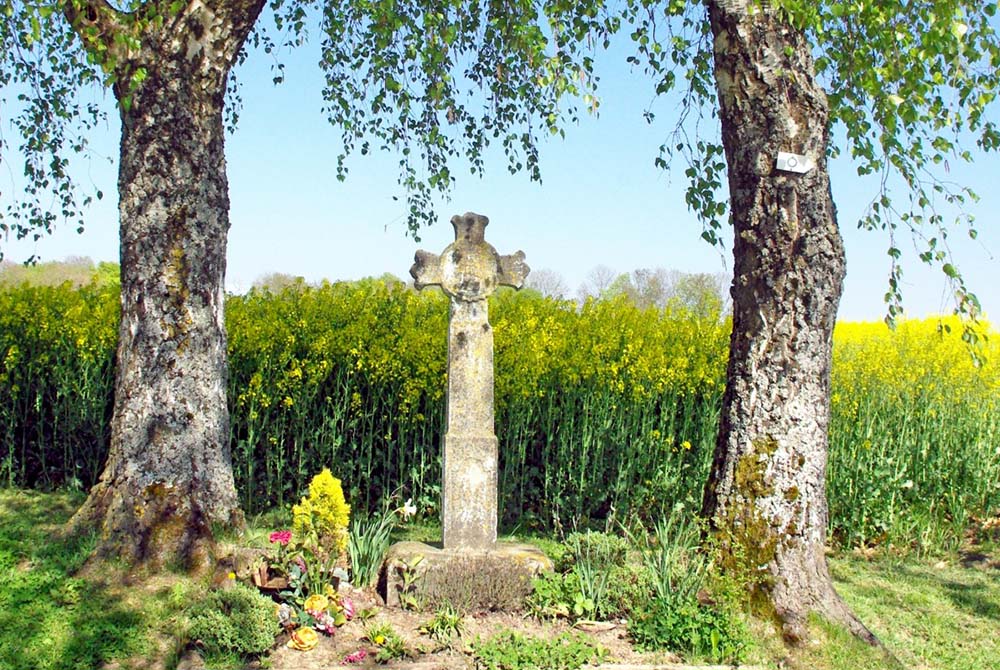
I lived in Alsace for more than a decade. Over time, I realised that the region reveals itself not only through its half-timbered towns or perfectly preserved villages, but also through its natural landscapes — the ones you cross without always naming them.
Landscapes which, once you grow familiar with them, become reassuring, almost intimate.
This article is my attempt to share that Natural Alsace: the one I explored on foot, by car, in every season — the one that taught me that a region can be understood as much through its fields as through its built heritage.
And three landscapes of natural Alsace, more than any others, have always seemed to express the region in its simplest and most honest form:
– the Sundgau, with its quiet valleys and peaceful meadows;
– the vineyards, that living ribbon shaped along the Route des Vins d’Alsace;
– the Vosges, with their deep forests and wide-open mountain pastures.
Table of Contents
Natural Alsace in the Sundgau – The Region at Its Most Discreet
The Sundgau, in the far south of Alsace, rarely makes the headlines.
You hardly ever see it on the cover of travel magazines.
Yet, for anyone who takes the time to wander, it is one of the region’s most endearing places — and one of the purest expressions of natural Alsace.
1. A landscape that refuses spectacle

There are no grand panoramas here.
No villages perched on rocky spurs.
No major monuments drawing crowds.
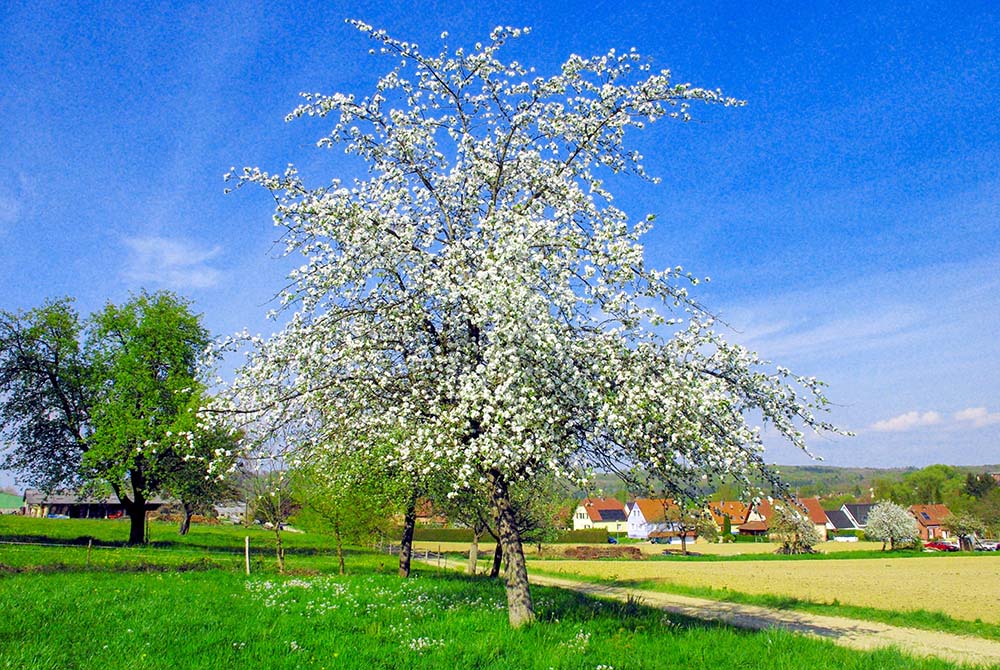
The Sundgau is made of small valleys, gentle hills, tree-lined meadows and evening-lit ponds.
A humble landscape, designed at a human scale.
A landscape that doesn’t impose itself — it accompanies.
2. Fields, meadows and ponds: a rural and living Alsace

The Sundgau is one of the few places in natural Alsace where you can still feel the deep logic of a territory shaped by farming and livestock.
Agricultural paths wind between fields, sometimes edged with old hedgerows. Cows aren’t a decorative backdrop: they’re part of the rhythm of the land.
The ponds — a medieval legacy — punctuate the scenery.
They form a discreet but essential network, mirroring clouds and trees.
Whenever I walked there, I had the sense of entering a slower Alsace, almost motionless yet never stagnant — the quiet pulse of Natural Alsace.
3. A landscape lived rather than admired
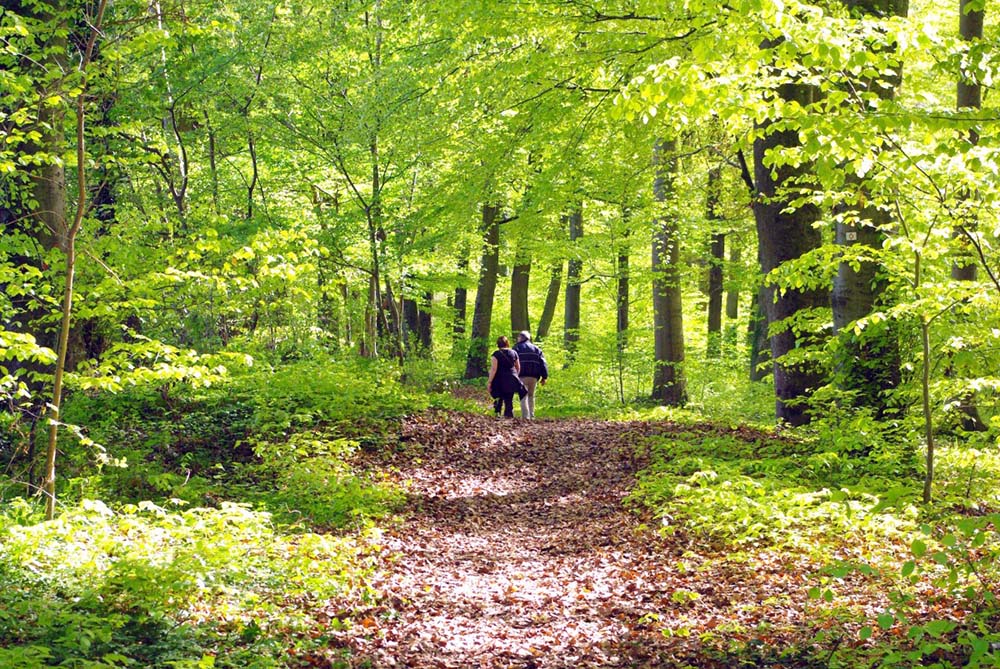
What makes the Sundgau so compelling is the sense that everything is “inhabited” without being “invaded”.
Human presence is everywhere — in maintained paths, mown meadows, water carefully managed for centuries — but never overwhelming.
During my walks, I often felt like a passerby in a landscape that lives independently.
One winter morning, I remember a fox crossing a frosted field before disappearing into a hedge.
Another day, a tiny chapel emerged at the bend of a path.
Nothing extraordinary — and yet exactly what gives the Sundgau its charm.
4. Why the Sundgau Embodies Natural Alsace
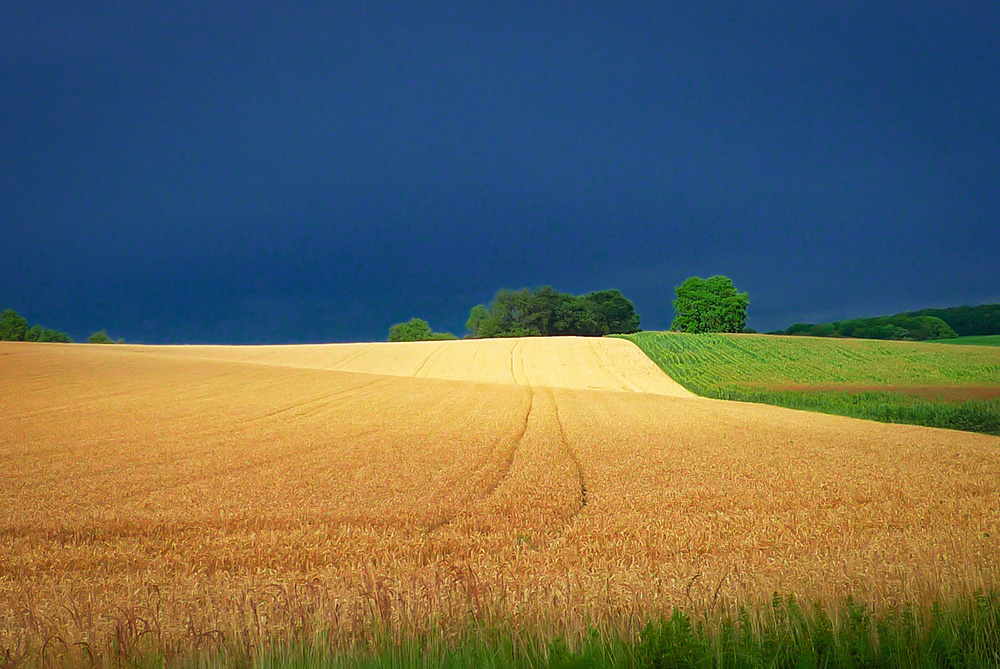
Because it’s a landscape without embellishment.
Because it proves Alsace is not just a postcard but a lived-in region.
Because its simplicity — fields, water, trees, rolling hills — expresses a sincere identity.
And because it does so quietly, without insisting on being noticed.
Natural Alsace in the Vineyards – The Landscape Shaped by Human Hands
If the Sundgau is rural and discreet, the vines form Alsace’s most recognisable landscape.
But behind the postcard lies something subtler — one of the richest expressions of Natural Alsace.
1. A mosaic in constant motion
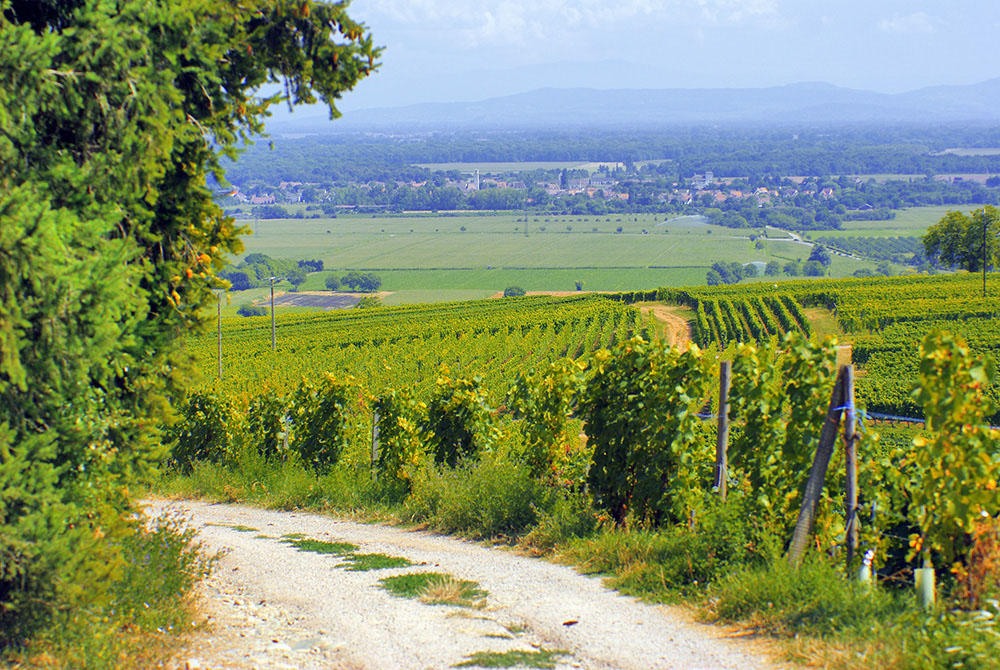
Seen from the road, the vineyards are already beautiful.
But it’s along the footpaths, weaving between parcels, that you truly grasp their complexity.
The vines aren’t uniform: they form a mosaic shaped by precision and patience.
Each season redesigns the view:
– winter draws clean lines;
– spring hints at renewal;
– summer radiates light;
– autumn sets the hillsides ablaze.
2. A landscape both cultural and natural
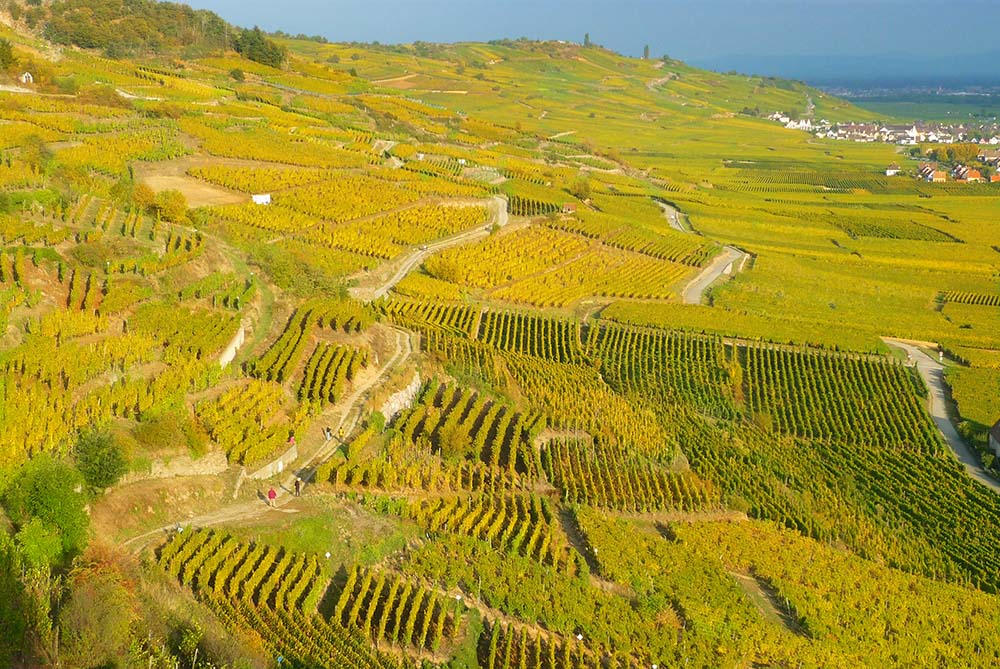
Here, nature is shaped, adapted, refined — and that is what makes it fascinating.
Winegrowers carry on ancient ways of working the land. Their gestures tell the story of a landscape that has become an identity.
You feel human presence in the hum of a tractor, in the warm smell of earth in July, in the geometry of the rows.
This is a place where culture and nature don’t oppose each other — they coexist, answering one another.
3. The foothills: Alsace at its “just right” balance

Between the plain and the mountains, the vine-covered foothills encourage walking.
You find small paths linking villages, huts, isolated chapels, and viewpoints that arrive without warning.
It is often here that I felt I understood Alsace best: in this gentle transition where villages follow one another, where a short climb suddenly reveals the Rhine or the Vosges.
4. Why the vineyards are a key part of Natural Alsace

Because they show a region living from the land without damaging it.
Because they express an intimate relationship between people and place.
Because they give walkers a human geography that changes with the seasons.
Natural Alsace in the Vosges – The Region in Its Deepest Form
Leaving the vineyard paths and entering the mountains brings a shift.
The Vosges aren’t imposing like the Alps, yet they carry a quiet strength — one of the most striking facets of Natural Alsace.
1. A familiar yet never dull mountain

The Vosges are accessible: waymarked trails, dense forests, open chaumes, and lakes tucked between ridges.
And yet, they always offer something unexpected — a sudden view, a block of red sandstone, a shaft of evening light.
2. The Vosges forest: a complete immersion

The Vosges forest is not just a line of trees: it’s a world of its own.
Moss-covered rocks, soft leaf-strewn paths, tall trunks filtering the light — the scents of resin and humus blending into that unmistakable mountain atmosphere.
Return often enough, and you begin to recognise the different silences:
the damp silence after autumn rain,
the crisp one of a winter morning,
the vibrant one before a summer storm.
3. The chaumes: Alsace in the open
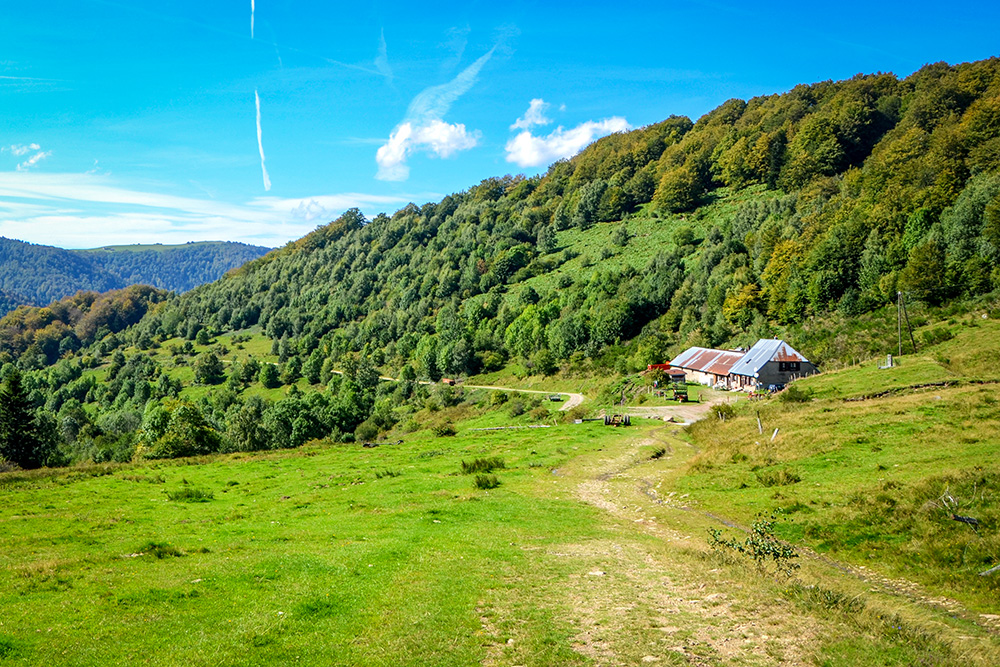
After the shadow of the woods, the high-altitude pastures feel like a deep breath.
They’re natural lookouts, revealing an Alsace far wider than expected.
4. A memory among many
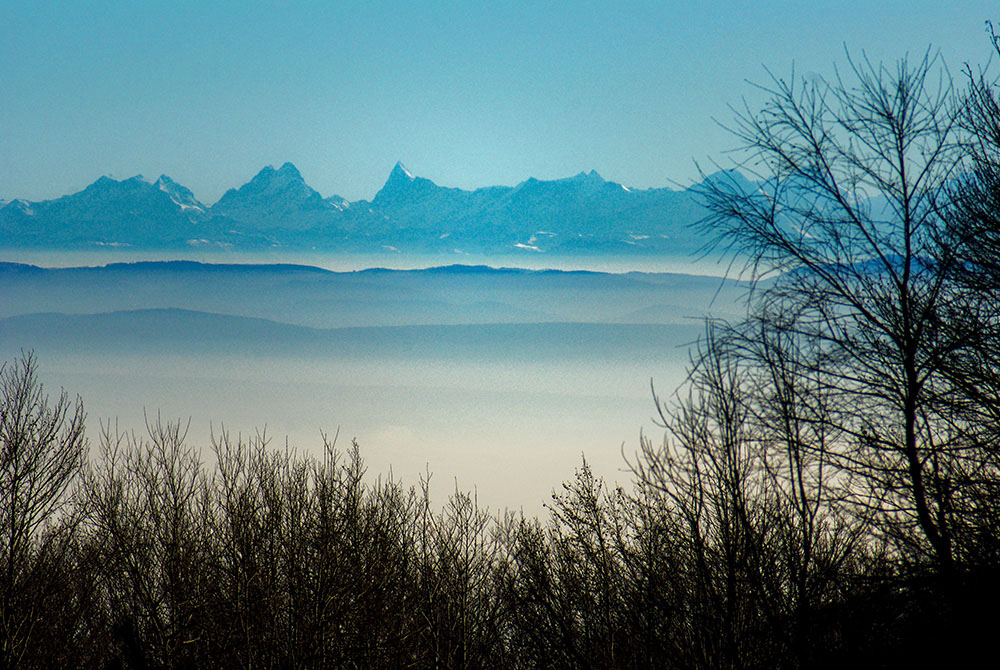
One autumn day, walking along the ridges near the Rossberg, I saw a sea of clouds covering the plain.
Above it, everything was calm. Beyond, the snowy peaks of the Swiss Alps.
The image stayed with me: a reminder that the Vosges don’t need dizzying heights to create a sense of space.
5. Why the Vosges complete Natural Alsace

Because they show the region’s wilder face.
Because they balance the Sundgau’s softness and the vineyards’ harmony.
Because they prove that nature is never far away in Alsace — even when you think you know the region by heart.
Conclusion – What “Natural Alsace” Truly Means
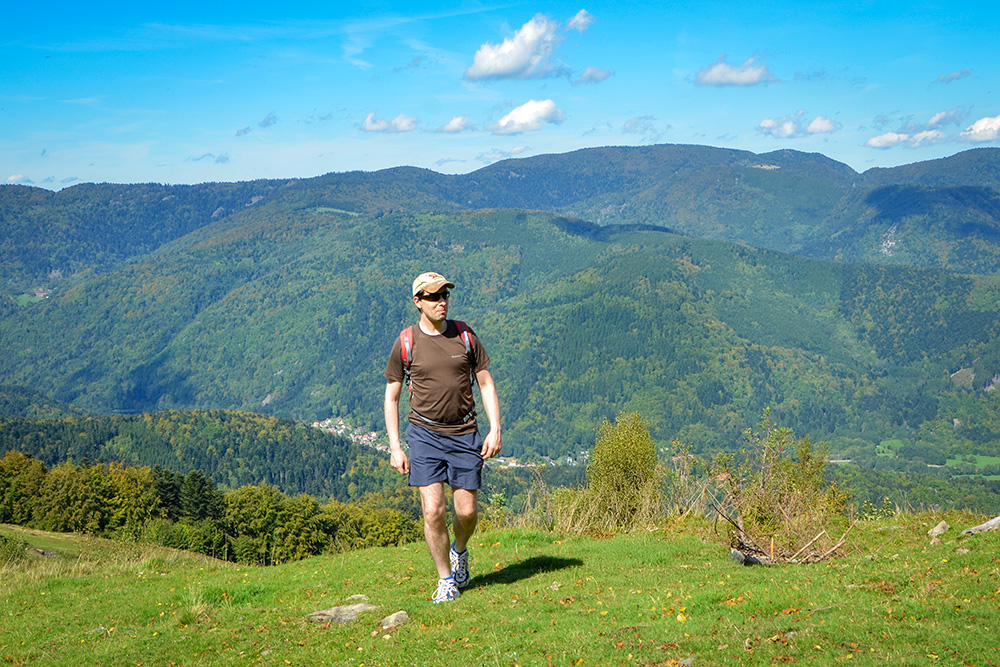
Natural Alsace is not a slogan.
It’s a way of looking at a region you think you know and discovering its most sincere expression.
The Sundgau speaks of discretion and slowness.
The vineyards express the harmony between landscape and culture.
The Vosges reveal a deeper, more meditative Alsace.
After more than ten years in Alsace, I know these landscapes aren’t trying to impress.
They accompany you, soothe you, and reveal themselves through walking and seasons.
They remind you that nature is not scenery — it’s a way of inhabiting a place and finding balance.
And perhaps Alsace is best understood not in postcard villages, but along a dirt track, between rows of vines, or in a Vosges undergrowth.
I believe so — because it’s there, away from the crowds and in the simplicity of these landscapes, that Natural Alsace shows its truest face.
Loved reading this article? Check out my other blog post: Uncharted Alsace: 10 Hidden Treasures to Discover.