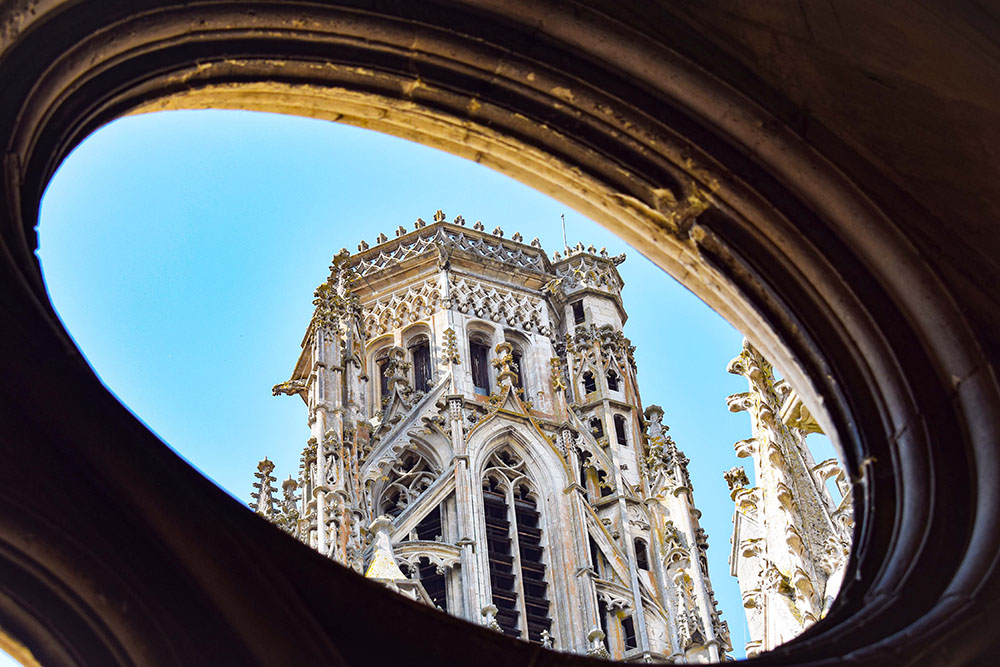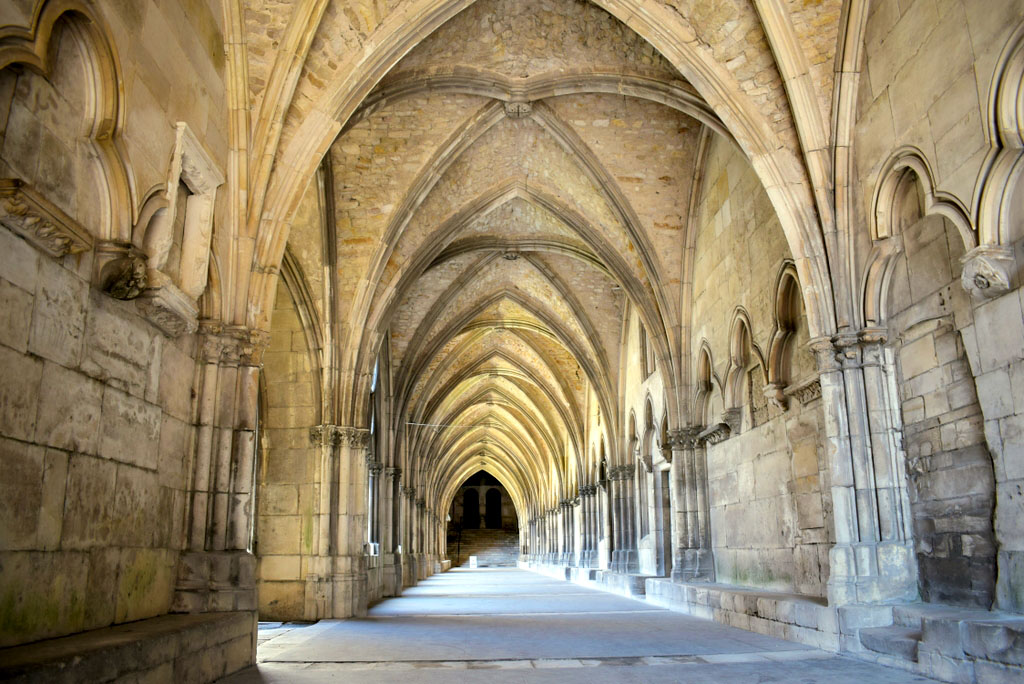

Cloisters in Lorraine are among the most quietly beautiful places I have explored in eastern France.
They do not usually dominate postcards, and they rarely attract the same attention as cathedrals, basilicas, or grand market squares.
And yet, for me, they often leave the deepest impression.
There is something unique about stepping from a busy street or a monumental church into a sheltered space of arcades, stone, light, and silence.
The mood changes at once.
Time seems to slow down.
What I love about these cloisters is not only their architecture, though many are remarkable.
It is also the feeling they create.
Some are vast and elegant, others modest and almost secretive.
Some stand beside great cathedrals, while others survive in quieter corners of towns and villages that many travellers might otherwise overlook.
But all of them invite the same thing: a slower, more attentive way of seeing.
Lorraine is especially rich in this kind of heritage.
Across the region, cloisters reveal another side of its history — one shaped by monastic life, canons, prayer, scholarship, and the patient craftsmanship of centuries.
They are places of passage, but also places of pause.
And perhaps that is why I find them so memorable. In a world that encourages us to move quickly, cloisters ask us, very gently, to do the opposite.
Why Cloisters in Lorraine Are So Special
Many travellers notice a cathedral first. That is understandable.
Cathedrals were built to impress, to dominate skylines, to make a statement in stone.
Cloisters do something different. They withdraw. They create an inner world.
That is perhaps why cloisters in Lorraine feel so rewarding.
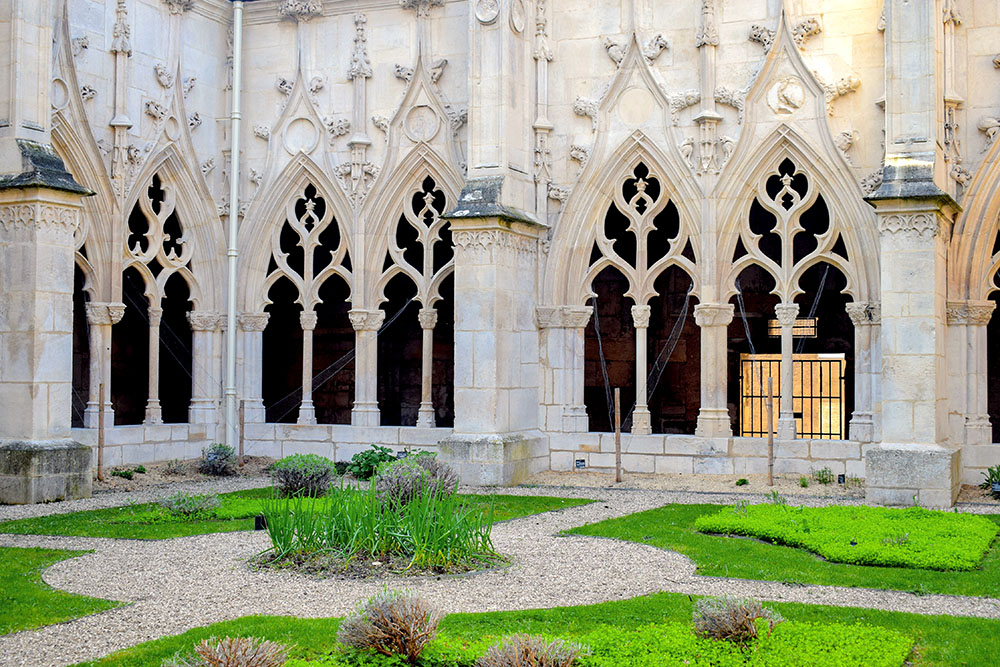
They are rarely the loudest part of a visit. You do not always see them from afar, and they do not compete for attention in quite the same way as towers, façades, or stained glass.
Instead, they reveal themselves through rhythm: the repeated arches, the quiet garden, the play of shade and sunlight across old paving stones.
A cloister is not simply an architectural extra. In a monastery, an abbey, or a cathedral complex, it was an essential space of circulation and reflection.
It linked the church to the other parts of communal life: the chapter house, the refectory, the dormitory, the library, and sometimes the cemetery.
It was both practical and symbolic.
Monks, canons, or religious communities passed through it every day, and yet it also offered a pause from the world beyond.
That duality is part of what makes cloisters so moving. They were built for everyday use, but they often feel almost dreamlike to us now.
You walk through them and notice details you might miss elsewhere: a worn capital, a patch of moss, a shaft of light, a carved boss high above your head, a garden laid out like a memory of paradise.
And in Lorraine, these spaces feel especially precious.
Some are grand, some incomplete, some partly hidden, some astonishingly elegant.
Together, they reveal a quieter side of the region’s heritage — one that rewards patience rather than speed.
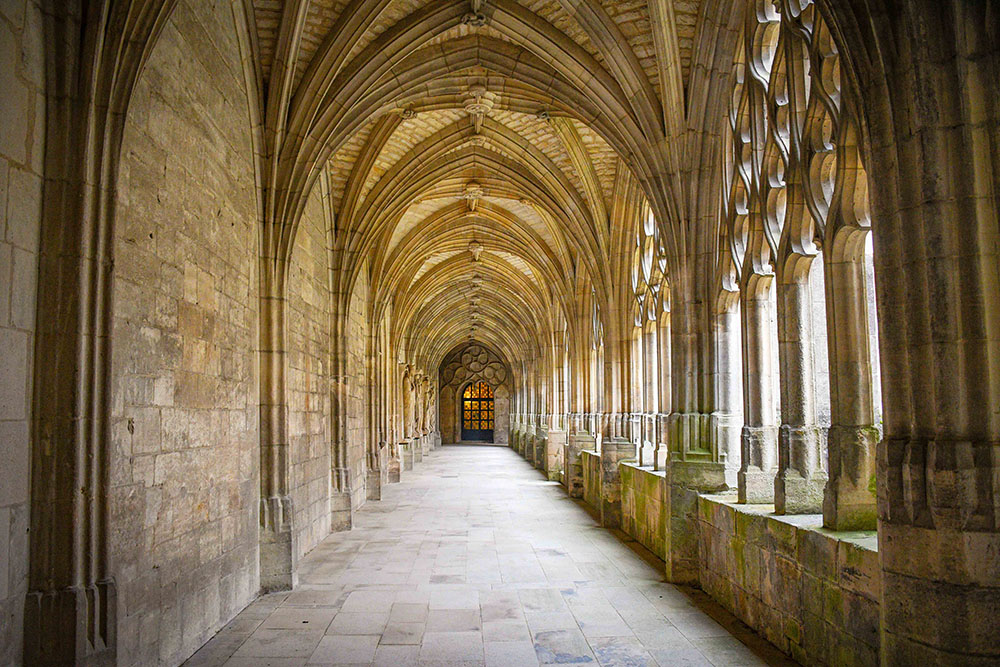
What Is a Cloister, Exactly?
At its simplest, a cloister is a set of covered galleries arranged around an open courtyard or garden, usually square or nearly square in shape.
That sounds almost too simple, because the experience of a cloister is much richer than the definition. The galleries frame the open space without enclosing it completely.
They create a threshold between indoors and outdoors, between communal life and contemplation.
You are sheltered, but not shut away. You are inside, yet still open to the sky.
The central garden often carried a symbolic meaning.
In Christian thought, it could evoke the Garden of Eden, order restored, or the enclosed garden associated with the Virgin Mary.
Water, plants, and symmetry mattered. Even when the original planting has changed, the sense of ordered stillness often remains.
In practice, cloisters were also hardworking spaces. They were walked through, crossed, used, and inhabited.
That matters because it stops them from feeling too abstract. Their beauty comes partly from the fact that they were lived in.
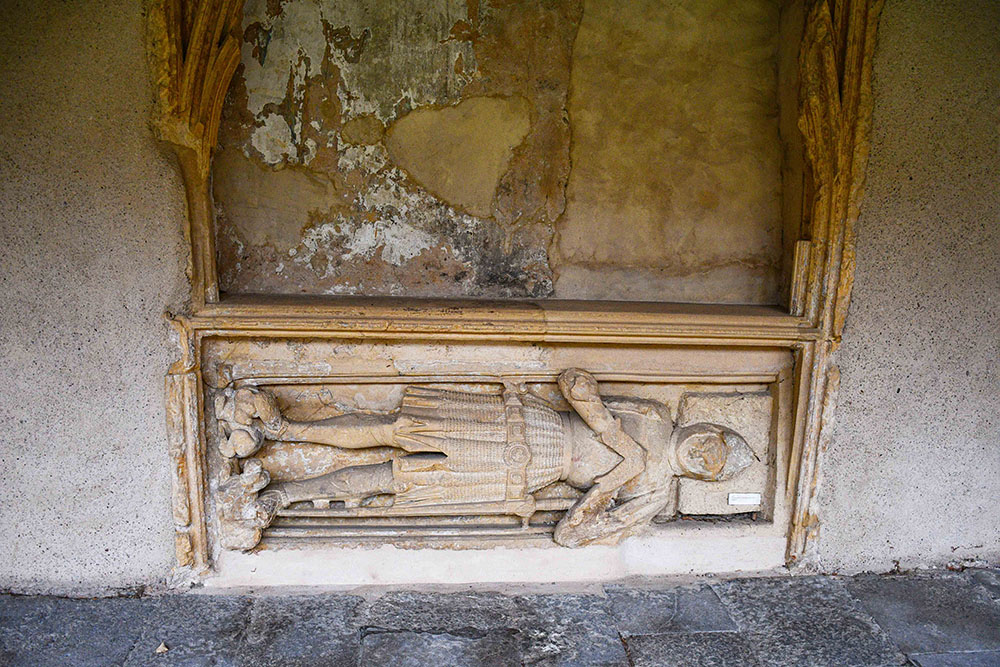
The Symbolism Behind Cloisters in Lorraine
One reason I find cloisters in Lorraine so memorable is that they never feel decorative for the sake of it. Their beauty usually has meaning.
The enclosed garden, the ordered paths, the repeated bays, the measured geometry of the galleries — all of this creates a sense of harmony that goes beyond style.
A cloister suggests balance. It offers a human-scaled version of order in a world that was often anything but orderly.
That symbolism is especially powerful in places where the cloister remains closely tied to a cathedral or abbey.
There, you feel how the space once belonged to a larger vision of religious life: prayer, reading, community, discipline, silence, repetition. Even if you do not share the beliefs that shaped it, the atmosphere still speaks.
And perhaps that is why these places stay with me. They are not spectacular in the usual tourist sense. They are slower than that. More interior. More durable.
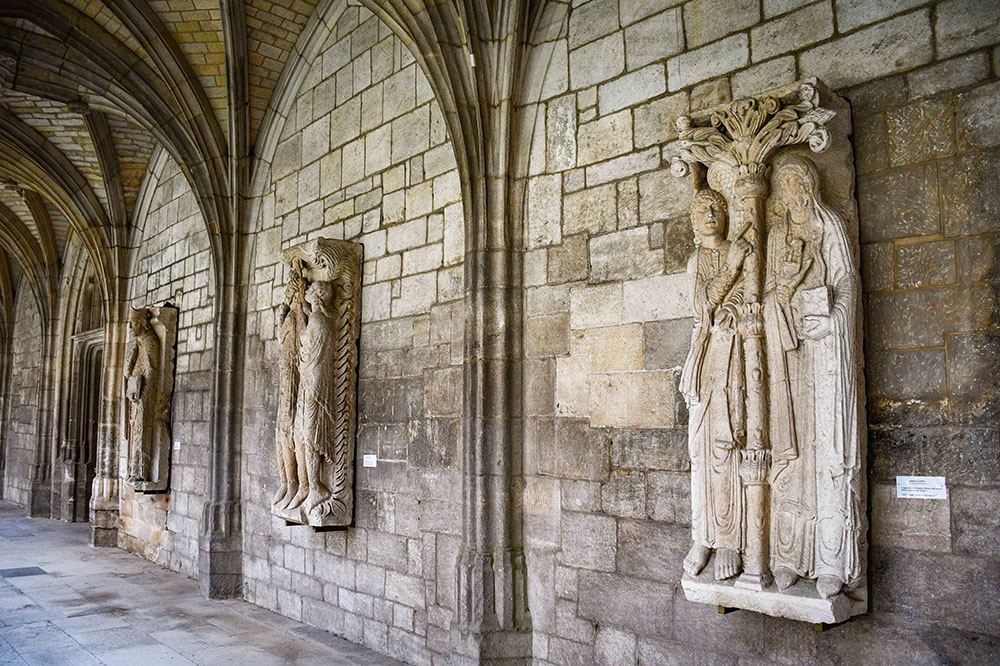
The Most Beautiful Cloisters in Lorraine
Verdun Cathedral Cloister
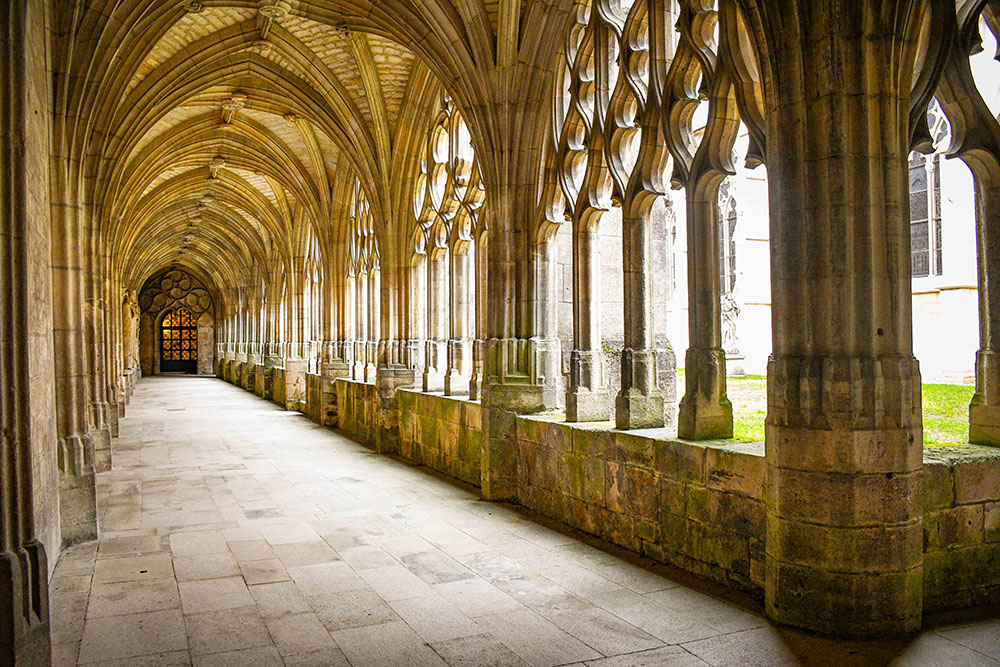
Verdun’s cloister is one of the finest places to begin exploring cloisters in Lorraine, because it combines age, elegance, and a strong sense of place.
Built beside the cathedral, it reflects several phases of construction.
The eastern gallery dates from the early 14th century, while the others were rebuilt in the early 16th century in a more flamboyant Gothic style.
The result is rich without feeling overloaded.
The ribbed vaults, the sculpted details, and the worn stone surfaces all give the space a remarkable dignity.
What I especially like here is the way the cloister feels both monumental and inward-looking. Verdun, of course, carries immense historical weight for many reasons, and yet within the cloister everything becomes quieter.
It invites another tempo, another kind of attention. You stop thinking of headlines and battles and start noticing tracery, light, proportion, and calm.
The Recollets Cloister in Metz
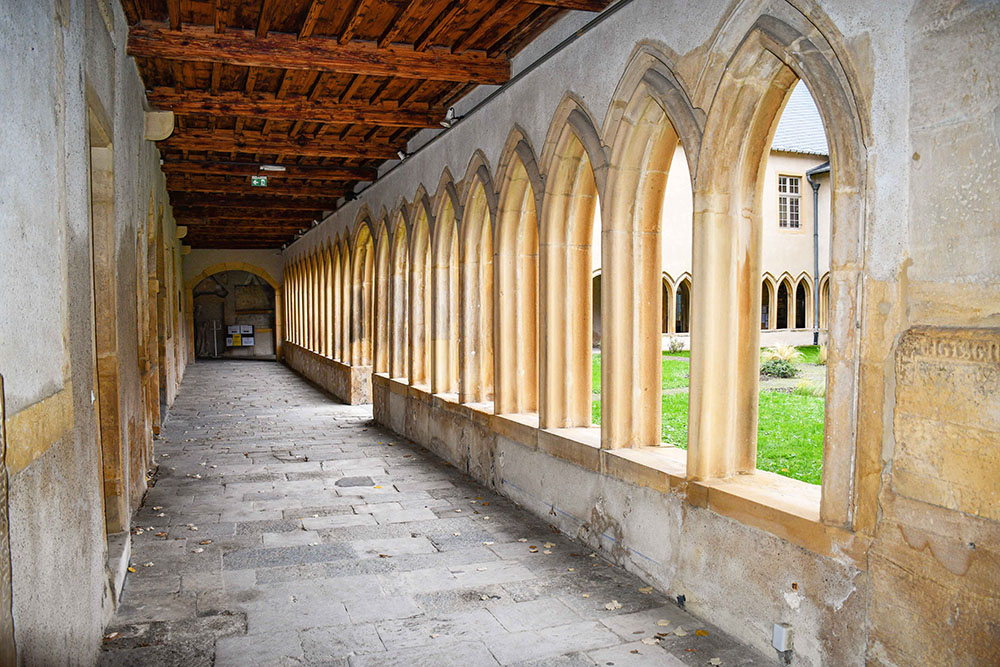
In a city as layered as Metz, the Recollets cloister feels like a quiet secret.
Set on the hill of Sainte-Croix, it has the rare charm of an urban refuge. Its origins go back to the 13th century, although only three galleries survive today.
The wooden ceilings, the old stones, the garden atmosphere, and the sense of enclosure all make it one of the most soothing cloisters I know in Lorraine.
This is one of those places that reminds you how much cloisters in Lorraine can vary. Not every cloister needs grandeur to be memorable. Sometimes intimacy is enough.
In Metz, where there is so much to see, the Recollets cloister offers something different: a pause. You do not have to do very much there. Just being present is enough.
Saint-Clément Abbey Cloister in Metz
Also in Metz, Saint-Clément offers a very different mood.
If the Recollets cloister feels medieval and hushed, Saint-Clément is more classical, more composed, and in some ways more theatrical.
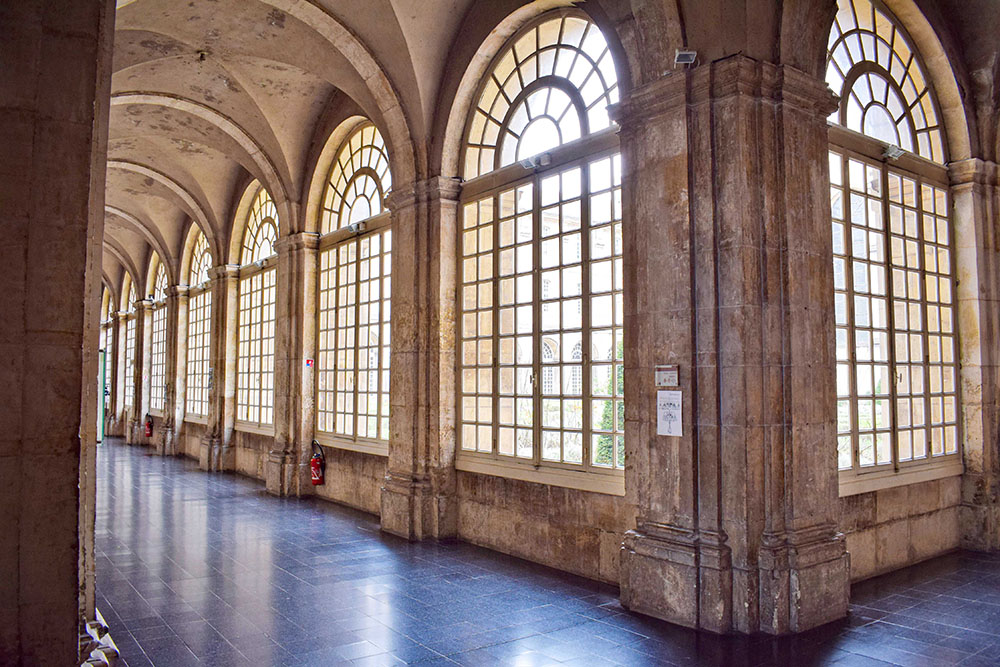
The present cloister dates from the late 17th century and reflects a different artistic world, shaped by Baroque taste and more formal geometry.
There is a decorative elegance here that contrasts beautifully with the rougher charm of some older cloisters.
What makes it memorable for me is precisely that shift in atmosphere. When people think of cloisters, they often imagine only medieval stone and Gothic arches.
Saint-Clément broadens the picture. It shows that cloisters in Lorraine also include spaces of later refinement, where order, ornament, and grace all matter.
Saint-Maur Cloister in Hattonchâtel
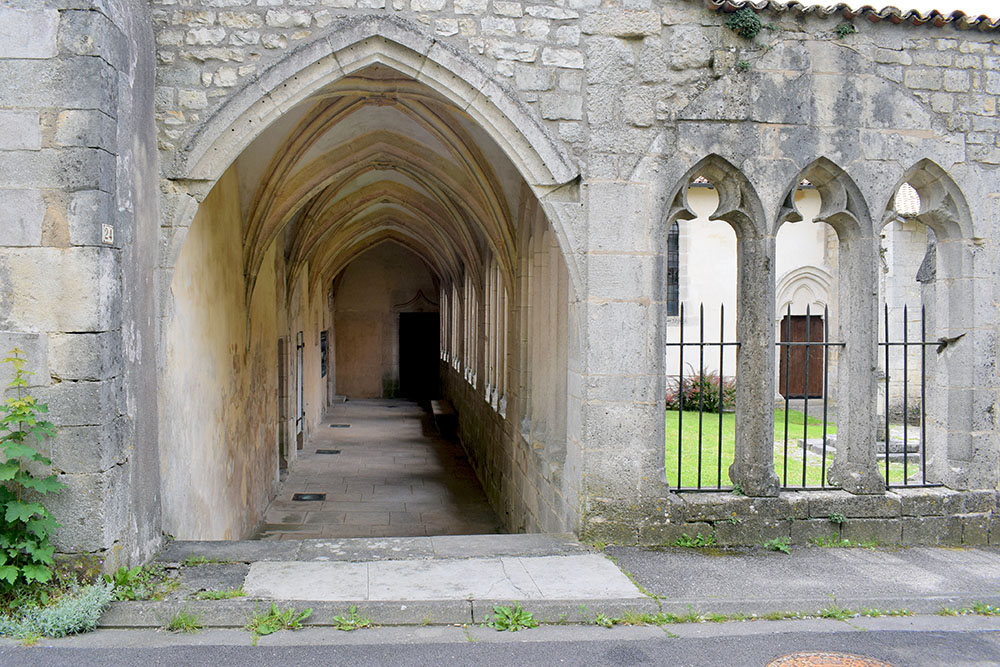
Hattonchâtel is one of those villages that already feels slightly apart from time, and its little Saint-Maur cloister fits that mood perfectly.
It is much smaller than the great cloisters of cathedral towns, and only one gallery survives today. That fragility is part of its charm.
This is not a place that overwhelms you. It draws you in quietly, through scale and atmosphere rather than grandeur.
I love including this cloister in the list because it proves that small does not mean minor. Some of the most touching places are the ones that feel almost overlooked.
In Hattonchâtel, the surviving gallery has something intimate and almost tender about it, as if the past had narrowed to a whisper rather than a declaration.
The Premonstratensian Abbey Cloister in Pont-à-Mousson
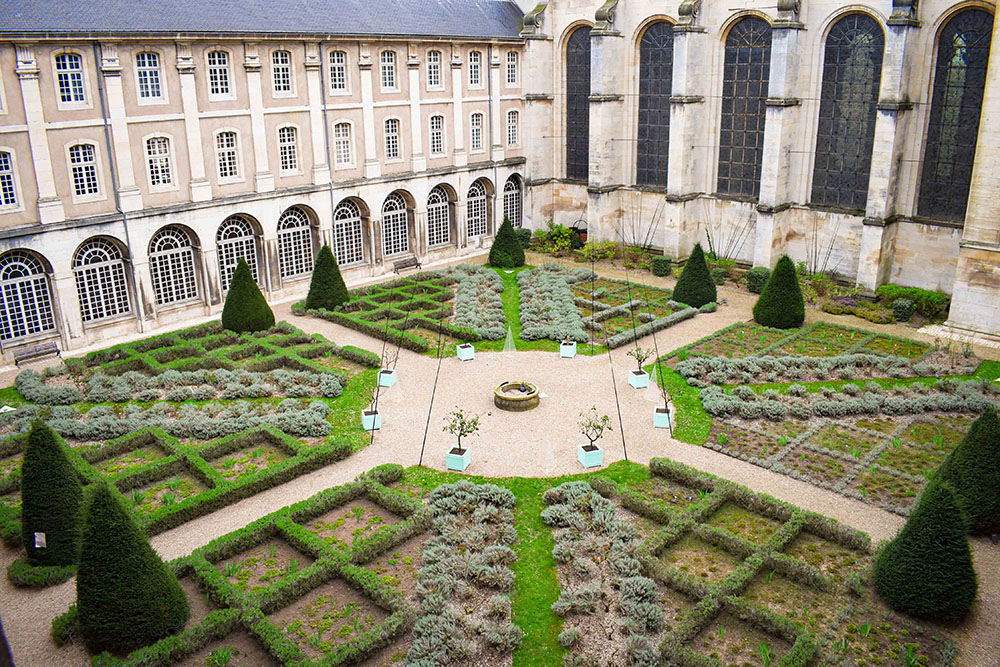
Pont-à-Mousson has an elegance that often surprises visitors, and the abbey cloister is part of that.
The abbey buildings, mainly dating from the 18th century, reflect a classical monastic architecture with a hint of Baroque in their sense of balance and ornament.
The cloister itself is less medieval in spirit than some others on this list, but that is exactly why it matters. It shows another face of the religious heritage of Lorraine.
What I find appealing here is the clarity. The architecture has a certain confidence, a calm order that feels almost Enlightenment in mood.
If some cloisters invite you into mystery, this one invites you into composure. It is a beautiful reminder that cloisters in Lorraine do not belong to one single visual language.
Toul Cathedral Cloister
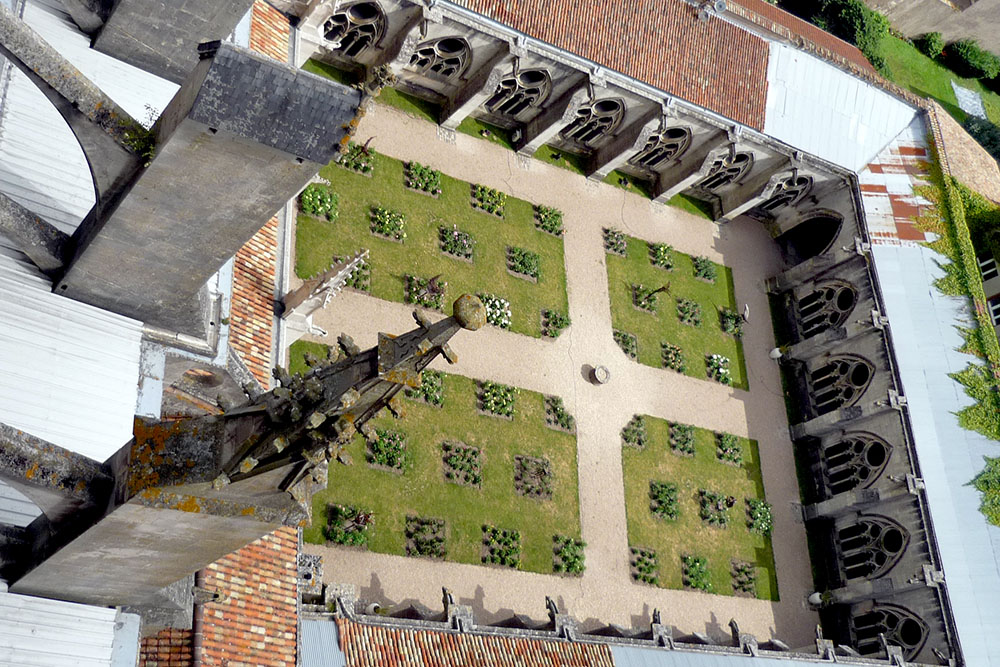
If there is one cloister on this list that feels almost breathtaking in scale, it is Toul.
This is one of the largest cloisters in Lorraine, and indeed one of the most impressive in France.
Its broad proportions, elegant Gothic arcades, and great open garden give it an extraordinary sense of amplitude.
And yet, for all its size, it never feels cold. The architecture is generous rather than intimidating.
Toul is a place where the cloister becomes almost a world in itself. You walk under the galleries and feel how fully the space was conceived — not as an afterthought, but as a major component of the cathedral complex.
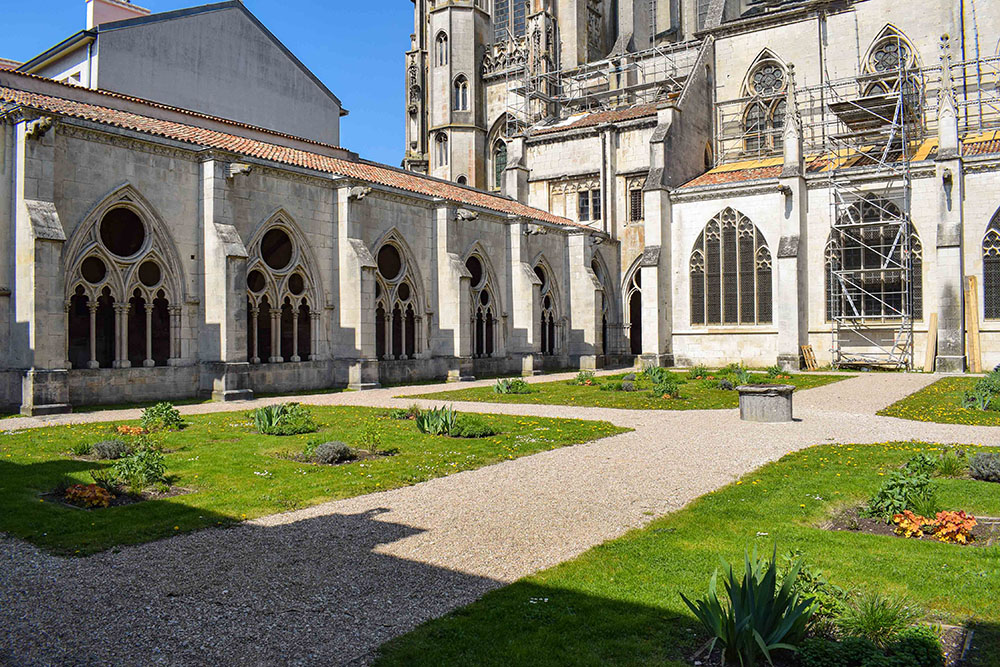
The relationship between the built space and the central garden is especially satisfying here. It is measured, serene, and deeply harmonious.
For me, this is one of the undeniable highlights among cloisters in Lorraine. It has the kind of presence that stays with you long after the visit.
Saint-Gengoult Cloister in Toul
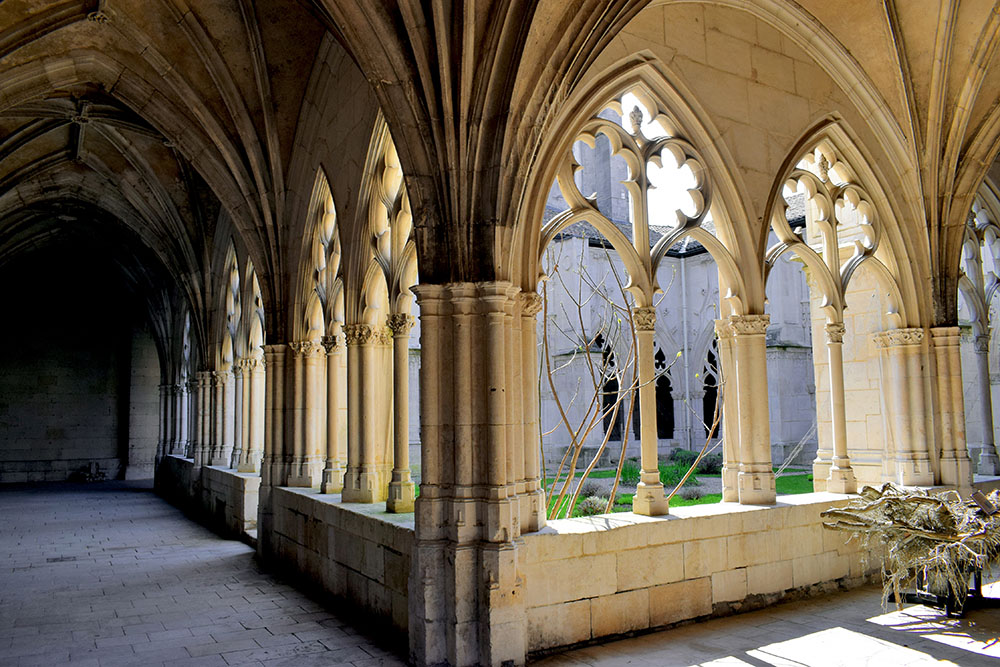
And then there is Saint-Gengoult, which offers a different kind of beauty.
Smaller than the cathedral cloister, it is nevertheless one of the most refined on the list.
Built in the early 16th century, it is close to a perfect square and richly decorated in the flamboyant Gothic style.
The vaulting is intricate, the stonework delicate, and the overall impression is one of precision and grace.
If Toul Cathedral cloister impresses through scale, Saint-Gengoult wins through elegance. It is perhaps the most jewel-like of the cloisters in Lorraine I have seen. It rewards close looking.
This is not a place to rush through. Lift your eyes. Study the bosses. Notice the way the structure feels both airy and exact.
It is the sort of cloister that makes you grateful for craftsmanship.
Senones Abbey Cloister
Senones is quieter in every sense, and that is very much part of its appeal.
The abbey itself carries a strong historical presence, but the cloister survives only in part, with two galleries remaining.
That partial survival gives the place a certain fragility, almost a melancholy. You become more aware of what time has preserved — and what it has taken away.
And yet, Senones remains one of the most moving stops among cloisters in Lorraine.
There is a modesty here that I find deeply attractive. Not every heritage site needs to astonish. Some simply need to endure, and Senones does that beautifully.
Saint-Dié Cathedral Cloister
Saint-Dié brings us back to pink sandstone and to a cloister with a strong, distinctive personality.
Begun in the 15th century, it remains unfinished, and that incompleteness is part of what makes it so interesting.
The broad proportions, the warm stone, and the unusual features — including an exterior pulpit on one of the buttresses — give it a character unlike any other on this list.
I have always liked places that show their history without smoothing it into perfection, and Saint-Dié does exactly that.
It feels open, slightly irregular, and very honest. Among the many cloisters in Lorraine, it is one of the easiest to remember because it refuses to look too polished. It keeps its edges, and I like it for that.
Which Cloisters in Lorraine Left the Strongest Impression on Me?
That is not an easy question, because the answer depends on what kind of beauty one values most.
If I think in terms of grandeur, Toul Cathedral is impossible to ignore. It has scale, balance, and a kind of architectural generosity that makes it unforgettable.
If I think of sheer refinement, Saint-Gengoult in Toul probably comes first. It is one of those places where every detail feels considered.
If I think of urban calm, the Recollets cloister in Metz wins me over every time. It feels like a pause hidden inside a city.
And if I think of intimacy, Hattonchâtel stands apart. Its very smallness is what makes it so affecting.
Perhaps that is the real lesson of cloisters in Lorraine: they do not all move you in the same way. Some impress. Some console. Some intrigue. Some invite silence. Their power lies partly in that variety.
Practical Tips for Visiting Cloisters in Lorraine
If you want to explore cloisters in Lorraine, it helps to travel with a little patience and flexibility.
Some cloisters are easy to visit as part of a cathedral or abbey stop. Others may have limited access or require checking opening times in advance.
That is worth doing, because these spaces are often quieter and less obviously signposted than the main monuments nearby.
I would also recommend slowing down. Cloisters are not places that reward a checklist mentality. They are best approached with time to wander, pause, and look closely.
A few combinations work especially well:
- Metz and Pont-à-Mousson for a varied urban and monastic contrast
- Toul for two exceptional cloisters in one town
- Verdun and Hattonchâtel for a mix of monumentality and intimacy
- Saint-Dié and Senones for a more eastern Vosges-flavoured route
And one final suggestion: always look up. Cloisters are full of details that live above eye level.
Final Thoughts on Cloisters in Lorraine
There are heritage sites that impress you instantly and others that reveal themselves more slowly. For me, cloisters in Lorraine belong firmly to the second category.
They are not the most famous monuments in the region, nor the most photographed. But they are among the most rewarding. They bring together architecture, symbolism, silence, craftsmanship, and memory in a way that few other spaces can.
What I love most is that they ask something different of us as travellers. Not admiration at a distance, but attention. Not speed, but presence.
And perhaps that is why they stay with me so strongly. In Lorraine, behind cathedrals and abbeys, behind town streets and old stones, the cloister often turns out to be the place where the visit becomes personal.