
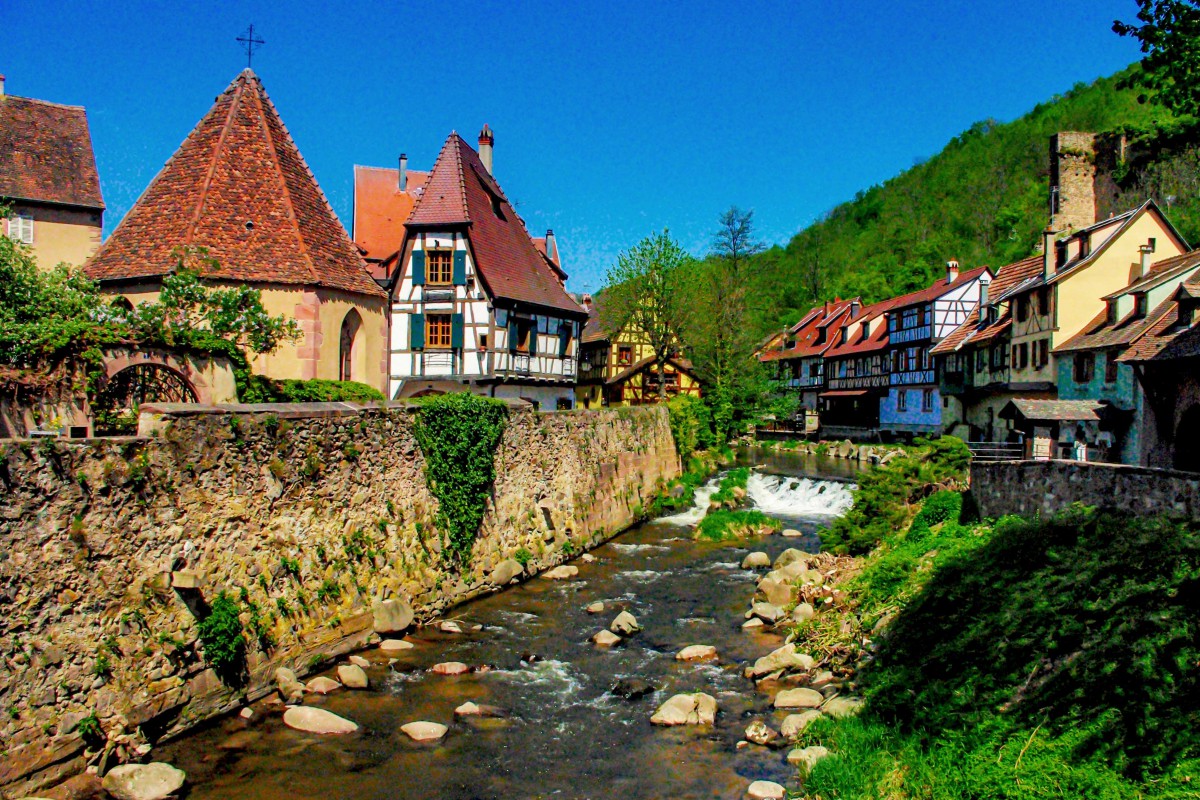

Kaysersberg is the kind of village that makes you slow down without even realising it. Tucked into the foothills of the Vosges and surrounded by vineyards, this small Alsatian town looks as though it has been carefully arranged for a postcard — and yet it feels far more real than polished.
There is a river running through it, a fortified bridge that seems to belong to another age, half-timbered houses leaning gently over cobbled streets, and the ruins of a castle watching from above.
For first-time visitors to Alsace, the village has a wonderful way of bringing together everything people hope to find in the region: history, charm, beautiful architecture, and that unmistakable sense that even a short stroll can turn into a memorable experience.
What makes K’berg especially appealing is that it is not a place you need to “do” with military precision.
You can explore it slowly, on foot, stopping to admire carved facades, quiet corners, old fountains, and the changing views between the church tower and the surrounding hills. It is small enough to feel easy, but rich enough to reward curiosity.
In this guide, I’ll show you why Kaysersberg deserves a place on your Alsace itinerary, what to see once you arrive, and a few practical tips to help you enjoy the village at its best.
Why Visit Kaysersberg?
Kaysersberg has a way of winning people over very quickly. At first glance, it seems to offer everything visitors expect from Alsace: half-timbered houses, flower-decked streets, a river, vineyard views, and enough medieval charm to keep any camera busy. But Kaysersberg is not simply pretty. That is what makes it memorable.
What sets K’berg apart is the way its beauty is tied to a strong sense of place. This is not a village that feels staged for tourists. Its old bridge, church, fortified walls, historic houses, and castle ruins all tell the story of a town that mattered for centuries. You do not just walk through Kaysersberg admiring façades. You walk through layers of history.
For first-time visitors to Alsace, K’berg is also wonderfully easy to enjoy. The historic centre is compact, walkable, and full of rewarding details. You can spend an hour here and leave charmed. You can spend half a day here and start noticing much more: carved stone doorways, timber-framed houses with distinct personalities, quiet lanes near the walls, and changing views up toward the castle.
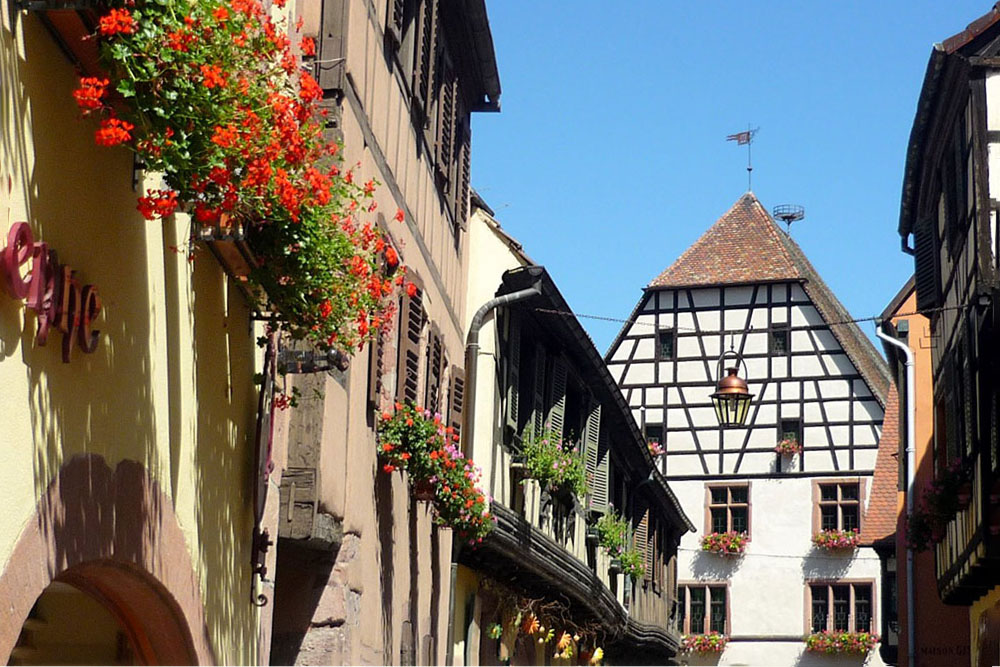
Another reason to visit Kaysersberg is its balance. Some beautiful villages can feel a little too polished, or a little too crowded with gift shops and postcard clichés. The village certainly has its share of visitors, especially in peak season, but it still feels like a place with depth. There is elegance here, yes, but also texture, age, and character.
K’berg is also a very good introduction to Alsace for British and American travellers who may not yet know the region well. It brings together many of the elements that make Alsace so distinctive: Germanic-looking architecture, French atmosphere, wine-country scenery, and a cultural identity that feels slightly different from the rest of France. In that sense, Kaysersberg is not only a lovely place to visit. It is also a very good place to begin understanding the region.
And then there is the simple pleasure of being there. K’berg is the kind of place where walking slowly feels like the correct decision. You cross the bridge, hear the river below, glance up at the church tower, notice a worn date above a doorway, and suddenly realise that the village has done something rather clever: it has made you stop rushing.
What to See in Kaysersberg
Kaysersberg may be small, but it is wonderfully dense with things to see. This is one of those places where you can cover the historic centre on foot without any effort, yet still come away with the feeling that every few steps reveals something worth stopping for. The secret is not to treat the village as a checklist. It is far better enjoyed as a sequence of views, details, and small discoveries.
Stroll Along Kaysersberg’s Grand-Rue
The best way to begin in Kaysersberg is simply to walk along the Grand-Rue. This is the village’s main historic street, and it immediately gives you the flavour of the place: timber-framed houses, old stone façades, colourful signs, and the sort of windows that make you wonder whether people in Alsace are born knowing how to arrange geraniums perfectly.
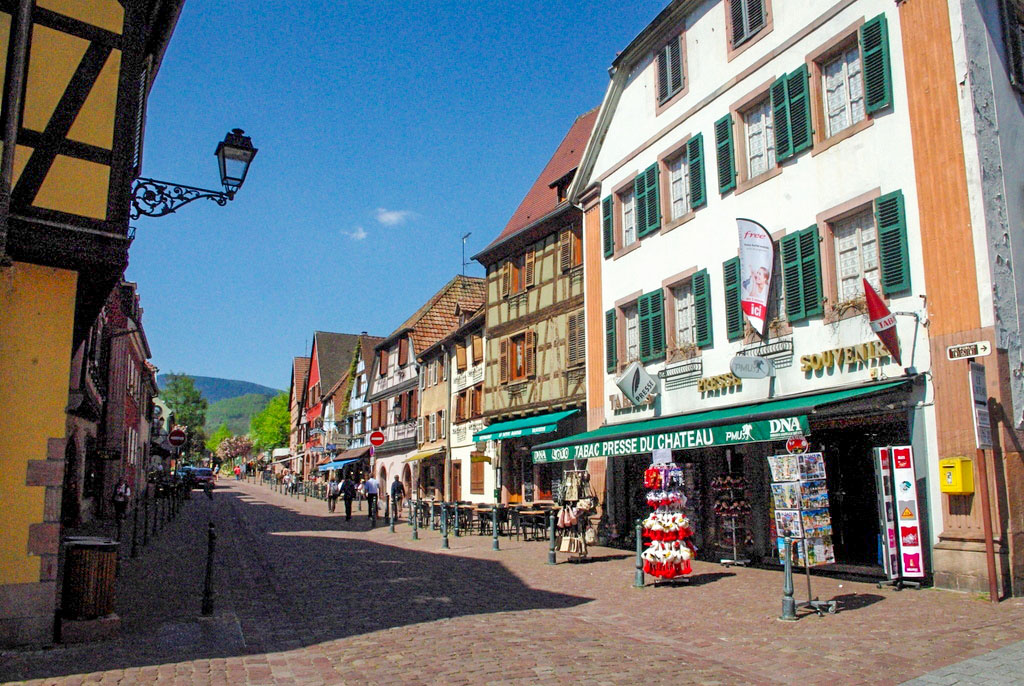
The Grand-Rue (Rue du Général de Gaulle) is not just attractive. It is also the thread that ties much of K’berg together. As you walk, you start to notice how the village blends elegance and age. Some buildings feel refined, others more rustic, but together they create that slightly theatrical Alsatian streetscape that people travel a long way to see.
See the Fortified Bridge of Kaysersberg
If there is one monument that instantly gives the village its identity, it is the fortified bridge. Crossing the Weiss River, it is both practical and picturesque, which is a very useful combination for a landmark. Many villages have a pretty bridge. Kaysersberg has one that looks as though it has been taking its defensive duties very seriously for several centuries.
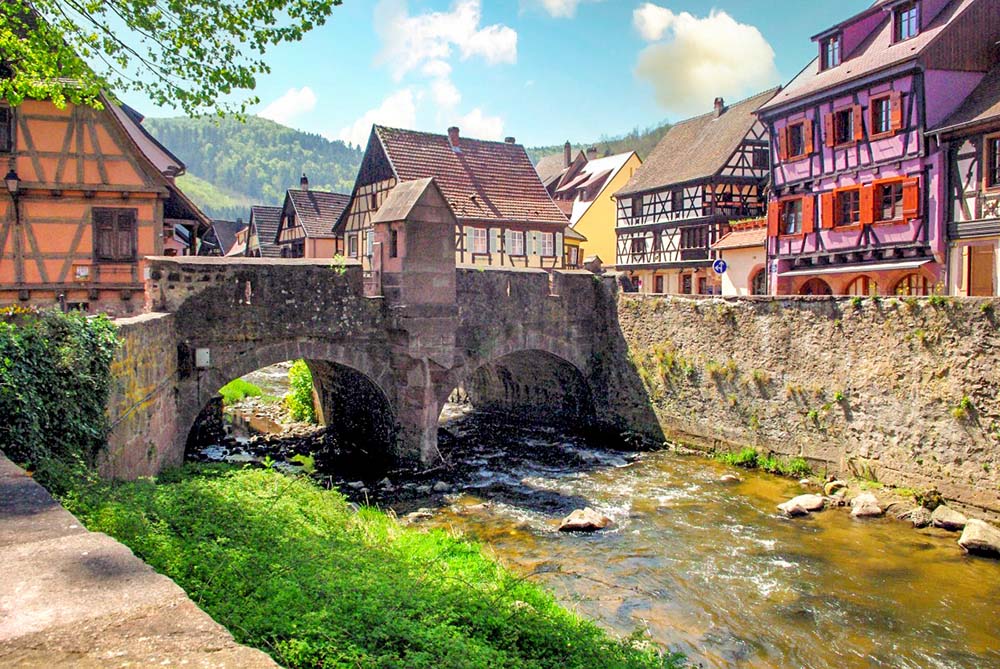
This bridge is one of the most distinctive sights in the village, and it is also one of the best places to pause. From here, you get lovely views of the river, the surrounding houses, and the village rising gently behind them. It is also one of those spots where you realise that K’berg does not need grand monuments on a huge scale. Its charm lies in proportion, texture, and atmosphere.
Step Inside Kaysersberg’s Sainte-Croix Church
The Church of Sainte-Croix is another essential stop. From the outside, it already catches the eye with its solid presence and unusual bell tower. Inside, it adds something deeper to the visit: a sense that this village was not only picturesque, but historically important and spiritually rooted.
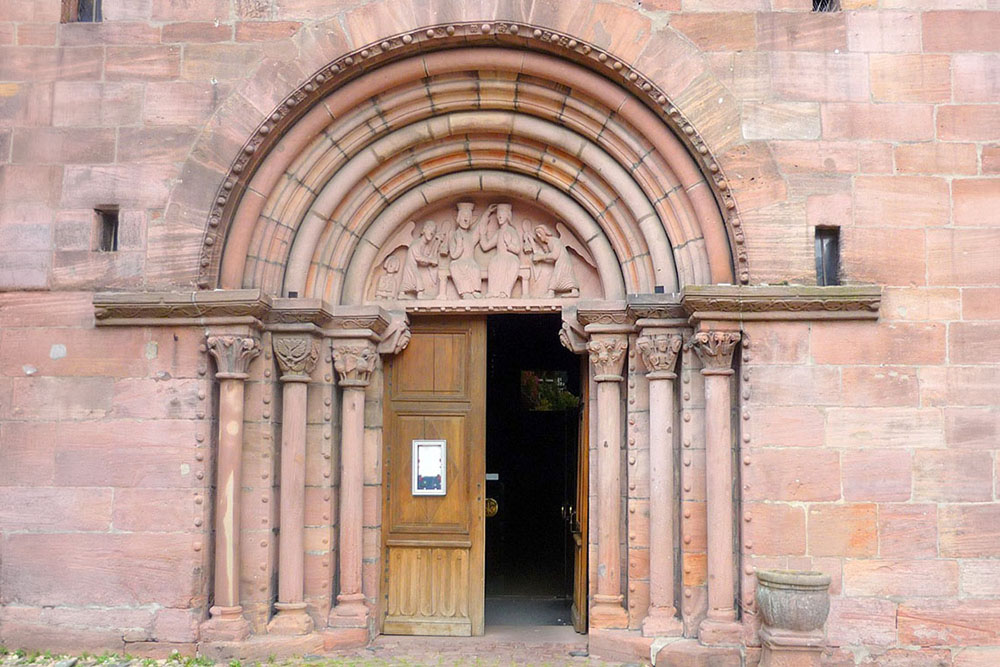
For visitors from Britain or America, one of the pleasures of the Alsatian village is seeing how much history is packed into such a small place. In a larger city, a church like this might be one stop among many. Here, it becomes part of the village’s whole personality. It is not just a monument to tick off, but part of the rhythm of the place.
Admire the Heart of Kaysersberg Around the Church Square
Around the church, the village becomes especially rewarding for those who like to wander without hurry. The square, the fountain, the neighbouring historic buildings, and the shifting perspectives between stone and timber all create one of the most photogenic parts of the village.
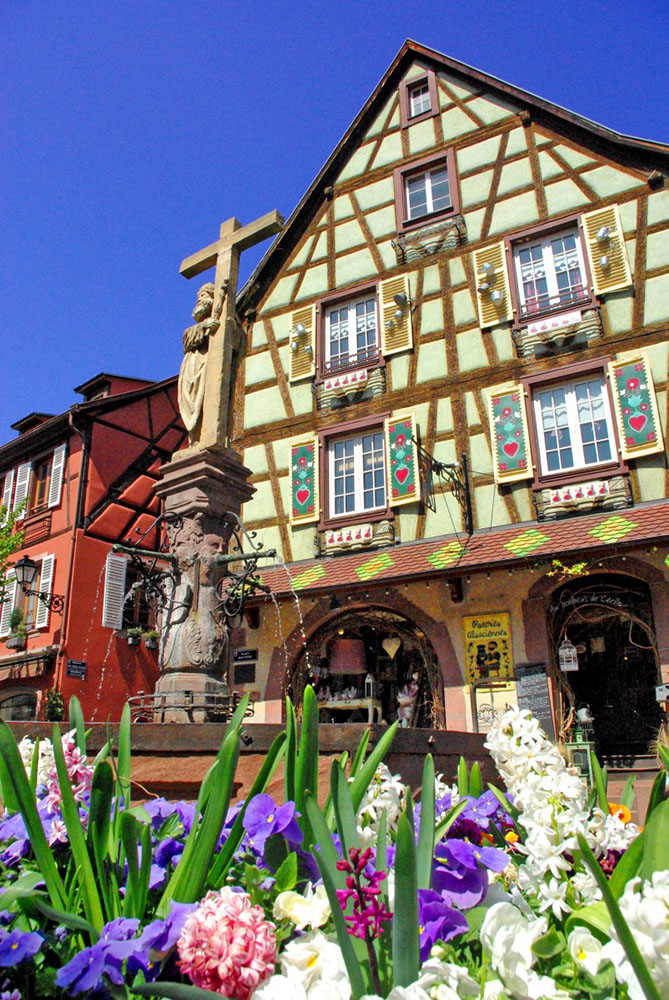
This is also where the Alsatian village shows its quieter charm. Not every memorable place has to be dramatic. Sometimes it is enough to stand in a square, hear water running from a fountain, and notice how the light falls on an old façade. K’berg is very good at offering exactly that sort of moment.
Walk Beside the Walls of Kaysersberg
One of the pleasures of Kaysersberg is that the village is not limited to a single postcard view. If you move slightly away from the busiest central areas, you begin to notice the old fortifications and the quieter edges of the historic centre. The remains of the walls help explain why K’berg feels so coherent: it still carries the shape of a place that once protected itself.
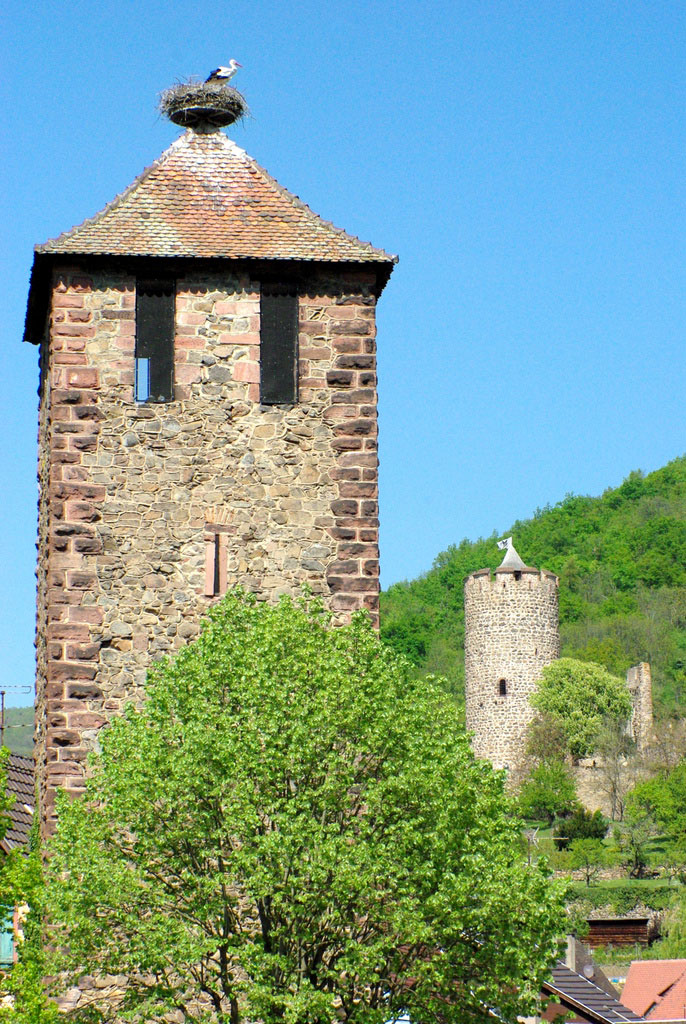
This part often feels calmer and more reflective. It is where you start to see the village not simply as a charming destination, but as a historic settlement with structure, memory, and a long life behind it.
Climb to Kaysersberg Castle
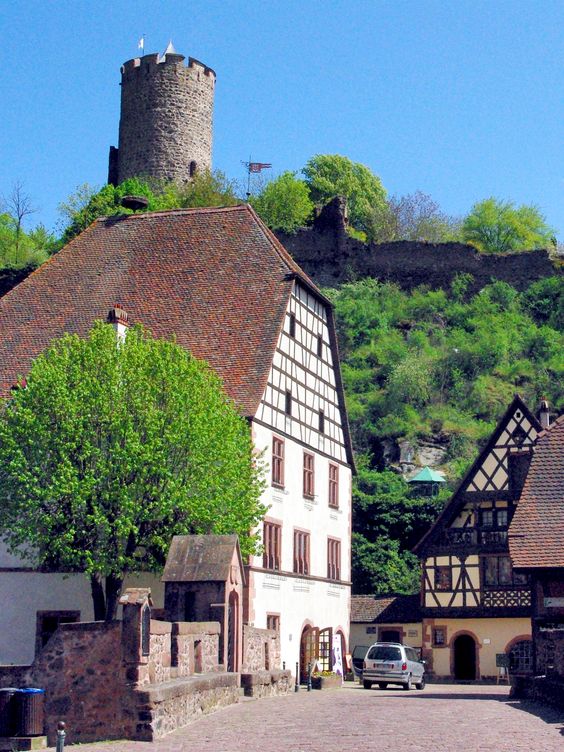
Above the village stand the ruins of Kaysersberg Castle, and the climb is well worth it. If the streets below give you intimacy, the castle gives you perspective. From up there, you can look back over the village, the valley, and the surrounding vineyards, and understand how beautifully K’berg sits within its landscape.

There is also something satisfying about the contrast. Down in the centre, K’berg feels delicate and detailed. Up at the castle, it feels strategic and historical. The two belong together. One gives the village its charm; the other gives it stature.
Notice the Historic Houses That Give Kaysersberg Its Character
Beyond the headline sights, one of the great joys of Kaysersberg is its collection of historic houses. Some stand out because of their timber framing, others because of carved stone, old inscriptions, or the subtle signs of wealth and craftsmanship. This is where K’berg rewards the observant traveller.
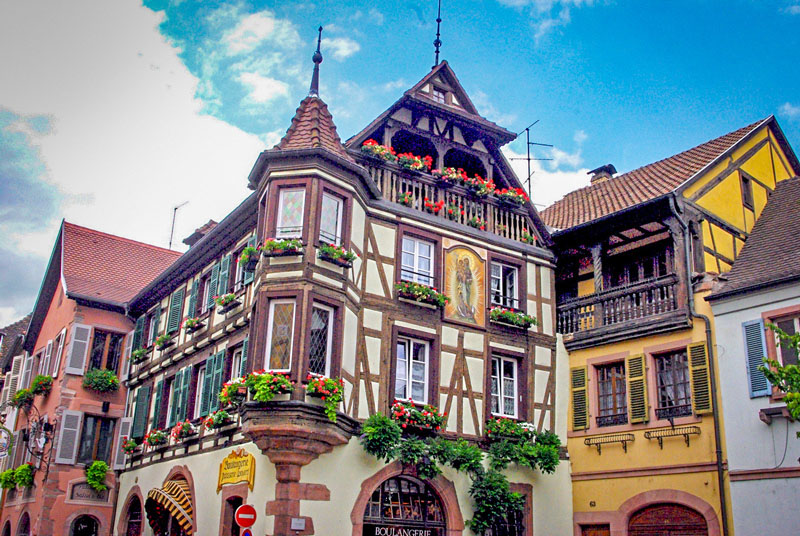
You do not need to know the history of every house to enjoy it. In fact, part of the pleasure is simply noticing the variety. Kaysersberg never feels flat or repetitive. One façade leans, another is more formal, and another hides small decorative details you would miss if you walked too quickly. It is a village that asks you to look up, look twice, and occasionally stop in the middle of the street with the expression of someone who has just found yet another excellent reason to take a photo.
The Most Beautiful Walk in Kaysersberg
One of the best things about Kaysersberg is that it does not require a complicated plan. This is not the sort of place where you need to study a map as though you are preparing a military campaign.
The real pleasure comes from walking slowly, following the natural rhythm of the village, and allowing its streets, bridges, houses, and viewpoints to reveal themselves in the right order.
For a first visit, the most rewarding walk through K’berg is one that combines the village’s main historic sights with its quieter corners. It gives you the postcard views people hope to find, but also the atmosphere that makes the village feel more than just photogenic.
Begin Your Walk in the Heart of Kaysersberg
The ideal approach is to start in the historic centre, where the village immediately introduces itself with charm and confidence. From the very first steps, you are surrounded by old houses, sloping roofs, timber frames, and the kind of cobbled setting that makes even people who claim not to care about picturesque villages suddenly reach for their camera.
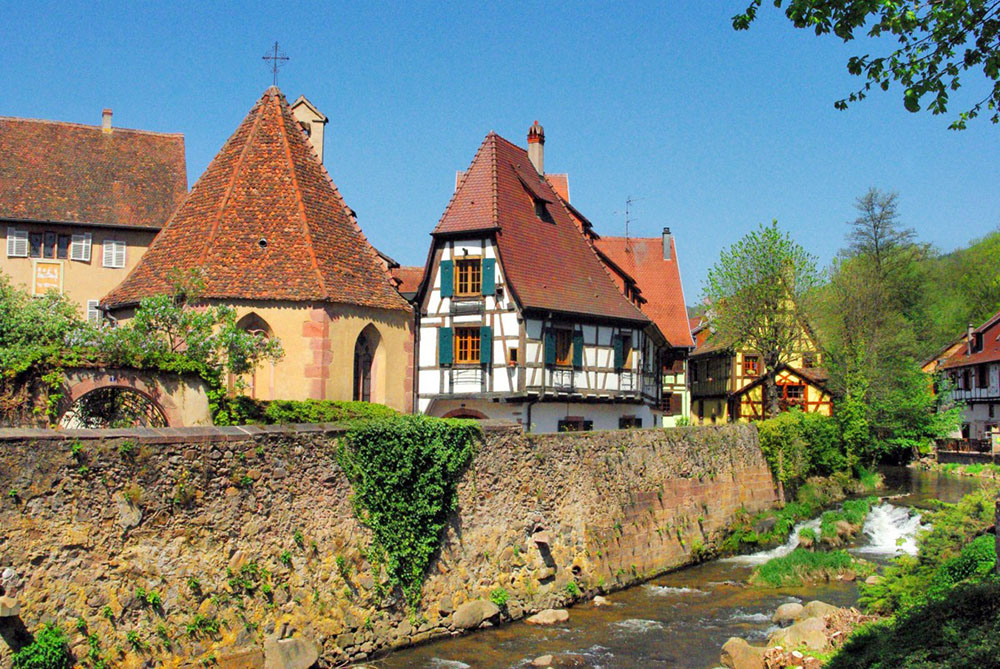
Starting in the centre also helps you understand K’berg quickly. The village is compact, and that compactness is part of its appeal. You are never far from the next point of interest, yet nothing feels rushed or crowded together awkwardly. K’berg feels coherent, as though history knew what it was doing when it laid out the place.
Follow Kaysersberg’s Grand-Rue at an Unhurried Pace
From there, walk along the Grand-Rue without trying to “complete” it too quickly. This is where you need to slow down. The street is not only a route through the village; it is part of the experience itself. Doorways, carved details, upper-storey windows, painted façades, signs, and half-hidden corners all compete gently for your attention.
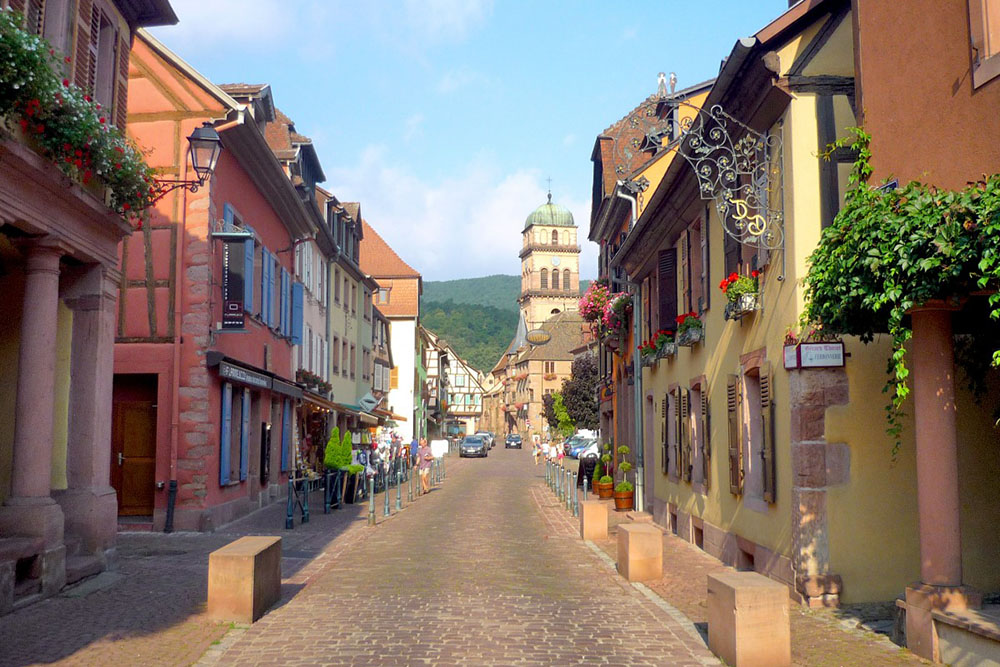
This is also the moment to remember that Kaysersberg is best enjoyed by looking up as much as looking ahead. Many visitors understandably focus on the obvious landmarks, but some of the village’s greatest pleasures are found in the details above eye level.
Cross the Fortified Bridge of Kaysersberg
Sooner or later, your walk through K’berg must bring you to the fortified bridge. It is one of the defining views of the village and one of the places where the setting feels especially complete. The river below, the old stone, the nearby houses, and the subtle movement of the water all combine to create a scene that feels almost unfairly well composed.
Pause here a little longer than you think necessary. In K’berg, some places deserve a proper pause, and this is one of them. Look one way for the river and houses, then the other for the village’s rising profile. It is the sort of spot that makes you understand why some travellers arrive planning a quick stop and end up lingering.
Explore the Church Quarter of Kaysersberg
After the bridge, continue toward the church area, which is one of the most characterful parts of Kaysersberg. Here, the atmosphere shifts slightly. The village still feels intimate, but the presence of the church and the surrounding historic buildings gives the area extra gravity and a stronger sense of age.
This is a good part for wandering rather than marching. Take in the square, the fountain, the angles between buildings, and the way the church tower rises above everything else. The village often reveals itself best in these little transitions, where one view opens into another and no single monument tries too hard to dominate.
Take the Smaller Streets, Not Just the Obvious Ones
A beautiful walk through Kaysersberg should never stay only on the main route. Some of the village’s most charming moments are found just away from the busiest stretch, in lanes where the atmosphere becomes quieter and more residential. This is where Kaysersberg feels especially authentic.
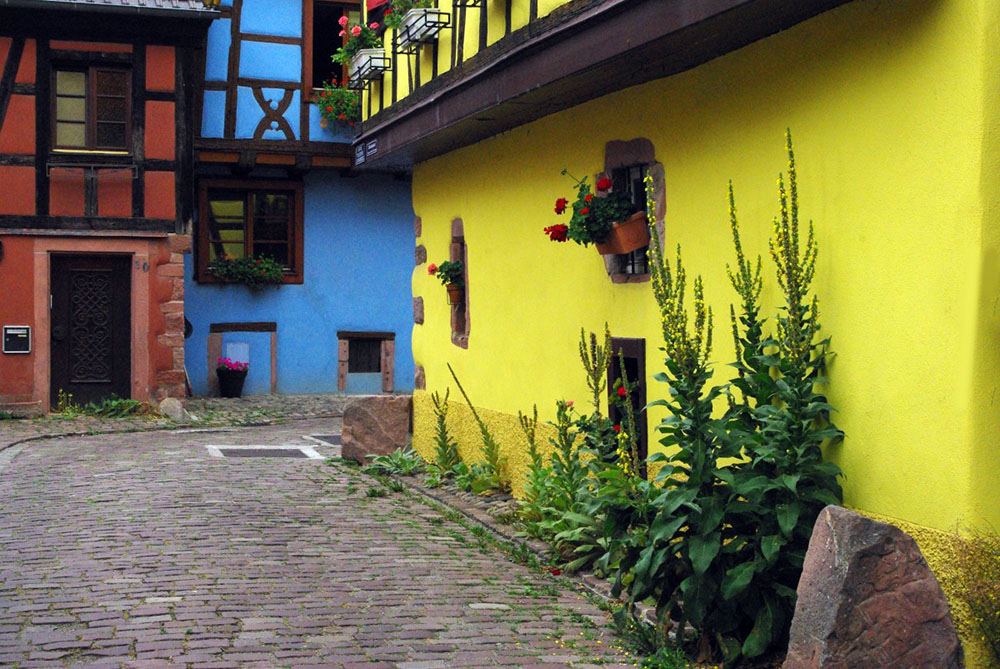
These smaller streets are where you notice how varied Kaysersberg really is. One part feels almost storybook, another more solid and historic, another more peaceful and understated. The village does not rely on a single trick. It keeps changing gently as you move through it, which is one reason the walk remains so satisfying from beginning to end.
Walk Along the Walls of Kaysersberg
If you have time, make sure your route includes the old walls or their remains. This adds an important layer to your visit, because it helps you see Kaysersberg not just as a lovely village, but as a place shaped by defence, status, and long history.
This part also offers a different mood. The centre can be lively and full of visual charm, but near the fortifications, the village feels more reflective. It is a good reminder that beauty here is not accidental. Kaysersberg has depth because it has lived many lives.
Climb Above Kaysersberg to the Castle
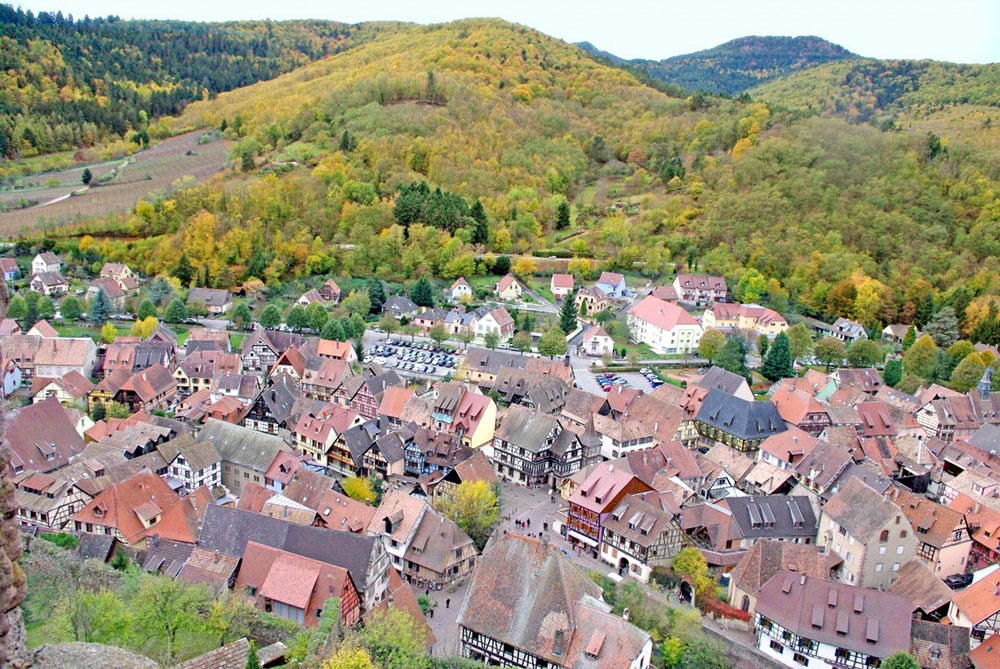
To complete the walk properly, climb up to Kaysersberg Castle. The ascent gives your visit a natural climax. After exploring the village at street level, you finally step back and see it in its wider setting: roofs, church tower, valley, vineyards, and hills all fitting together with enviable ease.
The castle ruins themselves are worth seeing, but the real reward is perspective. From above, Kaysersberg stops being just a charming place and becomes a whole landscape composition. You understand why it developed here, why it feels so protected, and why it leaves such a strong impression on visitors.
End Your Kaysersberg Walk by Slowing Down Again
Once you come back down, do not make the mistake of treating the walk as finished the moment you have “seen everything.” Kaysersberg is one of those places that deserves a final unstructured moment. Sit somewhere. Cross the bridge again. Take one last pass along a favourite street. Buy something small from a local shop or bakery. Let the village settle in your mind.
The most beautiful walk in Kaysersberg is not beautiful because it is dramatic from start to finish. It is beautiful because it unfolds naturally. It begins with curiosity, deepens into admiration, and ends with that pleasant travel feeling that is difficult to fake: the sense that a place has quietly exceeded expectations.
My Best Tips for Visiting Kaysersberg
Kaysersberg is easy to enjoy, but a few simple choices can make the visit much better. This is the kind of village that rewards good timing, comfortable shoes, and a willingness to slow down. In other words, Kaysersberg is not difficult — it just deserves slightly better behaviour from its visitors than the usual rushed photo stop.
Arrive Early to Enjoy Kaysersberg at Its Quietest
One of my best tips for visiting Kaysersberg is to arrive early in the day if you can. Like many of Alsace’s most beautiful villages, Kaysersberg becomes busier as the day goes on, especially in the warmer months, during weekends, and around Christmas.
In the morning, Kaysersberg feels gentler. The streets are quieter, the light is often softer, and the whole village seems to belong a little more to those who are prepared to start the day properly. It is also much easier to admire the details when you are not weaving your way through crowds with the grim determination of someone trying to board a train at rush hour.
Give Kaysersberg More Time Than You Think
A common mistake is to treat Kaysersberg as a very quick stop on an Alsace itinerary. Technically, yes, you can see the village centre in a short time. But seeing it and enjoying it are not quite the same thing.
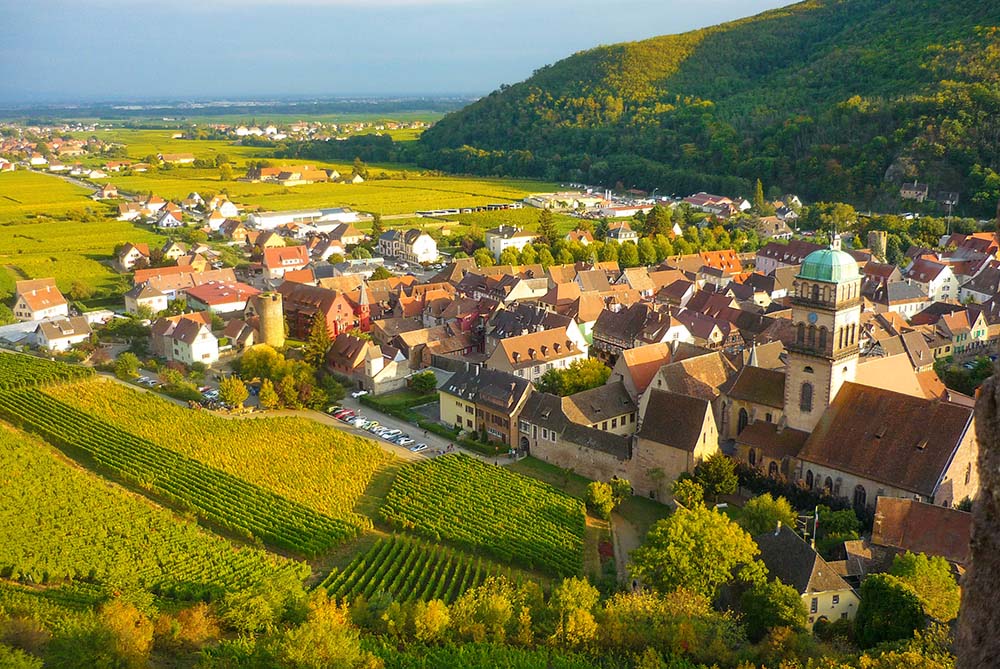
Kaysersberg works best when you allow yourself time to wander, pause, double back, climb to the castle, and notice what lies beyond the obvious viewpoints. Even if your schedule is tight, try to give Kaysersberg at least enough time for a slow walk rather than a brisk inspection. Villages like this are not improved by haste.
Wear Good Shoes for Kaysersberg
This may not sound glamorous, but it is one of the more useful tips for Kaysersberg. The historic centre includes cobbled streets, uneven surfaces, and, if you plan to go up to the Castle, a climb that definitely favours sensible footwear over optimism.
You do not need hiking boots for Kaysersberg, unless you are determined to approach every village as though it were an Alpine expedition. But comfortable walking shoes will make the visit more pleasant and help you explore without constantly looking at the ground in mild regret.
Look Beyond the Most Famous Views of Kaysersberg
Yes, the classic views of Kaysersberg are lovely. The bridge, the church, the river, the old houses — all absolutely worth seeing. But one of the best ways to enjoy Kaysersberg is to spend a little time off the obvious route as well.
Step into the smaller streets. Walk near the old walls. Look at the upper floors of houses, not just the ground level. Pause in quieter corners. Kaysersberg is the sort of place where the atmosphere often deepens as soon as you move a few metres away from the busiest spot. The postcard view is only the beginning.
Climb to Kaysersberg Castle If You Can
If you are physically comfortable with a short uphill walk, I would strongly recommend climbing to Kaysersberg Castle. It changes your understanding of the village.
Down below, Kaysersberg feels intimate and detailed. From above, it suddenly makes sense as a whole.
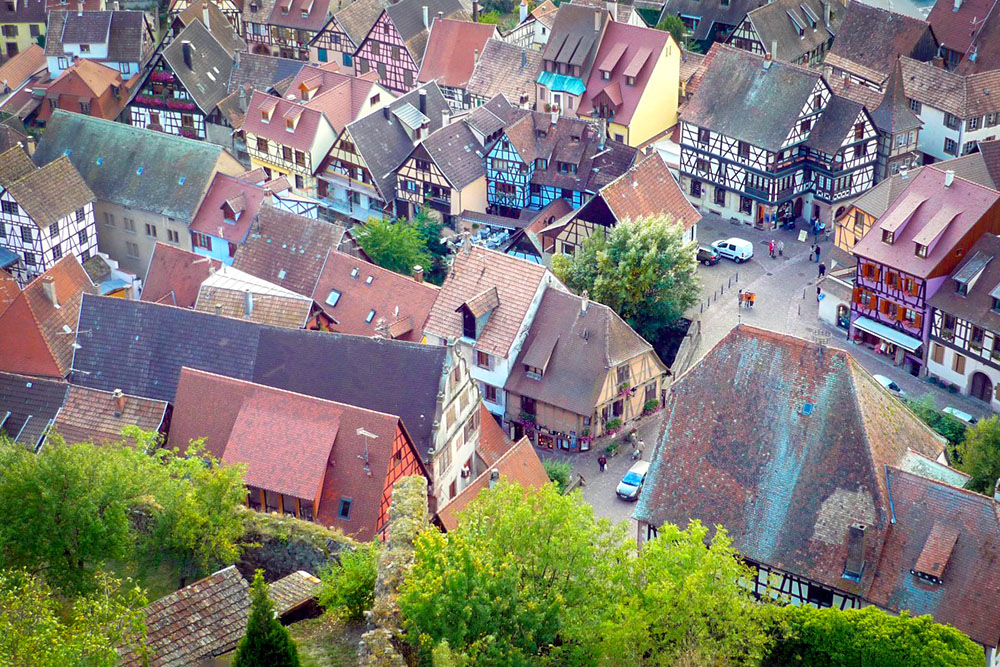
The castle adds more than just a viewpoint. It gives Kaysersberg a historical frame and a stronger sense of place within the landscape. It is also a useful reminder that some of the most memorable experiences in a village come not from shopping or ticking off sights, but from changing your perspective.
Visit Kaysersberg as Part of a Wider Alsace Trip
Another helpful tip is to think of Kaysersberg as part of a broader Alsace itinerary. It works beautifully on its own, but it also pairs well with nearby destinations such as Colmar and other wine-route villages.
For British and American visitors, especially, this matters because Kaysersberg is not an isolated destination in the middle of nowhere. It is one gem among many in a very rewarding region. Seeing Kaysersberg within that wider setting helps you appreciate both the village itself and the distinctive cultural character of Alsace.
Don’t Visit Kaysersberg Only Through a Camera Lens
This may sound slightly ironic in a village as photogenic as Kaysersberg, but it is good advice all the same. Take photos, of course. You would need unusual levels of self-restraint not to. But do not let photography become the entire experience.
Some of the best moments in Kaysersberg are not the ones you capture. They are the small impressions that happen while walking: the sound of water under the bridge, the change of light on old stone, the sudden view up to the castle, the calm of a quieter lane. Kaysersberg is not just a place to photograph. It is a place to absorb.
My Final Practical Advice for Kaysersberg
If I had to sum up my advice very simply, it would be this: arrive with enough time, walk slowly, wear decent shoes, and do not stop at the first pretty view. Kaysersberg is one of those rare villages that is easy to enjoy at first glance but even better once you give it a little attention.
That, in the end, is the real secret of Kaysersberg. It does not ask much of you. Just a little time, a little curiosity, and the good sense not to rush through somewhere this lovely as though it were a minor administrative errand.
When to Visit Kaysersberg
Kaysersberg is one of those places that changes gently with the seasons without ever losing its appeal. There is no truly bad time to visit, but the experience does shift depending on when you go. Some visitors come for flowers, others for vineyards, others for Christmas lights, and some simply want to see Kaysersberg when it feels a little quieter and easier to absorb.
Visit in Spring for Fresh Colour and Light
Spring is a lovely time to visit Kaysersberg. The village begins to wake up after winter, the light grows softer and clearer, and the surrounding landscape starts to regain its colour. This season suits Kaysersberg especially well because the village already has charm built into its streets and buildings; spring simply adds a little freshness to the scene.
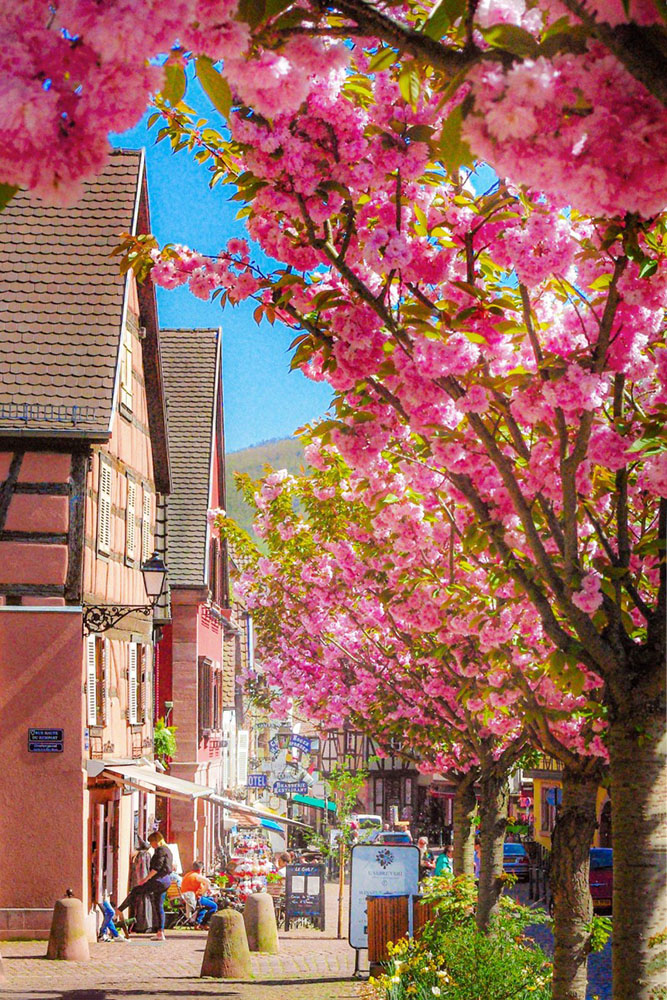
For visitors who prefer a calmer atmosphere, spring can be a very pleasant moment to enjoy Kaysersberg before the busiest summer weeks arrive. The village feels alive again, but usually without the full intensity of peak tourist crowds. It is a good season for strolling, photography, and that very agreeable feeling of discovering somewhere beautiful before everyone else has had the same idea.
Visit in Summer for a Classic Alsace Experience
Summer is when Kaysersberg looks exactly as many first-time visitors hope it will. The timber-framed houses seem brighter, the streets feel lively, and the whole village settles comfortably into its role as one of Alsace’s most appealing destinations. If you are putting together a first trip to the region, summer gives you Kaysersberg in full postcard mode.
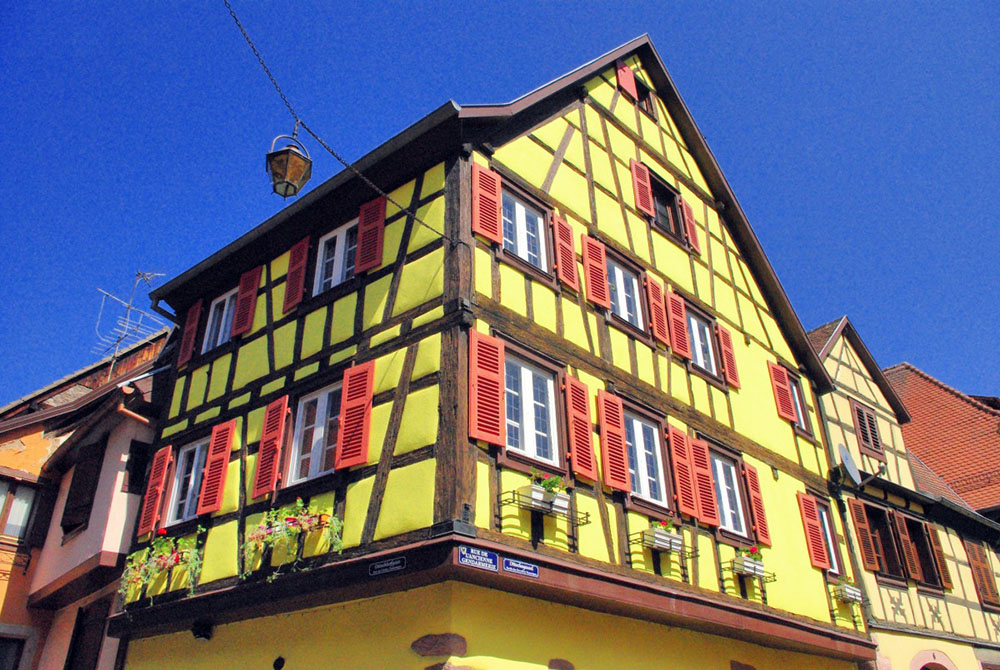
That said, summer also brings more people. Kaysersberg remains charming, but it is wise to arrive early if you want to enjoy the village at its best. In summer, the difference between seeing Kaysersberg at 9 in the morning and arriving later in the middle of the day can be the difference between peaceful admiration and gently competitive walking.
Visit in Autumn for Atmosphere and Vineyard Scenery
Autumn is an especially rewarding season for Kaysersberg, not least because the village sits so naturally within wine country. The nearby vineyards take on warmer tones, the light becomes softer, and the whole setting gains a little extra depth and richness. If summer shows the village at its brightest, autumn shows it at its most atmospheric.
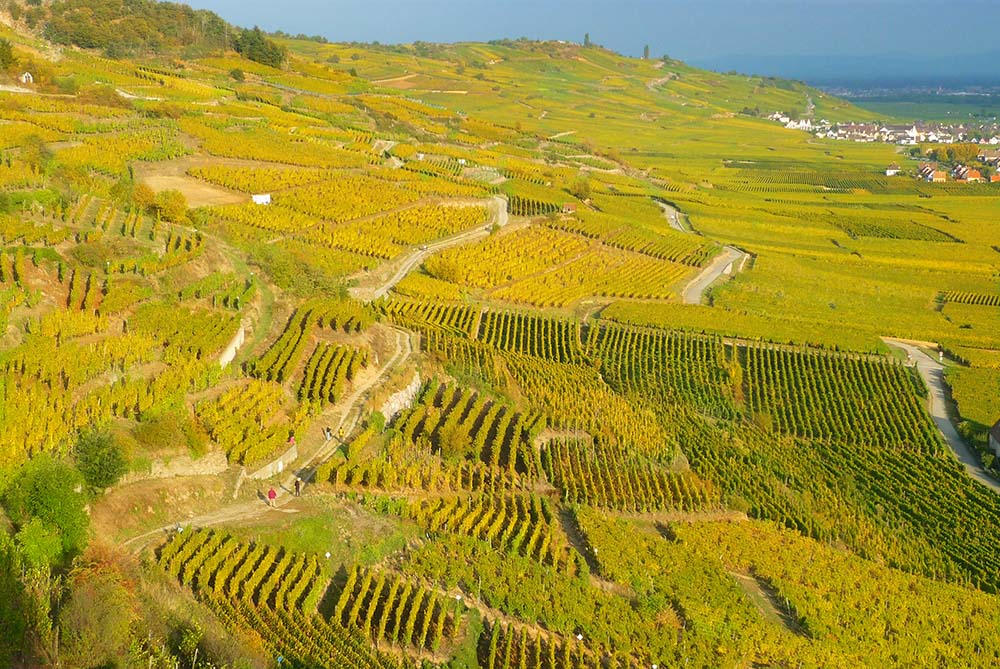
There is also something very fitting about visiting Kaysersberg at this time of year. The combination of old stone, timber-framed houses, sloping roofs, and autumn colour feels entirely right, as though the village had quietly been waiting for this season to show off a little. For many travellers, autumn may be the moment when Kaysersberg feels most memorable.
Visit in Winter for Christmas Magic and a Different Mood
Winter gives Kaysersberg a different personality. Outside the Christmas period, the village can feel calmer, more introspective, and almost more medieval in mood. But during the festive season, Kaysersberg becomes one of those Alsatian destinations people seek out for Christmas atmosphere, decorations, and market charm.
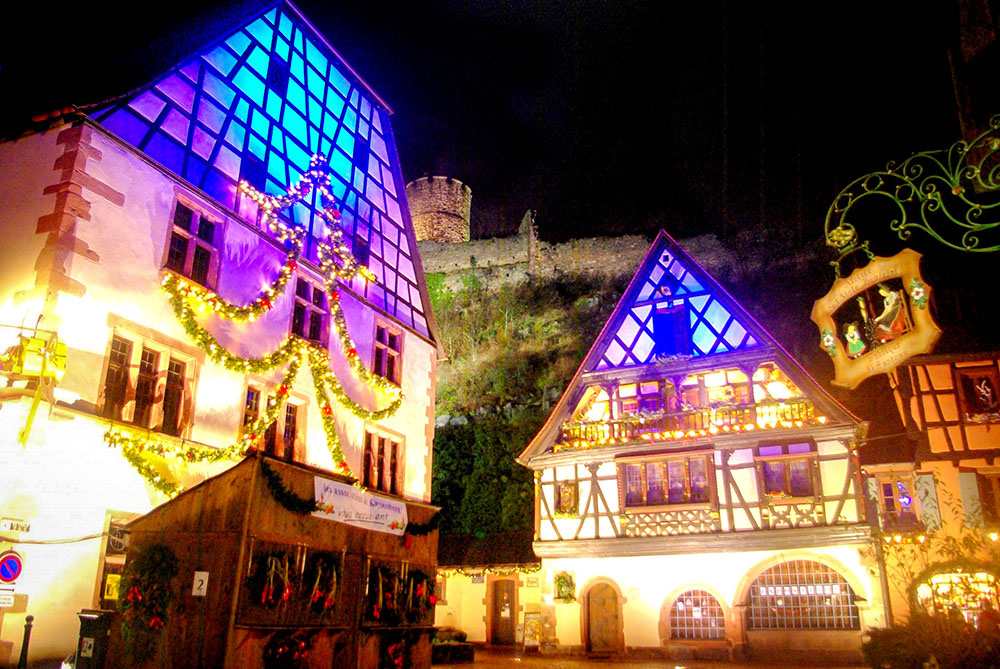
This is, of course, one of the most popular times to visit Kaysersberg, so it is not the moment to expect solitude. Still, if you enjoy festive travel and can accept the crowds, winter can be a magical time to see Kaysersberg. The key is to know what sort of experience you want. If you want quiet beauty, choose another season or visit outside the busiest festive dates. If you want lights, atmosphere, and seasonal charm, Kaysersberg will not disappoint.
The Best Time to Visit Depends on Your Travel Style
In the end, the best time to visit Kaysersberg depends less on a strict calendar and more on the sort of traveller you are. If you like flowers, fresh air, and gentler pacing, spring is excellent. If you want the full classic Alsace experience, summer works beautifully. If you love richer colours and a wine-country atmosphere, autumn may be ideal. And if Christmas villages are entirely your weakness, then Kaysersberg in winter will probably be very hard to resist.
The important thing is that Kaysersberg is not a one-season destination. It has enough character, history, and setting to remain rewarding throughout the year. The village simply changes tone, like a good piece of music played in a different light.
My Personal Advice on When to Visit
If I were advising a first-time visitor who wants to enjoy Kaysersberg with a balance of beauty and relative calm, I would lean toward spring or autumn. Those seasons allow the village to breathe a little more, and they make it easier to notice the village rather than just navigate around other people noticing it too.
But the truth is that Kaysersberg has that rare quality shared by the best small destinations: whenever you arrive, it tends to find a way of looking as though it had been expecting you.
Is Kaysersberg Worth Visiting?
Yes, Kaysersberg is absolutely worth visiting — and not simply because it is beautiful, though it certainly is that. What makes this particular Alsatian village so rewarding is the way it combines visual charm with real substance.
This is not a village that relies on one pretty street and a good reputation. It offers a fortified bridge, a remarkable church, old walls, a hilltop castle, and enough historic character to make even a short walk feel rich with discovery.
For first-time visitors to Alsace, Kaysersberg is also wonderfully accessible. It is easy to explore, easy to enjoy, and easy to fit into a wider itinerary. Yet it never feels forgettable or interchangeable. Some villages are pleasant but blur together after a while. Kaysersberg does not. It has too much personality for that.
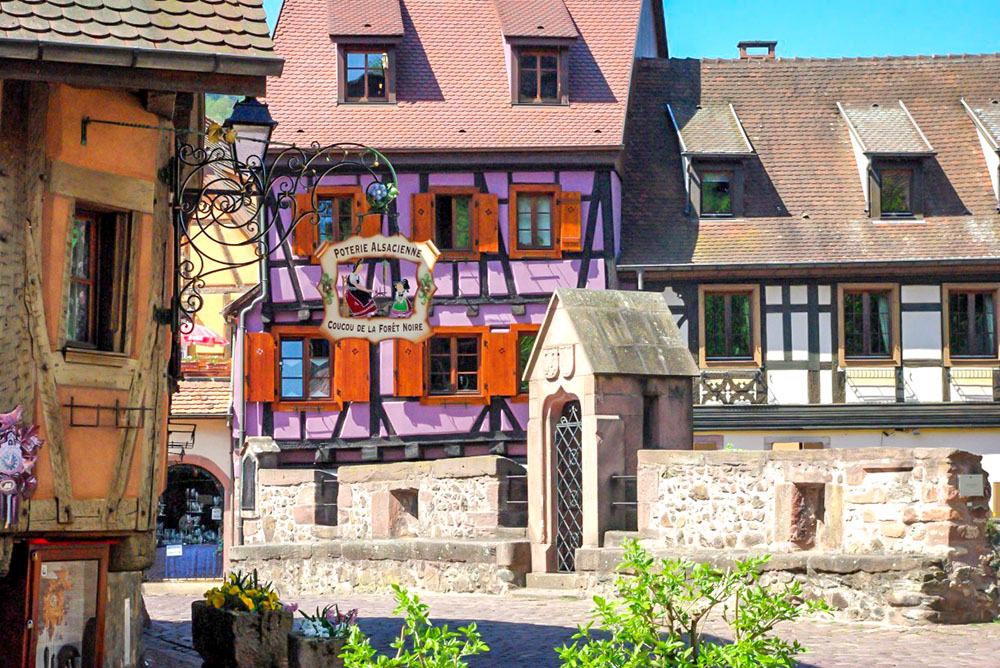
What I especially like about the Alsatian village is that it rewards different kinds of travellers. If you love architecture, there is plenty to admire. If you enjoy history, the place has depth. If you are mostly here for atmosphere, photography, and the pleasure of wandering through a beautiful spot, Kaysersberg delivers that too. It manages to be picturesque without feeling empty, and popular without losing all sense of itself. That is not as common as one might hope.
So yes, Kaysersberg deserves its reputation. But it deserves a little more than a hurried stop and a few quick photos from the bridge. Give it some time. Walk its streets slowly. Climb to the castle if you can. Notice the houses, the river, the shifting views, and the small details that make the village feel alive rather than staged.
That is when Kaysersberg becomes more than a pretty destination on the Alsace Wine Route. It becomes the sort of place you remember with surprising clarity afterwards — not just because you saw it, but because, for an hour or two, it quietly changed the pace of your day.