

Some places feel like illustrations from a storybook before you ever see a single picture.
Petite Venise is one of them.
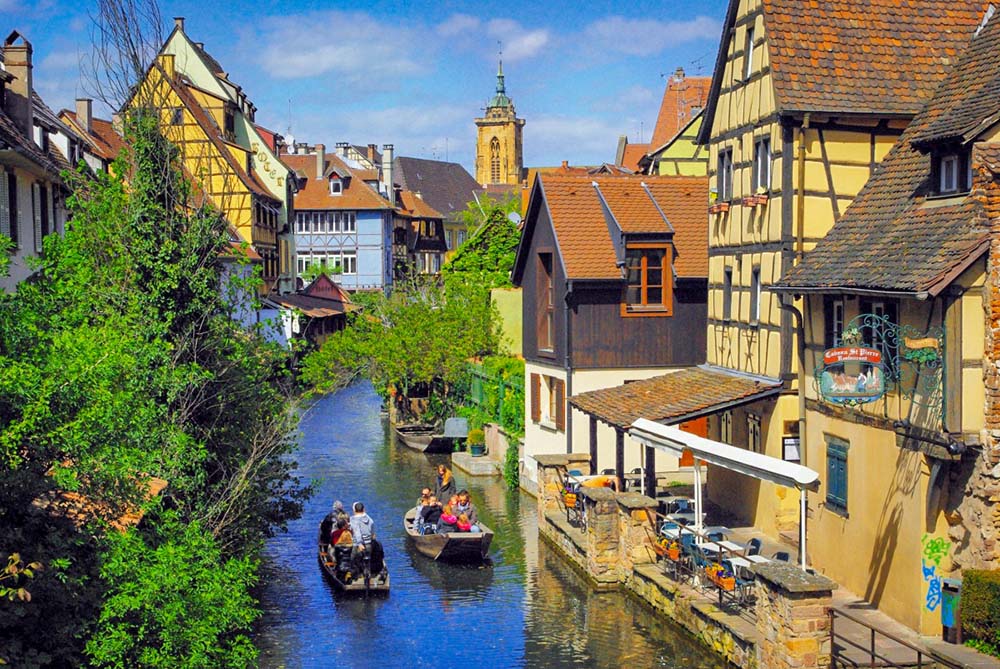
From the moment you step down from the old town into this quarter of winding canals and pastel timber-framed houses, you realise you’ve entered not just a neighbourhood — but a feeling.
It’s gentle, it’s poetic, and it captures something essential about Alsace: the way history, water and architecture come together to shape an atmosphere all its own.
This guide is for travellers who want to explore Petite Venise with purpose — to understand its charm, walk its lanes, breathe its mood, and leave feeling as if you’ve found a secret worth discovering.
What Is Petite Venise? A Tale of Water and Houses
“Petite Venise”, or Little Venice, is not a title bestowed lightly.
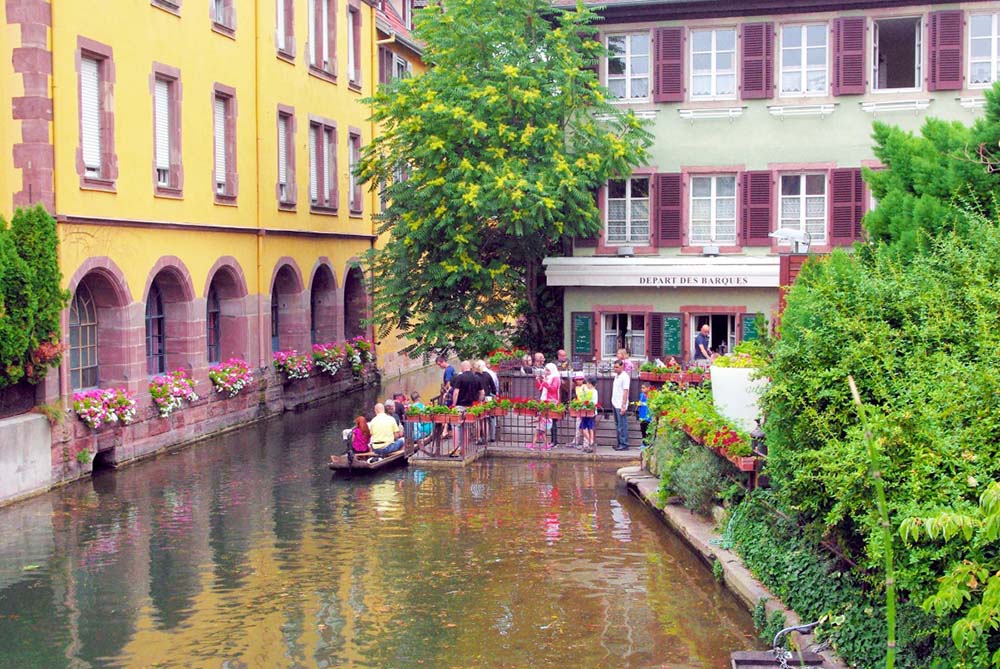
It refers to the section of the Lauch river as it winds through Colmar’s southern old town, creating a ribbon of water that threads between colourful half-timbered houses and stone bridges.
This area sits within the Krutenau district — historically marshland turned urban quarter on the edge of medieval Colmar.
The Lauch was canalised in the Middle Ages so that farmers, gardeners and boatmen could bring their produce directly to town markets by water.
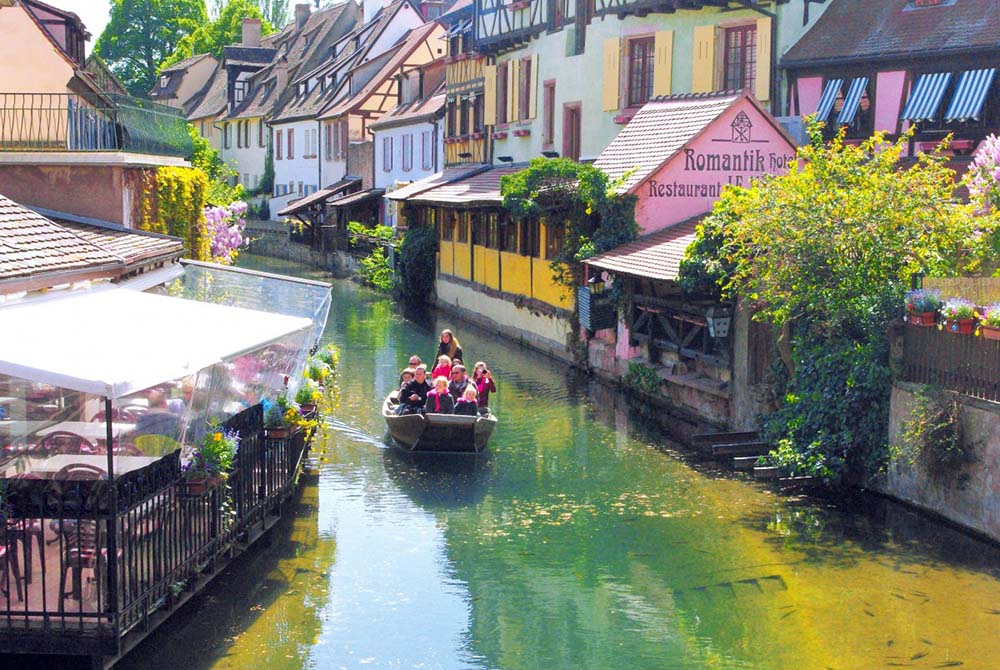
The name itself likely comes from the rhythm of houses lining the canal, as much as the romance of the waterways.
Colmar’s Little Venice isn’t Venice; it doesn’t pretend to be.
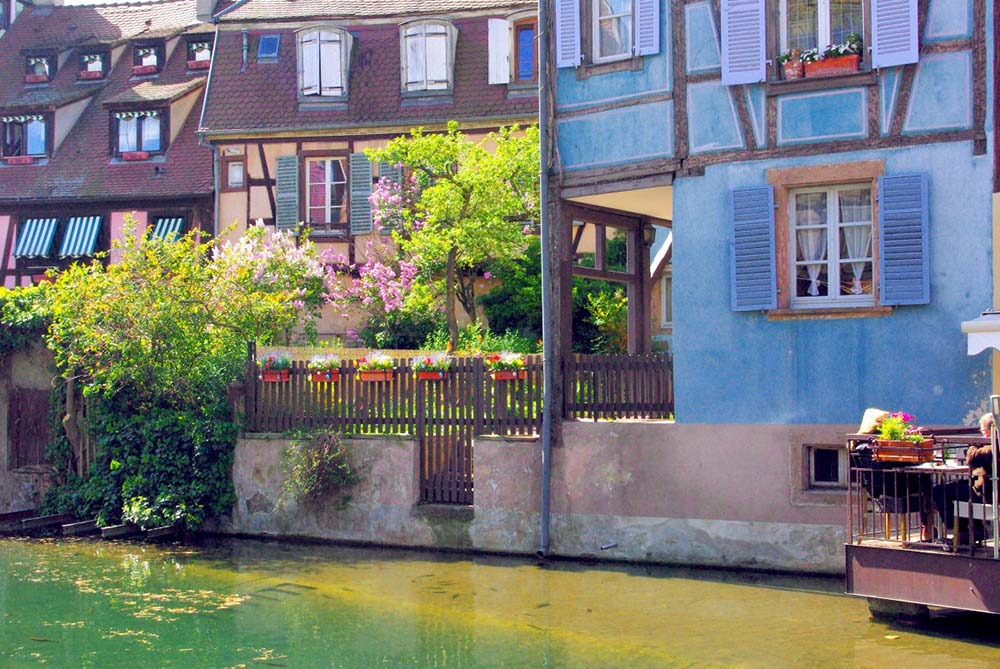
But it has its own kind of magic — a quiet charm, framed by canals and flowered balconies, that evokes fairytales and summer dreams.
How to Feel the Magic — A Suggested Walking Route
If I had only one hour in Petite Venise, here’s how I’d spend it, wandering slowly, breathing mingling with canal air and light shifting on water.
1. Start at the Koïfhus and Place de l’Ancienne Douane
Begin at the historic old customs house, the Koïfhus, one of Colmar’s oldest buildings.
From here, step into the nearby Place de l’Ancienne Douane, where a statue commemorates Alsace’s deep wine culture and an old canal branch brushes the edges of the square.
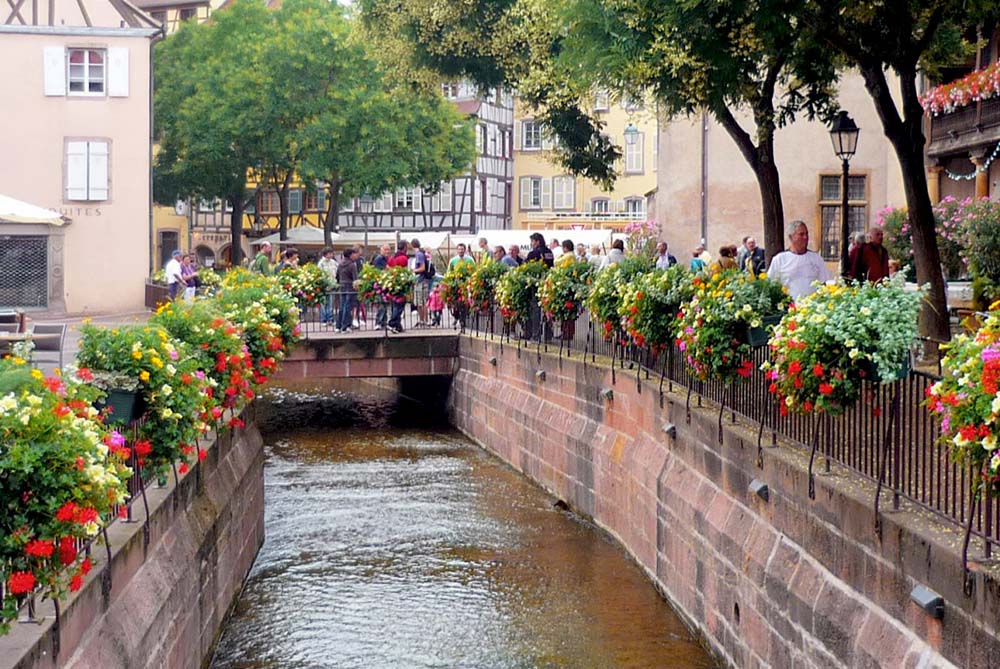
This junction is a quiet introduction to the rhythm of the quarter — stone, water, history — before the channelled Lauch pulls you forward.
2. Follow the Canal into the Heart of Petite Venise
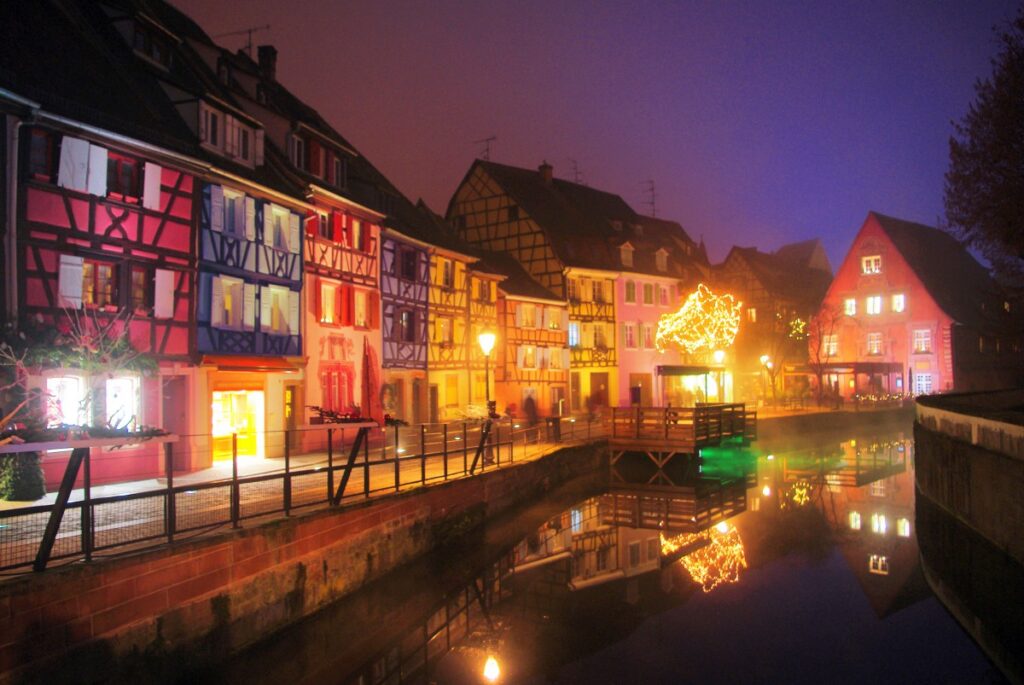
Walk east along the canal. On your left, old houses lean toward the water, their facades splashed with colours that range from sugared almond to deep ochre.
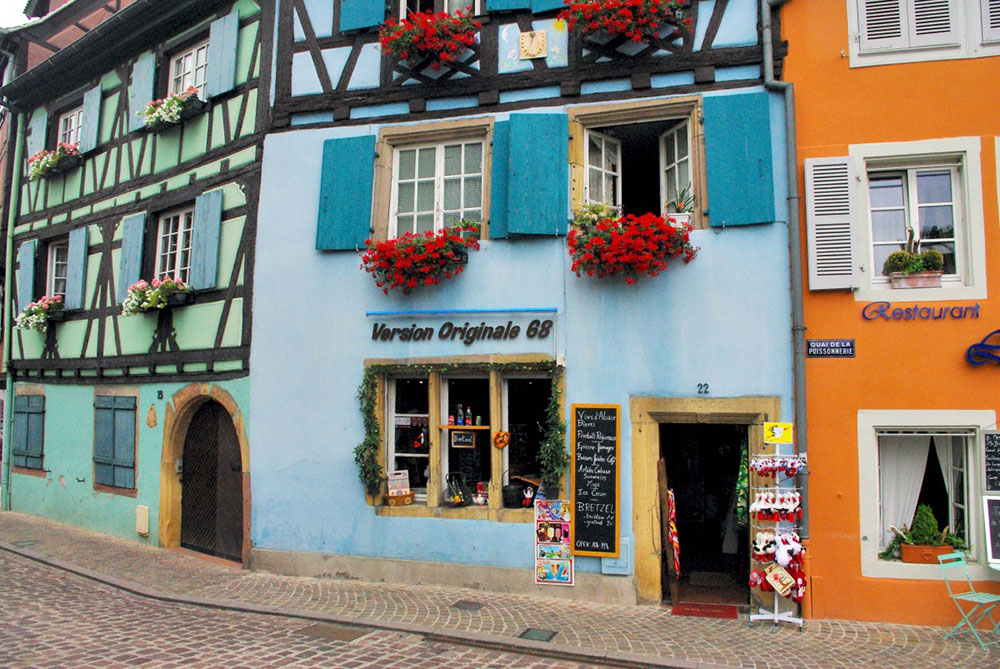
On your right, you pass the quai de la Poissonnerie, once home to Colmar’s fishers.

You’ll notice reflections of rooftops in the river, geraniums cascading from window boxes in summer, and the quiet cadence of water lapping at stone — a scene that feels more like a painting than real life.
3. Cross the Pont de l’Abreuvoir
A little further on, you reach the Pont de l’Abreuvoir — one of Petite Venise’s most photographed spots.
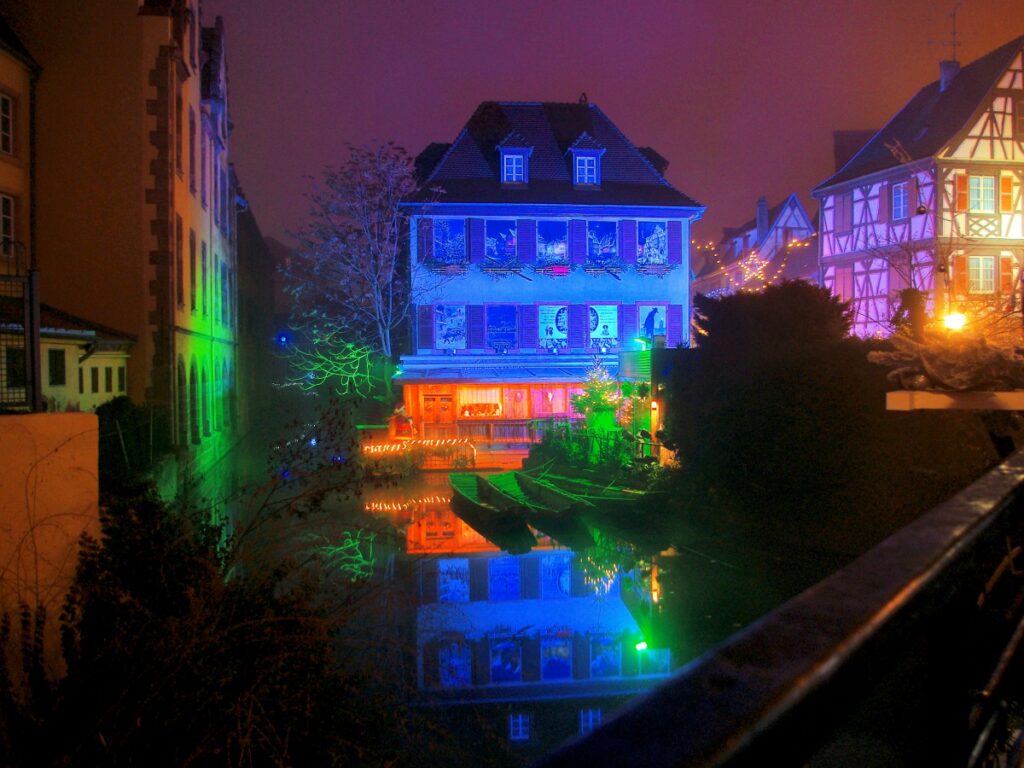
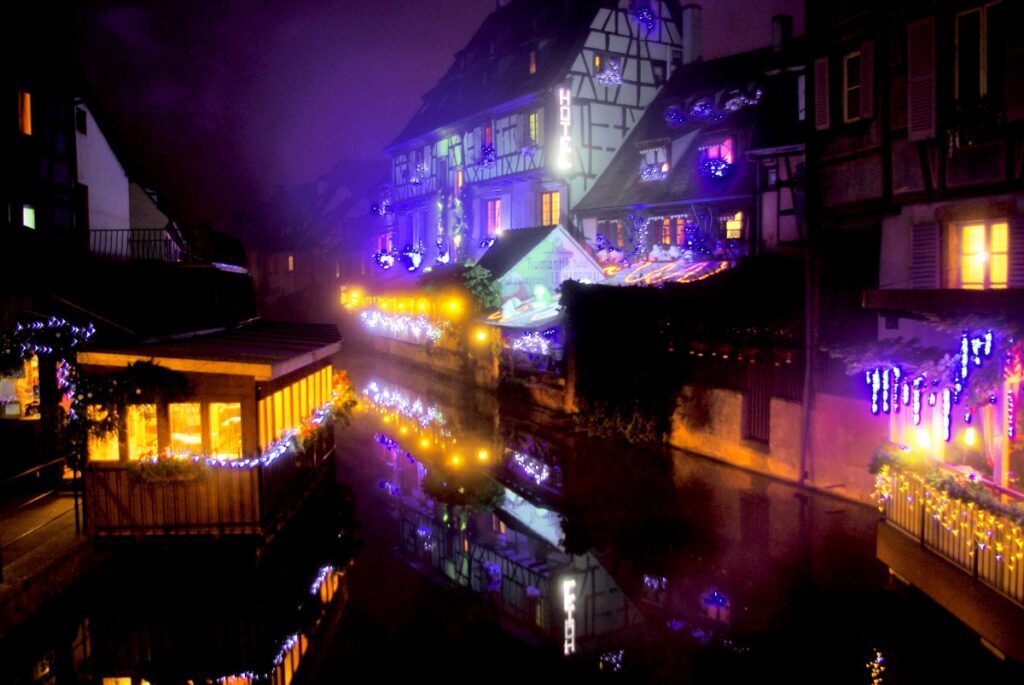
From here, look back along the canal and you’ll see the houses squeezing in on either side, almost as if they’re whispering to each other across the water.
This is one of those views that seems ordinary until you realise just how picturesque it truly is.
4. Continue to the Rue de la Poissonnerie and Rue Turenne
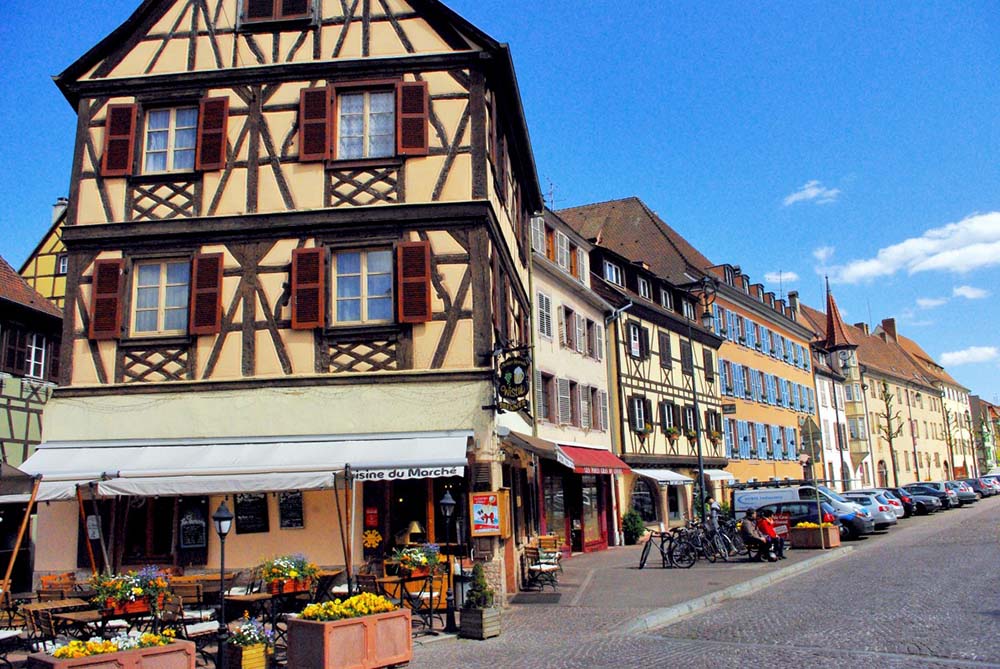
Step off the quay and continue along Rue de la Poissonnerie, a narrow pedestrian street lined with more half-timbered houses.
It’s easy to imagine life here centuries ago — the murmur of water, the creak of boats, the chatter of markets not far away.
Turn toward Rue Turenne to loop back toward the heart of Krutenau, reflecting on how this quarter once buzzed with trades from tanners to gardeners.
5. End at the Pont Saint-Pierre — The Best Panorama

Cap your wanderings at the Pont Saint-Pierre.
From this bridge, you’ll see the canal slice through Petite Venise with the towering spire of the Saint-Martin Church in the distance — a view so iconic it deserves its own camera memory.
Stand here a moment. Watch the water, the rooflines, the gentle motion of ducks and the occasional barge in summer.
This is Colmar at its most reflective — both literally and metaphorically.
Experiences Beyond the Walk
Boat Rides on the Lauch
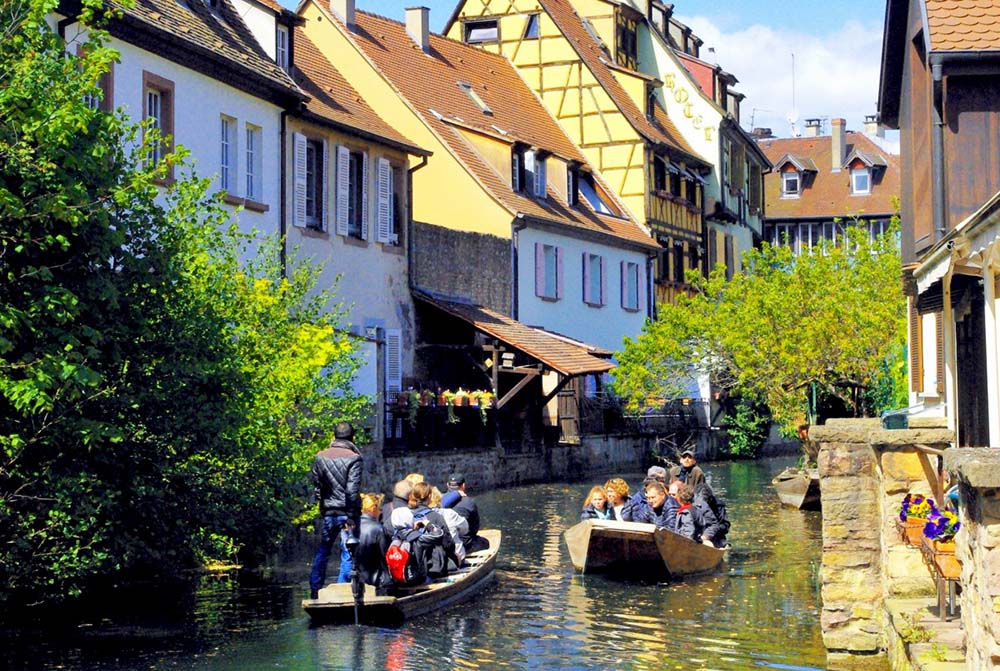
If you visit in spring or summer, you may spot traditional flat-bottomed boats gliding along the canal much like gondolas.
These rides offer a perspective from the water itself, slowing the pace and softening the world around you.
Food, Wine & Winstubs
Colmar’s Petite Venise isn’t just about views — it’s also about tastes.
Cafés and Alsatian winstubs line the edges of the old town, inviting you to linger over a Riesling, a tart flambée, or a sweet kougelhopf after your stroll.
Photography & Light
Early morning or late afternoon light makes this quarter shimmer.
Wandering when the canals are calm — or when the flowers are in bloom — rewards you with images that look like they were plucked from a painting rather than reality.
Quick Tips for Visitors
- Best time to visit: mornings or late afternoons through spring and early autumn for gentle light and fewer crowds.
- Walking: The route from the Koïfhus to Pont Saint-Pierre takes around 30–45 minutes at a measured pace, but allow more time to linger.
- Other attractions nearby: Colmar’s covered market, the Maison Pfister, Saint-Martin Church and museums are all a short stroll away.
Why Petite Venise Matters
Petite Venise is more than just a pretty canal.
It tells a story of medieval commerce and river life, of houses built to the water’s edge, of changing trades and the passage of time.
It is a place that feels lived-in, loved, and quietly alive — a corridor of history framed by water and coloured timber, whispering invitations to wander, ponder, and stay a little longer.
If Alsace has a postcard corner, this is one of its most enduring: small in scale but immense in charm.
Thanks for reading so far. If you are interested about Alsace, check out my other post: My 7 Favourite Towns in Alsace: Why You Should Visit Them Too