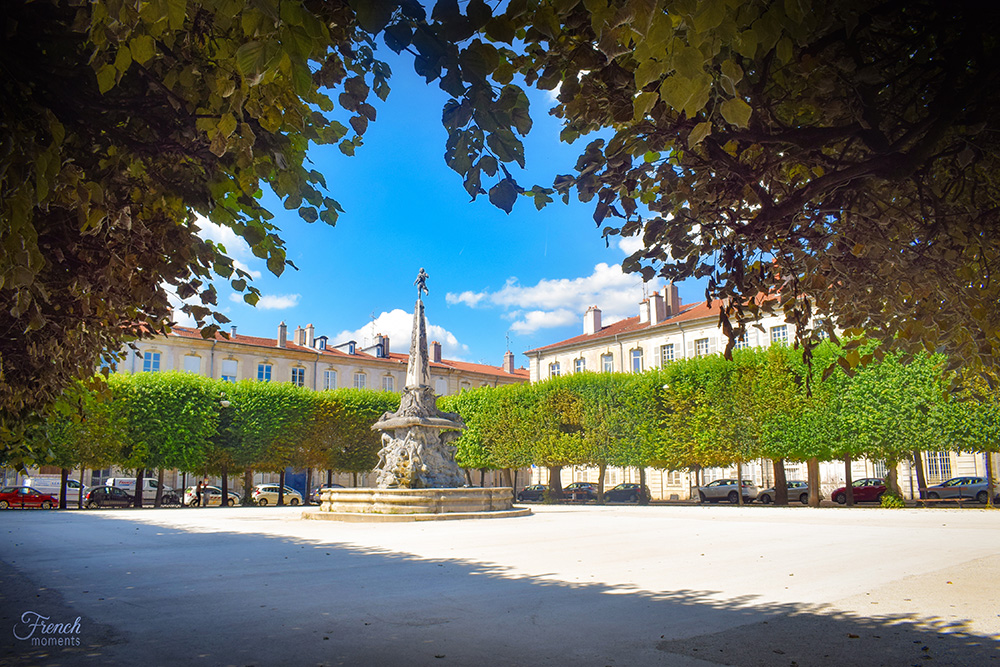
Place d’Alliance is one of those quiet corners of Nancy that many visitors pass by without ever realising what they are missing.
While the magnificent Place Stanislas draws crowds from around the world, this smaller square sits just a few minutes away, almost hidden within the historic centre of the city.
At first glance, Place d’Alliance feels more intimate than its famous neighbour.
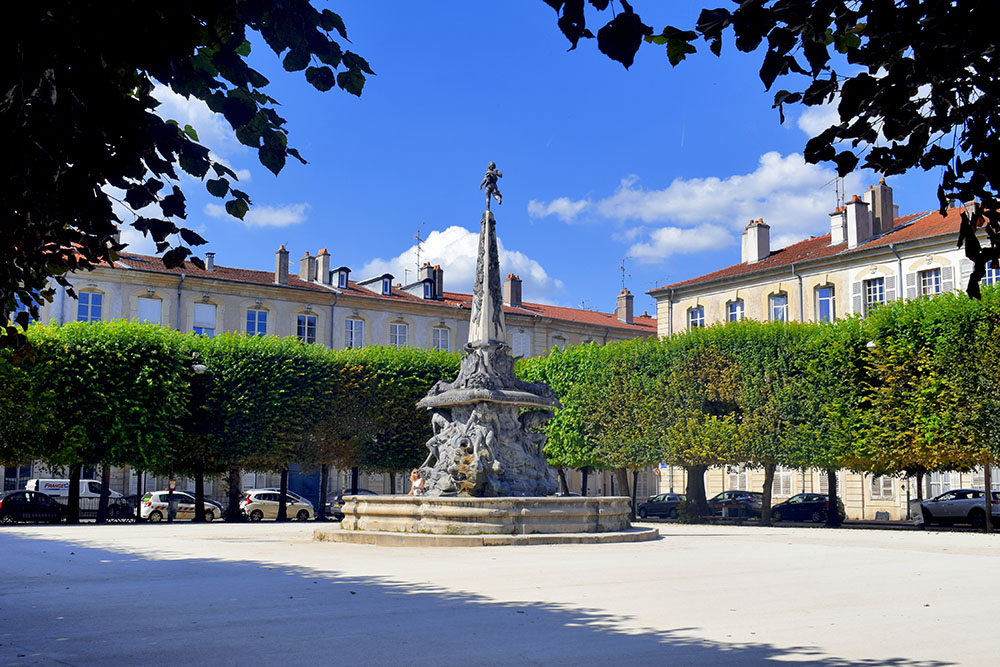
Trees surround the square, elegant 18th-century buildings frame the space, and at its centre stands a remarkable fountain decorated with sea creatures and classical figures.
Instead of the grand theatrical effect of Place Stanislas, the atmosphere here is calmer — almost like a small urban garden tucked into the heart of Nancy.
Yet this discreet square is far from insignificant. Together with Place Stanislas and Place de la Carrière, it forms part of the architectural ensemble that UNESCO recognised as a World Heritage Site in 1983.
These three squares were created during the Age of Enlightenment under the rule of Stanislas Leszczyński, transforming Nancy into one of the most elegant cities in Europe.
Understanding Place d’Alliance means stepping into this remarkable chapter of history — a time when architecture, diplomacy, and royal ambition shaped the city we see today.
Where Is Place d’Alliance in Nancy?
If you are exploring Nancy’s historic centre on foot, Place d’Alliance is surprisingly easy to reach — although many travellers never realise it is there.
The square lies just a short walk from Place Stanislas, hidden behind a few quiet streets in the direction of the old town.
From the grand royal square, it takes only a couple of minutes to reach this more peaceful space, yet the atmosphere changes noticeably as you approach.
Unlike Place Stanislas, which opens dramatically onto a vast architectural stage, Place d’Alliance feels almost enclosed.
Elegant townhouses surround the square on all sides, creating a sense of intimacy that contrasts beautifully with the grandeur nearby.
Its location is no coincidence. When Stanislas Leszczyński reshaped Nancy in the 18th century, he envisioned a carefully balanced urban composition made of three interconnected squares:
- Place Stanislas, the ceremonial heart of the city
- Place de la Carrière, a long promenade linking the royal and medieval quarters
- Place d’Alliance, a more intimate square set slightly aside from the main axis
This subtle arrangement created a remarkable variety of urban spaces within a very compact area.
Today, walking from Place Stanislas to Place d’Alliance feels like discovering a hidden layer of the city.
Within a few steps, the noise of the crowds fades, replaced by a calmer atmosphere where the architecture and fountain become the centre of attention.
The Story Behind Place d’Alliance
To fully appreciate Place d’Alliance, it helps to step back into the 18th century, when Nancy was undergoing one of the most remarkable urban transformations in its history.
At the centre of this transformation was Stanislas Leszczyński, the former king of Poland who became Duke of Lorraine in 1737. Although he ruled Lorraine only temporarily before the region would eventually be integrated into France, Stanislas left an extraordinary architectural legacy in Nancy.
His ambition was simple yet visionary: to transform the city into a place that reflected the ideals of the Enlightenment — elegance, harmony, and civic pride.
A Square Created in the Age of Stanislas
During Stanislas’s reign, Nancy was reorganised through a series of ambitious urban projects designed by the architect Emmanuel Héré.
The most famous of these is, of course, Place Stanislas, a grand royal square that still dazzles visitors today.
But the project extended beyond this monumental centrepiece.
Stanislas wanted to create a coherent urban ensemble linking different parts of the city. Alongside Place Stanislas and the long perspective of Place de la Carrière, another square was designed nearby: Place d’Alliance.
Unlike the ceremonial splendour of Place Stanislas, this new square was conceived on a smaller and more intimate scale.
It was surrounded by elegant residences built for members of the aristocracy and important officials connected to the ducal administration.
The architecture reflected the refined taste of the Enlightenment: balanced façades, classical proportions, and a harmonious urban composition that gave the square its quiet elegance.
Why It Is Called “Place d’Alliance”
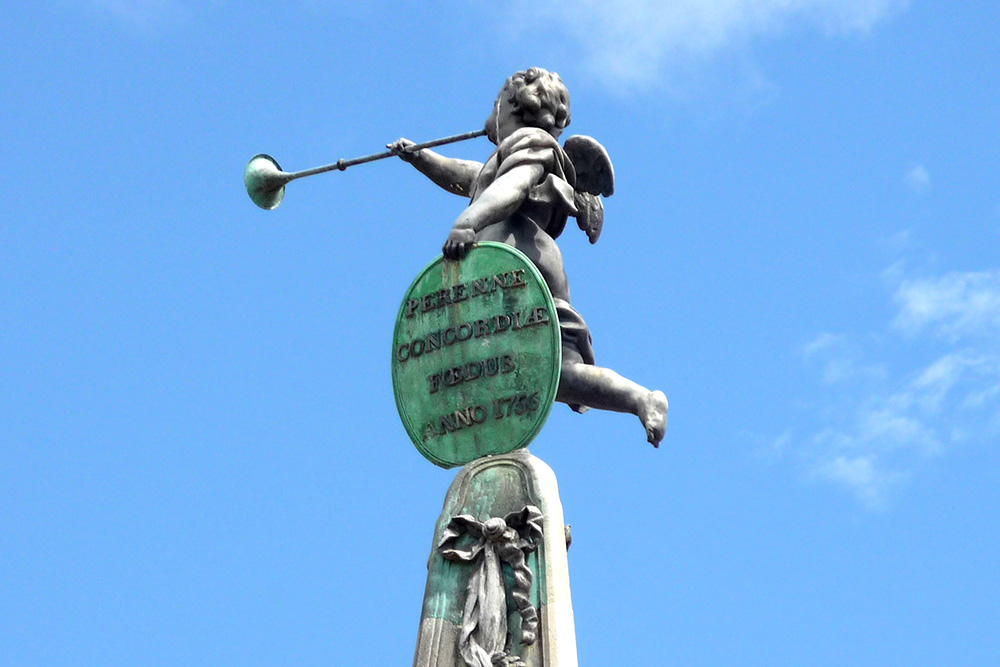
The name Place d’Alliance is not simply decorative. It commemorates an important diplomatic event that reshaped the political landscape of Europe.
In 1756, France and Austria signed a historic agreement known as the Treaty of Vienna, forming a new alliance between the two great powers.
This diplomatic shift reversed centuries of rivalry and became a key moment in European politics.
To celebrate this alliance, a monument was erected in the centre of the square — the beautiful fountain that still stands there today.
More than just an ornament, the fountain symbolised the unity between the two nations and the political ambitions of the time.
Its elaborate sculptures of sea creatures and mythological figures were designed to express strength, harmony, and prosperity.
Through its name and its fountain, Place d’Alliance therefore embodies both architectural beauty and historical meaning.
While visitors often admire the square for its peaceful atmosphere, its origins remind us that it was also a place shaped by diplomacy, royal ambition, and the shifting alliances of 18th-century Europe.
The Beautiful Fountain at the Heart of Place d’Alliance
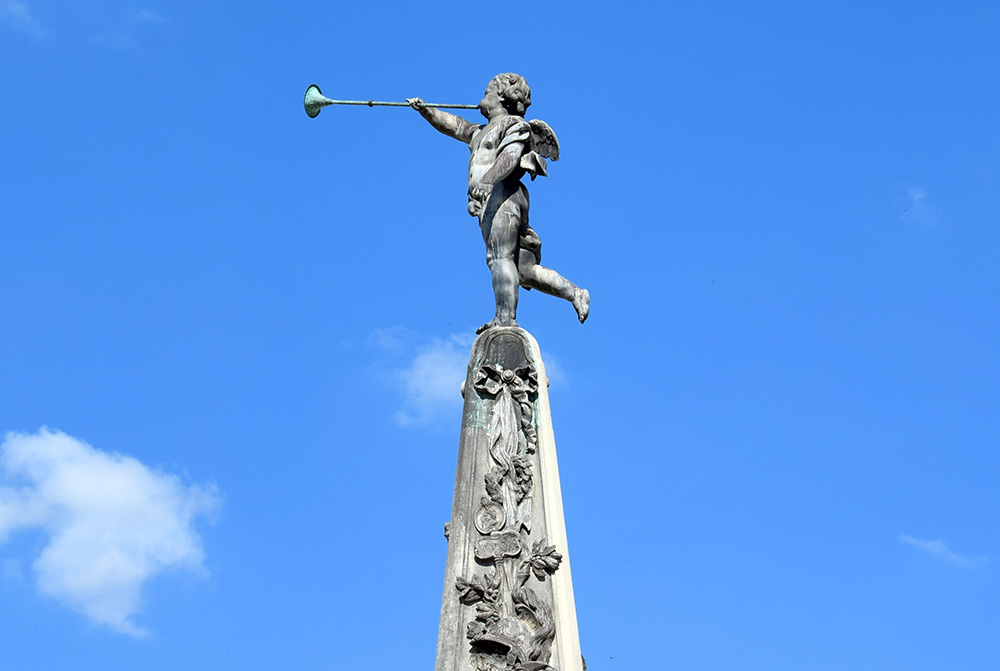
At the centre of Place d’Alliance, one feature immediately captures the attention of visitors: the magnificent fountain that rises from the middle of the square.
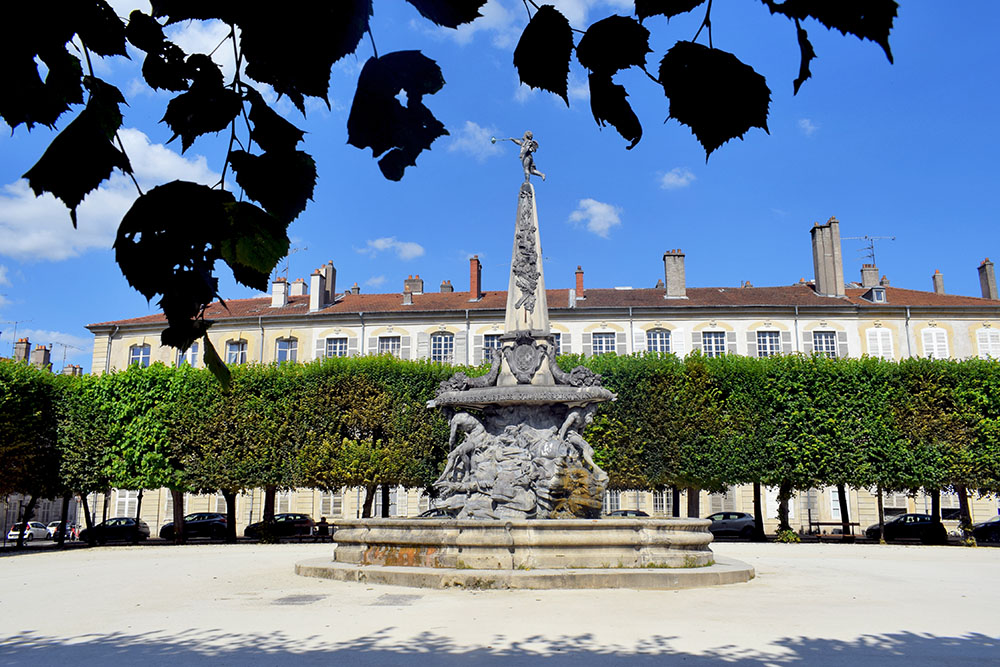
Surrounded by trees and framed by elegant 18th-century façades, it forms the visual heart of this quiet royal space.
While the square itself feels discreet and intimate, the fountain introduces a touch of theatrical artistry.
Its sculpted figures, swirling forms, and decorative details give the monument a lively character that contrasts beautifully with the calm symmetry of the surrounding buildings.
It is one of those monuments that invites visitors to pause, walk around it slowly, and discover its many details.
A Monument Celebrating an Alliance
The fountain was created in the mid-18th century to commemorate the alliance between France and Austria, a diplomatic agreement signed in 1756 during the reign of Stanislas.
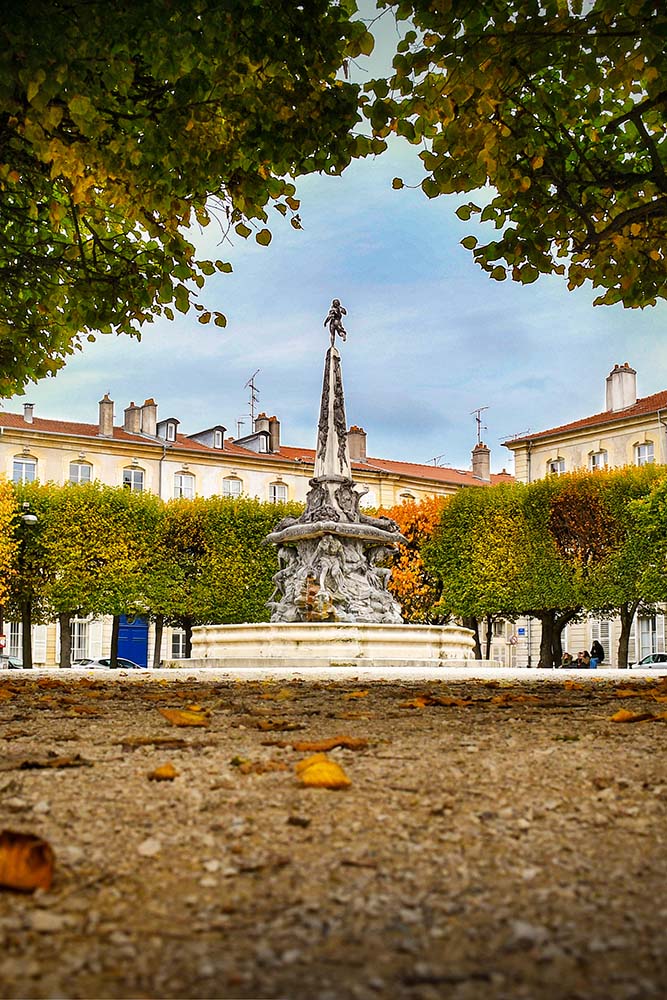
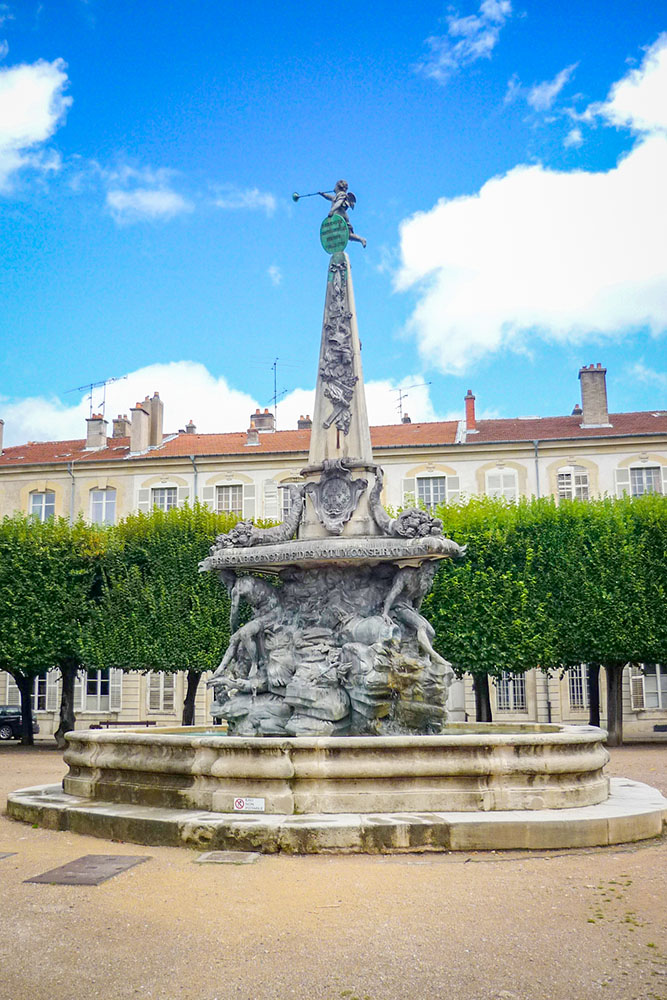
This political event, known as the Treaty of Vienna, marked a dramatic shift in European diplomacy. For centuries, the two powers had often been rivals.
The treaty symbolised a new era of cooperation, and the fountain was designed as a tribute to this alliance.
Placed at the centre of the square, the monument served both as a decorative element and as a symbolic statement. Its elaborate sculptures and mythological imagery reflected the optimism and artistic creativity of the Enlightenment period.
Even today, the fountain remains one of the most distinctive artistic landmarks in Nancy.
Neptune and the Sea Creatures
A closer look at the fountain reveals a fascinating collection of mythological figures drawn from the world of classical antiquity.
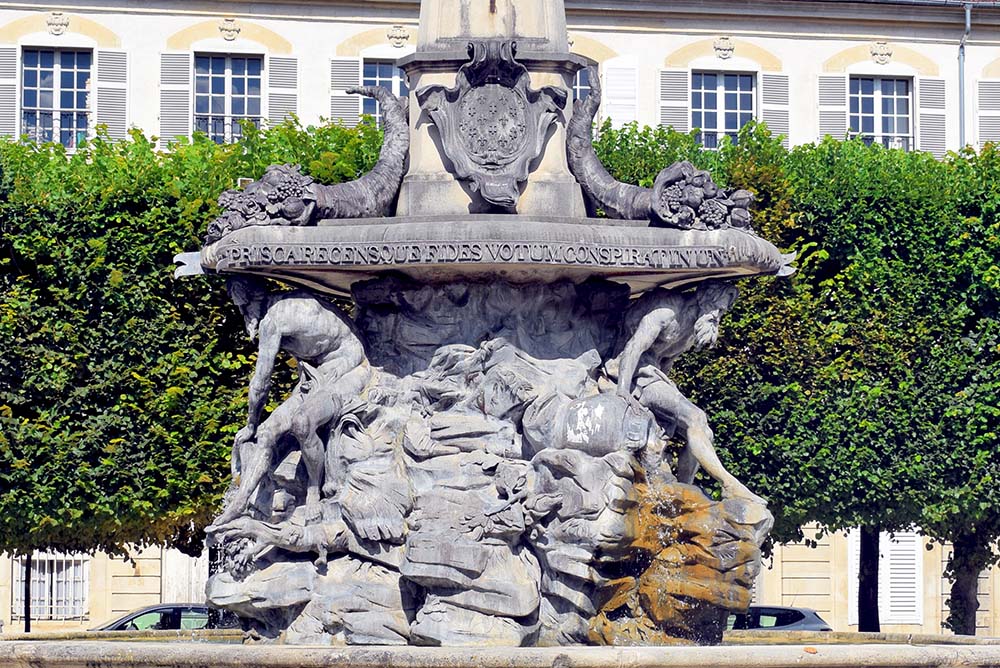
The sculptures feature Neptune, the Roman god of the sea, surrounded by a lively group of sea creatures. Dolphins, shells, and twisting marine forms rise from the basin, giving the monument a sense of movement and energy.
The composition feels almost playful. Dolphins seem to leap from the water, while sculpted figures appear to support the upper sections of the fountain. These elements combine to create a dynamic structure that feels both elegant and dramatic.
The choice of marine imagery was not accidental. In the artistic language of the 18th century, the sea often symbolised power, unity, and prosperity. By placing Neptune at the centre of the composition, the fountain celebrated strength and harmony — qualities associated with the diplomatic alliance it commemorated.
Today, the fountain continues to delight visitors with its lively details and refined craftsmanship. Photographers often find it particularly captivating, especially when sunlight highlights the sculpted figures and the water sparkles in the basin below.
Standing beside this monument, it becomes easy to understand why Place d’Alliance feels like a small jewel hidden within the historic centre of Nancy.
The Architecture Around Place d’Alliance
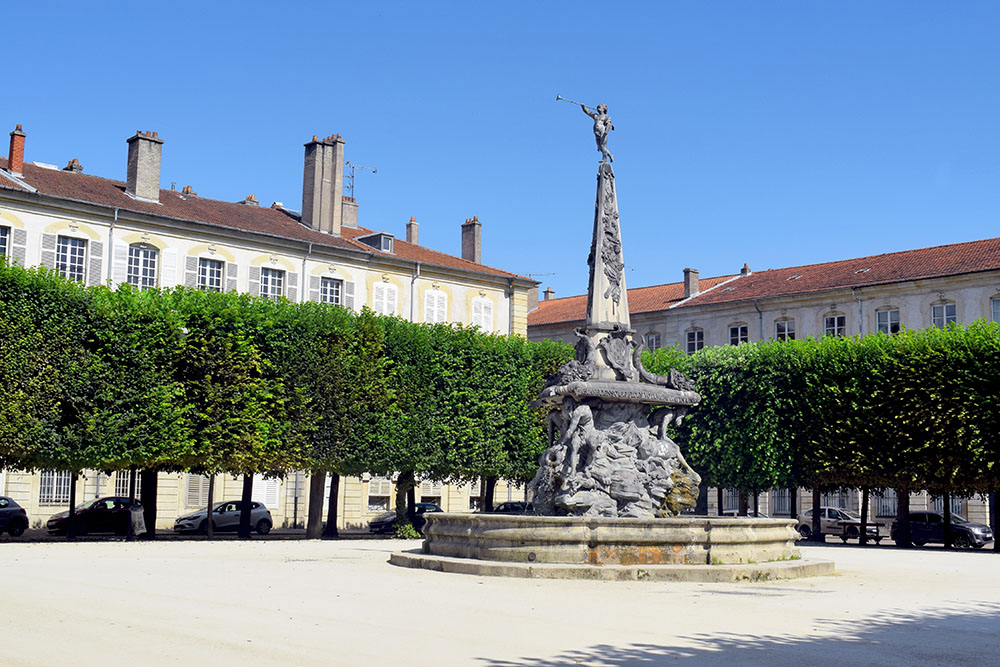
While the fountain at the centre immediately attracts attention, the beauty of Place d’Alliance also lies in the elegant buildings that surround it. Together, they create a harmonious architectural frame that gives the square its distinctive character.
Unlike the grand theatrical composition of Place Stanislas, the architecture here feels more restrained and intimate. The buildings form a continuous ring around the square, giving it a sense of enclosure that contributes greatly to its peaceful atmosphere.
This balance between the lively fountain and the calm façades is part of what makes the square so appealing.
Elegant 18th-Century Mansions
The buildings around Place d’Alliance date largely from the 18th century, when the square was created during the reign of Stanislas.
They were designed as townhouses for members of the aristocracy and important officials connected with the ducal administration.
Many of these residences were built as hôtels particuliers — elegant urban mansions typical of the period. Their façades reflect the classical style that characterised Enlightenment architecture: balanced proportions, tall windows, and subtle decorative details.
Rather than competing for attention, the buildings follow a unified architectural language that gives the square a remarkable sense of harmony.
Pale stone façades in pierre d’Euville catch the light beautifully throughout the day, while wrought-iron balconies and carefully aligned windows create a refined rhythm along the streets.
The result is an environment that feels dignified yet welcoming — exactly the kind of urban elegance that Stanislas and his architect Emmanuel Héré sought to achieve.
A Square Designed for Nobles and Officials
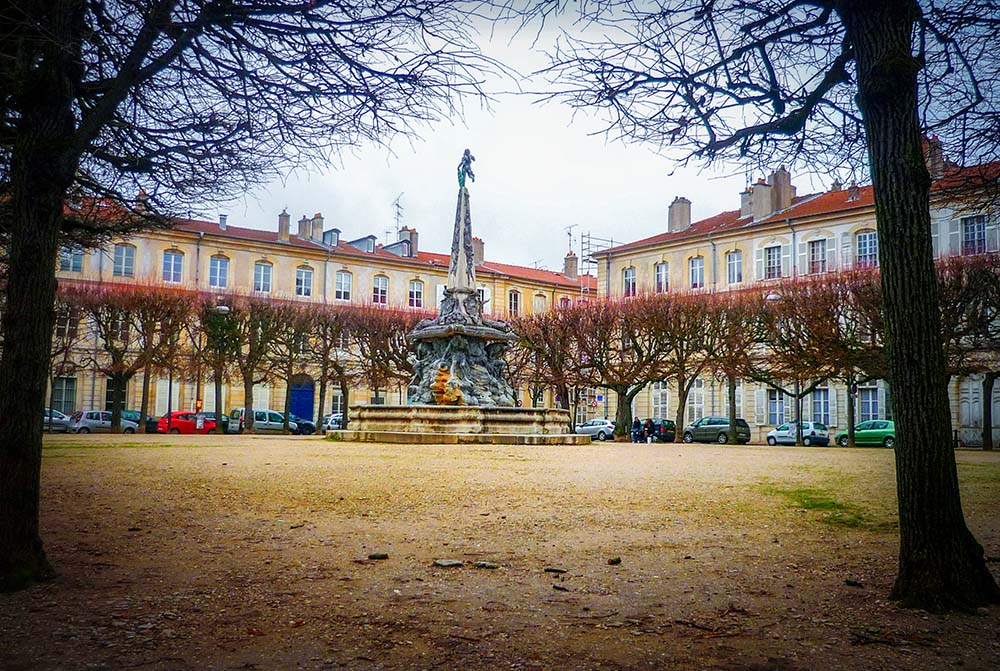
When Place d’Alliance was built, it was intended as a prestigious residential area. Its proximity to the royal square and the administrative centre of the city made it a desirable address for members of the elite.
Nobles, diplomats, and senior officials were among those who lived in the houses surrounding the square. From their windows, they would have enjoyed a direct view of the fountain and the orderly space below — a daily reminder of the refined urban vision that had reshaped Nancy.
Although the centuries have passed, the square still retains much of that atmosphere of quiet distinction. The buildings continue to house apartments, offices, and institutions, but the architectural unity remains largely intact.
Walking around Place d’Alliance today, visitors can easily imagine what life might have been like in 18th-century Nancy — a city where elegance, diplomacy, and urban planning came together to create spaces that still enchant travellers today.
Why Place d’Alliance Feels Like a Hidden Garden in Nancy
Among Nancy’s three famous UNESCO squares, Place d’Alliance has a personality all its own. While Place Stanislas dazzles with its golden gates and monumental scale, and Place de la Carrière stretches out in a long and elegant perspective, this smaller square offers something different.
It feels almost like a hidden garden in the middle of the city.
Part of this impression comes from its layout. The square is compact and framed by trees that soften the architecture around it. Instead of wide open space, visitors find a more intimate setting where the fountain becomes the centre of attention.
The result is a place that feels peaceful and welcoming — a quiet pause in the urban landscape.

A Calm Contrast to Place Stanislas
Because Place d’Alliance is located just a short walk from Place Stanislas, the contrast between the two spaces is striking.
Place Stanislas is lively and spectacular. Visitors gather to admire the gilded gates, photograph the fountains, and enjoy the cafés that line the square. It is the grand stage of Nancy’s historic centre.
Place d’Alliance, on the other hand, feels more secluded.
Here, the pace slows down. The surrounding streets are quieter, and the square itself often feels like a small oasis where residents and visitors can take a moment to relax.
Benches beneath the trees invite people to sit and enjoy the surroundings. The gentle sound of water flowing from the fountain adds to the tranquil atmosphere.
For travellers who enjoy discovering places beyond the main tourist landmarks, this calm setting is one of the square’s greatest charms.

A Square Loved by Locals
Another reason Place d’Alliance feels so special is the way it is used by the people who live in Nancy.
Unlike some historic squares that function mainly as tourist attractions, this one remains very much part of daily life. Residents pass through the square on their way to work, students cross it between university buildings, and neighbours sometimes pause here for a quiet conversation.
In spring and summer, the trees create a pleasant canopy of shade, making the square an inviting place to sit for a few minutes after exploring the city.
This mixture of history and everyday life gives Place d’Alliance an authenticity that many visitors appreciate. It does not feel like a monument frozen in time, but rather a living space that continues to evolve with the city around it.
For those willing to wander just a little beyond the most famous sights, the square reveals a gentler, more intimate side of Nancy.
Why Place d’Alliance Completes Nancy’s UNESCO Squares
To truly understand the beauty of Nancy’s historic centre, it helps to see how Place d’Alliance fits into the remarkable ensemble created in the 18th century.
The three famous squares of the city — Place Stanislas, Place de la Carrière, and Place d’Alliance — were not designed independently. They form part of a carefully planned urban vision developed during the reign of Stanislas Leszczyński and brought to life by the architect Emmanuel Héré.
Together, these spaces illustrate the ideals of the Enlightenment: harmony, elegance, and a thoughtful relationship between architecture and public life.
Each square, however, has its own personality.
Place Stanislas is the grand ceremonial stage of Nancy. Its monumental architecture, gilded ironwork, and lively cafés make it the vibrant heart of the city.
Place de la Carrière offers a long and elegant perspective that links the royal square to the older medieval quarter. Its tree-lined promenade invites visitors to stroll while enjoying the refined symmetry of the surrounding buildings.
Place d’Alliance, by contrast, provides a quieter and more intimate setting. With its beautiful fountain, elegant façades, and peaceful atmosphere, it feels almost like a hidden garden within the city.
This contrast is precisely what makes the ensemble so remarkable. Rather than repeating the same design three times, the planners of 18th-century Nancy created three different urban experiences within a very small area.
It is this harmony of scale, perspective, and atmosphere that led UNESCO to recognise the three squares as a World Heritage Site in 1983.
For travellers exploring Nancy today, discovering Place d’Alliance often feels like uncovering a secret. Just a few steps from the grandeur of Place Stanislas, the square reveals a calmer and more intimate side of the city.
If Place Stanislas is Nancy’s grand stage and Place de la Carrière its elegant promenade, Place d’Alliance is the city’s hidden garden — a place where history, architecture, and everyday life quietly come together.