
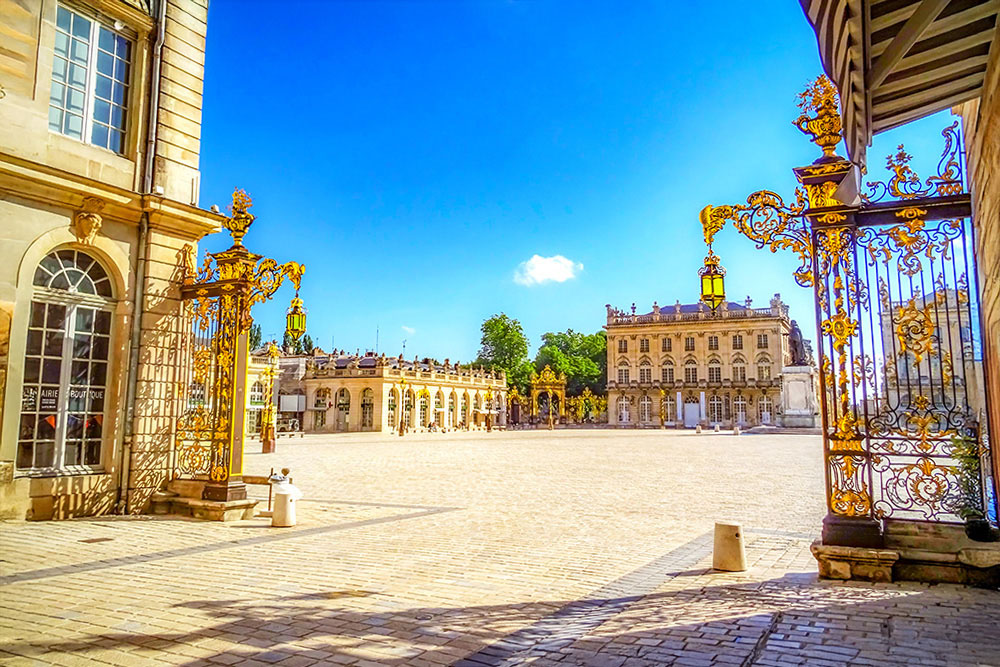

If you’ve been following me for some years, you would know that I am very fond of Nancy’s Place Stanislas.
There are public squares you pass through without thinking — functional spaces, intersections, places defined by movement rather than meaning.
But the first time you step into Place Stanislas in Nancy, something inside you pauses.
You slow down.
Your surroundings rearrange themselves.
And suddenly you realise you’re standing not in a square, but in a vision.
Symmetry, clarity, proportion, light — all balancing each other with the ease of a master composer.
It feels theatrical without being ostentatious, grand without being overwhelming.
A place engineered not only to impress, but to uplift.
I remember the last time I entered Place Stanislas years ago.
I didn’t take a photo. I simply stood there, quietly stunned, taking in a space that seemed almost too harmonious to be real.
Let’s take our time here.
This is a place that rewards slow attention.
A Masterpiece of Enlightenment Urbanism
Place Stanislas was born at a moment when cities were beginning to dream bigger — when the Enlightenment encouraged Europe to imagine spaces that were rational, elegant, and humane.
At the centre of that dream in Lorraine stood Stanisław Leszczyński, the exiled King of Poland turned Duke of Lorraine.
He wanted more than a pretty square. He wanted to unite two parts of Nancy:
- its medieval Old Town (Ville-Vieille), and
- its then-modern New Town (Ville-Neuve).
It was an ambitious idea: to create a ceremonial and civic space that would open Nancy toward the future while honouring its past.
Architect Emmanuel Héré understood this immediately.
Between 1752 and 1756, he crafted a square where geometry becomes poetry.
Nothing is left to chance — from the alignment of façades to the way the sky is framed between cornices.
The scale is grand, but its effect is calming rather than intimidating.
Stand in the middle and turn.
Nothing feels accidental.
Everything seems to be speaking to everything else.
This is Enlightenment urban design at its purest — a space made to elevate the mind as much as to serve the city.

A UNESCO World Heritage Ensemble: Harmony on a Civic Stage
In 1983, Place Stanislas, Place de la Carrière and Place d’Alliance were inscribed together as a UNESCO World Heritage Site. Not for a single monument, but for the ensemble they form.
UNESCO recognised something essential here: this isn’t just architecture, it’s choreography.
Walk from Place Stanislas to Place de la Carrière and you move through a deliberate progression of space: wide → narrow → wide again.
Each transition is intentional, each vista designed to guide the eye and the body effortlessly forward.
It feels like walking through the set of a grand 18th-century play — the kind where you half expect powdered wigs to appear behind the windows.
The genius lies not only in beauty, but in unity. Few places in Europe achieve this level of architectural coherence while still feeling alive.
The Golden Gates and Fountains of Place Stanislas
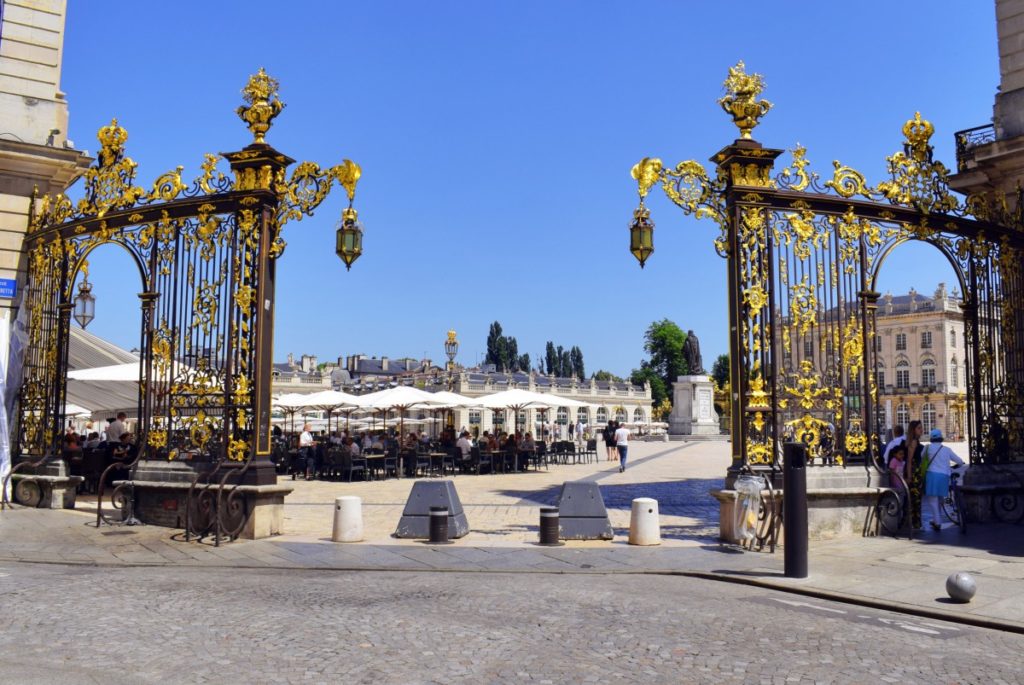
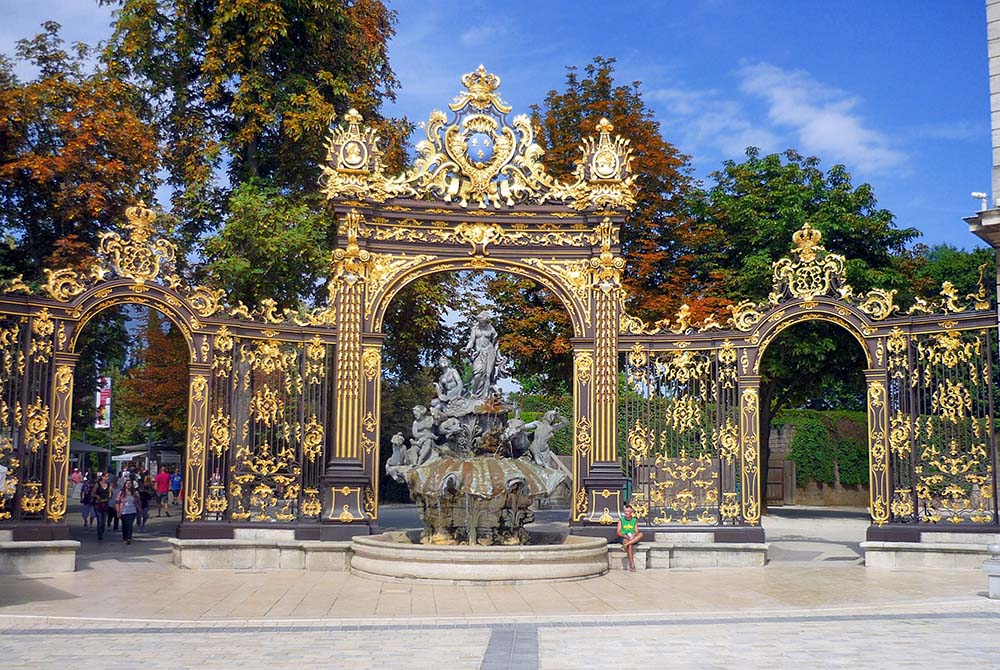
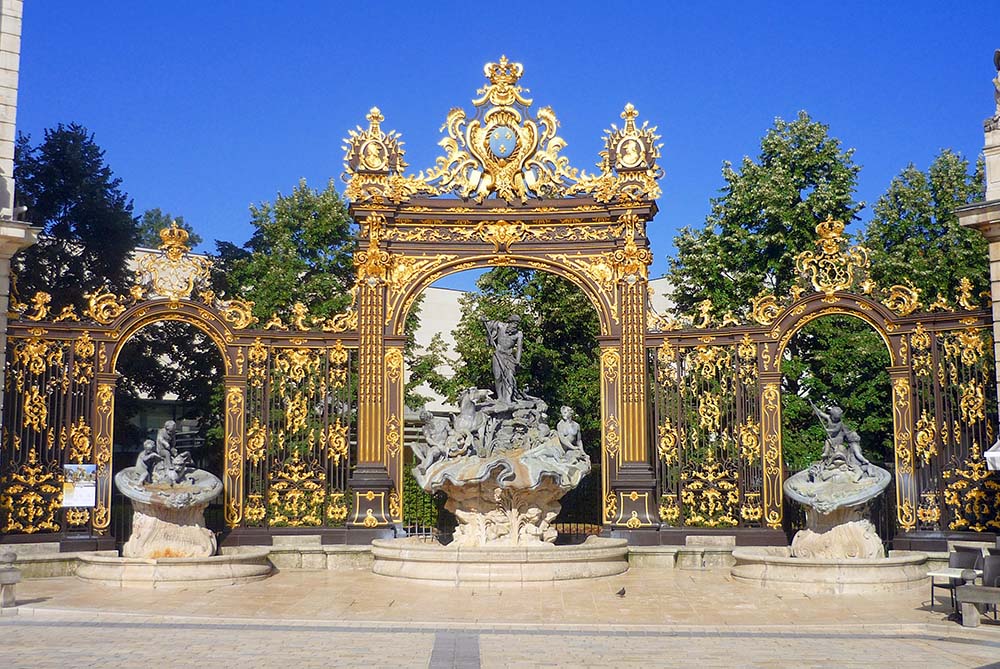
To speak of Place Stanislas without mentioning Jean Lamour would be unthinkable.
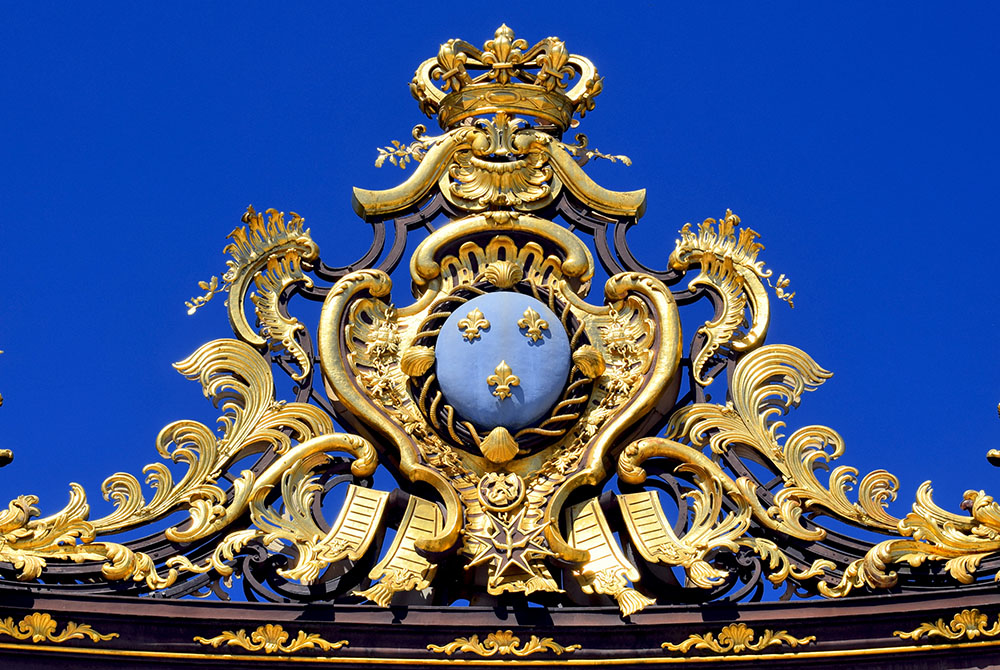
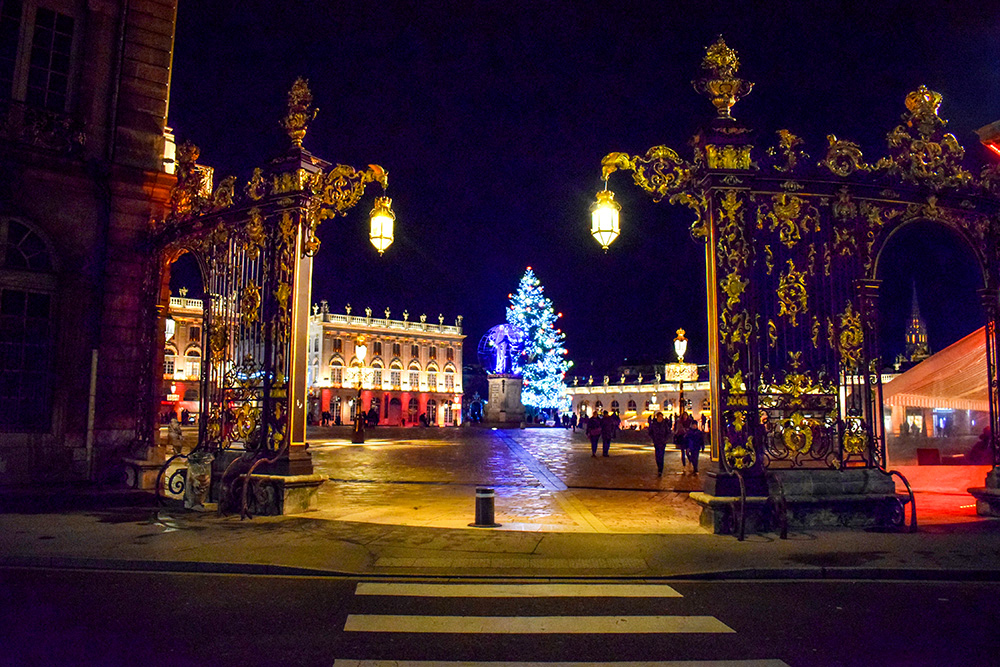
His gilded wrought-iron gates — curling, spiralling, glittering in sunlight — act like jewellery framing the square.

They are the kind of objects you could stand beneath for hours, spotting new details each time: a leaf here, a flourish there, a subtle symbol woven into the iron.
There is something almost musical about them.
If gates could hum, these would hum in gold.
At the corners, the fountains by Barthélemy Guibal bring movement and mythology to the classical order.
Neptune and Amphitrite seem frozen mid-gesture, shells and tritons caught in a suspended moment between stillness and motion.
The sound of water trickling here softens the geometry, adding warmth and life to the stone.
These elements aren’t decorative extras — they are part of the square’s emotional architecture, the “breath” that keeps its perfection from feeling cold.
The Buildings That Hold Place Stanislas Together
Place Stanislas is not just bordered by shops or tourist cafés thrown together over the years.
Its walls are themselves monuments:
- The City Hall: wide, elegant and authoritative — the civic anchor of the space.
- The Museum of Fine Arts: a classical façade hiding centuries of artistic heritage.
- The Opera House: dignified, harmonious, and particularly magical when lit at night.
Their façades match not only each other, but the overall rhythm of the square.
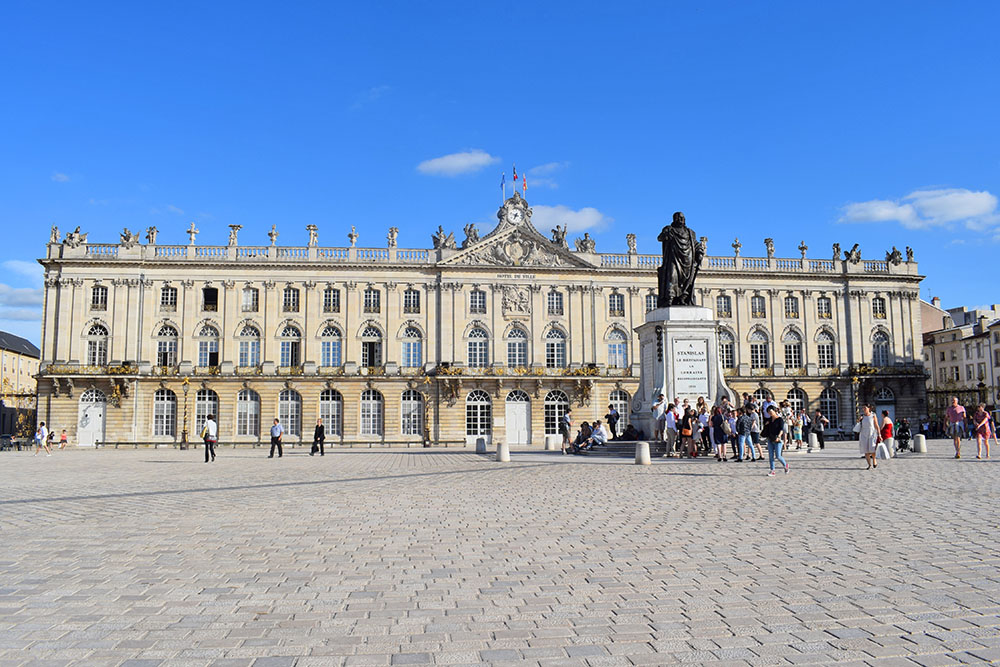
Stand in front of any one of them and you’ll find echoes — in windows, cornices, archways — all tying back into the collective architectural language.
Nothing shouts.
Nothing competes.
Each building knows its role, like instruments in a perfectly balanced orchestra.
The Statue of Stanislas — A Monument to Gratitude
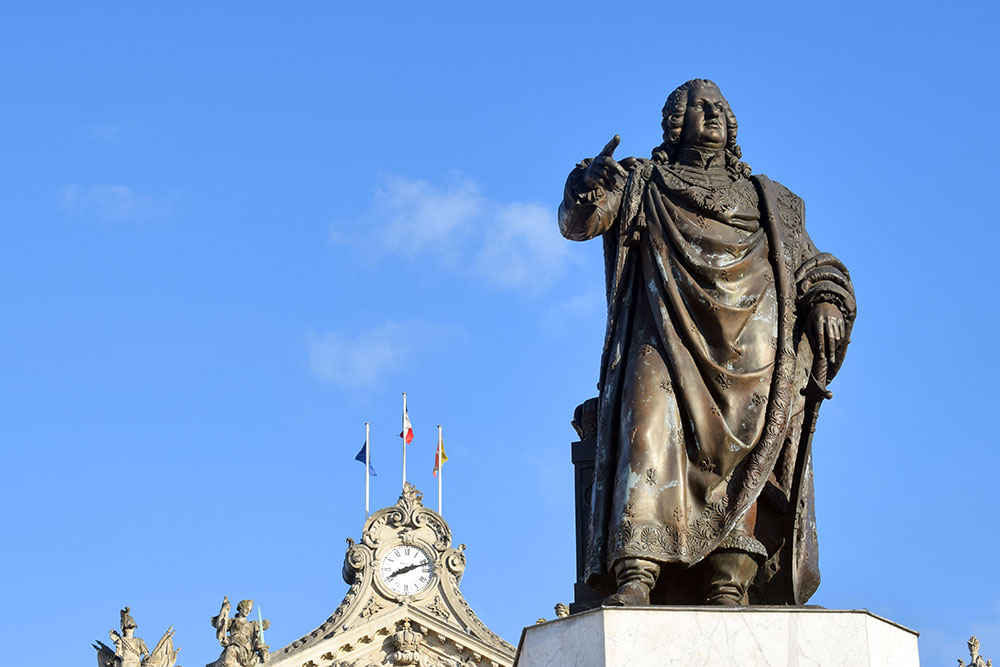
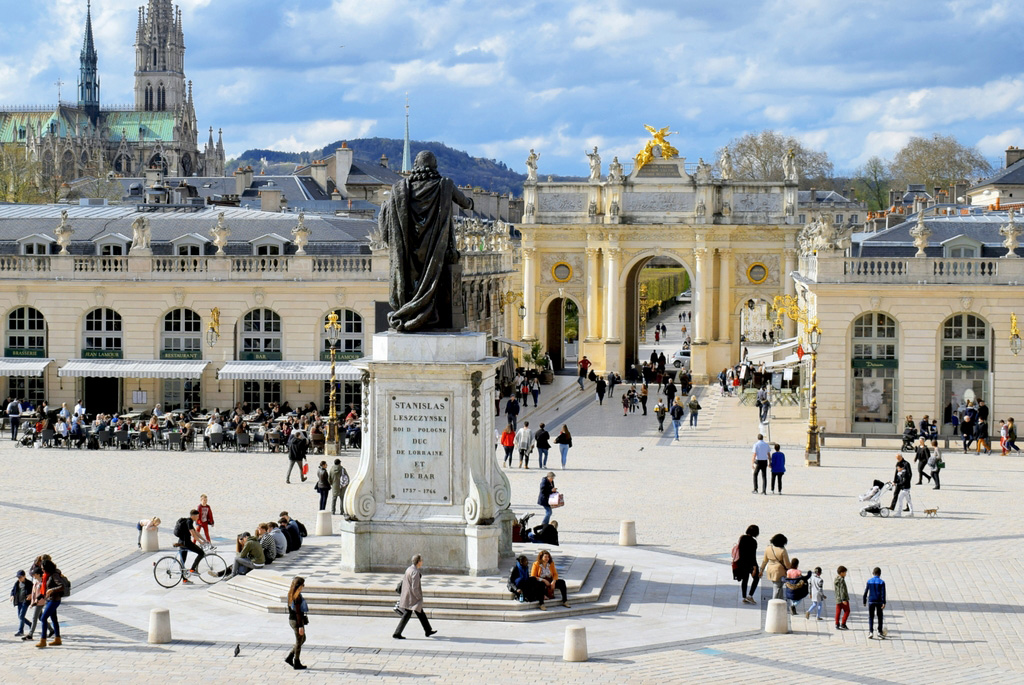
At the centre, Stanisław Leszczyński stands in bronze, arm extended.
This is the second statue placed here.
The first — of Louis XV — met its end during the French Revolution.
What replaced it in 1831 is more than a monument. It is a gesture of affection.
The inscription reads:
“À Stanislas le Bienfaisant, la Lorraine Reconnaissante.”
“To Stanislas the Benevolent, from a Grateful Lorraine.”
It’s rare for a city to dedicate a square to gratitude.
But then again, Nancy has always had a particular tenderness for this Polish king who became its adopted father — a ruler who chose art, architecture and humanism over military glory.
Even the direction of his outstretched hand feels symbolic: he is welcoming you into the square he dreamt into being.
The Arc de Triomphe and the Perspective That Defines a City
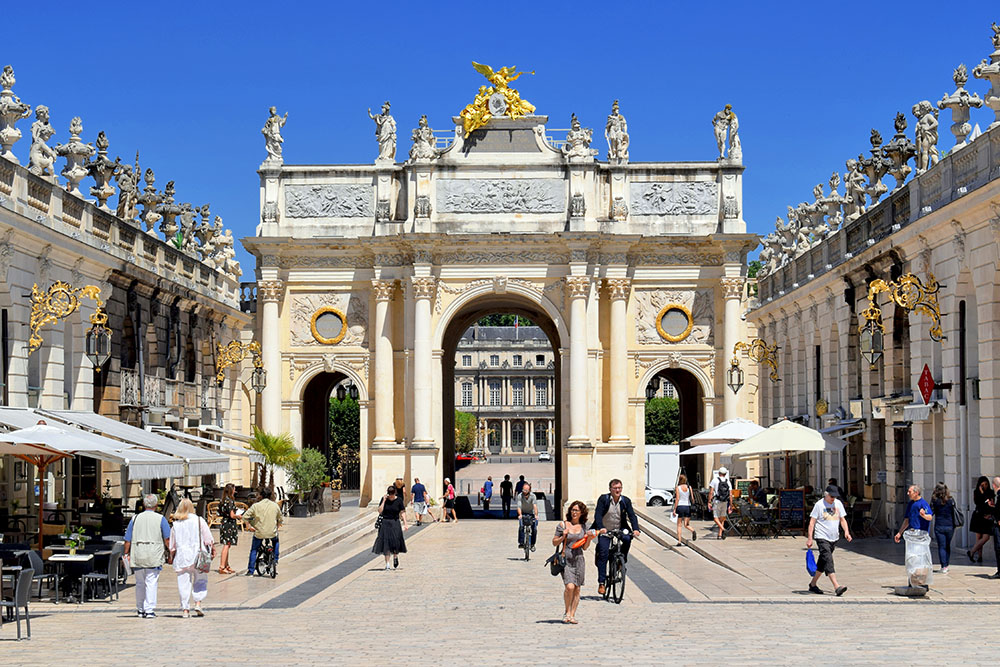
Face north and let your eyes follow the line.
This is one of the most extraordinary urban perspectives in France:
Place Stanislas → Arc de Triomphe (Porte Héré) → Place de la Carrière → Palais du Gouvernement
The Arc de Triomphe acts like a hinge between two worlds — the civic world of Place Stanislas and the aristocratic world of Place de la Carrière.
Pass beneath it and the space stretches out into a long, tree-lined rectangle bordered by classical façades.
Continue walking, and the vista ends in the Palais du Gouvernement, a symbol of ducal authority.
This axis tells the whole history of Nancy in one straight line: royalty, refinement, civic pride, Enlightenment ambition.
It is urban theatre on a monumental scale, yet utterly walkable.
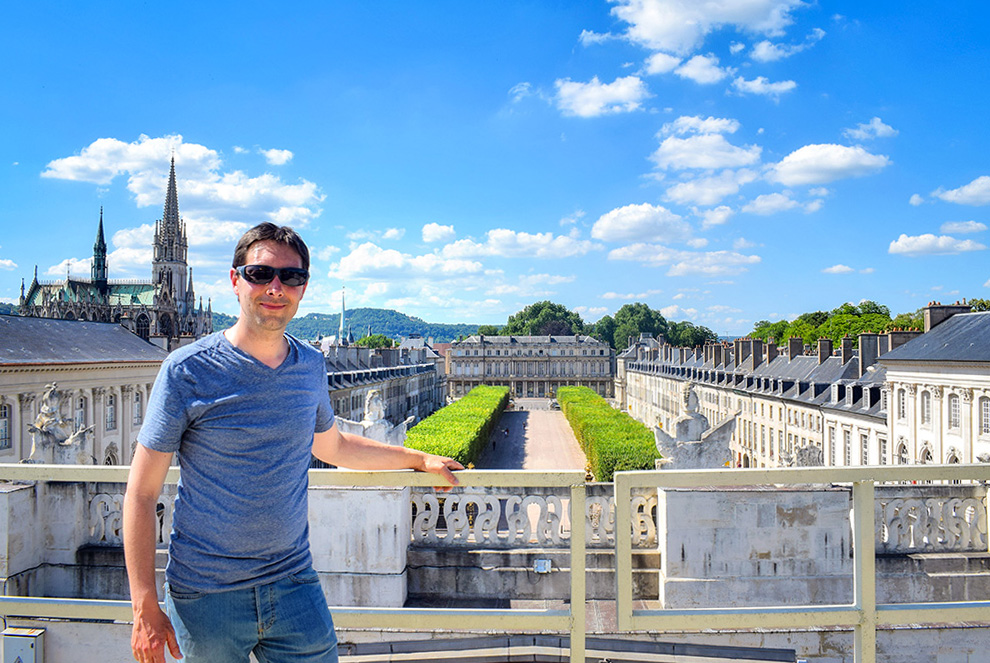
Place Stanislas Through the Seasons — A Square With a Life of Its Own
Some squares feel frozen in time.
Place Stanislas breathes with the seasons.
Summer
Terraces spill over the stones. Children run in and out of fountains. The light feels almost Mediterranean — warm, glowing, endlessly inviting.
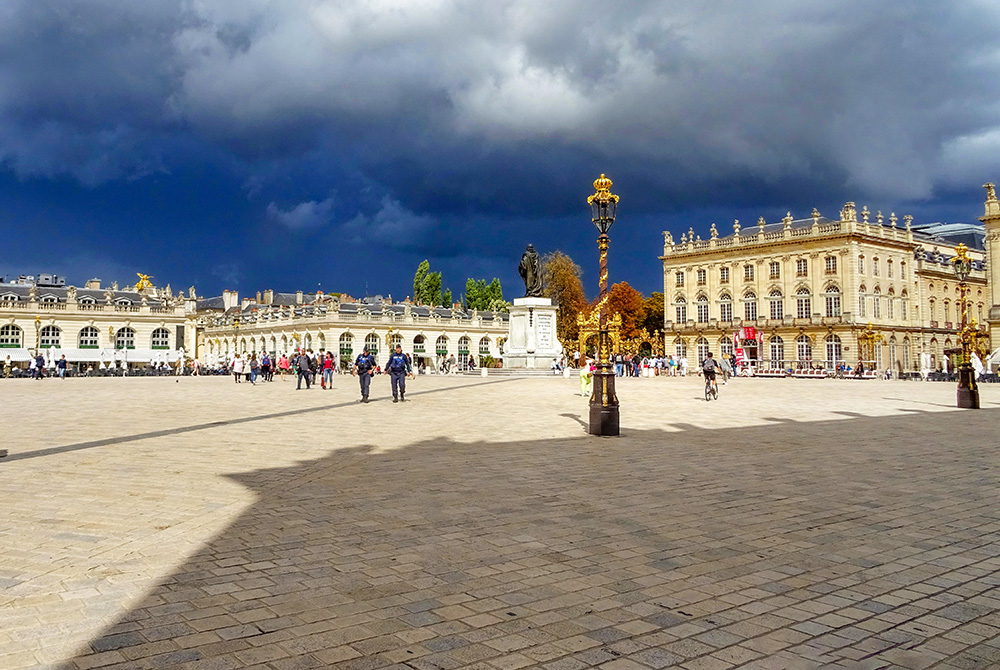
Autumn
Shadows lengthen. The façades take on burnt-gold tones. There is a softness to the air that makes the square feel contemplative, almost nostalgic. During the fall, the Royal Square welcomes the Jardin Éphémère.
Winter
Then comes the magic.
Saint-Nicolas festivities turn the square into a glittering dreamscape — lights, projections, music, warmth against the cold. Few European cities celebrate winter with as much heart as Nancy.
Spring
Wisteria blooms nearby. The air becomes gentle. Pigeons warm themselves on the sunlit stones. Everything feels like a quiet awakening.
Across the year, the square remains constant — yet somehow always new.
A Square That Has Lived Many Lives
Place Stanislas has worn many names:
Place Royale, Place du Peuple, Place Napoléon, Place Stanislas.
Each reflects a different chapter of French history.
Revolutions, wars, celebrations, protests, festivals — the square has witnessed all of them.
But perhaps its greatest achievement is this: despite everything, it has remained a place of joy.
A place where people sit, walk, talk, celebrate, and rest.
A place that belongs as much to the residents buying ice cream as to the travellers taking their first breathless photo.
Conclusion — Why Place Stanislas Still Matters Today
Place Stanislas is not just a square.
It is an idea — of beauty, of balance, of civic life elevated to an art form.
Every time I return to Nancy, I walk straight to the centre of the square.
I stand there, let the geometry settle around me, and feel the same quiet wonder I felt the first time.
The golden gates catch the light. The fountains murmur. The arc frames the sky. The perspective stretches toward history.
And I am reminded, again, that great cities are built not only with stone and expertise — but with imagination.
Place Stanislas is imagination made visible.
A masterpiece you don’t just see.
You feel it.
Discover more about Nancy’s royal square!
