
Planning your first Alsace trip is an exciting moment, because this small region in eastern France is one of the most charming destinations in Europe.
Tucked between the Vosges Mountains and the Rhine River, Alsace feels almost like a storybook landscape come to life.
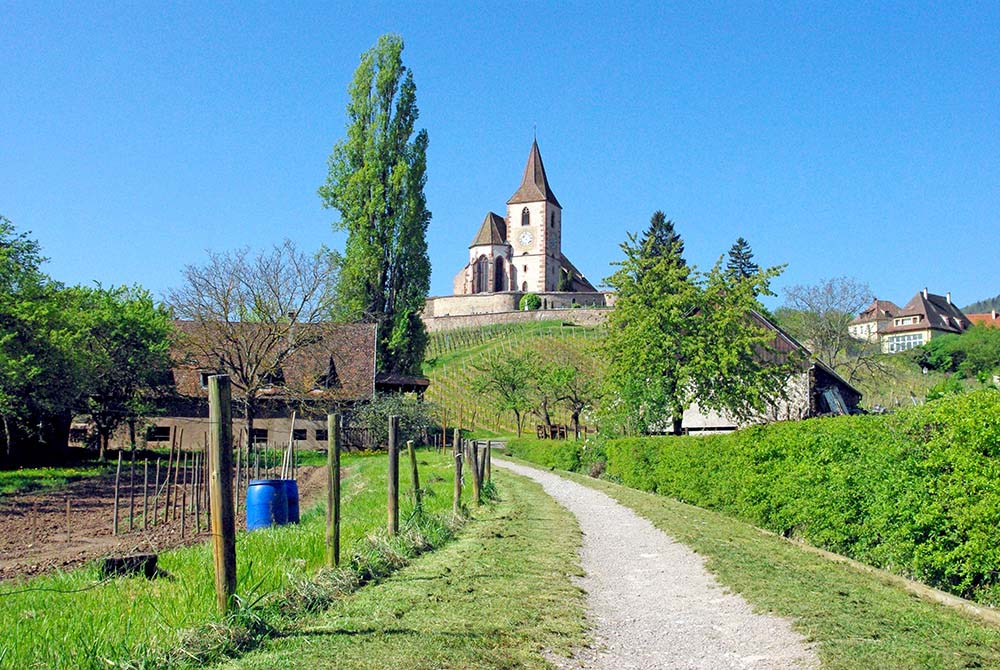
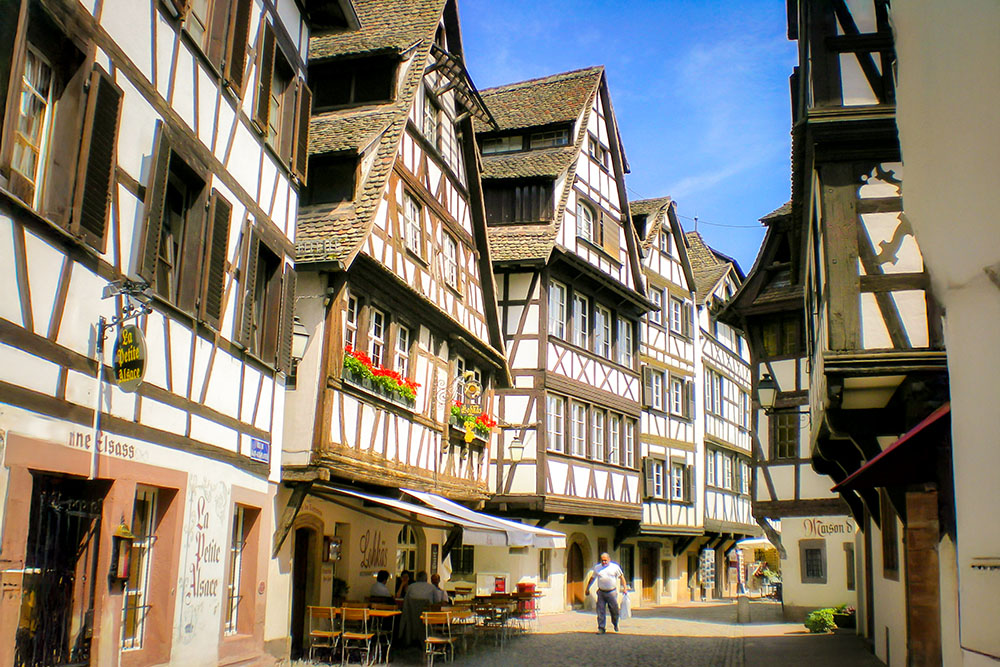
Half-timbered houses lean gently over cobbled streets, church spires rise above vineyards, and medieval town centres seem frozen in time.
For travellers coming from the United States or the United Kingdom, Alsace often feels both familiar and delightfully different.
Its culture blends French elegance with Germanic traditions, shaped by centuries of history along one of Europe’s great cultural crossroads.
The result is a region rich in architecture, gastronomy, festivals, and landscapes — all within surprisingly short distances.
Yet if you are preparing your first Alsace trip, deciding where to begin can be surprisingly difficult.
The region is compact, but it is filled with historic cities, picturesque villages, cultural treasures, and breathtaking viewpoints in the Vosges mountains.
The good news is that many of the most beautiful destinations are easy to combine into a single itinerary.
Whether you arrive by train in Strasbourg, drive along the famous Alsace Wine Route, or explore the mountains and vineyards, these places will give you a wonderful introduction to the region.
Here are ten destinations that perfectly capture the spirit of Alsace and deserve a place on your itinerary.
10 Places That Will Make Your First Alsace Trip Unforgettable
Strasbourg
Strasbourg is the natural starting point for a first Alsace trip, and for good reason. As the capital of the region, it combines grand history with a vibrant modern atmosphere.
The historic centre, known as the Grande Île, is a UNESCO World Heritage site and one of the most beautiful medieval districts in Europe.
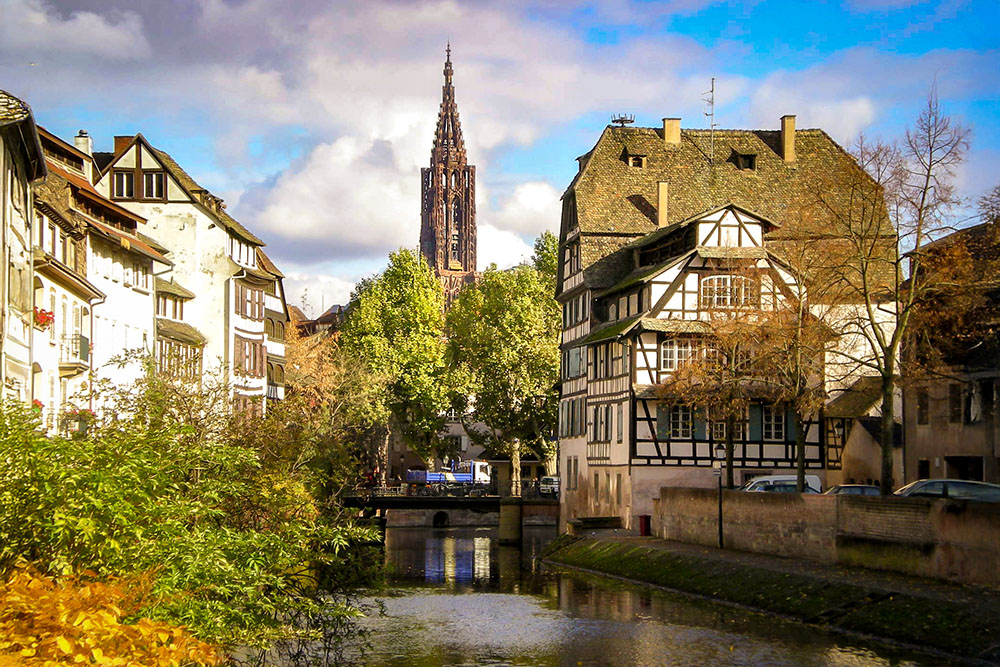
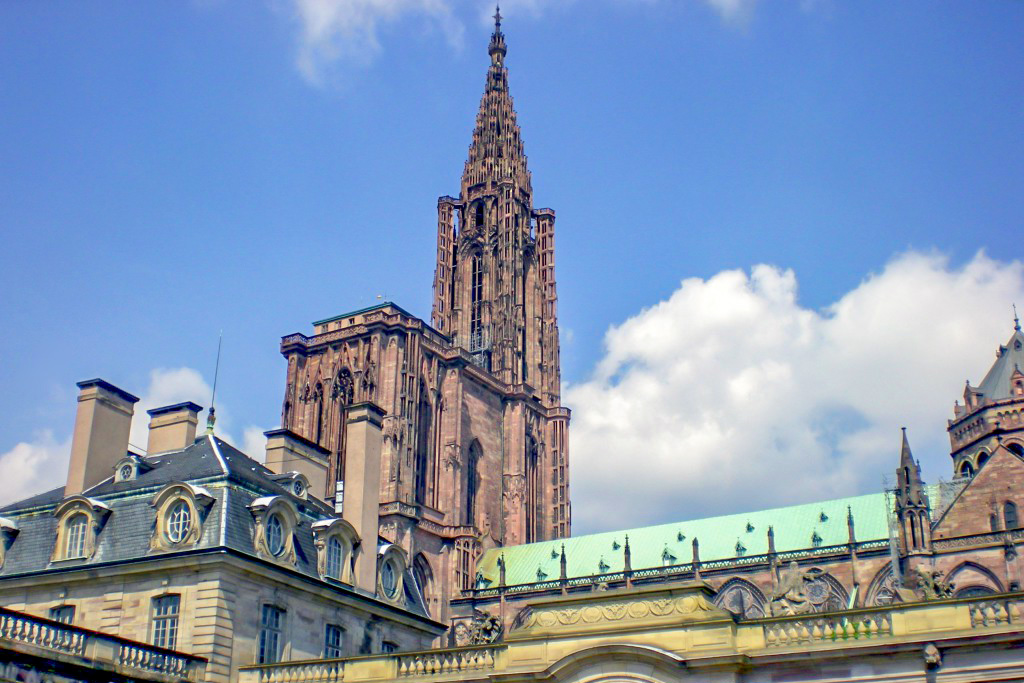
At its heart stands the magnificent Strasbourg Cathedral, a masterpiece of Gothic architecture whose pink sandstone façade glows in the evening light. Climb the cathedral platform and you will be rewarded with a sweeping view across the rooftops of the old town.
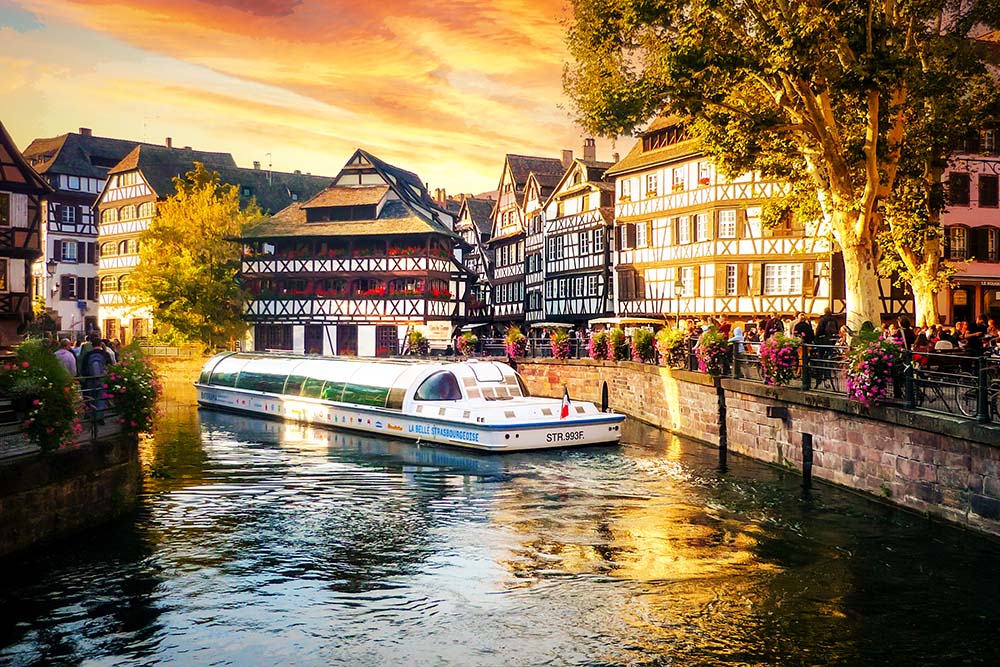
Nearby lies the district of La Petite France, where canals wind between half-timbered houses that once belonged to fishermen and tanners. Today, the area is filled with cafés, restaurants, and small shops, making it one of the most atmospheric places to stroll in the evening.
Strasbourg is also home to excellent museums, including the Alsatian Museum, which offers a fascinating look at traditional regional life. Between its medieval streets and lively squares, Strasbourg perfectly captures the cultural richness of Alsace.
Colmar

If Strasbourg feels like a grand European capital, Colmar feels like a perfectly preserved medieval town.
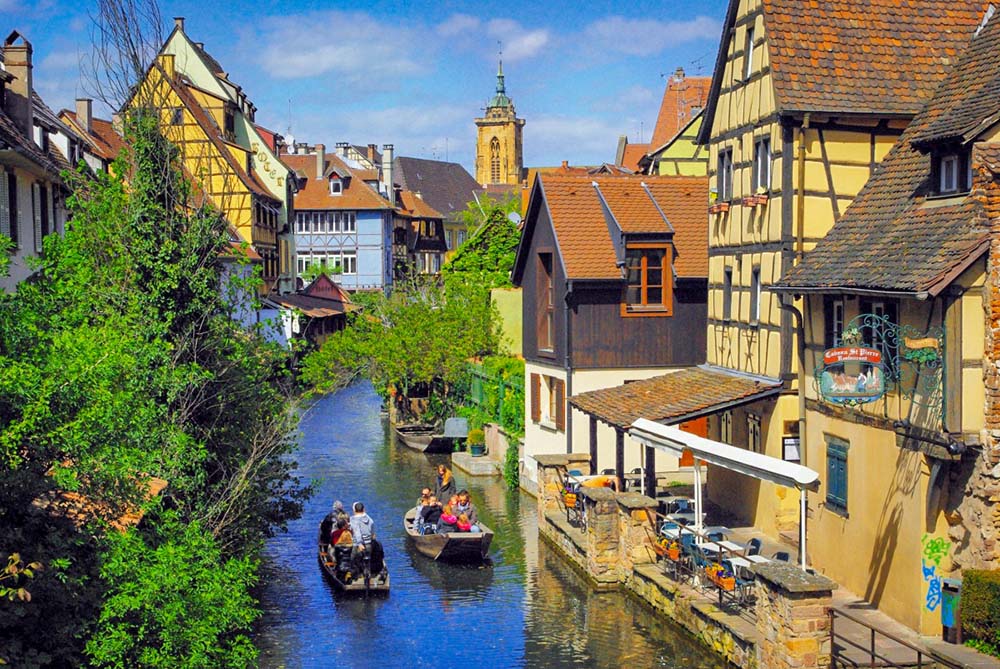
Often described as one of the most picturesque places in France, Colmar is famous for its colourful houses, flower-filled balconies, and romantic canals. The district known as Little Venice is particularly charming, where pastel façades reflect in the quiet waters of the Lauch River.
Colmar also has a remarkable artistic heritage. The Unterlinden Museum, housed in a former Dominican convent, contains one of Europe’s most famous religious masterpieces: the Isenheim Altarpiece.

Art lovers will also appreciate the Bartholdi Museum, dedicated to the sculptor who designed the Statue of Liberty.
Walking through Colmar is like wandering through centuries of history. Renaissance mansions, medieval churches, and lively market squares create an atmosphere that feels both elegant and welcoming.
For many visitors on their first Alsace trip, Colmar quickly becomes one of the most memorable stops.
Sélestat

Sélestat is often overlooked by first-time visitors, yet it is one of the most historically fascinating towns in Alsace.
During the Middle Ages, Sélestat was a major intellectual centre. Its Humanist Library, founded in the 15th century, contains an extraordinary collection of rare manuscripts and early printed books. Today, the library is listed by UNESCO as part of the Memory of the World Programme.
The town’s historic centre still reflects its medieval prosperity. Two impressive churches dominate the skyline: Saint-George’s Church, with its Gothic architecture, and the Romanesque Sainte-Foy Church, one of the oldest buildings in the region.
Sélestat is also known for a charming cultural tradition: it is home to one of the earliest written references to the Christmas tree, dating from the early 16th century. Every winter, the town celebrates this heritage with festive decorations and exhibitions.
For travellers interested in history and culture, Sélestat is a rewarding stop during a first Alsace trip.
Mulhouse
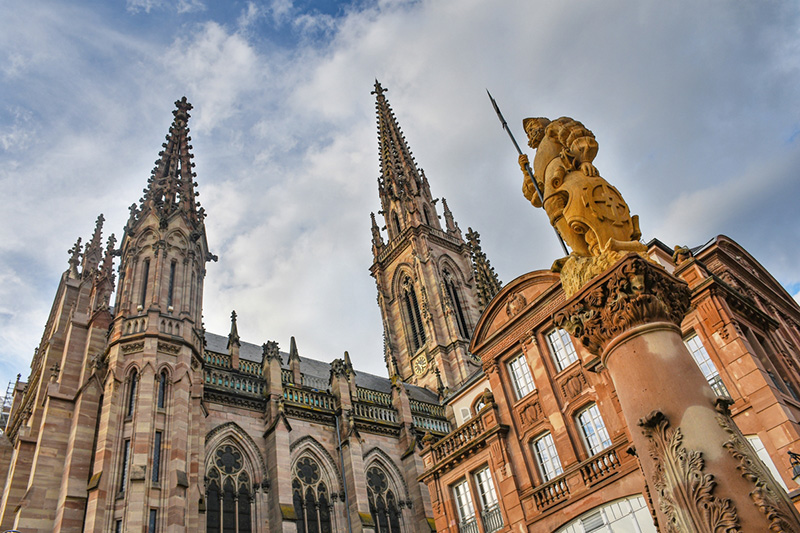
Located in southern Alsace, Mulhouse offers a very different perspective on the region.
Unlike the medieval towns along the Wine Route, Mulhouse developed as an industrial city during the 19th century. Yet this industrial heritage has given rise to some of the most remarkable museums in France.
The Cité de l’Automobile is the largest car museum in the world, displaying hundreds of historic vehicles, including the famous Bugatti collection.

Nearby, the Cité du Train tells the story of France’s railway history through impressive locomotives and interactive exhibits.
Mulhouse’s city centre also has its share of charm. The colourful Place de la Réunion is lined with elegant buildings, including the richly decorated Town Hall, whose painted façade reflects the city’s Renaissance past.
If you enjoy museums and cultural discoveries, Mulhouse adds a fascinating dimension to a first Alsace trip.
Riquewihr
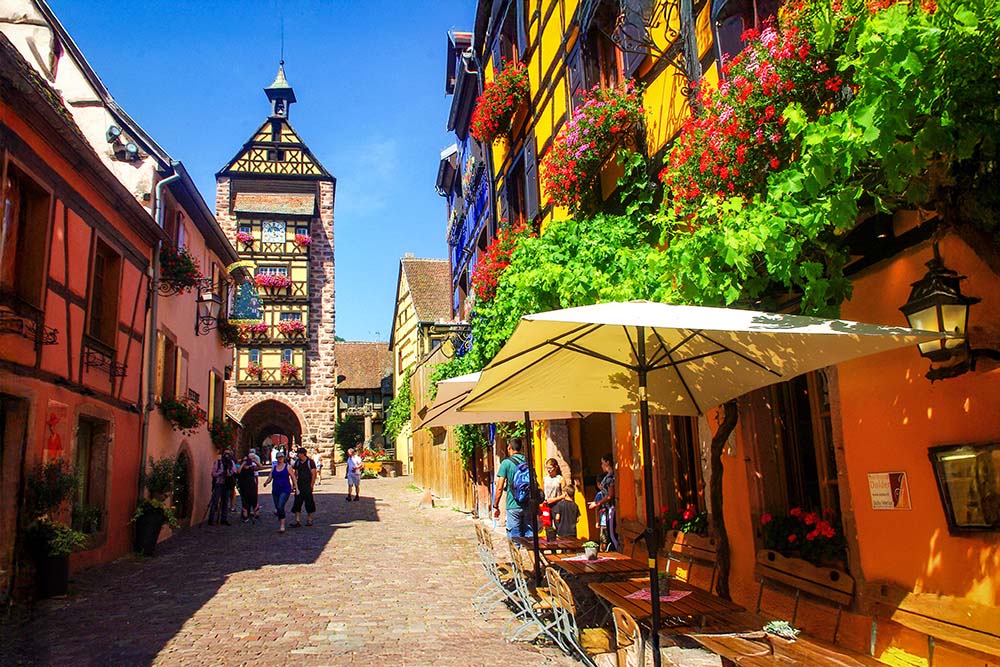
Few villages capture the fairy-tale charm of Alsace quite like Riquewihr.
Nestled among vineyards along the Alsace Wine Route, this small walled village has changed remarkably little since the 16th century.
Cobblestone streets wind between half-timbered houses painted in warm shades of yellow, pink, and blue.
The village is surrounded by medieval ramparts, and its main street is lined with wine cellars, bakeries, and craft shops. One of the most famous landmarks is the Dolder Tower, which once served as a defensive gate and watchtower.
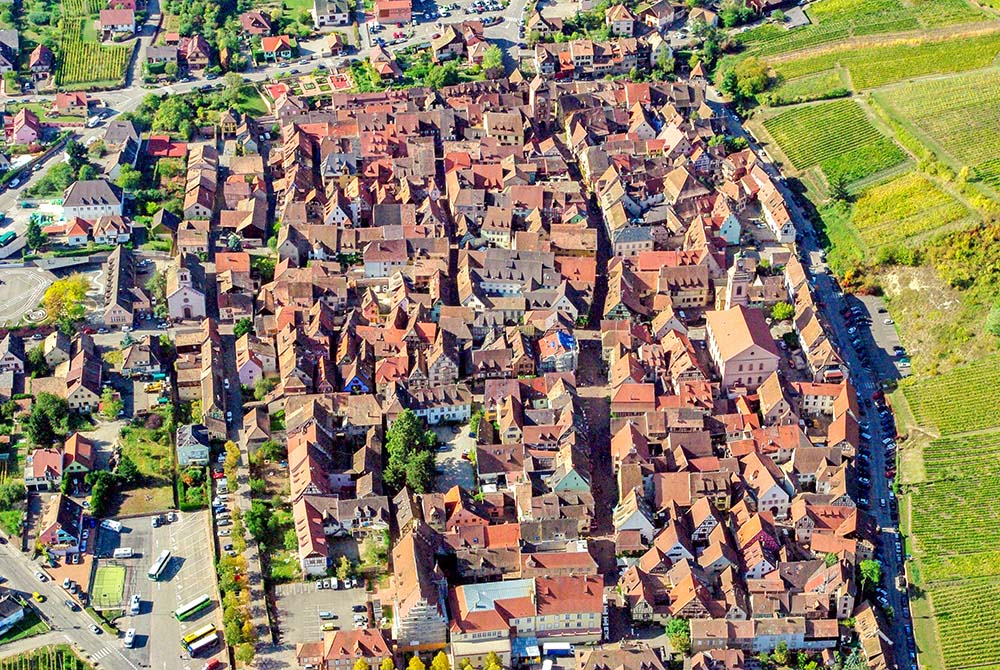
Riquewihr is also a paradise for wine lovers. The surrounding vineyards produce some of Alsace’s finest white wines, including Riesling, Gewurztraminer, and Pinot Gris.
For many visitors on their first Alsace trip, Riquewihr feels like stepping into a postcard.
Wissembourg

Near the German border, Wissembourg is one of Alsace’s hidden gems.
The town sits along a quiet river and retains a peaceful atmosphere that feels far removed from busy tourist routes.
Its historic centre is filled with charming half-timbered houses and narrow streets that lead toward the impressive Saints Peter and Paul Church, one of the largest Gothic churches in Alsace.
One of Wissembourg’s most picturesque corners is the Bruch district, where small houses line the banks of a canal shaded by trees. Walking here feels like discovering a secret corner of the region.
Because it lies at the northern edge of Alsace, Wissembourg is often overlooked. Yet its beauty and authenticity make it a delightful addition to a first Alsace trip.
Ferrette and the Sundgau

Far from the well-known Wine Route lies the Sundgau, a rural region of rolling hills, quiet villages, and traditional farms.
At its heart sits the small town of Ferrette, dominated by the ruins of a medieval castle perched on a rocky hill. From the top, you can enjoy sweeping views across the surrounding countryside — and the Alsatian Jura.
The Sundgau is also famous for its gastronomy. Many local restaurants specialise in carp dishes, a culinary tradition unique to this part of Alsace. The region’s landscapes are dotted with ponds, forests, and peaceful walking trails.
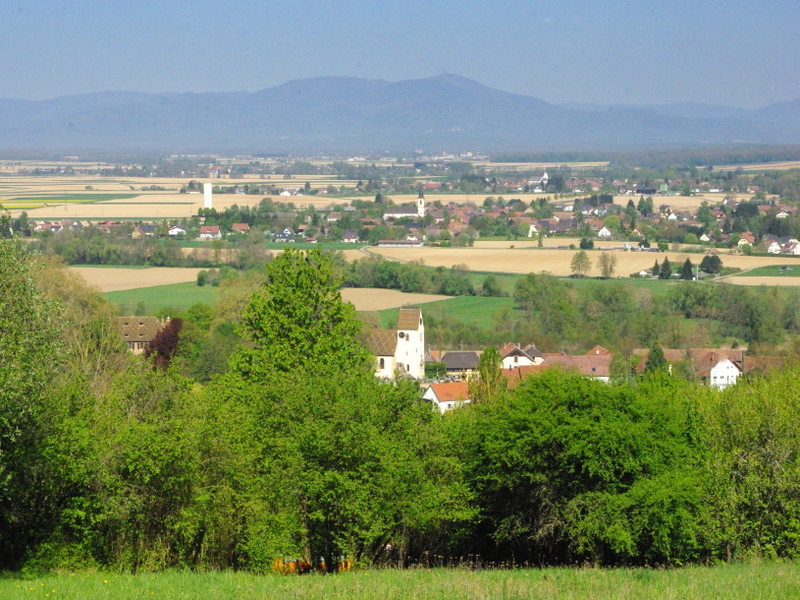
For travellers looking to explore beyond the classic tourist circuit, Ferrette and the Sundgau reveal a quieter side of Alsace that adds depth to a first Alsace trip.
Obernai

Located about 25 kilometres south of Strasbourg, Obernai is a charming town that perfectly represents the classic Alsatian atmosphere.
Its central square, Place du Marché, is surrounded by colourful half-timbered houses and dominated by a Renaissance belfry tower. Cafés spill onto the square, creating a lively setting throughout the day.

Obernai is also closely connected to Alsace’s wine culture. Vineyards stretch across the nearby hills, and the town is a convenient base for exploring the Wine Route.
Visitors will also enjoy wandering along the old town walls, which still encircle much of the historic centre.
With its welcoming atmosphere and well-preserved architecture, Obernai is an ideal stop on a first Alsace trip.
Kaysersberg

Many travellers fall instantly in love with Kaysersberg, one of the most photogenic villages in the region.
The town sits in a narrow valley surrounded by vineyards and dominated by the ruins of a medieval castle.
A beautiful stone bridge crosses the Weiss River, connecting the lively market square with the historic streets beyond.

Kaysersberg is also the birthplace of Albert Schweitzer, the Nobel Peace Prize laureate and humanitarian doctor. His former home has been turned into a museum dedicated to his remarkable life.
With its flower-filled balconies, winding streets, and welcoming cafés, Kaysersberg offers the perfect atmosphere for a leisurely afternoon during a first Alsace trip.
Grand Ballon

To experience the natural beauty of Alsace, a visit to the Grand Ballon is essential.
At 1,424 metres, it is the highest peak in the Vosges Mountains. The summit offers breathtaking panoramic views across the Rhine Valley, the Black Forest in Germany, and sometimes even the distant Alps.
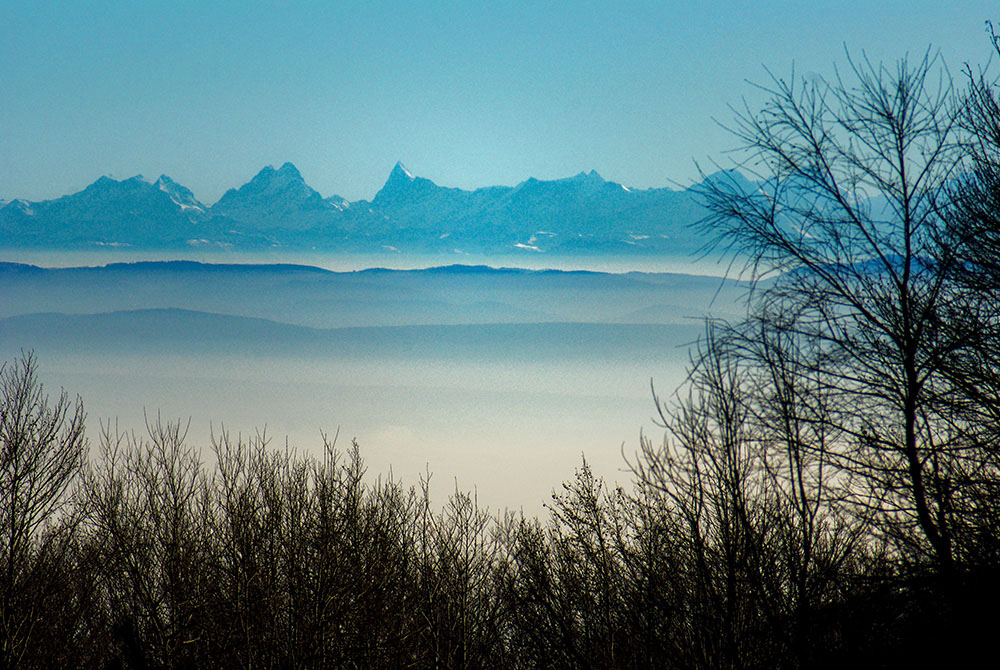
The surrounding landscapes are ideal for hiking, cycling, and scenic drives. In summer, alpine meadows are dotted with wildflowers, while winter often brings snow-covered forests.
A monument dedicated to the Blue Devils, French mountain troops of the First World War, stands near the summit, adding a poignant historical dimension to the site.
For travellers who want to see beyond the towns and vineyards, the Grand Ballon reveals the dramatic landscapes that complete a first Alsace trip.
Conclusion: The Perfect Introduction to Your First Alsace Trip
Planning a first Alsace trip can feel overwhelming at first. The region may be small, but it offers an extraordinary variety of experiences — from medieval cities and fairy-tale villages to vineyards and mountain landscapes.
The ten destinations above provide a wonderful introduction to what makes Alsace so special. Strasbourg and Colmar showcase the region’s rich heritage, while villages like Riquewihr and Kaysersberg reveal its postcard beauty.
Places such as Mulhouse and Sélestat highlight their cultural depth, while the Sundgau and the Grand Ballon offer a taste of their natural landscapes.
Perhaps the greatest joy of travelling in Alsace is how easily these places connect with one another. Within just a few days, you can move from cathedral cities to vineyard villages and mountain panoramas.
And chances are, once you complete your first Alsace trip, you will already be planning the next one.
Plan Your First Alsace Trip: Useful Guides to Go Further
If you are planning your first Alsace trip, these detailed guides will help you explore the region in more depth:
- Visiting Strasbourg: top things to see in the Alsatian capital
- Visiting Colmar: travel tips for exploring the Little Venice of Alsace
- Kaysersberg travel guide: one of the most beautiful villages in Alsace
- The Alsace Wine Route: the most scenic drive in eastern France
- Colmar Easter Market: a charming spring tradition in Alsace