Plombières-les-Bains is one of those places I had passed nearby countless times without stopping.
When driving the familiar routes between Mulhouse and Nancy, or later between Besançon and Nancy, the sign always flashed by on the roadside like a vague promise.
For years, I told myself I would visit one day, but I never quite managed it.
Until one afternoon.
I was driving up to Nancy from Savoie, where we lived at the time, and the weather was perfect.
Clear sky, warm sun, nothing urgent awaiting me at the end of the road.
When I reached the junction for Plombières-les-Bains, I finally turned the wheel.
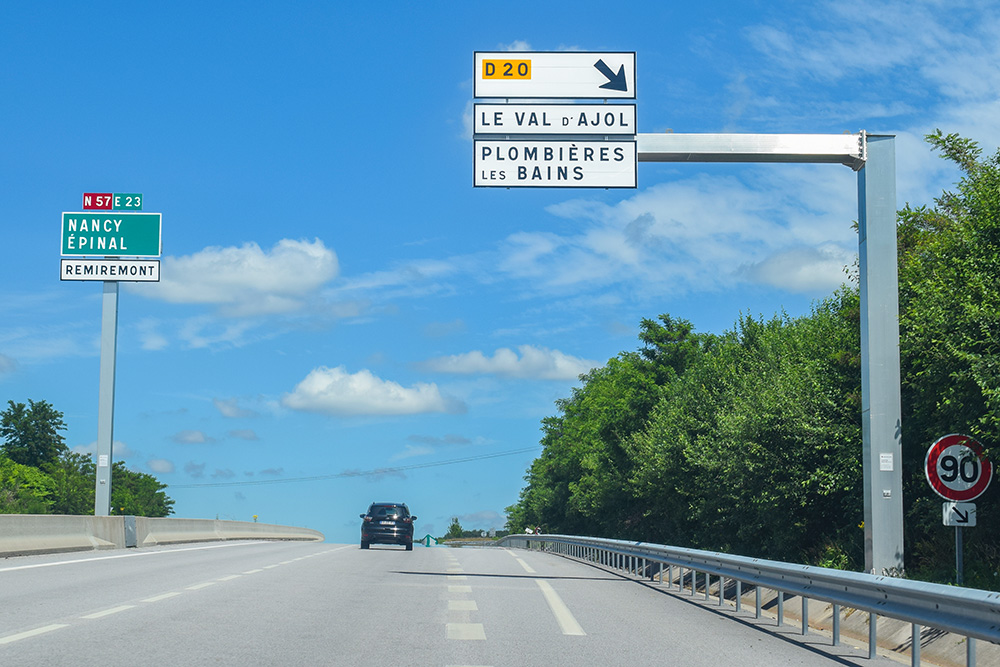
It felt like a small, spontaneous act of curiosity. And it turned out to be one of my most memorable detours in the Vosges.
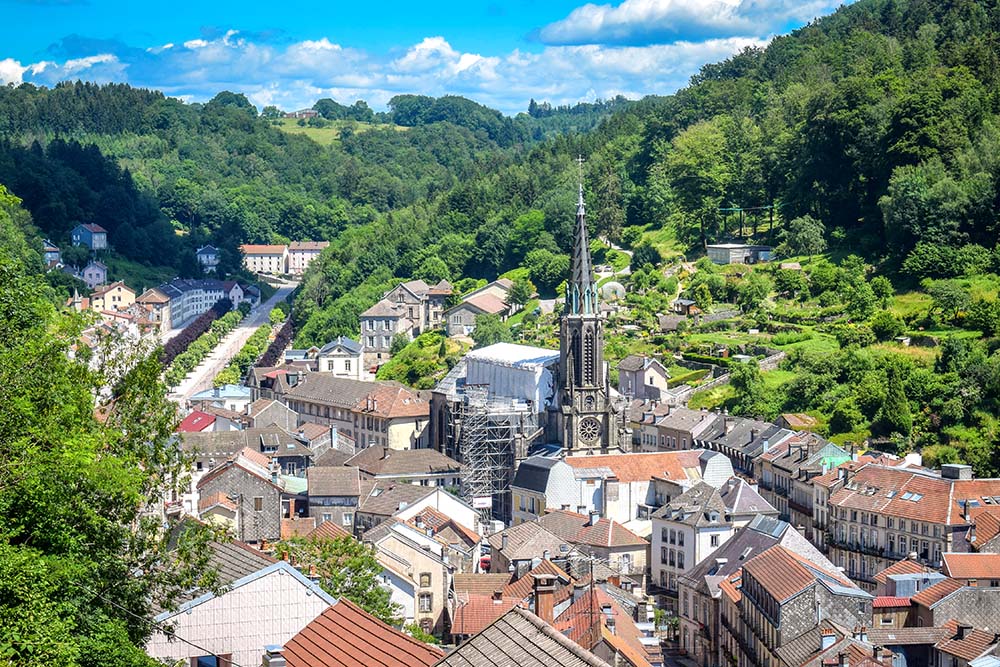
What I found was a town that time seems to treat gently: a narrow valley of tiled roofs, pale stone façades, and a deep-rooted spa culture stretching back two millennia.
For British and American travellers unfamiliar with this corner of France, Plombières-les-Bains offers a surprising blend of quiet charm, historical resonance, and a sense of discovery that rewards every unhurried step.
This is a place where Roman engineers and French monarchs left their marks, where diplomatic secrets altered the map of Europe, and where the pace of life seems calibrated to the rhythm of warm, rising steam.
It is, in short, a destination worth lingering in.
Where Exactly Is Plombières-les-Bains? A Gentle Orientation
Plombières-les-Bains lies in the southern Vosges, tucked into a steep valley carved by the Augronne river.
Surrounded by thick forests and terraced hillsides, the town looks almost like it was folded into the landscape rather than built upon it.
A Spa Town Nestled in the Mountains
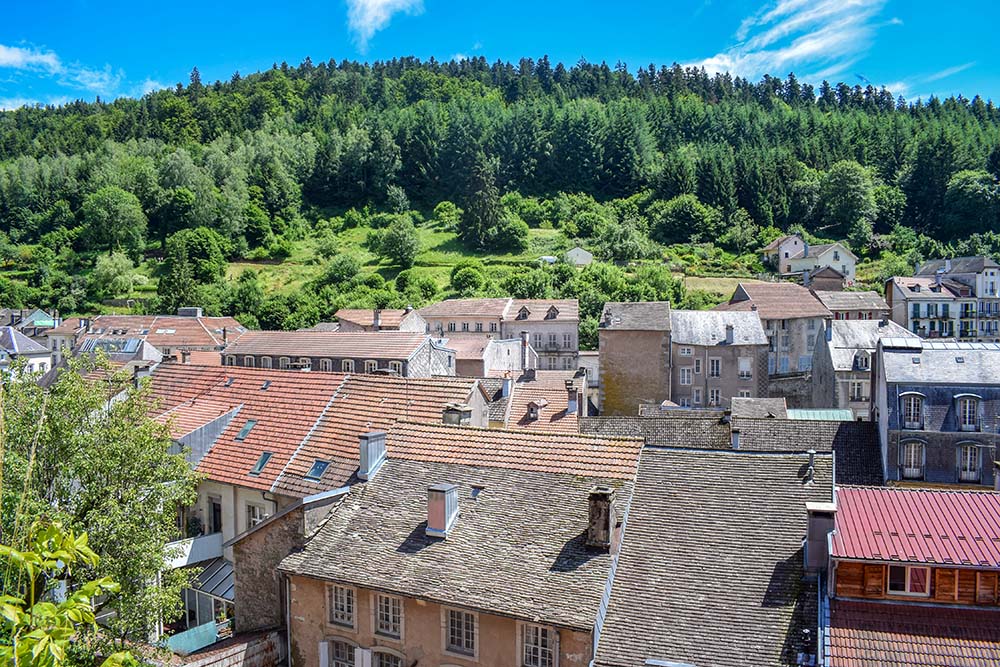
The geography shapes everything here.
Streets wind along the slope, balconies overlook the water, and narrow lanes disappear into pockets of greenery.
It is undeniably picturesque, yet never overly polished.
There is authenticity in the uneven stones and the quiet streets that descend towards the thermal establishments.
Getting There Without Stress
For travellers coming from Paris, the easiest route is to take the train to Remiremont or Épinal, then continue by car or regional transport.
From Strasbourg or Nancy, the journey is short and scenic.
British visitors can connect through Paris or Basel, and the drive from the Channel ports is straightforward.
Nothing here is hurried. Even the arrival feels like stepping slightly sideways in time.
Plombières-les-Bains and Its Hot Springs: Two Millennia of Curative Dreams
The story of Plombières-les-Bains begins with water — hot water rising from more than fifty natural springs, some reaching temperatures of 70°C beneath the surface.
The Romans Discover a Treasure
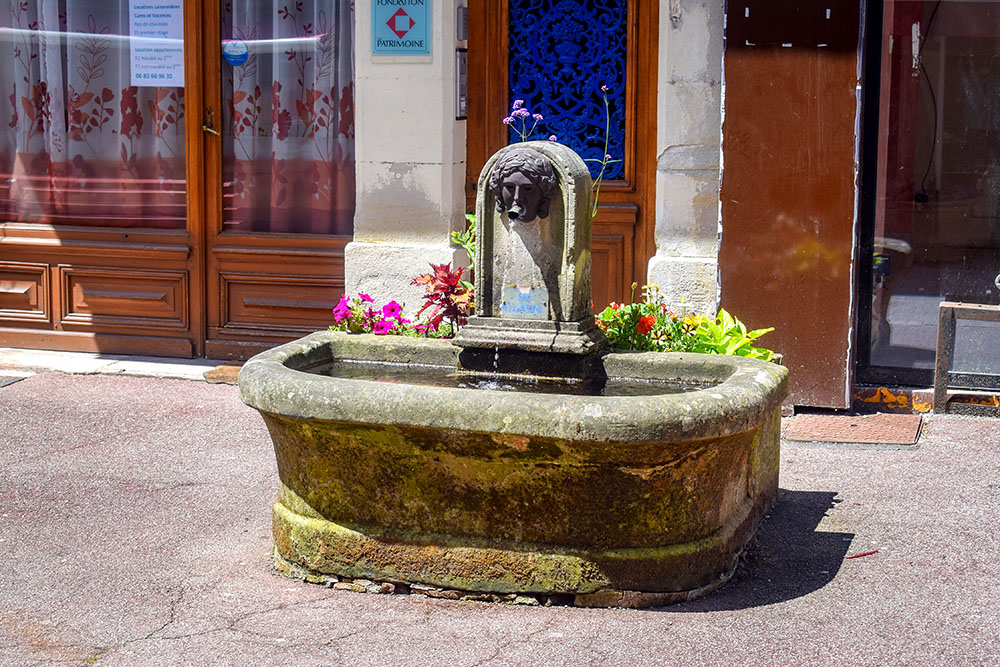
For the Romans, the springs were an irresistible resource.
They founded a settlement here, building baths, galleries, and sophisticated heating systems.
What remains today — fragments of walls, underground chambers, archaeological vestiges — is enough to feel the echo of sandals on stone floors and the murmur of ancient conversations drifting through warm vapour.
Pliny the Younger even mentions the region in his writings.
If he did visit Plombières-les-Bains, one imagines him composing letters while wrapped in a thermal robe.
A Spa Through the Middle Ages
The Middle Ages did not erase Plombières’ spa identity. Pilgrims, monks, merchants, and nobles continued to visit, chasing relief from ailments both physical and spiritual.
The hot water, rising faithfully through the cracks of the earth, has been the town’s constant companion.
Plombières-les-Bains and Stanislas: The 18th-Century Revival
Any traveller exploring the history of Lorraine eventually encounters the name of Stanislas Leszczynski, former King of Poland and Duke of Lorraine.
Plombières-les-Bains owes him more than a passing footnote.
Stanislas Falls in Love with a Spa Town
During his reign over Lorraine, Stanislas recognised the potential of Plombières-les-Bains and invested heavily in its development.
He modernised the baths, commissioned new constructions, and helped elevate the town’s reputation.
Thanks to him, Plombières-les-Bains became not just a local curiosity but a recognised destination for the European elite.
Enlightenment Ideas in a Valley of Steam
Stanislas also brought artists, architects, and intellectuals to the region.
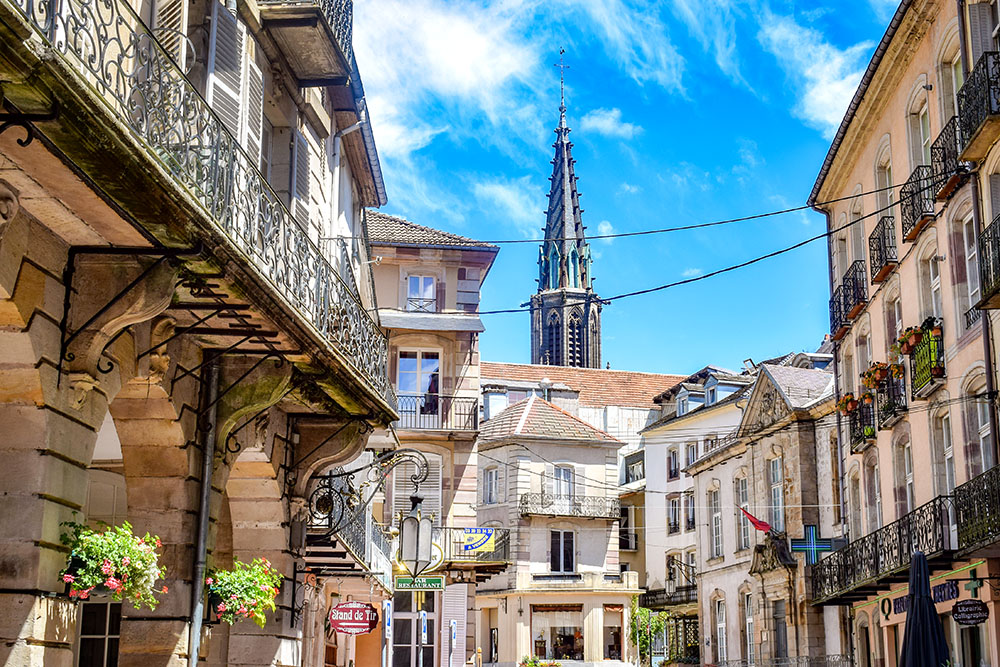
His touch gave Plombières a small but distinctive Enlightenment flair — one that still lingers in certain façades and the calm, rational geometry of its 18th-century structures.
Plombières-les-Bains, Napoleon III, and a Secret Meeting That Changed Europe
If the Romans built the foundations and Stanislas revived the town, Napoleon III and Camillo Benso di Cavour added a discreet political chapter that history enthusiasts will appreciate.
The Plombières Agreement
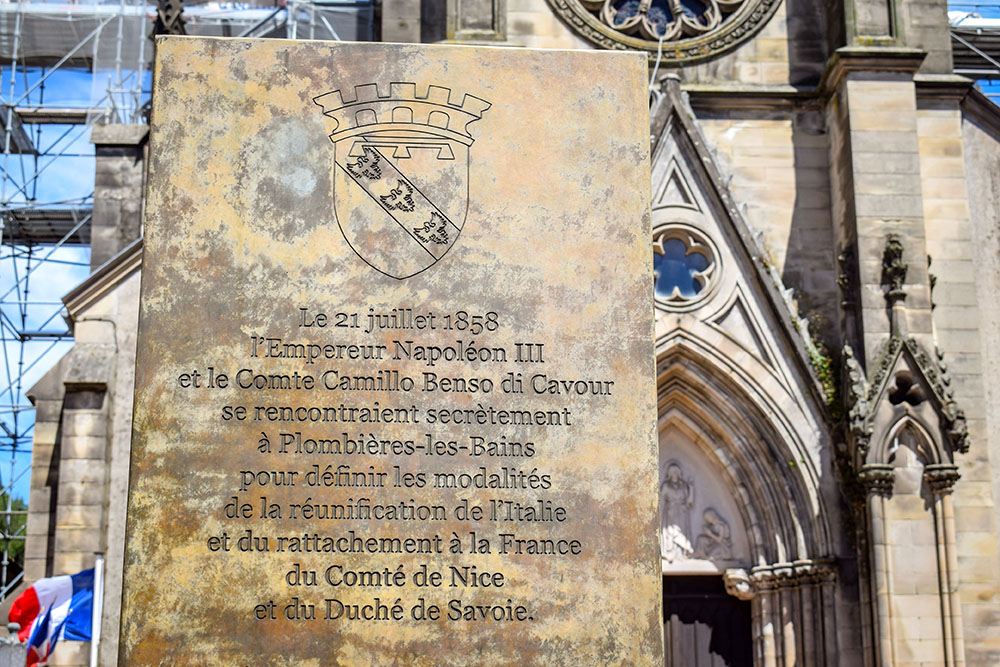
In July 1858, Cavour and Napoleon III met secretly in Plombières-les-Bains to discuss the unification of Italy.
Their conversation would lead to the Second Italian War of Independence, the growing influence of Piedmont-Sardinia, and, eventually, the birth of modern Italy.
In exchange for French military support, France would receive Savoy and Nice.
A quiet spa town in the Vosges became the unlikely birthplace of a geopolitical realignment.
A Setting Chosen for Discretion
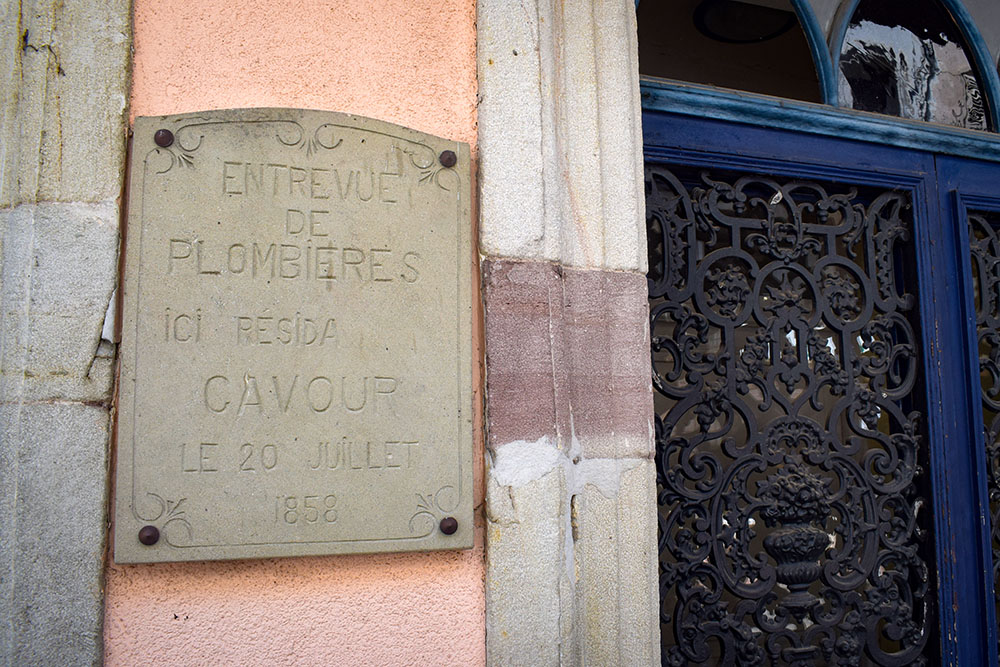
Why Plombières-les-Bains? Because it was remote enough for confidentiality, accessible enough for both men, and discreet enough for their purpose.
Walking the narrow streets today, one imagines the two statesmen slipping through side doors and whispering over the murmur of thermal water.
The Architecture and Atmosphere of Plombières-les-Bains
A Town Preserved by Time
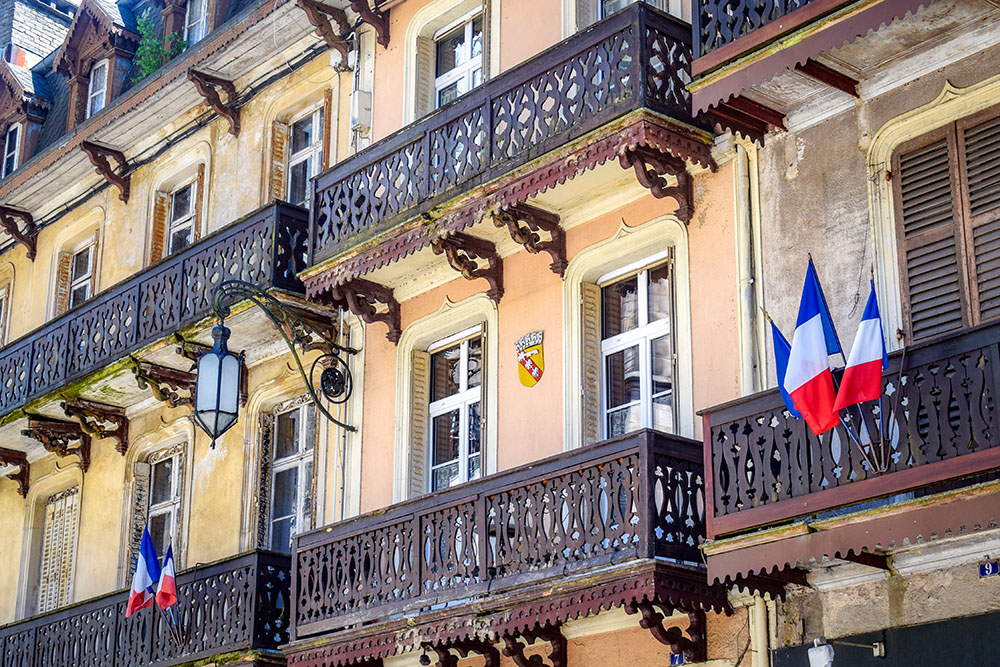
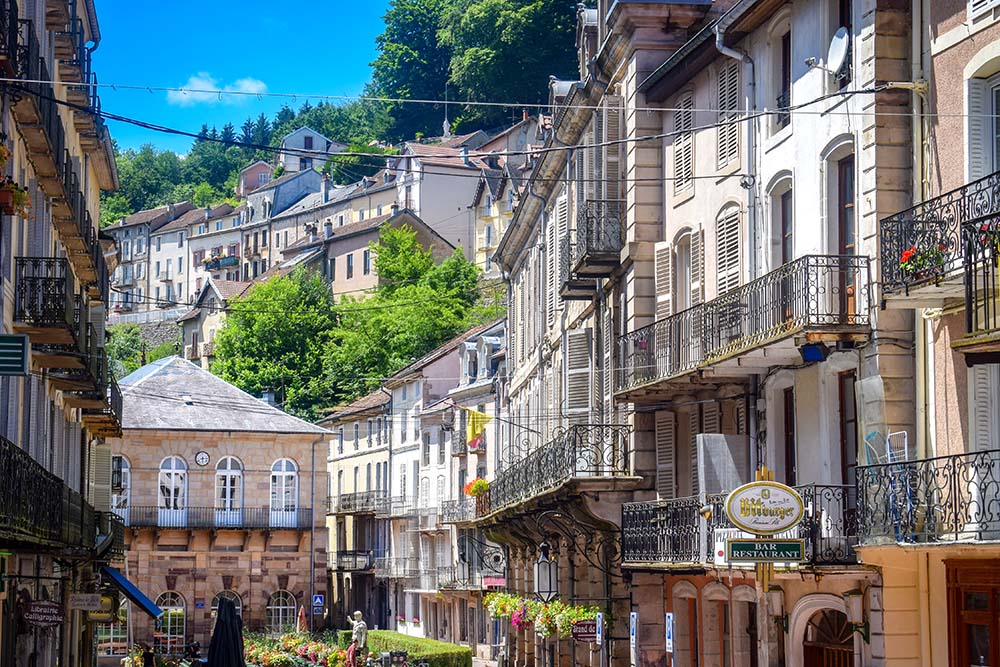
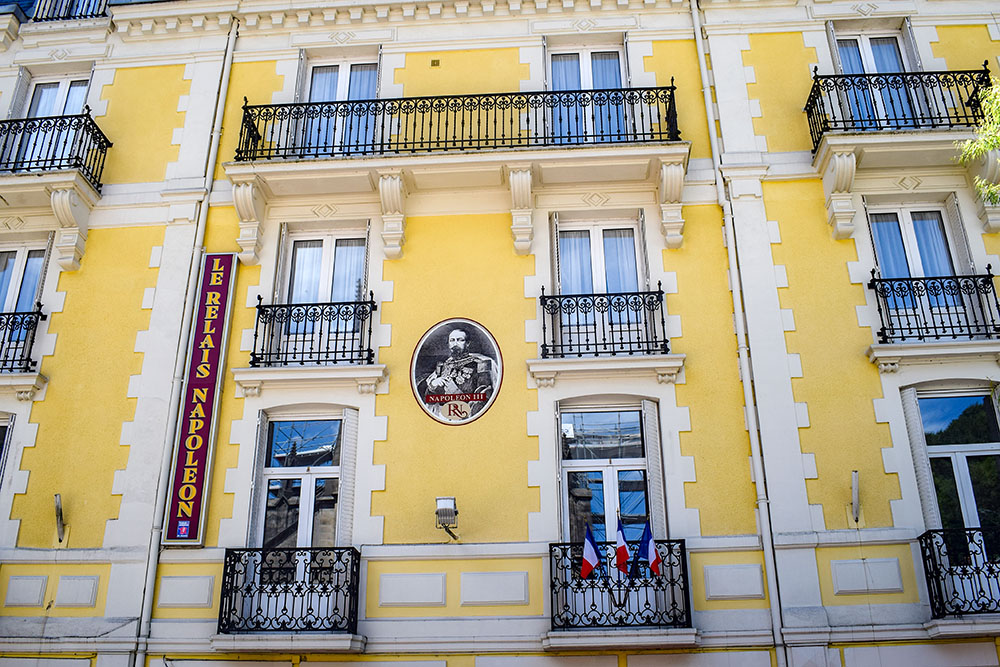
Much of Plombières-les-Bains feels like the 19th century simply paused and never resumed.
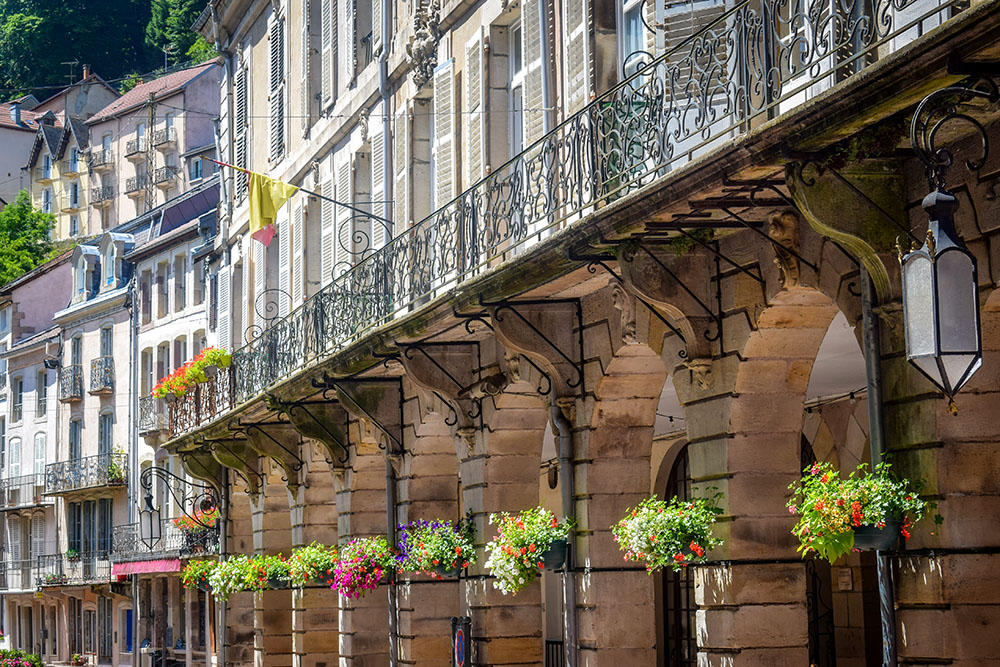
The façades, balconies, and bridges reflect the golden age of French spa culture.
Some buildings are perfectly maintained; others show gentle signs of wear, which only enhances the town’s nostalgic charm.
Between Belle Époque and Vosges Simplicity
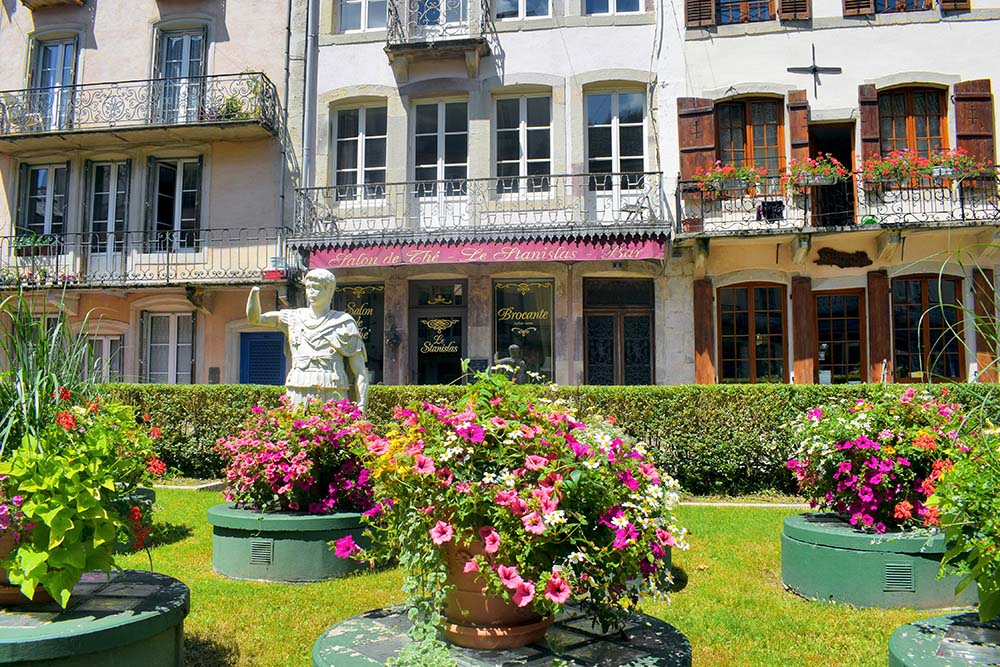
The architecture blends:
- classical spa design
- mountain-town sobriety
- narrow, hillside street plans
- elegant bathing complexes built for emperors, generals, and aristocrats
It is a mixture both delicate and rugged, refined yet provincial.
A Quiet Town That Invites Slowness
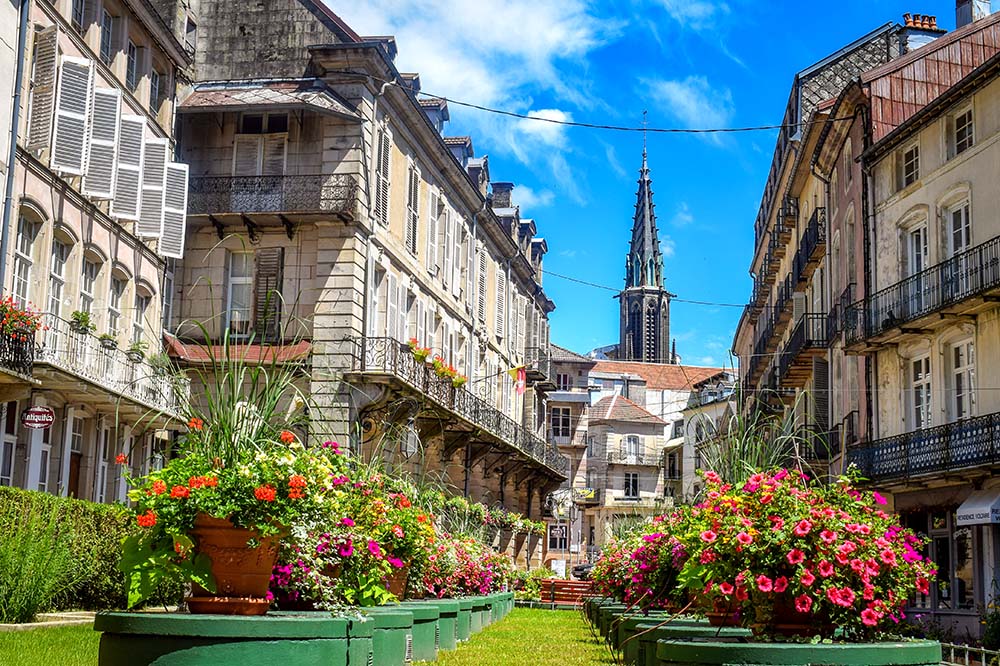
Many travellers rush from one major site to another.
Plombières-les-Bains invites the opposite approach.
Here, the pleasure lies in taking one’s time: listening to the river, strolling along shaded paths, following unexpected stairways, and letting the past seep through the present.
What to See and Do in Plombières-les-Bains
A stay of one night is ideal to appreciate the town and its surroundings fully. There is more to see than one might expect at first glance.
The Roman Baths
This is the historical heart of Plombières-les-Bains.
The underground galleries, dug into rock and ancient stone, give a compelling sense of continuity.
It is one thing to read that Romans built baths here; it is another to walk through them.
The 19th-Century Thermal Establishments
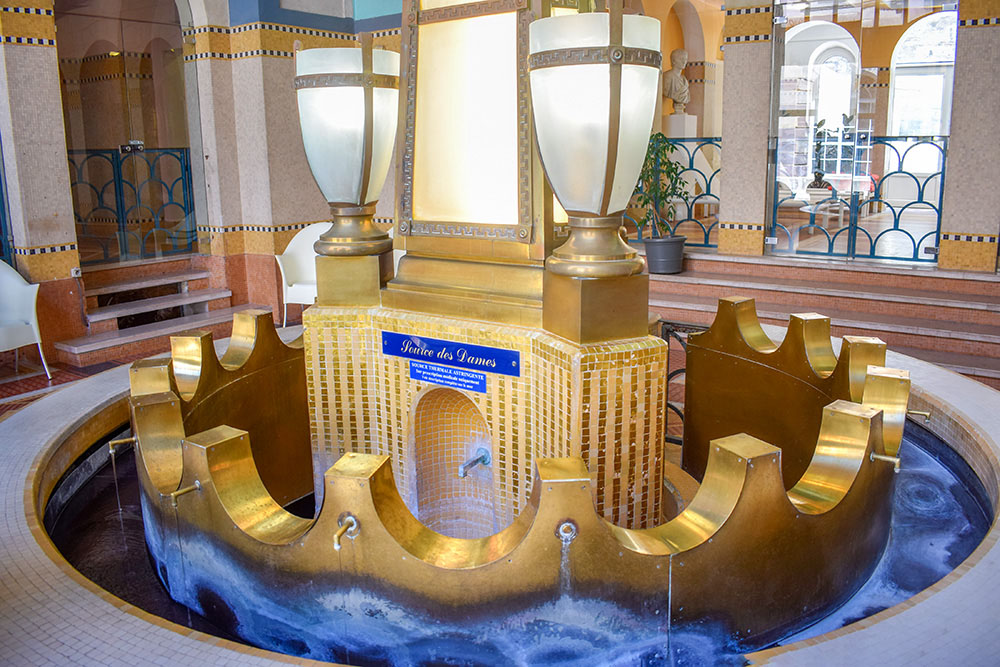
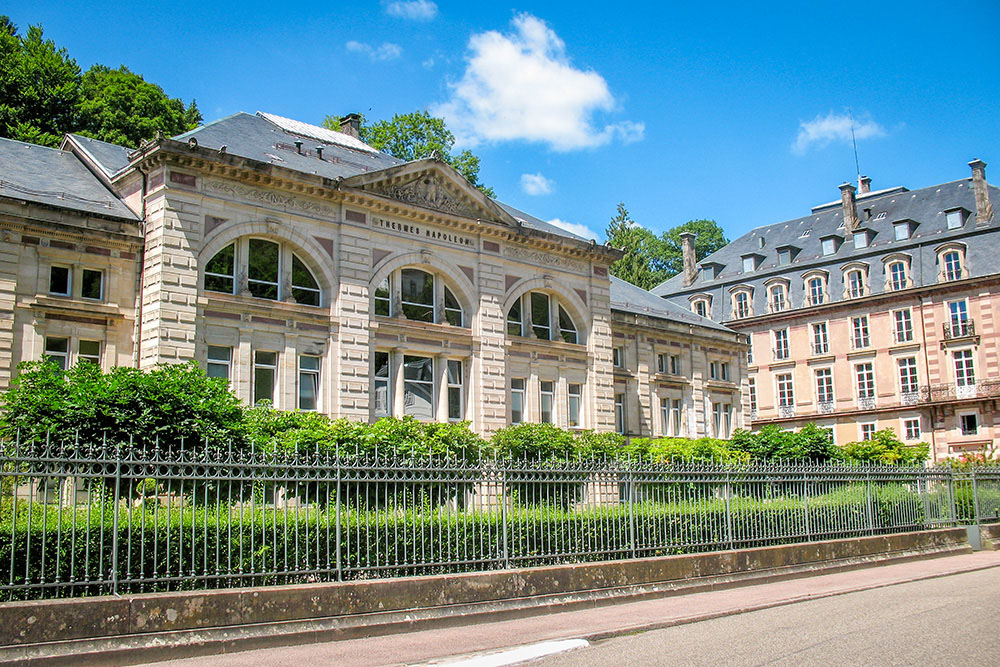
The more recent thermal structures, especially those from the Napoleonic era, are impressive.
Marble, columns, vast bathing halls — a reminder that Plombières-les-Bains catered to Europe’s elite.
Parc Tivoli
A leafy refuge perfect for an afternoon stroll. The small bandstand and winding paths offer a pleasant break between visits.
Les Jardins en Terrasses
One of the town’s highlights. These terraced gardens climb the slope and offer superb views over the valley.
In summer, they are fragrant and colourful; in autumn, warm-toned and peaceful.
The Calvary (Le Calvaire)
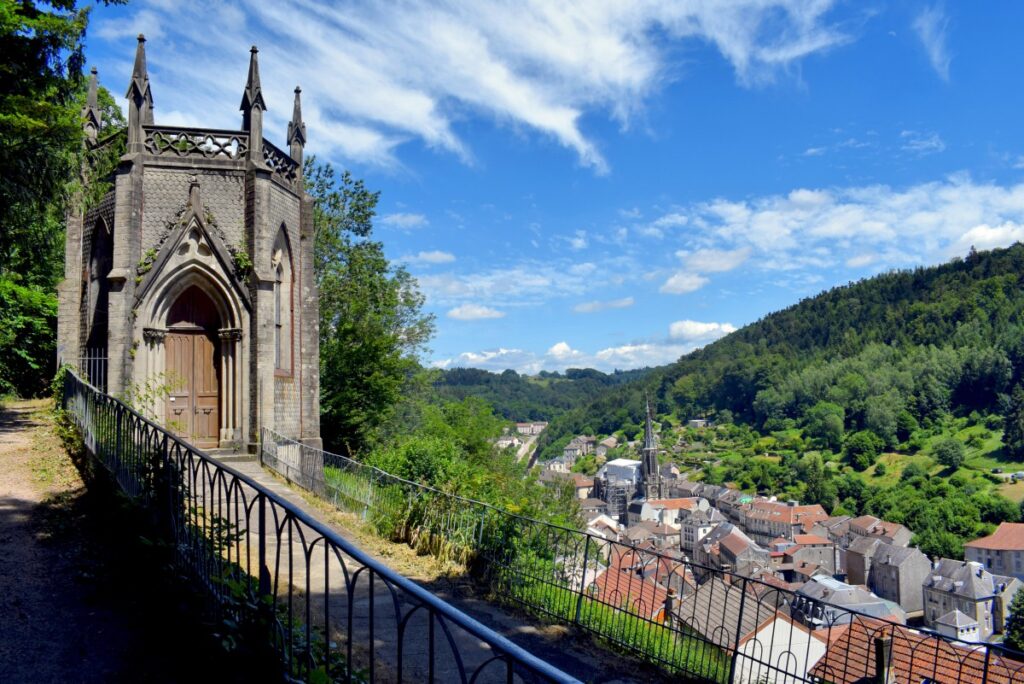
A short climb leads to this viewpoint overlooking the town.
Ideal for photographers or travellers who enjoy a bit of elevation.
The Flea Market Tradition
Plombières-les-Bains has a strong brocante culture.
Weekends in summer often include street sales, antique fairs, or small markets full of quirky objects and charming vintage surprises.
Seasonal Events
The Christmas season brings the popular winter festival, when the narrow streets glow with lights and stalls.
The Christmas market of Plombières-les-Bains is one of the most visited in the Vosges.
Food, Flavours, and the Taste of the Vosges
A Region of Simplicity and Hearty Dishes
The Vosges offer straightforward, satisfying cuisine.
In Plombières-les-Bains, expect dishes with real character: smoked meats, Munster cheese, blueberry tarts, local honey, mountain herbs, and robust regional wines.
The Famous Plombières Ice Cream
No visit to Plombières-les-Bains is complete without tasting the town’s namesake dessert: glace Plombières.
Its origins go back to 1882, when a local ice-cream maker had the inspired idea of marinating candied fruit in kirsch.
![Glace Plombières © Marianne Casamance – licence [CC BY-SA 3.0] from Wikimedia Commons](https://alsacelorraineguide.com/wp-content/uploads/2026/03/Plombieres-©-Marianne-Casamance-licence-CC-BY-SA-3.0-from-Wikimedia-Commons-1024x685.jpg)
The fruits came from Apt, the Provençal capital of fruit confit, while the kirsch was sourced from nearby Fougerolles-Saint-Valbert, the proud heart of France’s “cherry country.”
The result was an elegant, fragrant ice cream that quickly became a classic of French gastronomy: creamy, festive, and touched with the unmistakable warmth of cherry brandy.
Today, it remains one of the sweetest ways to taste the heritage of Plombières-les-Bains—quite literally.
Cafés and Terraces
Even a simple drink on a terrace here feels like part of the local ritual. Time slows, conversations stretch, and the valley seems to cradle the town in its leafy arms.
Practical Tips for Visiting Plombières-les-Bains
Getting There
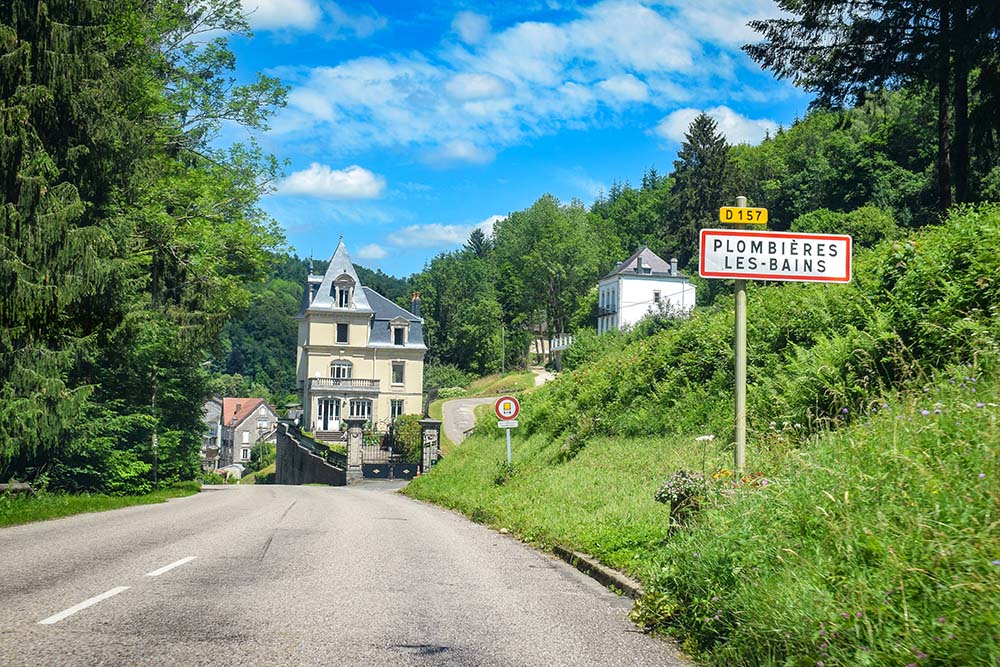
- From Paris: train to Remiremont or Épinal, then car or local transport.
- From Strasbourg: direct drive through scenic forest roads.
- From the UK: Eurostar to Paris, then the above route.
Best Seasons
- Spring and summer: ideal for gardens, terraces, and walking trails.
- Autumn: a quieter, golden season with beautiful colours.
- Winter: atmospheric, especially with Christmas events.
Staying Overnight
Hotels are generally small, family-run, and friendly. Staying at least one night allows you to appreciate the town’s calm evening ambience.
Click here to browse a map of accommodations in Plombières and surroundings.
Who Will Love Plombières-les-Bains
- Travellers seeking authenticity
- History lovers
- Spa enthusiasts
- Photographers
- Slow travellers who enjoy wandering rather than rushing
A Personal Closing Thought — Why Plombières-les-Bains Stayed With Me
When I finally visited Plombières-les-Bains — after years of driving past its exits — I arrived on a warm afternoon with no particular expectations.
I wandered through Roman corridors, climbed terraced gardens, stood where Stanislas once strolled, and walked the very streets where Napoleon III and Cavour reshaped the fate of Italy.
But beyond the history and architecture, what stayed with me most was the atmosphere.
A peaceful valley where every stone seems to carry a memory, where time stretches spaciously, and where the world’s noise fades into the background.
Plombières-les-Bains is not a town that shouts for attention. It is one that reveals itself quietly, with patience, and in the soft warmth of its springs.
And for travellers willing to slow down, listen, and wander, it offers one of the most rewarding discoveries in the Vosges.