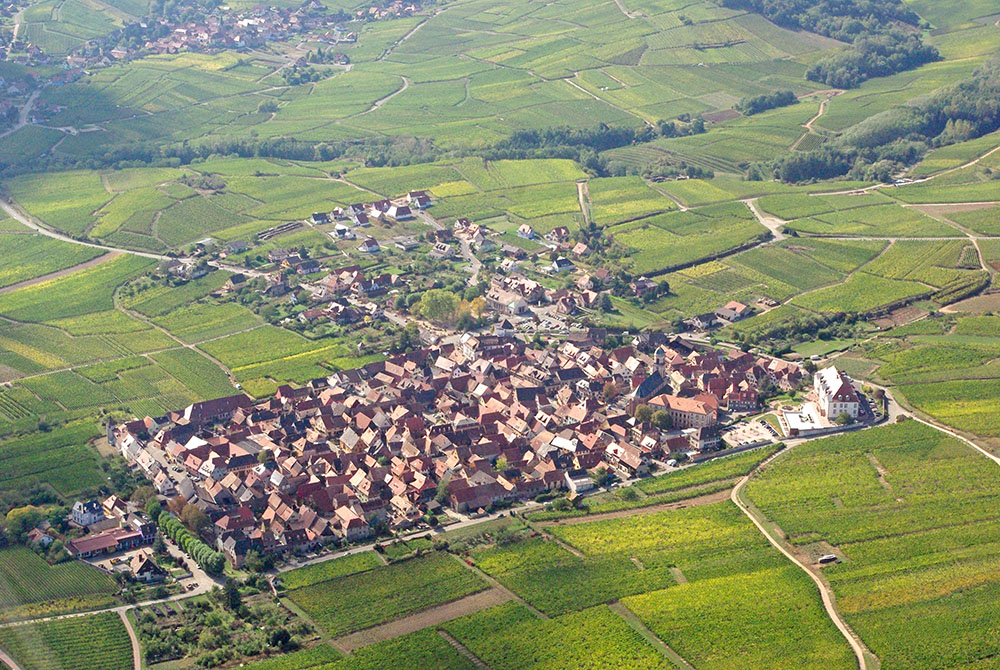
Saint-Hippolyte is one of those Alsatian villages that many travellers pass without a second thought — and yet it has all the ingredients that make this region so irresistible.
Tucked between vineyards and watched over by the mighty silhouette of Haut-Kœnigsbourg, this peaceful village blends wine heritage, medieval echoes, and quiet beauty in a way that feels deeply authentic.
I still remember staying here as a child with my family, in a holiday cottage beneath the castle. From my bedroom window, I could see the fortress high on the hill, and for a boy fascinated by old stones and stories, it felt unforgettable.
Years later, Saint-Hippolyte still has that same gentle pull.
It is not the loudest or most famous stop on the Alsace Wine Route, but it may well be one of the most charming.
Why Visit Saint-Hippolyte?
Some Alsatian villages impress instantly. Saint-Hippolyte works differently. It reveals itself in details.
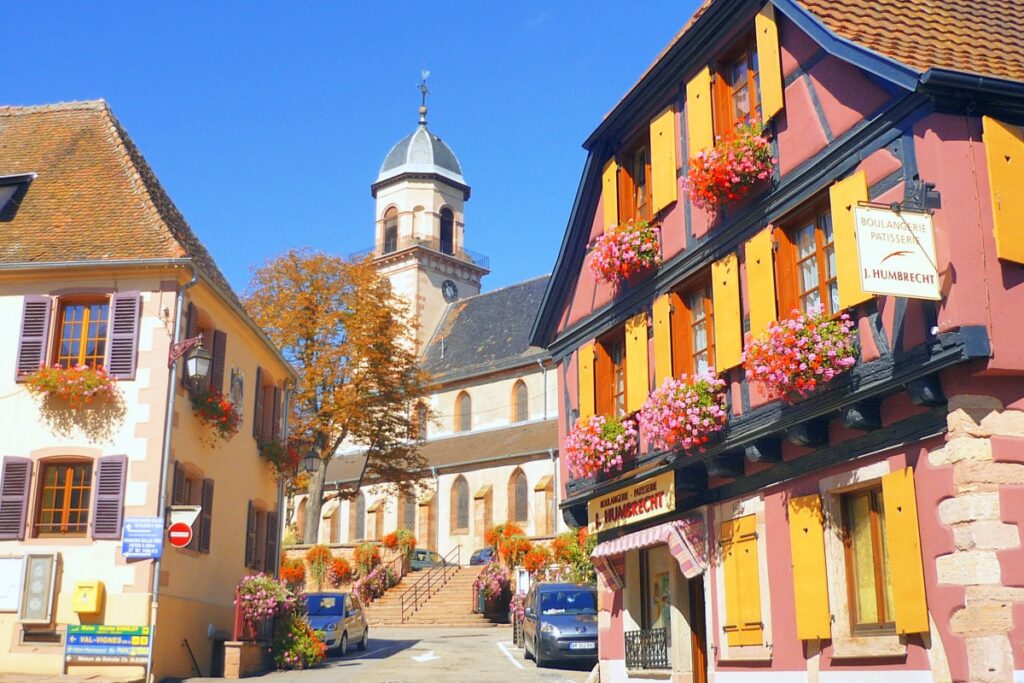
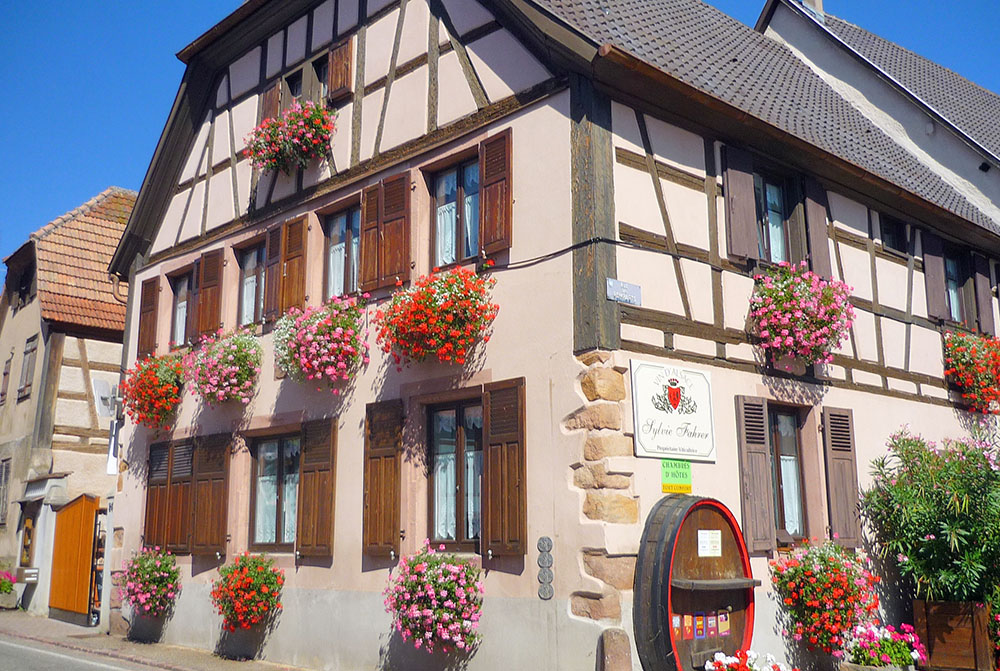
You notice the warm colour of the stone. The half-timbered houses tucked along narrow streets.
The rhythm of village life that still feels real rather than staged.
It is less polished and less theatrical than some of Alsace’s best-known postcard destinations, and that is exactly part of its charm.
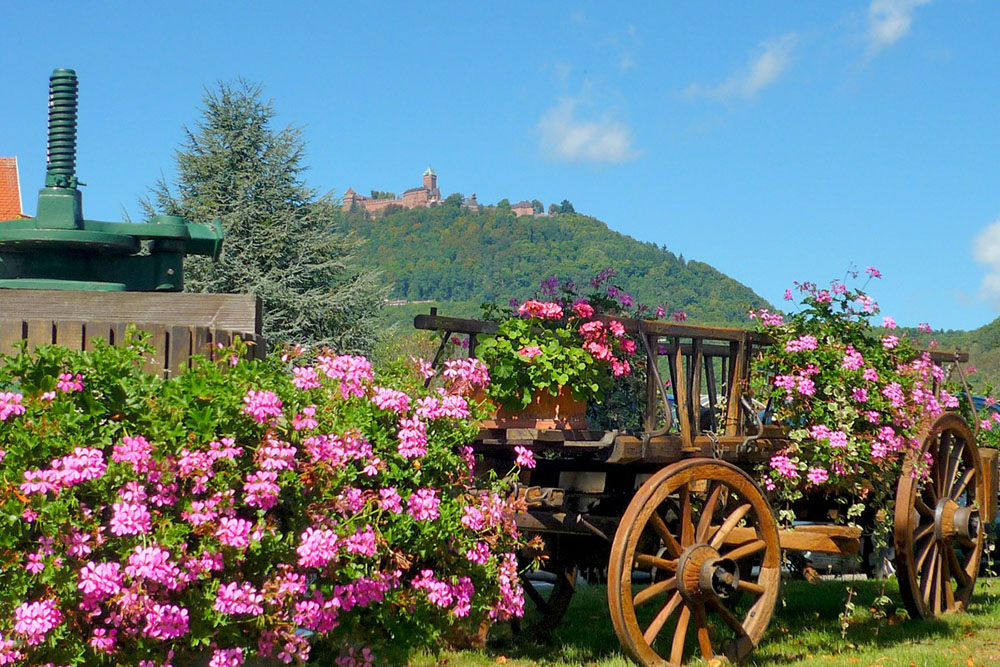
Saint-Hippolyte also has a strong sense of place. It stands on the Wine Route, beneath Haut-Kœnigsbourg, and its history is unusually rich for such a small village.
For centuries, it belonged not to Alsace proper, but to the Duchy of Lorraine, which explains why traces of Lorraine can still be found here today.
For travellers who enjoy villages with atmosphere rather than checklist tourism, Saint-Hippolyte is a rewarding stop.
A Short History of Saint-Hippolyte
The story of Saint-Hippolyte reaches back deep into the early Middle Ages.
Local history links the village to Fulrad, the powerful abbot of Saint-Denis, who brought the relics of Saint Hippolyte from Rome before 774.
The village appears under early names connected to Fulrad before becoming associated with Saint Hippolyte himself.
That alone would already give the village a memorable past.
But Saint-Hippolyte adds another layer: for centuries, it was tied to Lorraine.
The municipal history of the village itself notes its belonging to the Duchy of Lorraine from the 13th century until the Revolution, and the village’s arms still recall that connection.
This is one of the details I love most about the place.
You arrive expecting a typical Alsatian wine village and discover a settlement with a political and cultural story that is rather more tangled.
In eastern France, history rarely moves in straight lines.
The Church of Saint-Hippolyte
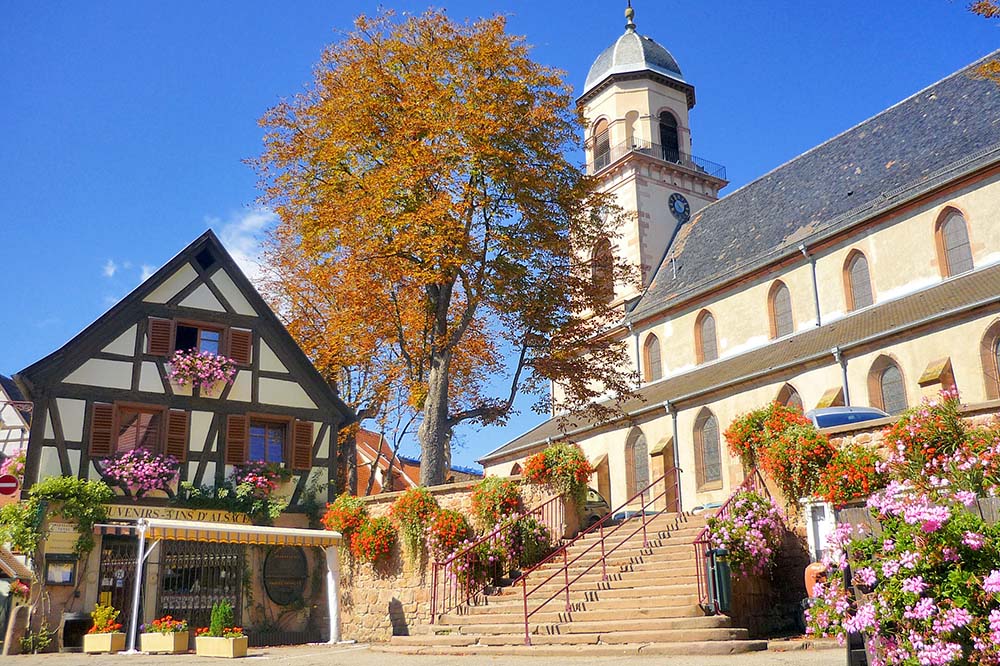
One of the most important sights in Saint-Hippolyte is the parish church.
It stands on a site with very old religious roots, and much of the building seen today reflects later medieval and 19th-century phases.
The choir and part of the nave date from the 14th to 16th centuries, while the church was enlarged in the early 1820s.
Inside, there is more to see than you might expect from a village church.
The reliquary shrine, created in 1766, still contains relics of Saint Hippolyte.
The stained glass tells the saint’s story, and the church also preserves a notable Silbermann organ case, originally from the 18th century.
This is not the kind of church you rush through in two minutes.
Pause a little. Let your eyes adjust. Saint-Hippolyte’s history feels especially tangible here.
Walking Through the Old Village
The pleasure of visiting Saint-Hippolyte comes largely from wandering.
You do not need a grand sightseeing strategy. In fact, the village works best on foot and without hurry.
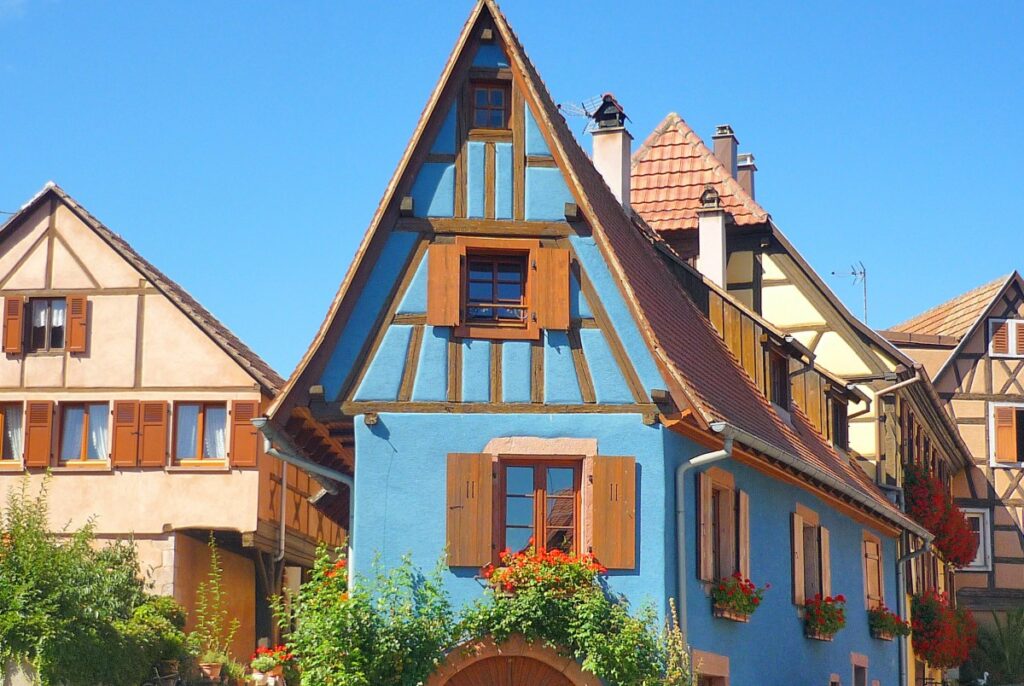
As you walk through the centre, you will find handsome half-timbered houses, Renaissance and Baroque façades, and the pleasingly human scale that makes Alsatian villages so enjoyable.
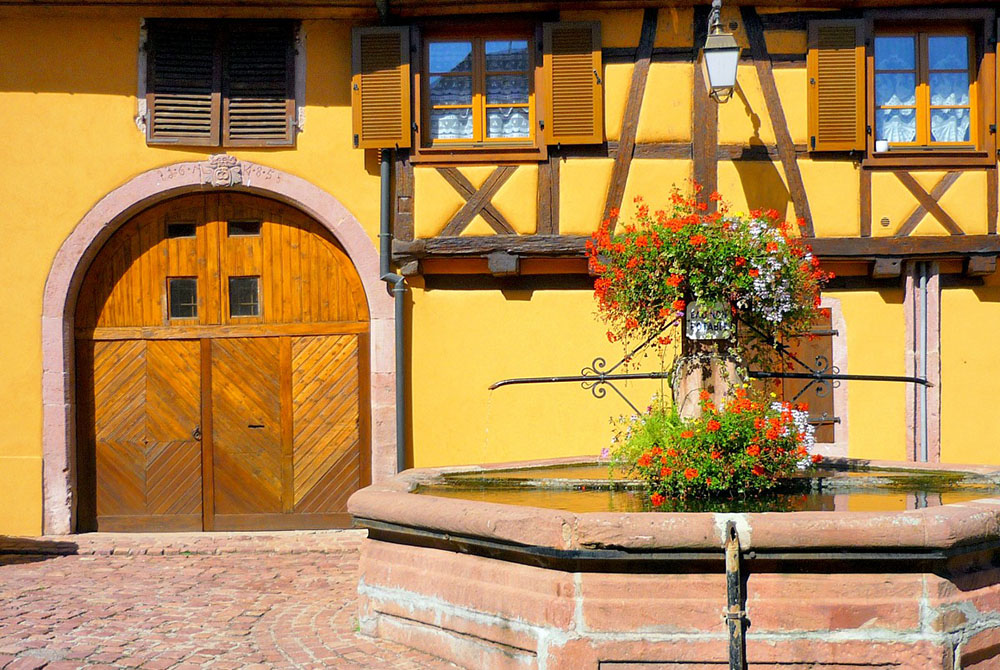
The area around the town hall and church forms a particularly attractive historic heart, with a fountain dating from 1555.
This is where the village begins to win you over. Not with one dramatic monument, but with a series of small visual rewards: flower-filled windows, timber frames, old doors, quiet corners, changing views toward the vineyards.
It is exactly the sort of place where a camera becomes both useful and slightly distracting.
The Medieval Walls and the Tour des Cigognes
Saint-Hippolyte was once a fortified settlement, and although much has disappeared over time, the old defensive layout can still be traced.
The most striking survivor is the Tour des Cigognes, the Stork Tower, which defended the south-east of the town. It is the only remaining tower from the old fortifications, and yes, true to its name, it is associated with one of Alsace’s most beloved symbols.
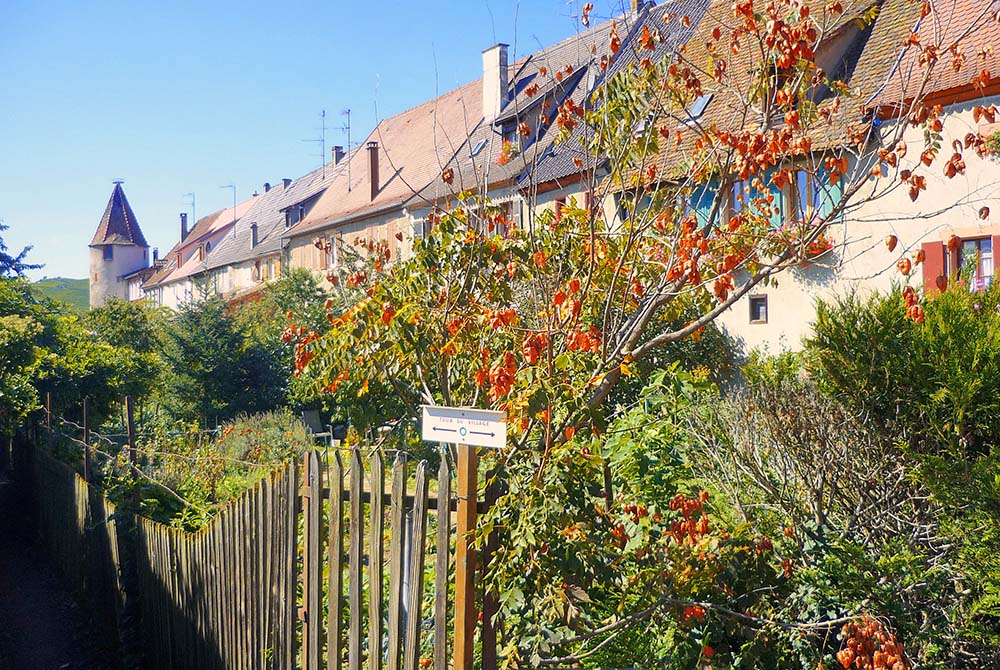
There is also a waymarked Wall path following the line of the former ramparts around the outside of the village. This gives Saint-Hippolyte an extra layer of interest, because you are not simply looking at pretty façades; you are walking the outline of a medieval town.
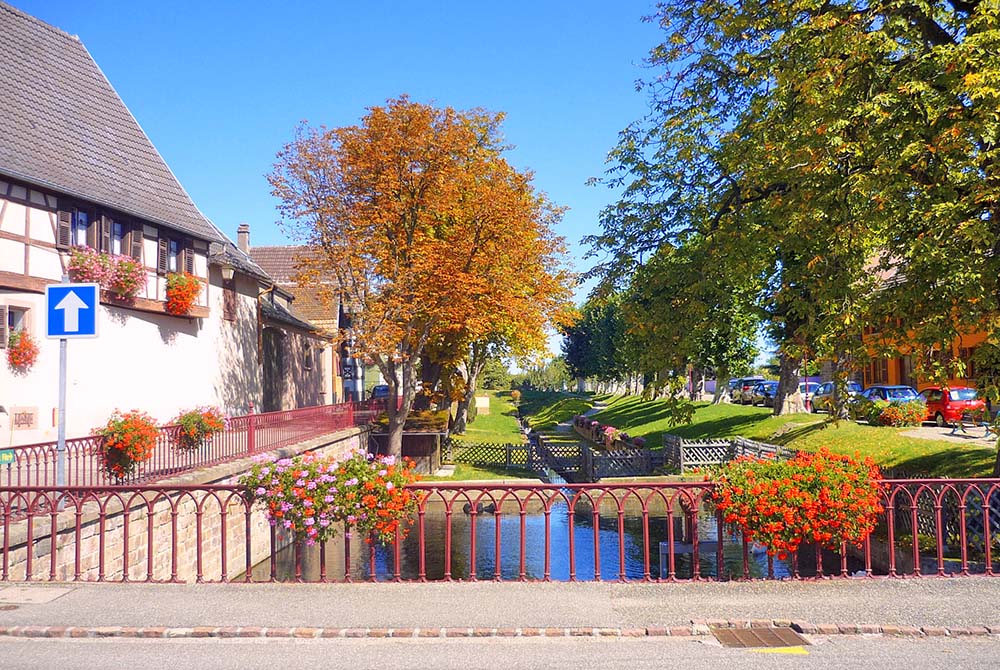
For anyone who likes villages where the historic footprint is still legible, this is one of the most appealing aspects of Saint-Hippolyte.
The Former Château of the Dukes of Lorraine
Another reminder of the village’s unusual past is the former château linked to the Dukes of Lorraine.
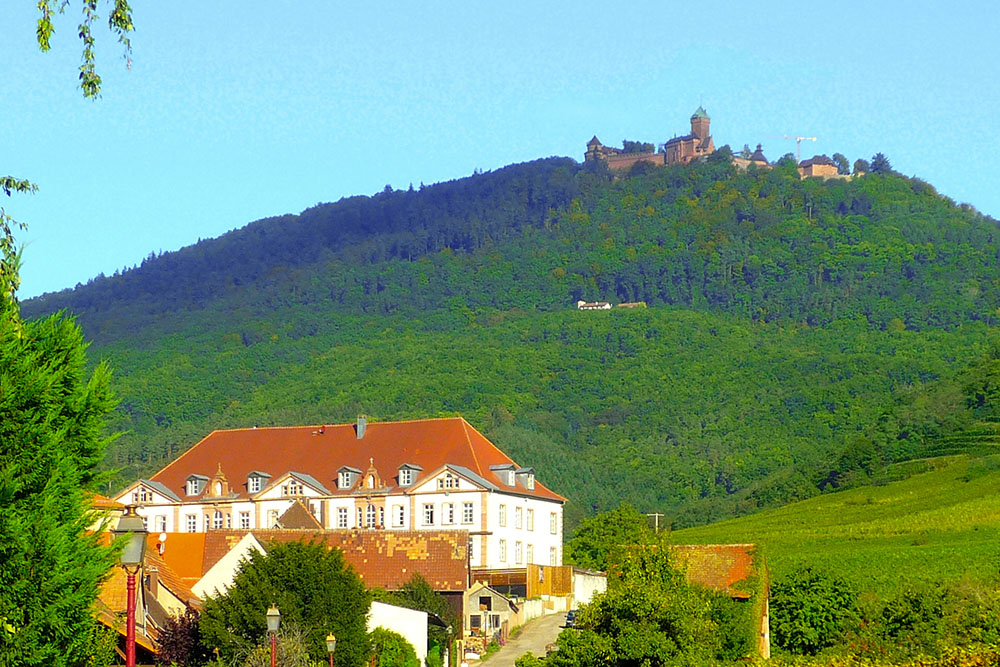
Today, that story survives in a more comfortable form. The site is associated with Hôtel Val-Vignes, which overlooks the village and vineyards from 23 Chemin du Wall.
The hotel’s setting is one of its great strengths, with views toward the vineyards, the village, and Haut-Kœnigsbourg.
Even if you do not stay there, this part of the village helps make sense of Saint-Hippolyte’s identity. Lorraine was not just an abstract historical footnote here. It left a visible imprint.
Saint-Hippolyte and Wine
You cannot write about Saint-Hippolyte without talking about wine.
The village is especially known for its Pinot Noir, often referred to locally as the “Rouge de Saint-Hippolyte.”
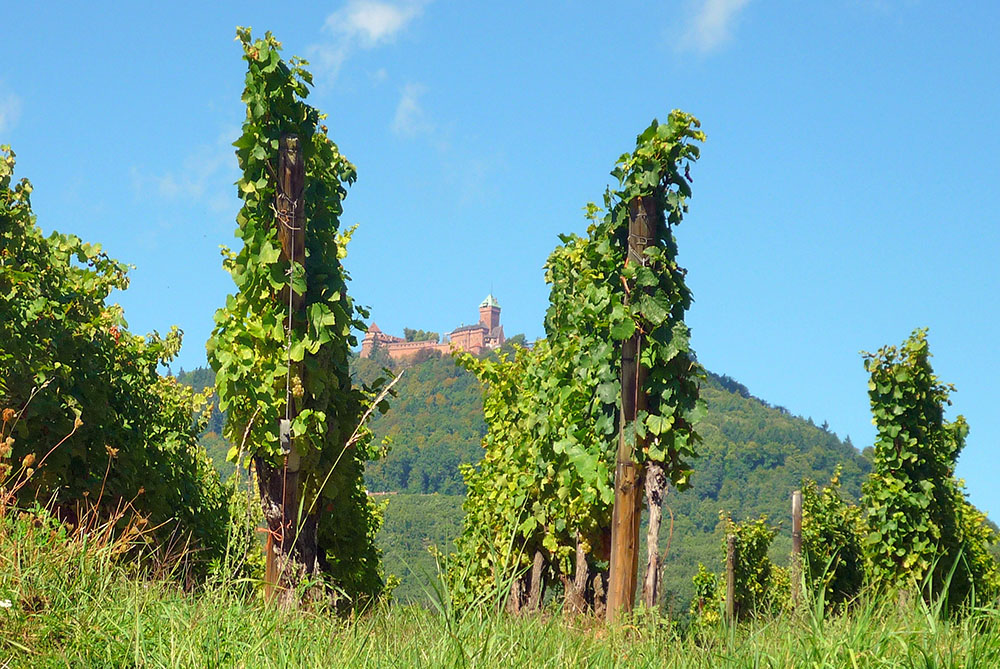
In a region often associated in travellers’ minds with Riesling, Gewurztraminer, and other white wines, that gives the village a slightly different personality.
That difference matters. It gives Saint-Hippolyte a character of its own on the Wine Route.
The village is not simply another pretty stop among many. It has a wine identity, a historic identity, and a landscape identity, all working together.
A tasting here is more than a pleasant extra. It is one of the best ways to understand the village.
Where to Stay in Saint-Hippolyte
If you are wondering whether Saint-Hippolyte works as an overnight stop, the answer is yes.
According to the Alsace tourism listings, the village offers a mix of hotels, guesthouses, and furnished holiday accommodation, which makes it practical as well as charming.
For a more upscale stay, Le Parc Hôtel & Spa is one of the best-known options in the village. It is located right in Saint-Hippolyte and offers rooms, suites, a restaurant, a winstub, and spa facilities, making it a good choice for travellers who want a more indulgent Wine Route base.
Hôtel Val-Vignes is another strong option, especially if the view matters to you. Set above the village among the vineyards, it has 46 rooms and a particularly attractive setting between the village and Haut-Kœnigsbourg.
If you prefer something more intimate, there are also guesthouse-style stays in the village. Domaine Sylvie Fahrer & Fils offers chambres d’hôtes within a wine estate in the village centre, while La Cour St Fulrad provides furnished accommodation in a renovated old Alsatian farmhouse.
That variety is one more reason Saint-Hippolyte works well for a short stay. You can use it simply as a stop on the Wine Route, but it also makes a pleasant base for exploring nearby places such as Ribeauvillé, Bergheim, Kintzheim, and Haut-Kœnigsbourg.
Practical Tips for Visiting Saint-Hippolyte
Saint-Hippolyte is easy to include in a Wine Route itinerary, especially by car. It lies at the foot of Haut-Kœnigsbourg and within easy reach of other popular Alsatian villages.
The official Alsace tourism site also notes local shops and accommodation in the village, which makes it convenient for travellers staying overnight.
For the best experience, wear comfortable shoes and allow yourself time to wander rather than simply tick it off. This is not a village that needs rushing.
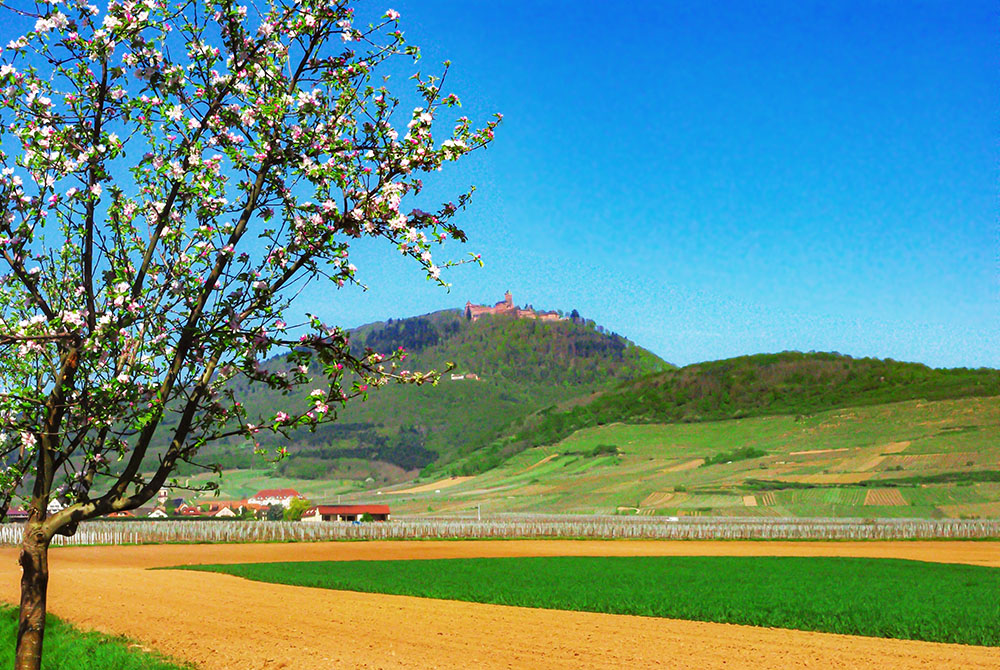
Spring and summer bring flowers and vineyard colour, while autumn adds richness to the surrounding landscape.
And naturally, leave room for wine tasting.
Final Thoughts on Saint-Hippolyte
Some places become memorable because they are spectacular. Others stay with you because they feel personal.
For me, Saint-Hippolyte belongs firmly in the second category.
It has the ingredients travellers come to Alsace hoping to find — old houses, history, vineyard views, and a castle on the skyline — but it offers them in a softer, quieter way.
That is why I think Saint-Hippolyte deserves a place on your itinerary.
Come for the setting beneath Haut-Kœnigsbourg.
Stay for the church, the old walls, the Lorraine echoes, the village streets, and the glass of Pinot Noir that reminds you this corner of Alsace has its own story to tell.