
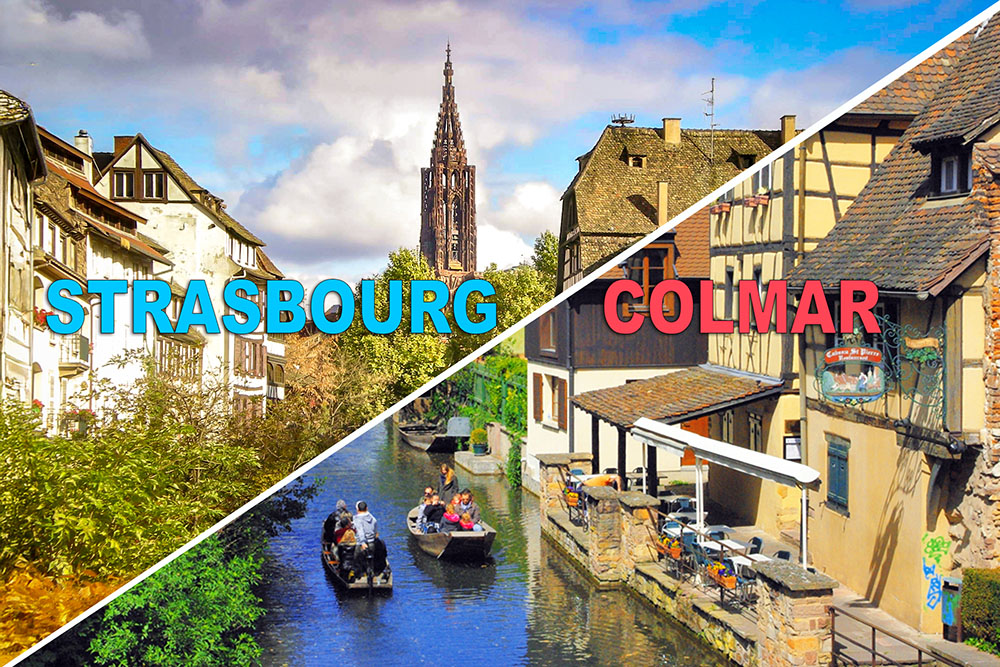

If you’re planning a trip to Alsace, one question almost inevitably comes up: Strasbourg or Colmar?
At first glance, the two cities seem to promise the same thing — colourful half-timbered houses, cobbled streets, flower-filled balconies, and that distinctive Alsatian charm that feels half French, half German. In photos, they can even look surprisingly similar.
Yet anyone who has spent time exploring the region quickly discovers that Strasbourg and Colmar offer two very different experiences.

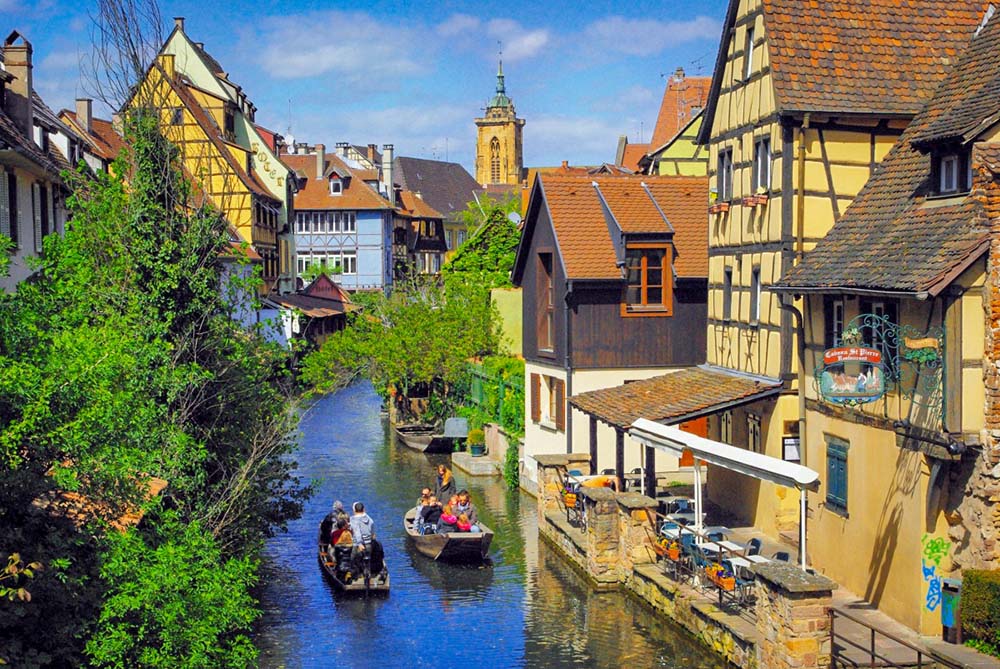
One is a lively European capital where medieval streets coexist with grand boulevards, student cafés, and international institutions. The other feels like a perfectly preserved storybook town, where every corner seems designed for slow wandering and photography.
Both are beautiful. Both are deeply rooted in Alsatian history and culture. And both attract visitors from around the world.
But if your itinerary allows time for only one city, the choice can feel surprisingly difficult.
Should you choose the grandeur and energy of Strasbourg, home to one of Europe’s most extraordinary cathedrals?
Or the intimate charm of Colmar, with its canals, pastel houses, and fairy-tale atmosphere?
The answer depends on what you hope to experience in Alsace.
In this guide, we’ll explore what makes Strasbourg and Colmar unique, compare their atmosphere, size, architecture and attractions, and help you decide which city is the best fit for your trip — whether you’re visiting in summer or during the magical Christmas season.
Strasbourg: The Historic Capital of Alsace
If you choose Strasbourg, you are choosing the largest and most dynamic city in Alsace — a place where centuries of history blend with the rhythm of a modern European capital.
Strasbourg sits on the Rhine, right on the border between France and Germany, and that location has shaped its identity for centuries.
The city has changed hands several times throughout history, and as you walk through its streets, you can see traces of both cultures in its architecture, its cuisine, and even its atmosphere.
At the heart of Strasbourg lies the Grande Île, the historic centre surrounded by the waters of the River Ill and listed as a UNESCO World Heritage Site.
This is where most visitors begin their exploration, wandering through narrow medieval streets lined with timber-framed houses, traditional shops, and inviting cafés.
Dominating the skyline is the extraordinary Strasbourg Cathedral, a masterpiece of Gothic architecture whose delicate pink sandstone façade glows warmly in the sunlight.

For centuries, it was the tallest building in the world, and even today it remains one of the most impressive cathedrals in Europe. Climbing the tower rewards visitors with sweeping views across the rooftops of the city and, on clear days, all the way to the distant Black Forest in Germany.
Not far from the cathedral lies one of Strasbourg’s most photographed districts: La Petite France. This former neighbourhood of fishermen, millers and tanners is famous for its canals, flower-filled bridges and crooked half-timbered houses. It is easy to spend an hour or two simply strolling along the quays, watching the reflections of colourful façades shimmer in the water.
But Strasbourg is more than a picturesque historic centre. Unlike smaller towns in the region, it feels like a living, breathing city. Students fill the cafés and wine bars, trams glide through elegant boulevards, and lively markets bring locals and visitors together throughout the week.
Beyond the medieval streets, you’ll also discover the Neustadt, a grand district built during the German imperial period in the late 19th century. Its wide avenues, monumental buildings and parks offer a completely different architectural atmosphere, revealing another layer of Strasbourg’s fascinating past.
Because of its size and diversity, Strasbourg rewards travellers who take their time. While you can see the highlights in a day, the city is best enjoyed over two or even three days, allowing you to explore its neighbourhoods, museums, markets and restaurants at a relaxed pace.
For many visitors, Strasbourg feels like the perfect introduction to Alsace: historic yet vibrant, elegant yet welcoming — a city where the region’s unique blend of cultures comes to life.
Colmar: The Storybook Town of Alsace
If Strasbourg is the historic capital of Alsace, Colmar is its most picturesque town.
Smaller, quieter, and almost impossibly charming, Colmar feels like a place where time slowed down somewhere in the late Middle Ages and simply decided to stay there.
Located about 70 kilometres south of Strasbourg, Colmar sits right in the heart of the Alsace Wine Route, surrounded by vineyards and some of the region’s most beautiful villages. While Strasbourg impresses visitors with its grandeur and energy, Colmar wins hearts with something much simpler: pure Alsatian charm.

The historic centre of Colmar is remarkably well preserved. Streets wind between brightly coloured half-timbered houses, Renaissance buildings, and small squares where fountains quietly bubble in the sunlight.
Many of these houses date back several centuries, yet the town never feels like an open-air museum. Instead, it has the warm, welcoming atmosphere of a place where people still live, shop and gather every day.
One of the most famous areas of the town is Little Venice (La Petite Venise). Here, a narrow canal runs between rows of pastel-coloured houses, their flower boxes spilling over with geraniums during the summer months. Small bridges cross the water at gentle angles, and wooden boats occasionally glide along the canal, giving the whole scene a dreamlike quality.
Not far away lies the Quartier des Tanneurs, or Tanners’ Quarter, where tall half-timbered houses once served as workshops for leather craftsmen. Their upper floors lean slightly over the street, a reminder of the medieval techniques used to dry hides in the open air.
Colmar is also known for its beautiful architectural details. Ornate oriels, painted façades, carved wooden beams and colourful shutters create a townscape that seems almost designed for photography. Around nearly every corner, there is another charming street, another flower-filled balcony, another quiet square waiting to be discovered.
Despite its relatively small size, Colmar also offers cultural treasures. The Unterlinden Museum, housed in a former convent, is one of the most important museums in eastern France and is home to the famous Isenheim Altarpiece, a masterpiece of Renaissance art.
Because the historic centre is compact, most of Colmar can be explored comfortably in a single day. That makes it an ideal stop for travellers exploring the wine route or visiting the nearby villages of Eguisheim, Riquewihr, or Kaysersberg.
Where Strasbourg feels like a vibrant regional capital, Colmar feels more intimate — almost like stepping into a beautifully preserved postcard of Alsace.
And for many visitors, that is precisely its appeal.
Strasbourg or Colmar: The Key Differences
Now that we’ve looked at both cities individually, the question becomes clearer: Strasbourg or Colmar — which one should you choose?
While they share the same Alsatian heritage and architectural charm, the overall experience of visiting these two places can feel quite different.
Size and Atmosphere
The most obvious difference between Strasbourg and Colmar is their size.
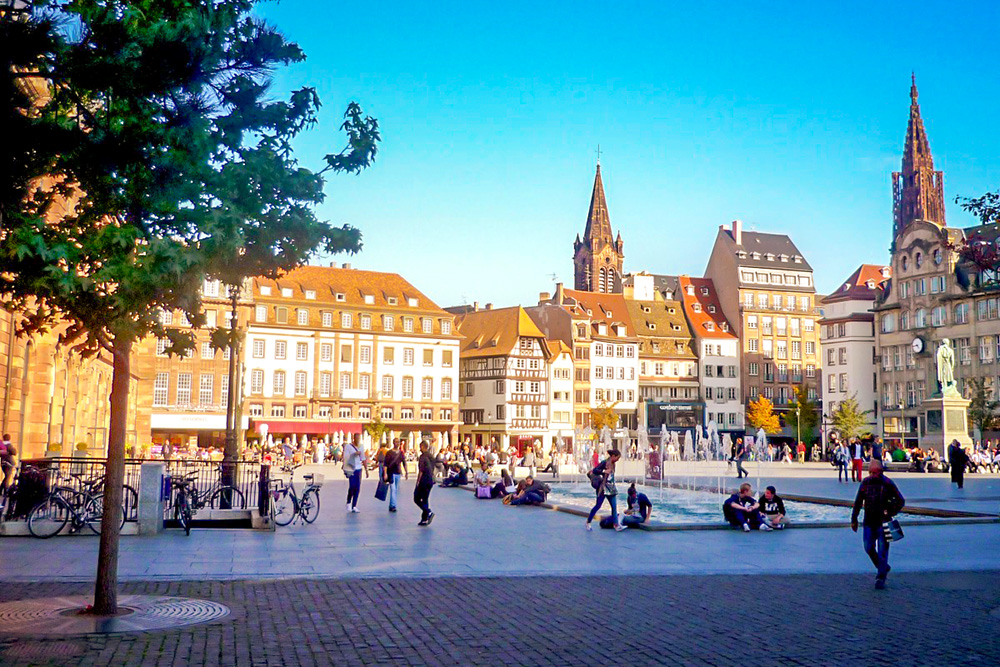
Strasbourg is a large and lively city. With nearly 500,000 inhabitants, it feels like a true urban centre where history, politics, culture and everyday life intersect. Alongside medieval streets and half-timbered houses, you’ll find elegant boulevards, modern tramways, universities, and a vibrant café culture.
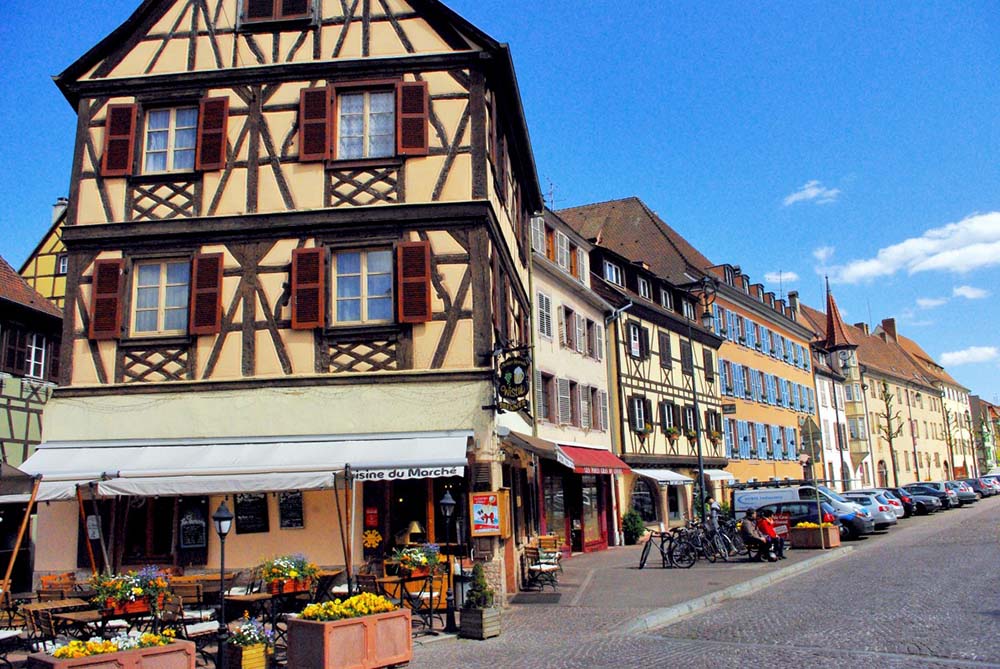
Colmar, by contrast, is much smaller and more intimate. Its population is around 80,000, and the historic centre is compact enough to explore on foot in just a few hours. The atmosphere is quieter and more relaxed, giving the impression of stepping into a charming Alsatian village rather than a major city.
In simple terms:
- Strasbourg feels like a historic capital
- Colmar feels like a perfectly preserved storybook town
Architecture and Scenery
Both cities are famous for their half-timbered houses, but the architectural experience differs.
Strasbourg offers greater variety. Gothic landmarks like the cathedral stand alongside medieval streets, Renaissance buildings and grand 19th-century German architecture in the Neustadt district.
Colmar’s architecture is more homogeneous and picturesque. The town centre is filled with colourful houses, narrow lanes and canals that create a highly photogenic setting. It is easy to understand why many visitors describe it as one of the most beautiful small towns in France.
Time Needed to Visit
The size of the cities also affects how long you should plan to stay.
Strasbourg deserves two or even three days if you want to fully appreciate its neighbourhoods, museums, markets and restaurants.
Colmar, on the other hand, can easily be explored in one day. Many travellers visit it as part of a wider itinerary along the Alsace Wine Route.
Tourism and Local Life
Both cities attract large numbers of visitors, especially during peak travel seasons.
However, Strasbourg maintains a strong sense of local life. It is a working city with universities, government institutions and lively neighbourhoods where residents go about their daily routines.
Colmar feels more tourism-focused, particularly in the historic centre. While it remains charming, some streets can feel crowded during busy periods, especially in summer and around Christmas.
For travellers seeking a vibrant urban atmosphere, Strasbourg may feel more authentic. Those looking for postcard-perfect Alsatian scenery may prefer Colmar.
Strasbourg or Colmar in Summer
Summer is one of the best times to explore Alsace, and both cities are particularly beautiful during the warmer months.
In Strasbourg, summer brings a lively atmosphere to the historic centre. Café terraces fill the squares around the cathedral, boats glide along the canals of the Ill, and locals gather along the riverbanks in the evening. The city’s parks and gardens are full of greenery, and festivals often animate the streets.

Because Strasbourg is a larger city, there is always something happening — from markets and concerts to cultural events.
In Colmar, summer highlights the town’s colourful architecture and flower-filled balconies. The canals of Little Venice reflect pastel façades, and the narrow streets seem made for slow wandering. The pace is more relaxed than in Strasbourg, making it a lovely place for leisurely strolls and quiet moments on shaded terraces.
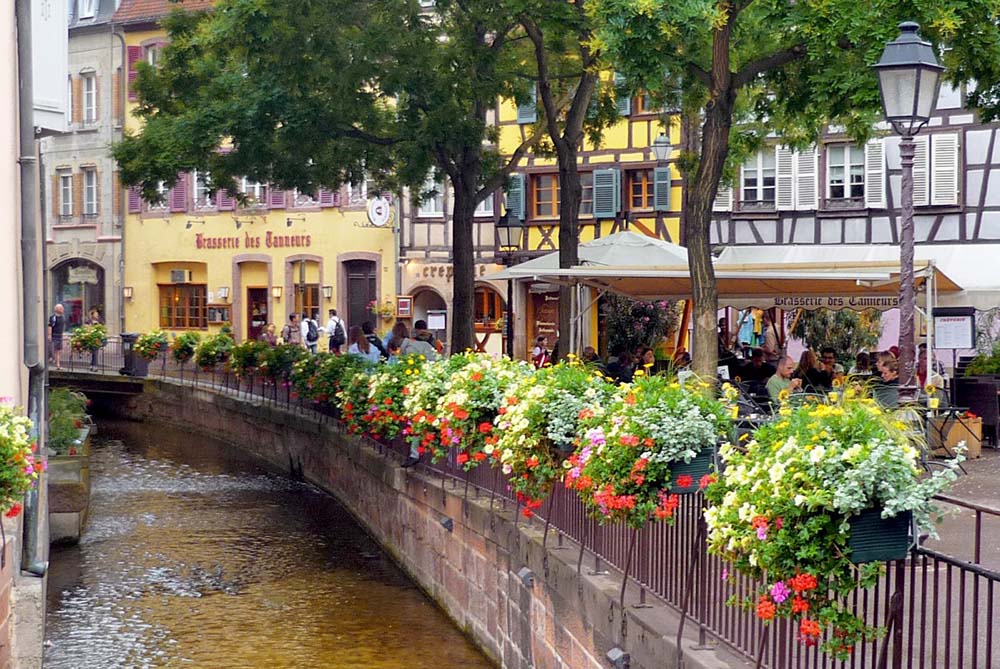
Colmar also hosts the Colmar International Festival, a renowned classical music festival that attracts musicians and visitors from around the world.
For travellers who enjoy lively urban energy, Strasbourg shines in summer. For those seeking a romantic and picturesque setting, Colmar may feel even more enchanting.
Strasbourg or Colmar at Christmas
If there is one season when this comparison becomes especially interesting, it is Christmas.
Alsace is famous for its Christmas traditions, and both Strasbourg and Colmar transform into magical winter destinations.
In Strasbourg, Christmas is celebrated on a grand scale. The city proudly calls itself the “Capital of Christmas”, and its famous Christkindelsmärik is one of the oldest Christmas markets in Europe.

The entire historic centre is illuminated with festive decorations, wooden stalls fill the squares, and a towering Christmas tree stands proudly on Place Kléber.
The atmosphere is festive, lively and sometimes quite crowded — but undeniably spectacular.
In Colmar, the Christmas experience feels more intimate and storybook-like (although you would expect many visitors there, too!). Several smaller Christmas markets are scattered throughout the historic centre. Each one has its own atmosphere, tucked between medieval houses, canals and beautifully decorated squares.
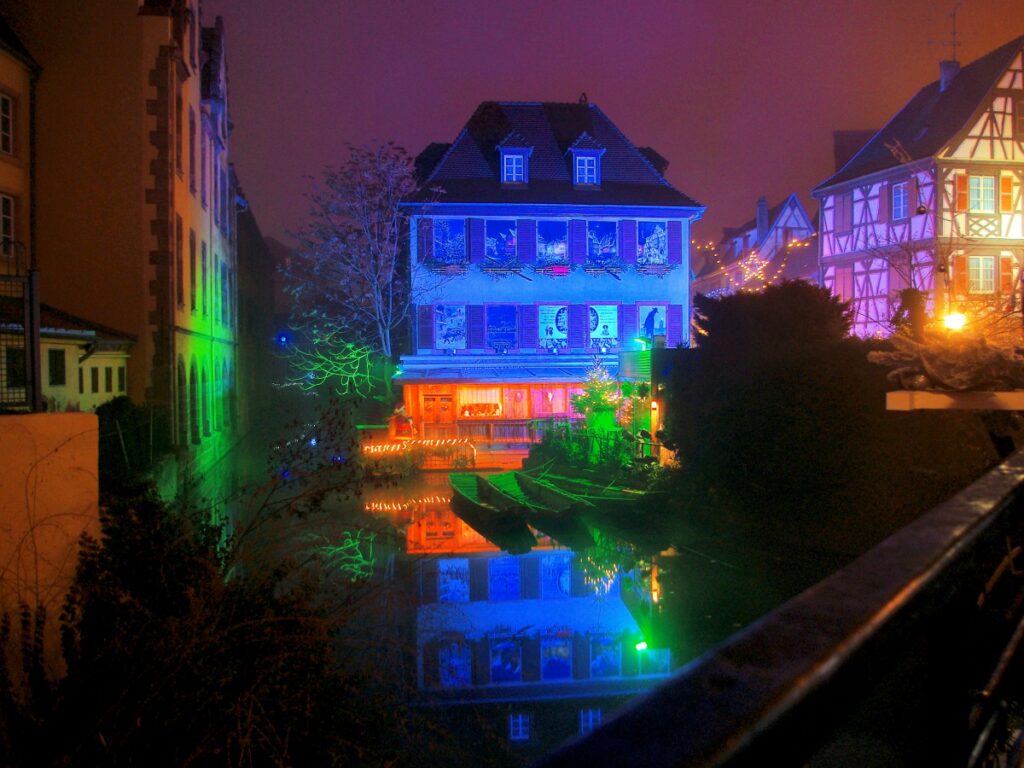
The town’s colourful façades glow under the festive lights, and the whole setting feels almost like stepping into a Christmas postcard.
Both cities offer wonderful Christmas experiences, but the feeling is slightly different:
- Strasbourg offers the grand spectacle of Christmas
- Colmar offers a more intimate fairy-tale atmosphere
So… Strasbourg or Colmar?
If you must choose only one destination, the best choice depends on the kind of experience you are looking for.
Choose Strasbourg if you want a vibrant city filled with history, culture, restaurants and lively neighbourhoods. It offers greater diversity and rewards travellers who enjoy exploring a destination over several days.

Choose Colmar if you are dreaming of a charming Alsatian town where colourful houses, canals and medieval streets create a truly picturesque setting. It is smaller, quieter and perfect for a relaxed day of wandering.
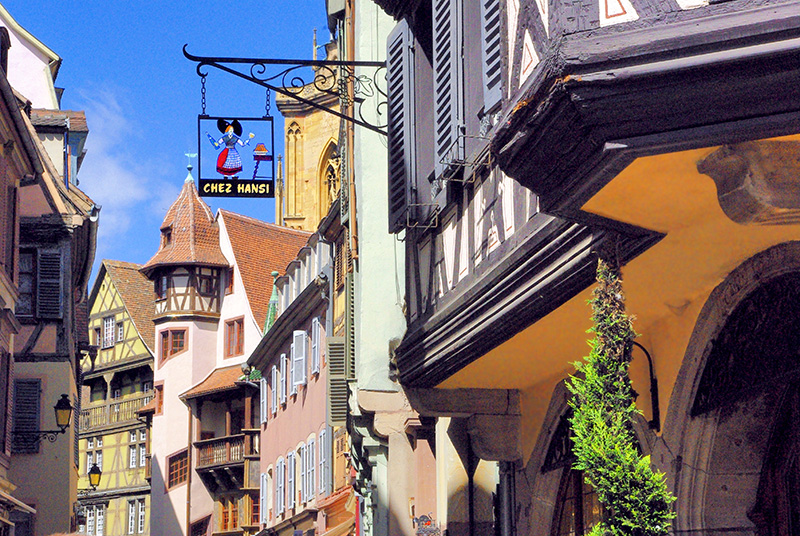
Of course, the ideal solution — whenever possible — is simple: visit both.
The two cities are only about 30 minutes apart by train, and together they reveal the many faces of Alsace: the grandeur of its historic capital and the irresistible charm of its most beautiful town.
Can You Visit Strasbourg and Colmar on the Same Trip?
If you are still hesitating between Strasbourg or Colmar, there is some good news: in many cases, you don’t actually have to choose.
The two cities are surprisingly close to each other. By train, the journey takes around 30 minutes, with frequent connections throughout the day. That makes it perfectly possible to visit both during the same trip to Alsace.
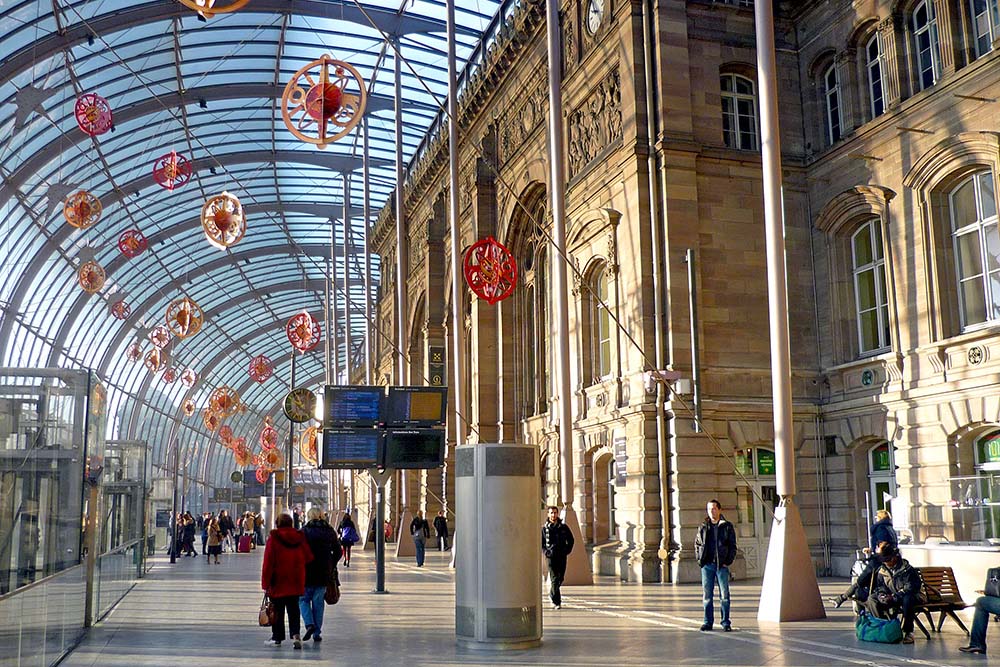
Many travellers choose to stay in Strasbourg, which offers more accommodation options, restaurants and transport connections. From there, Colmar makes an easy and very enjoyable day trip. You can spend the morning wandering through the colourful streets of the old town, enjoy lunch in a traditional winstub, and still be back in Strasbourg by late afternoon.
Another option is to stay in Colmar, especially if you are planning to explore the Alsace Wine Route and the nearby villages such as Eguisheim, Riquewihr, or Kaysersberg. In that case, Strasbourg can easily be visited as a day trip.
Because the region is compact and well-connected by train, many visitors include both cities in a two- or three-day itinerary.
For example:
Day 1: Explore Strasbourg — the cathedral, Petite France, and the historic centre
Day 2: Visit Colmar and perhaps one or two nearby wine villages
Day 3: Return to Strasbourg or continue along the Alsace Wine Route
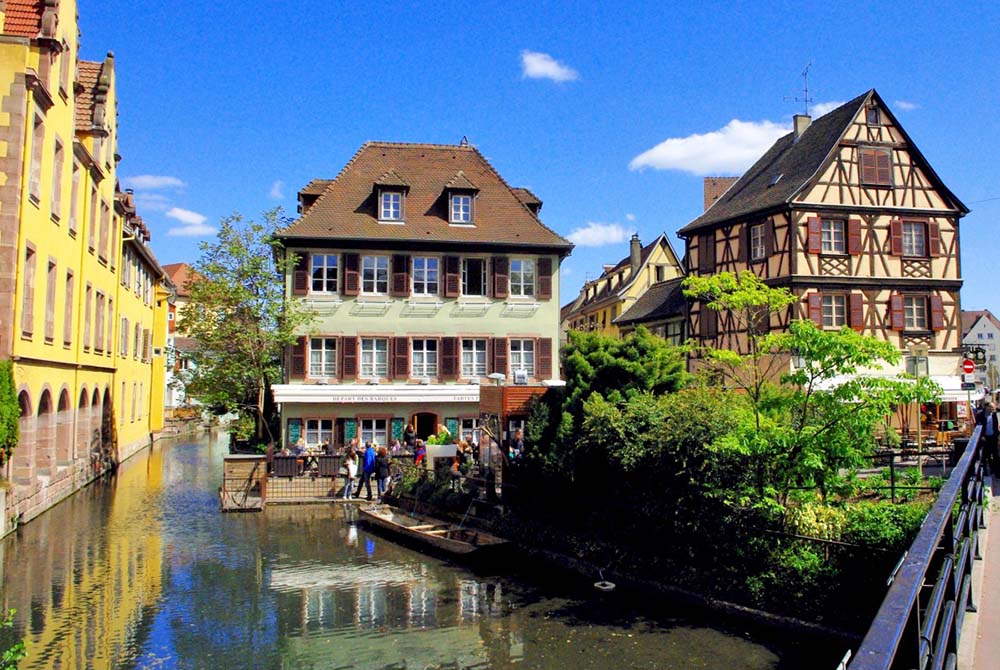
Seeing both places allows you to experience two different sides of Alsace: the lively energy of its historic capital and the intimate charm of one of its most picturesque towns.
And once you have wandered through the streets of both Strasbourg and Colmar, you may find that the real answer to the question “Strasbourg or Colmar?” is simply:
Both are unforgettable — and together they capture the true spirit of Alsace.
Strasbourg or Colmar: Which City Should You Visit?
So, if your itinerary forces you to choose, Strasbourg or Colmar — which city is the better destination?
The truth is that both offer wonderful experiences, but they appeal to slightly different types of travellers.
Choose Strasbourg if you are looking for a destination that feels like a major European city with layers of history. Its magnificent cathedral, lively neighbourhoods, elegant boulevards and rich cultural life make it a place where you can easily spend several days exploring. Strasbourg is also the easiest city to reach, with direct high-speed trains from Paris and excellent transport connections.
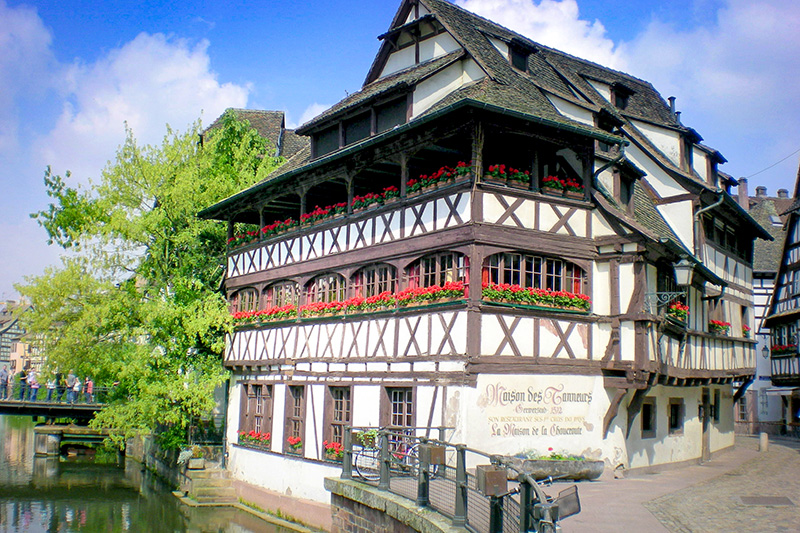
Choose Colmar if your idea of Alsace is a charming town filled with colourful houses, canals and quiet streets where every corner feels like a photograph waiting to happen. Colmar’s compact historic centre makes it easy to explore at a relaxed pace, and its location along the Alsace Wine Route places you close to some of the region’s most beautiful villages.

Season can also influence your choice.
In summer, Strasbourg feels vibrant and cosmopolitan, while Colmar enchants visitors with its flowers, canals and relaxed atmosphere.
During the Christmas season, Strasbourg dazzles with its famous Christmas markets and festive energy, while Colmar offers a more intimate, fairy-tale setting with beautifully decorated streets and smaller markets.
Ultimately, there is no wrong choice. Strasbourg and Colmar both reflect the unique character of Alsace — a region where French and German influences have blended for centuries to create a culture unlike any other.
But if your journey allows it, the best decision may still be the simplest one.
Visit Strasbourg for its grandeur and history, and Colmar for its charm and beauty.
Together, they reveal why Alsace remains one of the most enchanting regions in France.