

The UNESCO sites in Alsace and Lorraine reveal some of the most fascinating World Heritage places in France.
Yet when people think about UNESCO heritage in France, the images that usually come to mind are Mont-Saint-Michel rising from the sea, the grand palace of Versailles, or the romantic landscapes of the Loire Valley.
In eastern France, however, the story told by these places is different. It is a story shaped by borders, by cultures meeting and blending, and by landscapes slowly carved by centuries of history.
From the majestic cathedral of Strasbourg to the elegant royal squares of Nancy and the powerful fortifications designed by Vauban, Alsace and Lorraine are home to several sites recognised by UNESCO for their Outstanding Universal Value.
Each of them reveals a different chapter of European history: the urban ideals of the Enlightenment, the great military fortifications of the seventeenth century, the scars left by the First World War, and even the ancient forests that have covered the Vosges mountains for centuries.
Exploring the UNESCO sites in Alsace and Lorraine feels a little like travelling through time. Architecture, memory and nature all come together here to tell the story of a region that has long stood at the crossroads of Europe.
Today, six sites in these two regions are officially listed as UNESCO World Heritage Sites.
But a seventh could soon join them: Royal and Imperial Metz, currently included on UNESCO’s tentative list.
Here are the 7 UNESCO sites in Alsace and Lorraine you should definitely know.
UNESCO Sites in Alsace and Lorraine: An Exceptional Heritage to Discover
In eastern France, the UNESCO sites in Alsace and Lorraine form a remarkable concentration of historical, cultural and natural landmarks.
For centuries, these two regions stood at the heart of Europe’s great political upheavals. Kingdoms, empires and cultures followed one another here, leaving behind a landscape rich with history.
This complex past has shaped a heritage that is both diverse and extraordinary.
Here you will find:
- a medieval and imperial city in Strasbourg,
- one of the most beautiful Enlightenment urban ensembles in Nancy,
- impressive military fortifications designed by Vauban,
- powerful memorial sites linked to the First World War,
- an ancient beech forest in the Vosges, recognised as a natural World Heritage site,
- and even a major work of modern architecture by Le Corbusier.
Alongside these already listed places, Royal and Imperial Metz is also part of UNESCO’s tentative list and could one day become a new World Heritage Site.
So let’s explore the seven UNESCO sites in Alsace and Lorraine that make this region such a fascinating destination.
1. Strasbourg: From the Grande-Île to the Neustadt
(UNESCO World Heritage Site since 1988, extended in 2017)
Sometimes, it takes only a single glance to understand why Strasbourg ranks among the most remarkable UNESCO sites in Alsace and Lorraine.
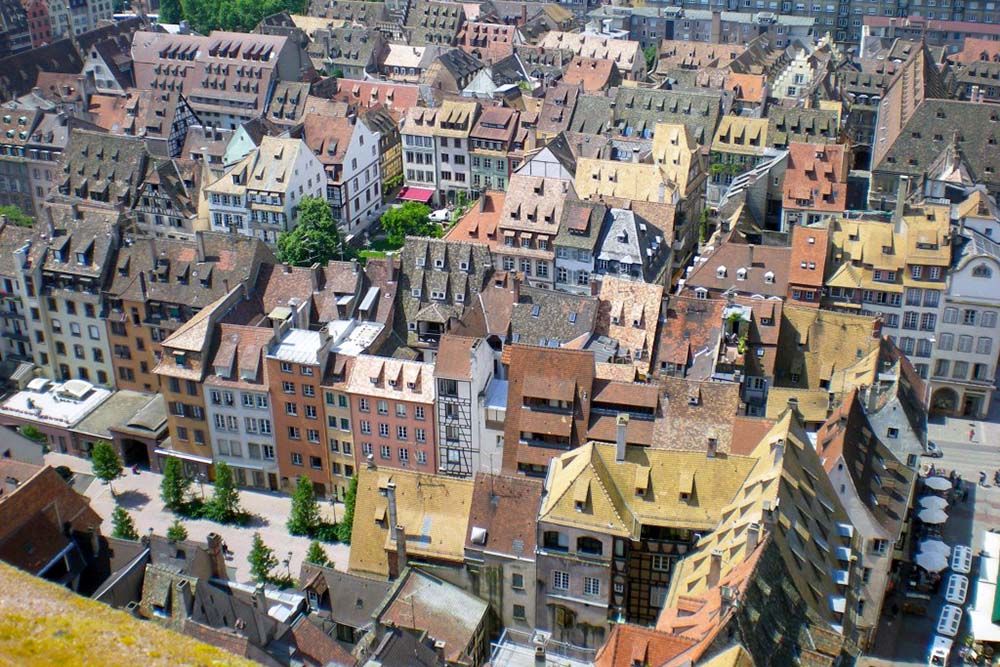
As soon as you arrive on the Grande-Île, the historic heart of the city, it feels as if you have stepped into a setting shaped slowly by centuries of history.
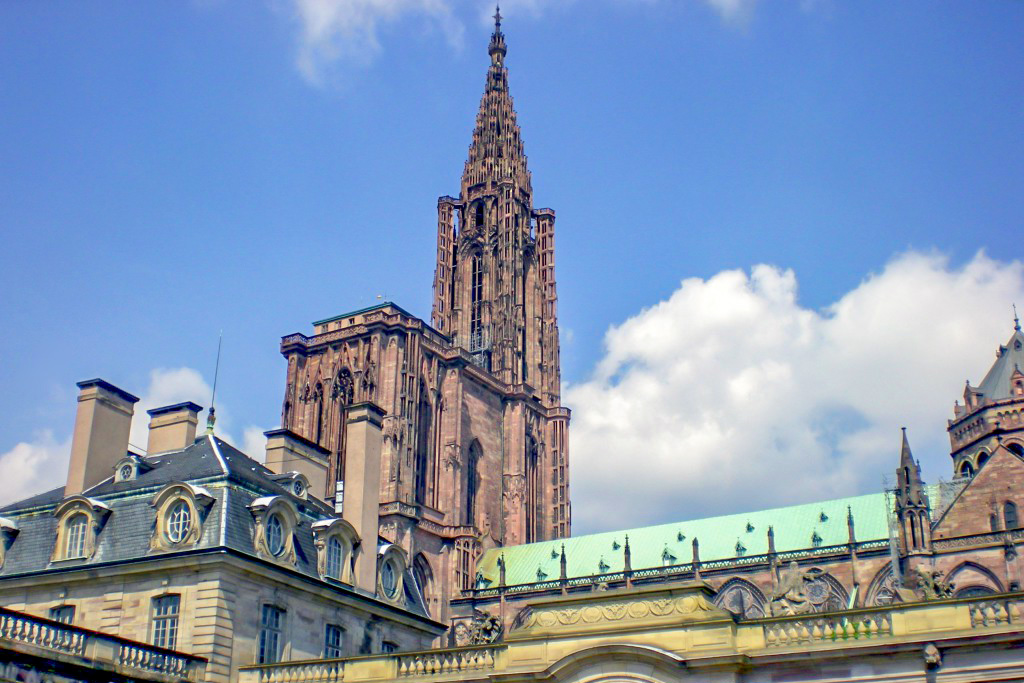
At the centre of it all rises Strasbourg Cathedral, a masterpiece of Gothic architecture whose slender spire has dominated the Alsace plain for more than five hundred years. For a long time, it was even the tallest building in the world.

Around it, a maze of medieval streets winds between half-timbered houses, lively squares and narrow canals that remind visitors that Strasbourg grew in the middle of the branching waterways of the Ill River.
It is precisely this exceptional urban layout — inherited from the Middle Ages and remarkably preserved — that led UNESCO to inscribe the Grande-Île of Strasbourg on the World Heritage List in 1988.
The district known as La Petite France, with its charming timber-framed houses leaning over the water, is perhaps the most iconic image of this Alsatian city with its unmistakable character.

But Strasbourg’s story does not end with its medieval streets.
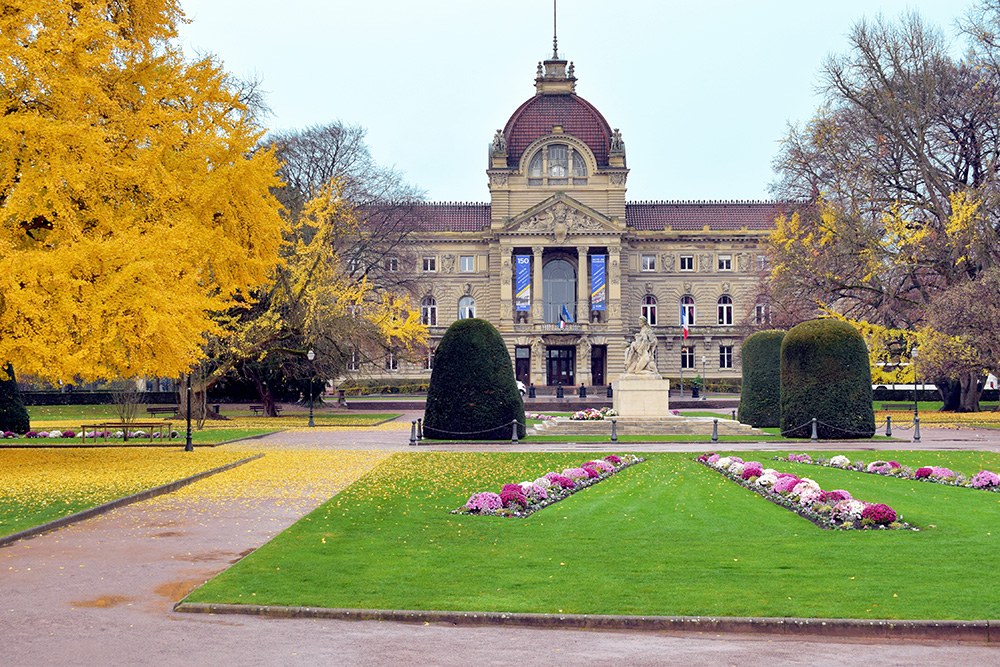
In 2017, UNESCO extended the listing to include another fascinating district: the Neustadt, the “new town” built in the late nineteenth century when Alsace was part of the German Empire.
This ambitious imperial urban project introduced wide boulevards, monumental squares and imposing public buildings that contrast strikingly with the intimate charm of the medieval old town.
Today, this juxtaposition between medieval city and imperial urban planning is one of Strasbourg’s most remarkable features. Few cities in Europe offer such a clear architectural reading of their complex history.
In that sense, Strasbourg — one of the most important UNESCO sites in Alsace and Lorraine — is not defined by a single monument.
Instead, the entire city tells a story spanning more than a thousand years of European history, shaped by French and German influences, Rhine trade routes and imperial ambitions.
And it is precisely this rich historical and cultural layering that makes Strasbourg one of the most fascinating UNESCO sites in the region.
2. The Squares of Stanislas, de la Carrière and d’Alliance in Nancy
(UNESCO World Heritage Site since 1983)
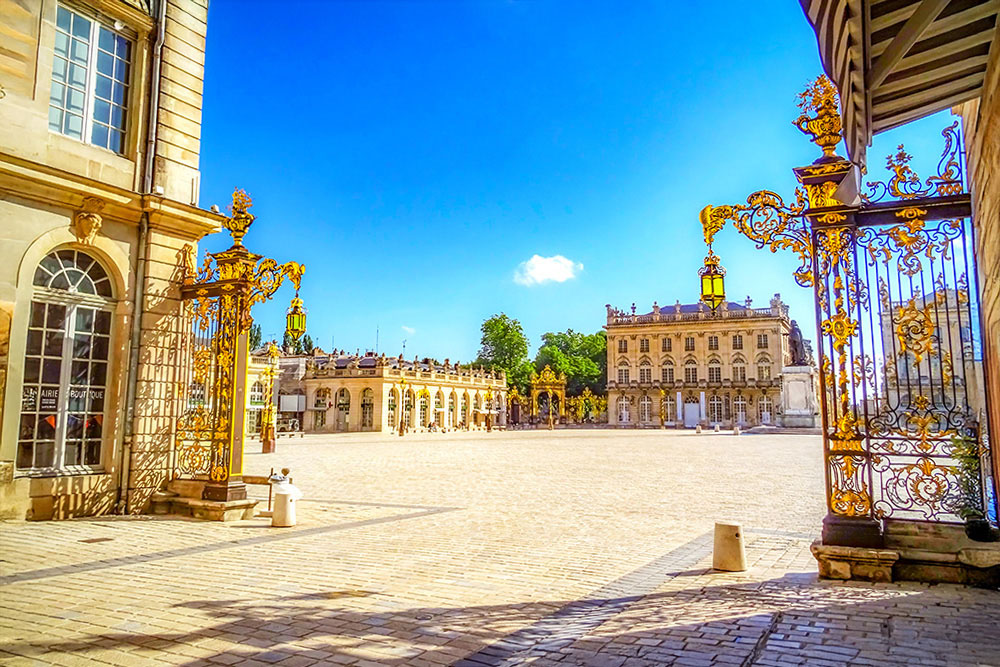
In the heart of Nancy, there is a place where architecture feels almost like a carefully staged performance.
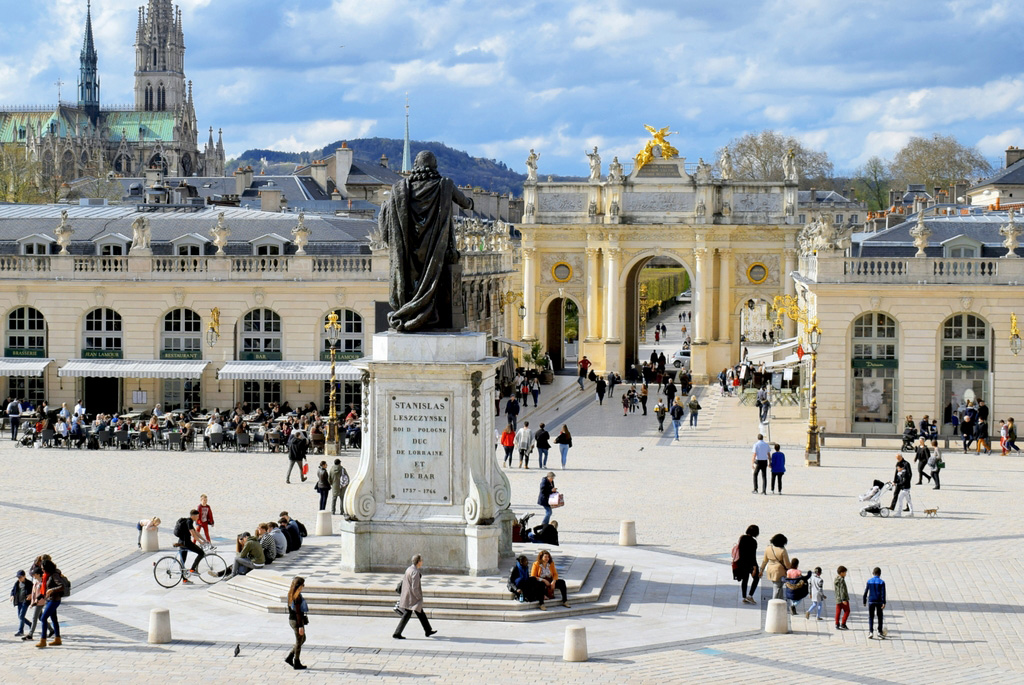
When you step onto Place Stanislas, the effect is immediate: a vast harmonious square framed by elegant façades, punctuated by ornate golden gates and dominated by the statue of Stanislas Leszczyński.
It is hard to imagine today that this extraordinary urban ensemble was conceived in the eighteenth century as a project that was as political as it was architectural.
Stanislas Leszczyński, the former King of Poland who later became Duke of Lorraine, wanted to connect the medieval old town of Nancy with the newer district built under Duke Charles III.
To achieve this ambition, he entrusted the project to architect Emmanuel Héré, who designed a monumental urban composition made up of three distinct yet perfectly coordinated squares: Place Stanislas, Place de la Carrière, and Place d’Alliance.
Place Stanislas, inaugurated in 1755, forms the heart of the ensemble. The buildings that surround it — the City Hall, the Opera House, and the Museum of Fine Arts — create a setting of refined classical elegance.

At the corners of the square, the famous wrought-iron gates by Jean Lamour, highlighted with delicate touches of gold leaf, add a spectacular detail that immediately captures the eye.
But the urban composition does not stop there.
Passing through the elegant Arc Héré, visitors enter Place de la Carrière, a long and stately perspective lined with aristocratic mansions and ending at the Palace of the Government.

Further on lies the more intimate Place d’Alliance, completing this remarkable urban sequence designed as a carefully balanced architectural composition.

It is precisely this exceptional harmony between urban planning and architecture that earned Nancy its inscription on the UNESCO World Heritage List in 1983. Together, the three squares represent one of the finest examples of Enlightenment urban planning in Europe.
Even today, Place Stanislas remains the vibrant heart of Nancy. Locals cross it on their daily routines, visitors pause to admire the architecture, and café terraces fill as soon as the sun appears.
At night, the lighting highlights the façades and gilded gates, giving the entire square an almost theatrical glow.
Among the UNESCO sites in Alsace and Lorraine, Nancy offers a very different vision of heritage: not a medieval city or a military fortress, but the urban ideal of the eighteenth century, conceived as a symbol of balance, elegance and enlightened power.
3. Vauban’s Fortifications: Longwy and Neuf-Brisach
(UNESCO World Heritage Site since 2008)
![Neuf-Brisach vue du ciel © Luftfahrer - licence [CC BY-SA 3.0] from Wikimedia Commons](https://alsacelorraineguide.com/wp-content/uploads/2026/03/Neuf-Brisach-vue-du-ciel-©-Luftfahrer-licence-CC-BY-SA-3.0-from-Wikimedia-Commons.jpg)
Looking at a map of eastern France, it quickly becomes clear why this region has long been considered strategic. For centuries, shifting borders, rival kingdoms and expanding empires turned Alsace and Lorraine into a frontier zone where cities needed protection and key routes had to be controlled.
It was in this context that one of the most remarkable figures of French military history emerged: Sébastien Le Prestre de Vauban.
As the chief military engineer of King Louis XIV, Vauban revolutionised the art of fortification in the seventeenth century. His goal was straightforward: to build cities capable of withstanding the most advanced sieges of the time.
To achieve this, he developed the famous star-shaped fortification system, combining bastions, moats, ravelins and sloping glacis. The design allowed defenders to protect the city from every angle while making it extremely difficult for attackers to approach.
Several of Vauban’s masterpieces are now recognised as UNESCO World Heritage Sites. In Alsace and Lorraine, two towns particularly illustrate his genius: Longwy and Neuf-Brisach.
In Longwy, in Lorraine, Vauban transformed an existing stronghold into a modern citadel. The polygonal ramparts, carefully adapted to the terrain, created a formidable defensive system.
![Porte de France in Longwy © Initsogan - licence [CC BY-SA 3.0] from Wikimedia Commons](https://alsacelorraineguide.com/wp-content/uploads/2026/03/La-Porte-de-France-a-Longwy-©-Initsogan-licence-CC-BY-SA-3.0-from-Wikimedia-Commons-1024x683.jpg)
Even today, walking along the bastions and through the fortified gates, you can almost read the strategic logic imagined by the engineer of the Sun King.
Yet it is probably in Neuf-Brisach, in Alsace, that Vauban’s military architecture reaches its most spectacular expression.
Founded in 1698, after France lost the nearby city of Breisach on the opposite bank of the Rhine, Neuf-Brisach was designed entirely from scratch.
Seen from above, the town forms a perfect star. Two concentric rings of fortifications surround a rigorously geometric urban plan. At the centre lies the Place d’Armes, from which the streets extend in an impressively orderly grid.
This perfectly rational organisation makes Neuf-Brisach one of the most remarkable examples of Vauban’s defensive system.
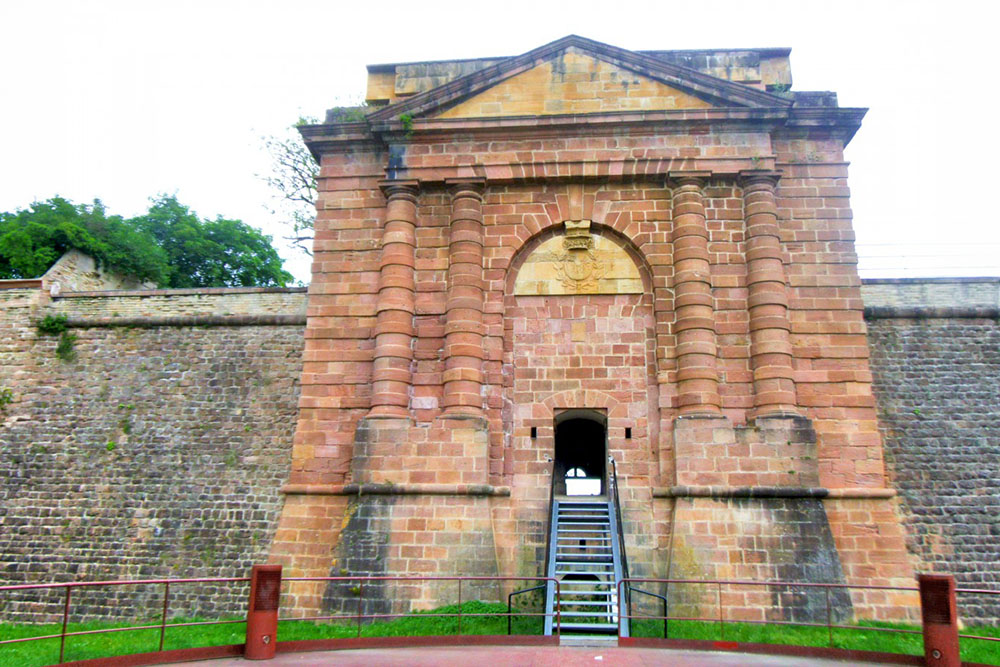
For this reason, both Longwy and Neuf-Brisach were included in 2008 in the network known as the Fortifications of Vauban, a group of twelve fortified sites across France recognised by UNESCO for their outstanding universal value.
Among the UNESCO sites in Alsace and Lorraine, these fortifications highlight another dimension of the region’s history — one shaped by borders, conflicts and military strategies that influenced the European landscape for centuries.
4. First World War Funeral and Memorial Sites
(Western Front – UNESCO World Heritage Site since 2023)
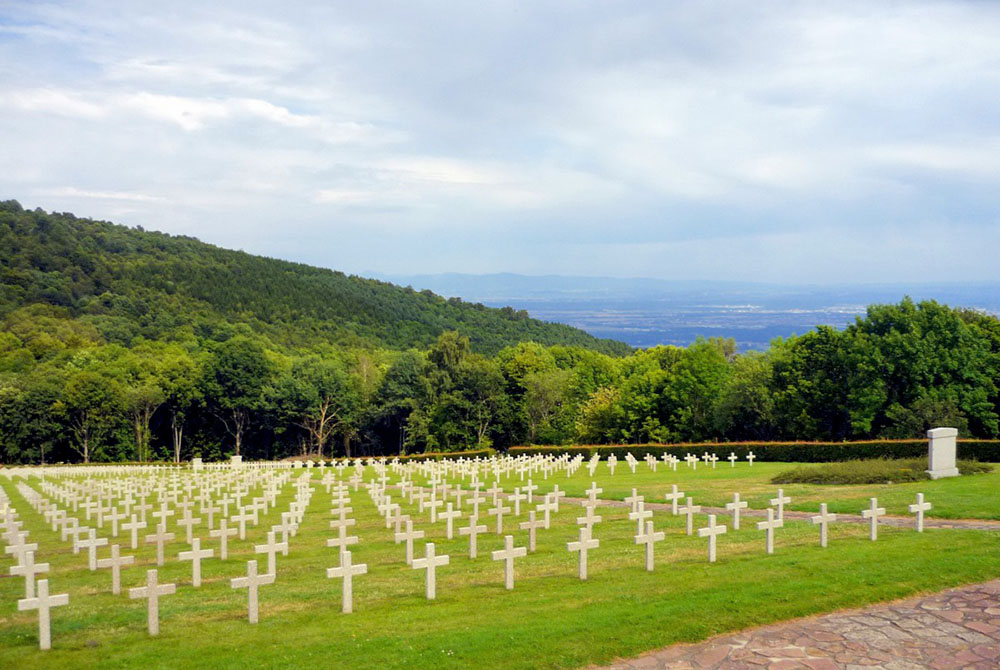
In some parts of Alsace and Lorraine, the landscape still bears the deep scars of the First World War. The hills, forests and valleys of this region were once the setting for some of the most devastating battles of the conflict.
More than a century later, these places have become powerful spaces of remembrance, where European history can be read through military cemeteries, ossuaries and memorial monuments.
In 2023, UNESCO inscribed 139 First World War funeral and memorial sites on the World Heritage List. They are spread along the former Western Front, from Belgium to the eastern edge of France, with several located in Alsace and Lorraine.
One of the most striking examples is the Douaumont Ossuary, near Verdun. This monumental structure holds the remains of more than 130,000 French and German soldiers who died during the Battle of Verdun in 1916 — one of the longest and most devastating battles of the war.
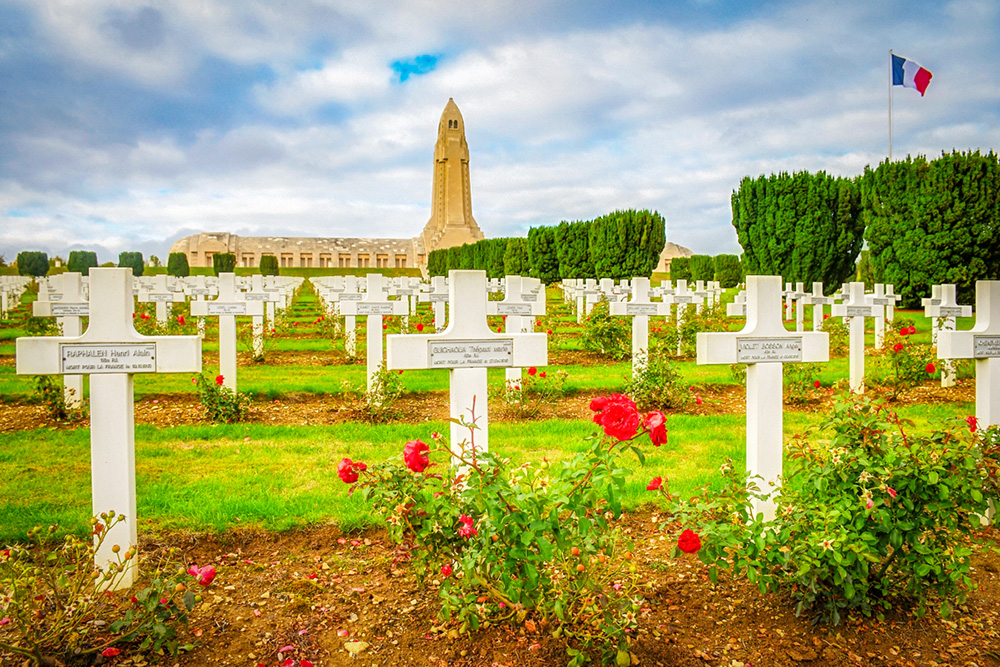
In front of the ossuary stretches a vast military cemetery, where endless rows of white crosses extend across the landscape, creating a powerful and deeply moving sight.
In Alsace, another major memorial site is Hartmannswillerkopf, often known as Vieil Armand. This mountain in the Vosges became the scene of particularly intense fighting between French and German forces.
Today, a national memorial, a military cemetery and the preserved remains of trenches allow visitors to understand the scale and violence of the battles that took place here.
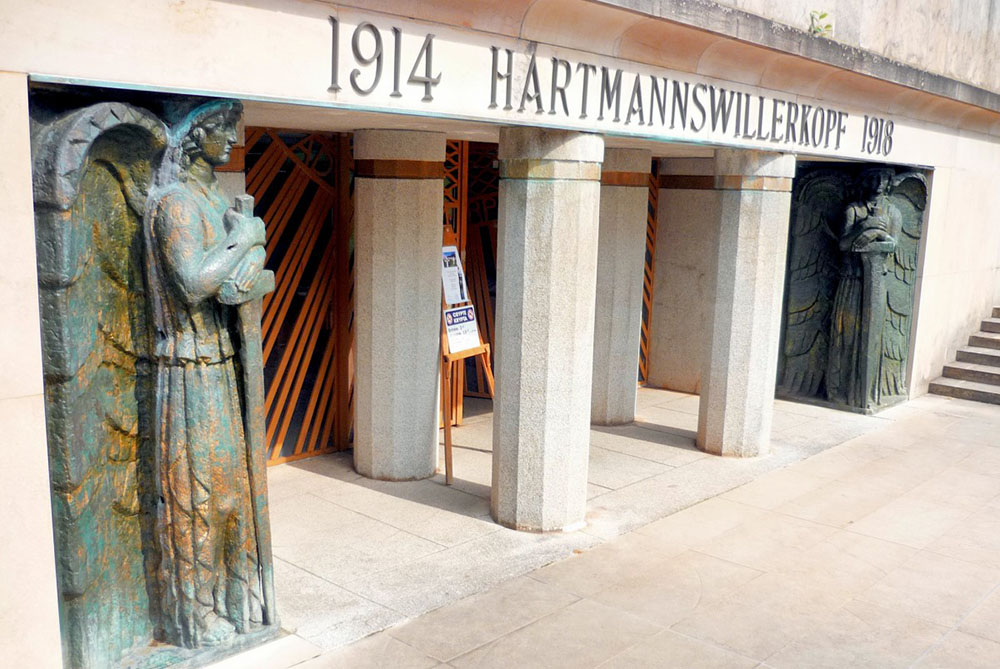
What led UNESCO to recognise these sites is not only their historical significance, but also their universal message of remembrance and reconciliation. The cemeteries and memorials were designed to honour soldiers of different nationalities in a spirit of dignity and respect.
Among the UNESCO sites in Alsace and Lorraine, these places occupy a very special place.
Unlike cathedrals, fortified towns or architectural masterpieces, they do not celebrate power or beauty. Instead, they preserve the memory of the tragedies that shaped the twentieth century.
Walking through these landscapes today, the silence itself becomes meaningful, reminding visitors that the history of Alsace and Lorraine is not only written in stone monuments, but also in the trials that helped shape modern Europe.
5. The Ancient Beech Forests of the Carpathians and Other Regions of Europe: The Grand Ventron
(UNESCO World Heritage Site since 2021)
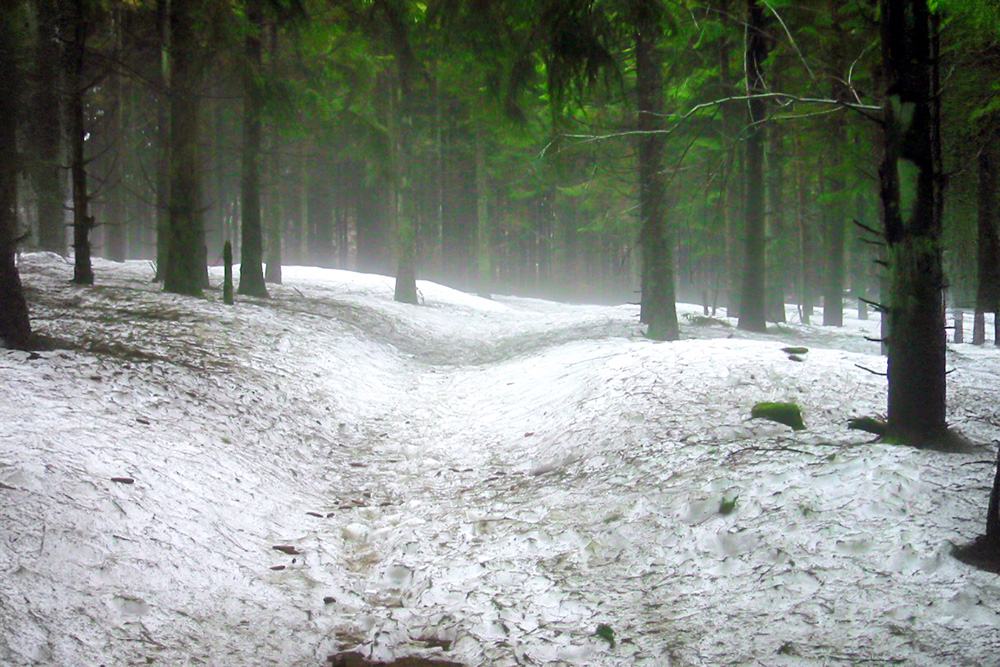
Not every World Heritage Site is a historic city or a famous monument. Some tell a much older story — the story of Europe’s natural landscapes themselves.
In the Vosges Mountains, on the border between Alsace and Lorraine, lies one of these discreet yet extraordinary places: the Grand Ventron Nature Reserve.
This mountainous area is home to a beech forest that forms part of a vast natural ensemble recognised by UNESCO: the Ancient and Primeval Beech Forests of the Carpathians and Other Regions of Europe.
This transnational site now stretches across more than twenty European countries. It protects ancient forests that reveal how European forest ecosystems have evolved since the end of the last Ice Age.

In the Vosges, the Grand Ventron forest offers a rare glimpse of this original landscape. Here, beech trees can grow to impressive sizes, some reaching well over a hundred years old. Fallen trees are left on the forest floor, nourishing a rich biodiversity of fungi, insects and birds.
Nothing here is artificially “tidied up”. The forest is allowed to evolve naturally, following its own ecological cycles.
Walking along the reserve’s quiet trails, visitors quickly sense a special atmosphere. The tall trunks of the beech trees filter the light, wooded slopes descend into deep valleys, and the silence is sometimes broken only by the wind in the branches or the call of a bird.
The inclusion of this forest on the UNESCO list reminds us that World Heritage is not limited to human creations. Certain landscapes are also precious heritage, because they reveal what Europe’s natural environment looked like before centuries of intensive land use.
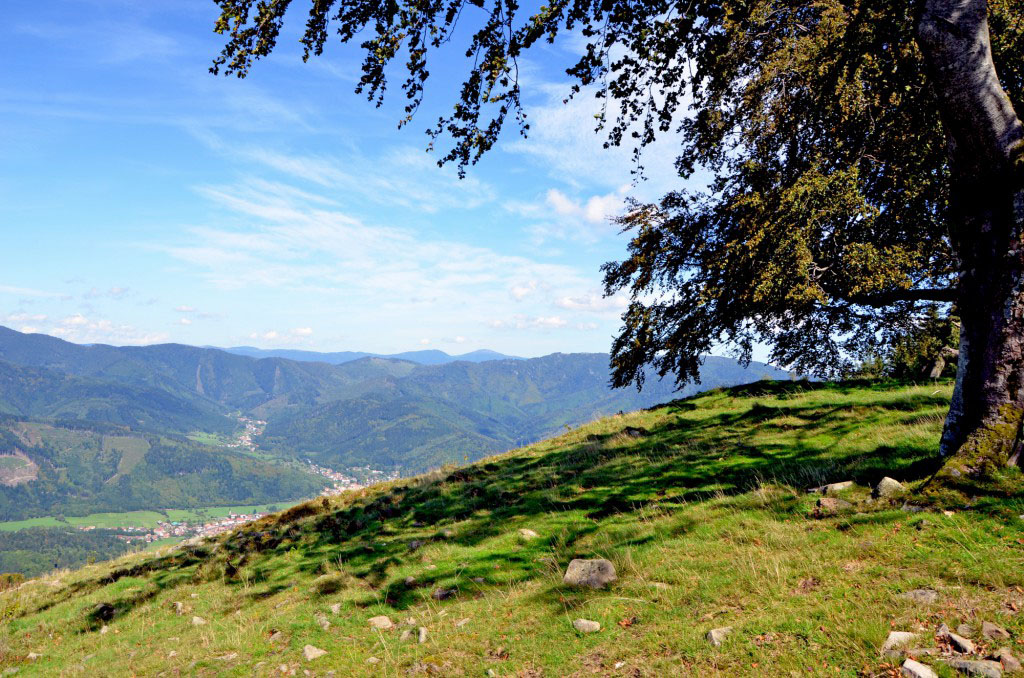
Among the UNESCO sites in Alsace and Lorraine, the Grand Ventron therefore adds a completely different dimension: that of an exceptional natural heritage where forest ecosystems have developed almost freely for centuries.
It offers another way to discover these regions — not only through their cities and monuments, but also through the wild landscapes that surround them.
6. The Architectural Work of Le Corbusier: The Claude and Duval Factory in Saint-Dié
(UNESCO World Heritage Site since 2016)
![Usine Le Corbusier Saint-Dié-des-Vosges © Pymouss- licence [CC BY-SA 3.0] from Wikimedia Commons](https://alsacelorraineguide.com/wp-content/uploads/2026/03/Usine-Le-Corbusier-Saint-Die-des-Vosges-©-Pymouss-licence-CC-BY-SA-3.0-from-Wikimedia-Commons.jpg)
Among the UNESCO sites in Alsace and Lorraine, some stand out for their surprising modernity. Far from Gothic cathedrals, eighteenth-century squares or military fortifications, one of these sites reflects a radically new vision of architecture that emerged in the twentieth century.
In Saint-Dié-des-Vosges, in the valley of the Meurthe River, stands a discreet yet essential building for understanding the evolution of modern architecture: the Claude and Duval Factory.
This textile factory was designed by Le Corbusier, one of the most influential architects of the twentieth century. His work, which profoundly shaped modern architecture around the world, is now recognised through a series of buildings spread across several countries.
The Saint-Dié factory is part of this international collection of sites that UNESCO inscribed on the World Heritage List in 2016 under the title “The Architectural Work of Le Corbusier.”
The story of this building is closely linked to that of the town itself. At the end of the Second World War, Saint-Dié-des-Vosges was almost completely destroyed. When the time came to rebuild the city, Le Corbusier proposed an ambitious and innovative urban plan.
Although his overall reconstruction project was never fully realised, one building did emerge from that vision: the Claude and Duval textile factory, built between 1948 and 1951.
The structure reflects the architectural principles that defined Le Corbusier’s work: clean lines, reinforced concrete structures, large horizontal windows that allow light to flood the interior, and a rational organisation of space.
The factory was designed to improve working conditions for employees, with bright and functional workshops that brought a new sense of modernity to industrial architecture.
Remarkably, the factory is still in operation today, making it the only industrial building designed by Le Corbusier that continues to serve its original purpose.
This site reminds us that World Heritage is not limited to ancient monuments. It also includes more recent creations that have profoundly changed the way cities and workplaces are designed.
Within the panorama of UNESCO sites in Alsace and Lorraine, the Saint-Dié factory therefore brings a distinctly modern dimension — a reminder of the global influence of twentieth-century architecture.
7. Royal and Imperial Metz
(Site included on UNESCO’s Tentative List)
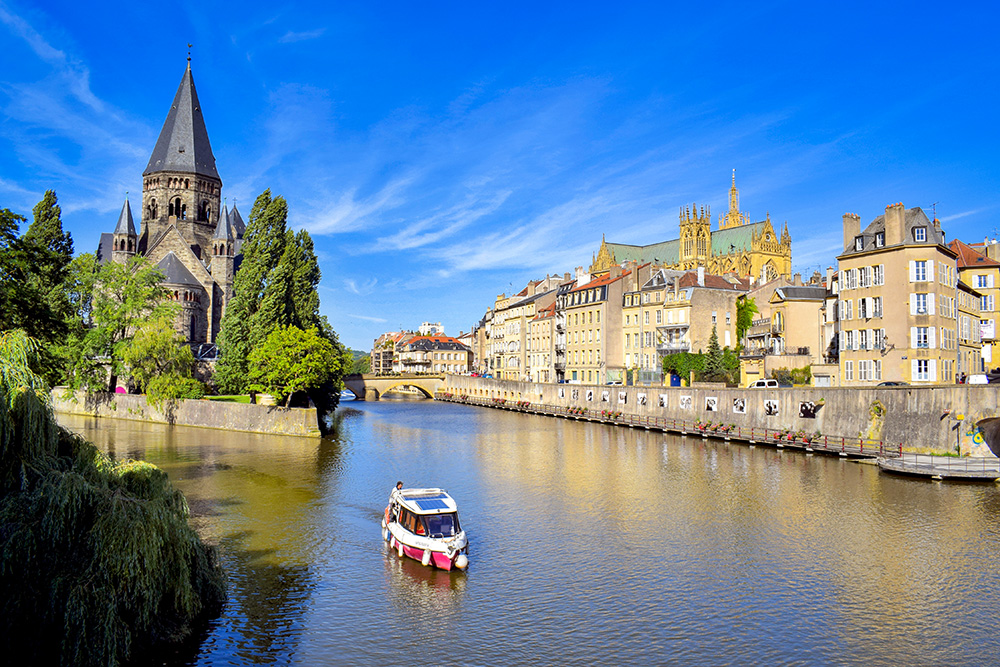
Among the UNESCO sites in Alsace and Lorraine, some are already recognised for their outstanding universal value. Others, however, may well join this prestigious list in the years to come.
This is the case with Royal and Imperial Metz, currently included on UNESCO’s Tentative List, an essential step before a possible inscription on the World Heritage List.
To understand this candidacy, the best approach is simply to walk through the historic centre of Metz and observe how the city tells, through its architecture, several centuries of political and cultural history.
The first image that often comes to mind is Saint-Étienne Cathedral, famous for the immense stained-glass windows that have earned it the nickname the Lantern of God.
With more than 6,000 square metres of stained glass, it possesses one of the largest expanses of stained glass in the world. Artists from different periods have contributed to these luminous masterpieces, including Marc Chagall in the twentieth century.
But the architectural richness of Metz extends far beyond its cathedral.
The city preserves a remarkable urban landscape reflecting several historical periods: medieval Metz, with its narrow streets and ancient squares; classical Metz, shaped during the eighteenth century under French rule; and above all, imperial Metz, developed in the late nineteenth century when the city belonged to the German Empire.
It is this last chapter that lies at the heart of the UNESCO nomination.
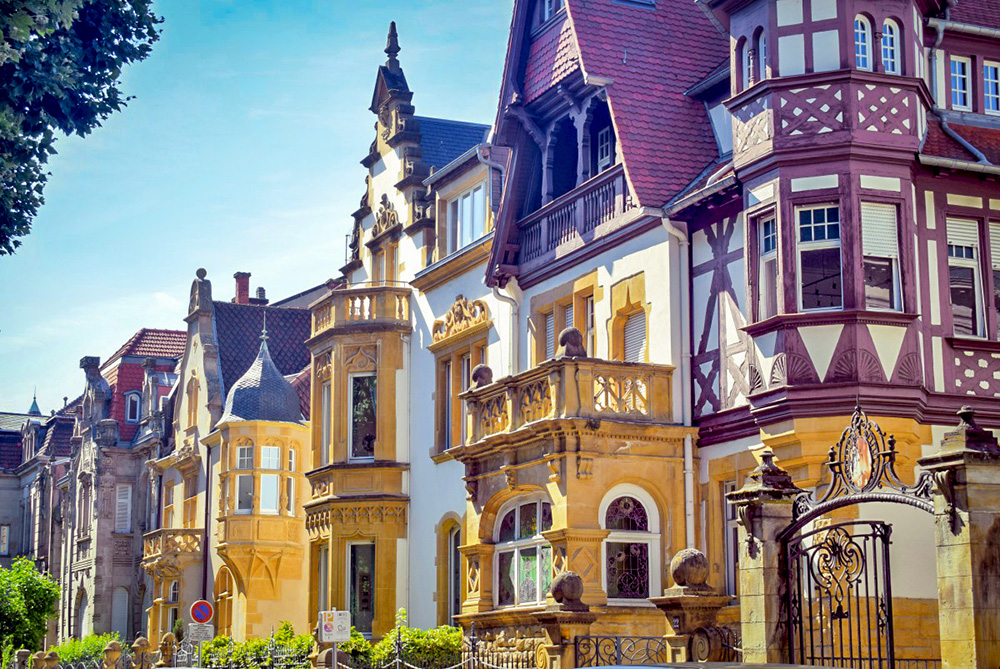
After the annexation of Alsace-Lorraine in 1871, the German authorities launched an ambitious urban development programme. New districts were created, characterised by wide avenues, monumental buildings and architecture blending Neo-Romanesque, Neo-Gothic and Germanic influences.
One of the most striking examples is the Metz railway station, inaugurated in 1908. With its imposing clock tower and massive façades built in the region’s golden Jaumont stone, it perfectly illustrates the architectural ambition of that era.

This layering of historical periods — medieval, classical French and imperial German — gives Metz a unique urban identity in Europe. It is precisely this architectural and historical richness that underpins its candidacy for World Heritage status.
If officially recognised in the future, Metz would become the seventh UNESCO site in Alsace and Lorraine, joining Strasbourg, Nancy and the other remarkable places already listed.
Until then, the city already offers visitors a remarkable heritage that reflects its major role in the history of both the region and Europe.
Map of the UNESCO Sites in Alsace and Lorraine
Looking at a map of the UNESCO sites in Alsace and Lorraine, it quickly becomes clear how these places tell the story of a region located at the crossroads of Europe.
Between the plains of the Rhine, the mountains of the Vosges, and the valleys of the Meuse and Moselle, these sites are spread across a relatively compact territory. This makes it surprisingly easy to discover several of them during a single trip.
![France Unesco © AlSepPhoenix - licence [CC BY-SA 4.0] from Wikimedia Commons](https://alsacelorraineguide.com/wp-content/uploads/2026/03/France-Unesco-©-AlSepPhoenix-licence-CC-BY-SA-4.0-from-Wikimedia-Commons-1024x717.jpg)
In Alsace, several sites are concentrated around the Rhine plain and the Vosges mountains:
- Strasbourg, with the Grande-Île and the Neustadt
- Neuf-Brisach, the remarkable fortified town designed by Vauban
- Hartmannswillerkopf, an important First World War memorial site
- The Grand Ventron Nature Reserve, protecting an exceptional ancient forest
In Lorraine, other sites reflect an equally rich history:
- Nancy, with the urban ensemble of Place Stanislas, Place de la Carrière and Place d’Alliance
- Longwy, another remarkable example of Vauban’s fortifications
- Verdun and the Douaumont Ossuary, powerful symbols of the memory of the First World War
- Saint-Dié-des-Vosges, home to the factory designed by Le Corbusier
- Metz, whose royal and imperial heritage could one day join the UNESCO World Heritage List
This distribution shows that the UNESCO sites in Alsace and Lorraine are far from representing a single type of heritage. Here you find historic cities, Enlightenment urban planning, military fortifications, natural landscapes and even a major work of modern architecture.
Few regions in Europe offer such diversity within such a relatively small area.
An Itinerary to Discover the UNESCO Sites in Alsace and Lorraine
Here is some good news for travellers: it is perfectly possible to explore several UNESCO sites in Alsace and Lorraine during a single stay.
Because the distances between the main cities are relatively short, even a few days can allow you to discover a large part of this exceptional heritage.
A Weekend Around Strasbourg
If you are staying in Alsace, Strasbourg makes an excellent base.
You can begin by exploring the Grande-Île and the Neustadt, then take a day trip to Neuf-Brisach, one of the most remarkable fortified towns in Europe. Along the way, the landscapes of the Rhine plain and the picturesque Alsatian villages offer beautiful stops.


A Route Through Lorraine
On the Lorraine side, an itinerary linking Nancy, Metz and Verdun reveals several facets of the region’s heritage.
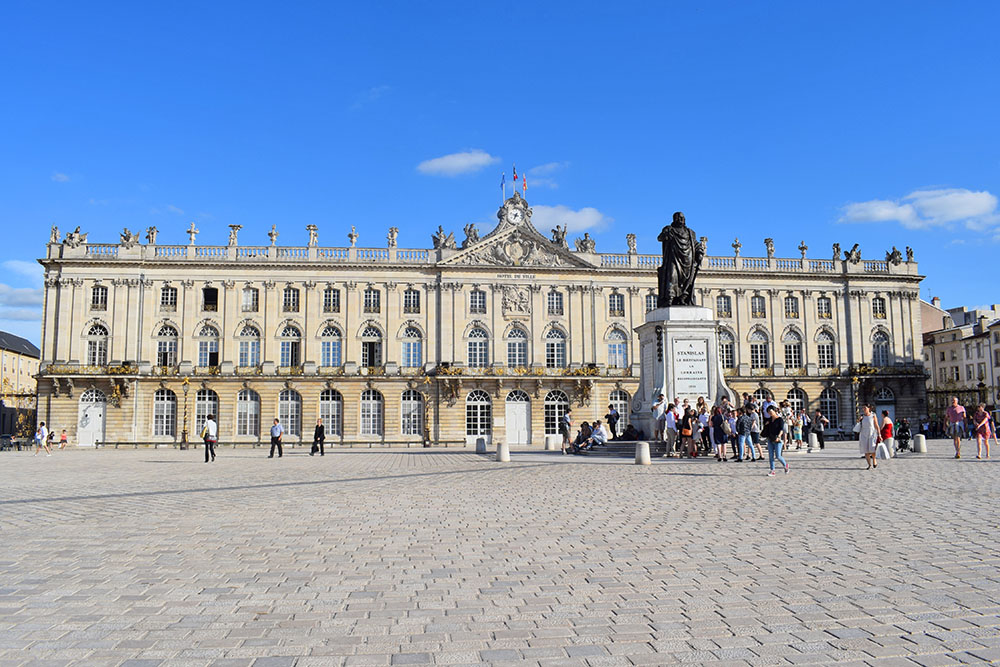
In Nancy, the three UNESCO-listed squares showcase the elegance of eighteenth-century urban planning. Further north, Verdun and the Douaumont Ossuary invite visitors to reflect on the memory of the First World War. Finally, Metz reveals a spectacular architecture blending medieval heritage with imperial urban planning.
A Nature Escape in the Vosges
To complete the journey, the Vosges Mountains offer a completely different experience.
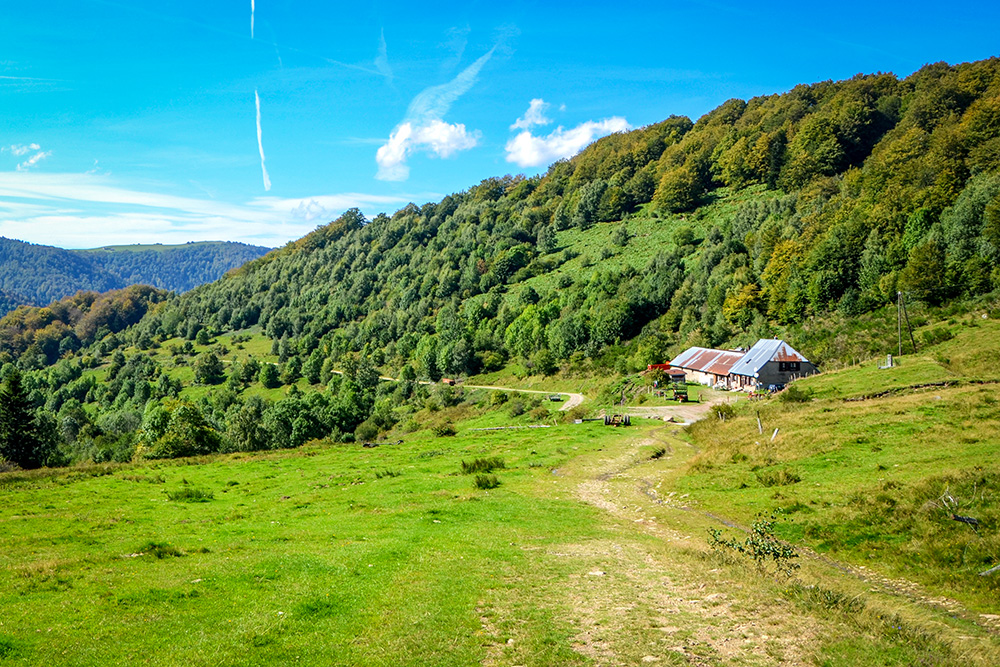
The forests of Grand Ventron and the town of Saint-Dié-des-Vosges provide an opportunity to discover a lesser-known combination of natural and architectural heritage.
Travelling through the UNESCO sites in Alsace and Lorraine, therefore, feels like moving through different periods of history — from medieval cities and seventeenth-century fortifications to the ideals of Enlightenment urban planning and the innovations of modern architecture.
Why Visit the UNESCO Sites in Alsace and Lorraine
Exploring the UNESCO sites in Alsace and Lorraine means discovering much more than a simple list of prestigious monuments.
These places tell a deeply European story. Located in the heart of the continent, Alsace and Lorraine have long been lands of passage, encounter — and sometimes conflict.
Their heritage reflects these multiple influences, blending French traditions, Germanic heritage and centuries of cultural exchanges that shaped the region.
This richness explains why UNESCO has recognised such diverse places here: a medieval city, an Enlightenment urban masterpiece, military fortifications, natural landscapes and a landmark of modern architecture.
By visiting these sites, travellers discover a mosaic of landscapes and architectural styles that reflect the diversity of European history.
And perhaps one day — we can hope — Royal and Imperial Metz will complete this remarkable list, adding a new chapter to the story of the UNESCO sites in Alsace and Lorraine.
