


If you set out to explore Lorraine, you quickly realise something unusual: some regions shout for your attention… but Lorraine does the opposite.
It speaks softly — through its orchards, its river valleys, its hilltop villages, its restrained yet elegant cities — and somehow carves its way into your memory more deeply than places far louder or more famous.
I know this because Lorraine is where my own story begins.
I was born here. I grew up between its cities and its countryside — between the golden squares of Nancy, the soaring cathedral of Metz, and the gentle landscapes of the Toulois.
My childhood smells like mirabelles in summer, bergamot candies in winter, and madeleines still warm from the oven.
So when I say Lorraine is worth visiting, I say it not as a tourist, but with the affection of someone who has carried this region with him all his life.
Here are seven reasons why you should explore Lorraine, too.
Why you need to explore Lorraine
1. Because Nancy Is One of France’s Most Elegant Cities
Nancy is the kind of city that doesn’t need to prove anything.
It simply opens its gates—literally—and invites you into one of the most beautiful squares in Europe: Place Stanislas, shimmering with gold leaf and framed by classical façades that seem to glow at any hour of the day.
But there’s more.
Nancy is one of the cradles of Art Nouveau, where the spirit of the École de Nancy lives on in whimsical curves, stained glass, and houses that feel sculpted rather than built.
Then there’s the Old Town, a maze of medieval streets where you can wander from bookshops to bakeries and feel the city’s warmth rise gently around you.
Growing up, every visit felt special: a walk in the Pépinière park, a hot chocolate near the cathedral, a bag of bergamotes on the way home. Small things—but unforgettable ones.
2. Because Metz Blends 3,000 Years of History with Modern Creativity
Metz is a city of light.
It radiates from the stained-glass windows of its cathedral—some solemn and ancient, others designed by Chagall.
It glows in the yellow Jaumont stone that catches the sun on late afternoons. And it shines, quite literally, at the contemporary Centre Pompidou-Metz, whose bold silhouette has transformed the city into a major cultural destination.
Metz is layered: Roman remains, medieval streets, French classicism, German imperial architecture—it’s all there, coexisting quietly, telling different chapters of a long and complicated story.
I have returned many times as an adult, camera in hand, rediscovering a city I first knew as a child.
And each time, Metz feels both familiar and new, as if it has patiently waited for me to notice something I missed before.
Yes, you can’t ignore Metz when you explore Lorraine!
3. Because the Toulois Is an Unexpected French Countryside Treasure
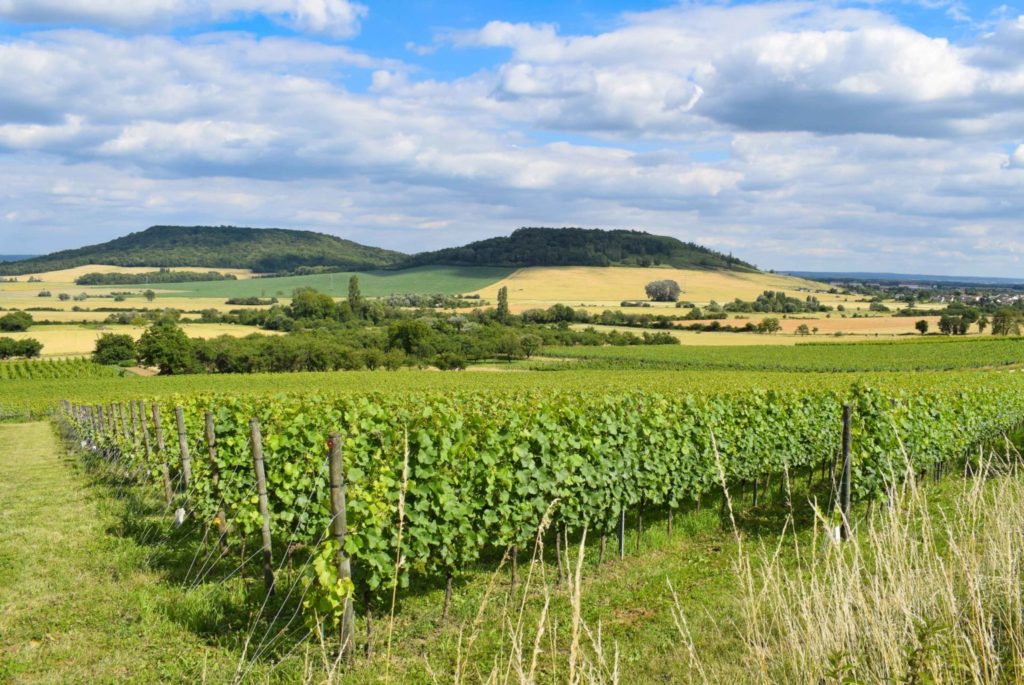
Just west of Nancy lies the Toulois—a gentle land of rolling hills, sleepy villages, vineyards, and wide, open skies.
It’s not a place that appears often in guidebooks. And that’s precisely why it feels so special.
Here, the Gris de Toul vineyards climb up sunlit slopes, fortified villages stand proudly on their hills, and the Moselle flows past quiet riverside paths perfect for cycling.
For me, the Toulois is inseparable from childhood outings: picnics in the shade, the smell of crushed grass, long summer evenings where time seemed to stretch endlessly. It’s the kind of countryside that teaches you to breathe.
4. Because the Meuse Hills Are Wild, Poetic, and Full of Stories

Drive through the Meuse and you’ll understand what “France profonde” really means.
The land rises into soft, undulating hills—orchards heavy with mirabelles in late August, fields that glow with wheat, and villages perched high above the valley.
Among them is the hauntingly beautiful Hattonchâtel, a hilltop village with sweeping views that seem to go on forever.
The Meuse is also a land of memory. Here lie the scars of the Great War, preserved with dignity and respect. Visit thoughtfully, and you’ll feel the weight of history beneath your feet.
When you explore Lorraine, you will get that it’s a region that touches you in ways you don’t quite expect.
5. Because the Vosges Mountains Offer Real Escapism

The Vosges might not be the highest mountains in France, but they have a charm all their own.
Forests of tall pines, glacial lakes reflecting the sky, and soft ridgelines that seem to float above the plains… It’s a world of quiet trails, wooden chalets, cowbells in the distance, and steaming meals eaten after long hikes.
The Lorraine side of the Vosges is greener, gentler, more intimate than its Alsatian cousins.
It’s the perfect place to slow down, breathe deeply, and feel the cool mountain air brush against your face.
6. Because Lorraine’s Gastronomy Is Warm, Honest, and Utterly Delicious

If my childhood had a flavour, it would be Lorraine.
Golden mirabelles bursting with juice.
Freshly baked madeleines with their unmistakable hump.
Bergamote sweets that stick to your fingers when you’re little.
A perfect slice of quiche lorraine, warm from the oven.
And the comforting, rustic taste of pâté lorrain wrapped in flaky pastry.
This is not show-off cuisine. It’s family food—seasonal, regional, and crafted with pride.
Even today, one taste can transport me back instantly.
Yes, when you explore Lorraine, it’s not just about beautiful classical squares and cathedrals, it’s also about food!
7. Because Lorraine Is a Land of Memory, Resilience, and Deep Roots

Lorraine is a crossroads.
History is a big part of the trip when you explore Lorraine.
It has changed hands, endured wars, rebuilt itself, and yet remained unmistakably itself—resilient, quiet, dignified.
This is the land of Joan of Arc.
A region where French and Germanic influences blend not by choice but by history.
A place where shifting borders have never erased local character.
Lorraine invites reflection. It asks you to look closely, to listen, to pay attention to the small details. And when you do, something inside you shifts.
Conclusion — Lorraine Doesn’t Try to Impress You… and That’s Why It Does
I’ve known Lorraine all my life, yet it still surprises me.
Its cities, its hills, its orchards, its rivers, its memories—they all weave together into a region that feels quietly profound.
When you explore Lorraine, you quickly understand it isn’t a destination you check off.
It’s a region you feel, a region you remember, a region that stays with you in unexpected ways.
Explore Lorraine once… and you’ll understand.
Return… and you’ll feel at home.
