
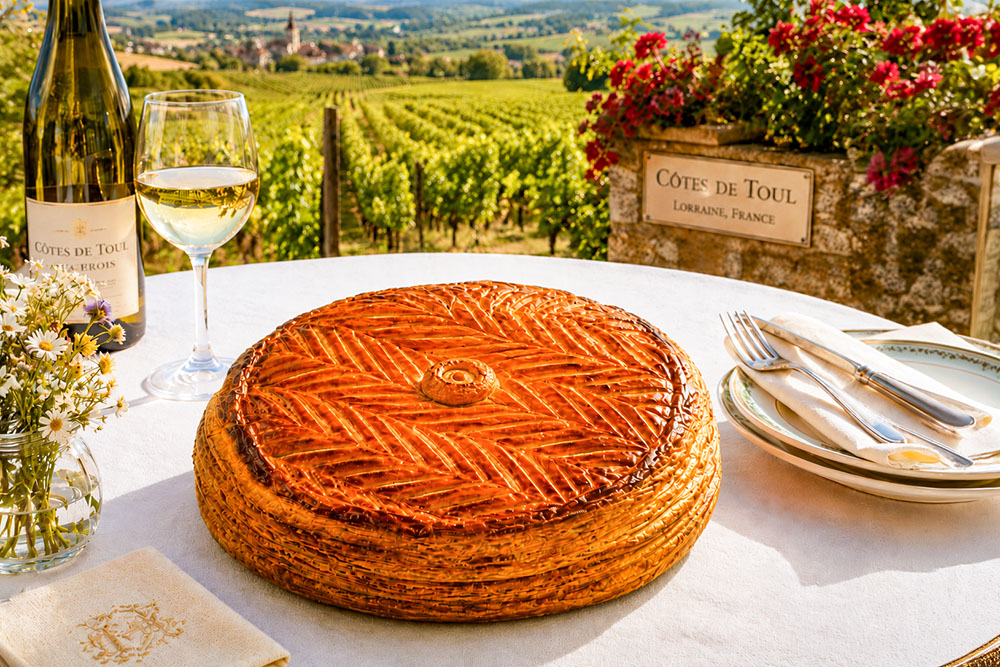

Tourte lorraine is one of those traditional French regional dishes that many people outside Lorraine have never heard of — even if they know its famous cousin, quiche Lorraine.
Everyone has heard of quiche Lorraine.
It has travelled the world, appeared on brunch menus, met spinach, salmon, broccoli, mushrooms, goats’ cheese, and probably several ingredients it was never formally introduced to.
But tourte lorraine?
That is another story.
Tourte lorraine is quieter. More discreet. More local. It never hired a public relations team. It never became a supermarket classic in faraway countries. It did not move to London, New York or Sydney to reinvent itself as “Lorraine Pie Deluxe”.
It stayed in Lorraine.
And frankly, that is part of its charm.
First of All, Where Is Lorraine?
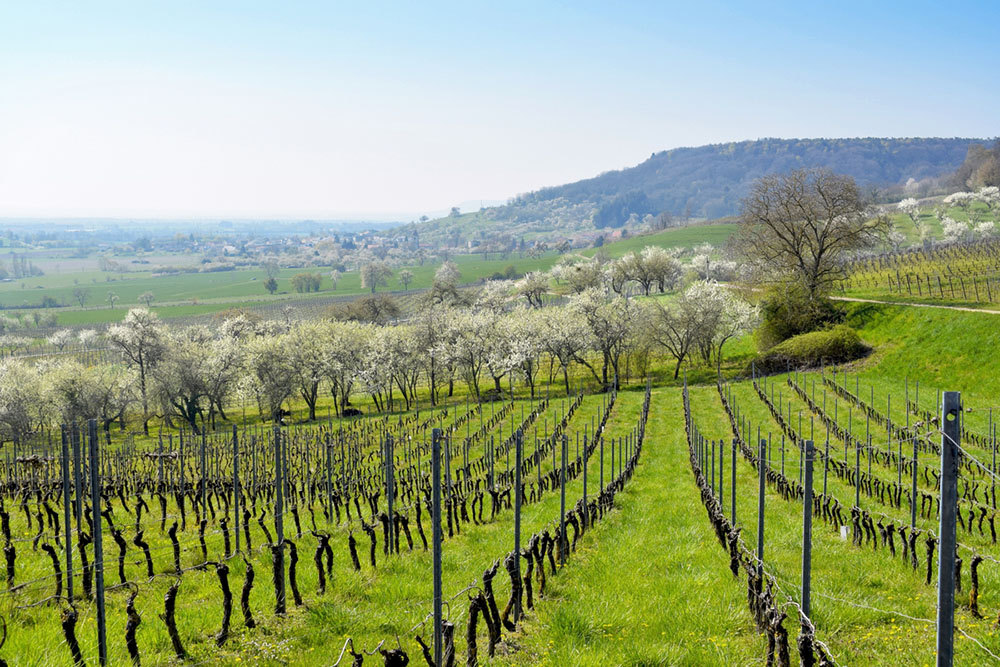
Lorraine is a historic region in north-eastern France, close to Luxembourg, Belgium, Germany and Alsace.
It is a land of forests, rivers, mirabelle plums, cold winters, hearty food, beautiful towns such as Nancy and Metz, and a culinary tradition that deserves far more attention than it usually gets.
Most people outside France know Lorraine for one dish only: quiche Lorraine.
And while I have nothing against quiche — at least not anymore — Lorraine has much more to offer than a famous open tart with cream, eggs and bacon.
There is pâté lorrain, a savoury pastry filled with marinated meat.
And then there is tourte lorraine: round, golden, generous, and very pleased with itself, though far too modest to say so.
What Is A Tourte Lorraine?
Tourte lorraine is a traditional savoury pie from Lorraine, usually made with puff pastry and filled with marinated meat.
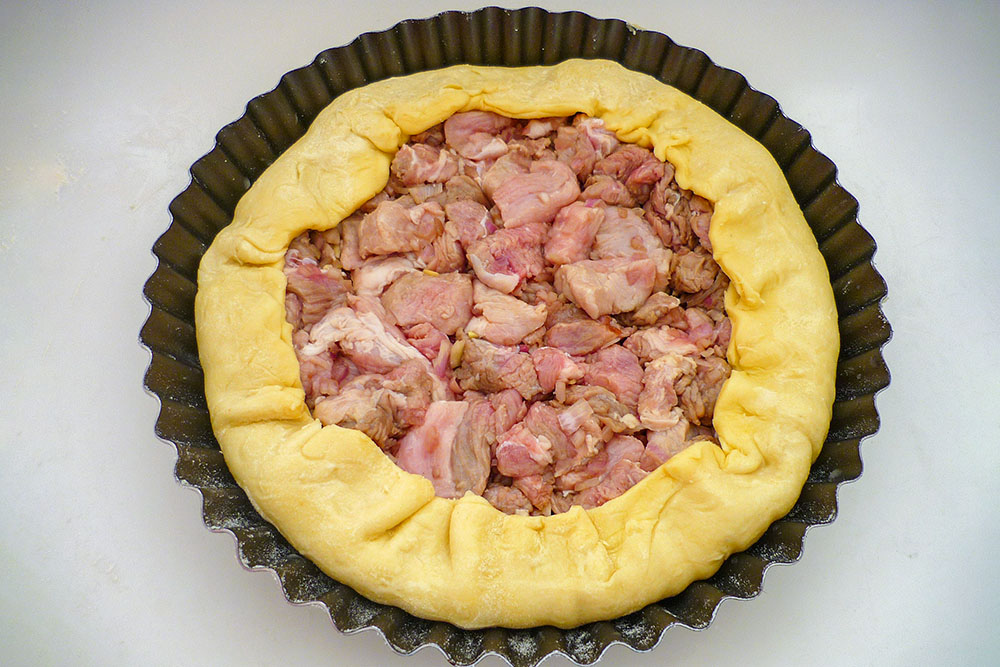
The meat is often a mixture of pork and veal, sometimes including cuts such as pork shoulder, pork belly or veal shoulder. In some family versions, rabbit may also be used.
The meat is cut into pieces and marinated, often in white wine or gris de Toul, with shallots, garlic, parsley, thyme, bay leaf, pepper and other aromatics. It is then placed inside a round pastry case and covered with a pastry lid.
So far, you may be thinking: “Ah, a French meat pie.”
Yes.
But also, no.
Because the real personality of tourte lorraine comes from something called migaine.
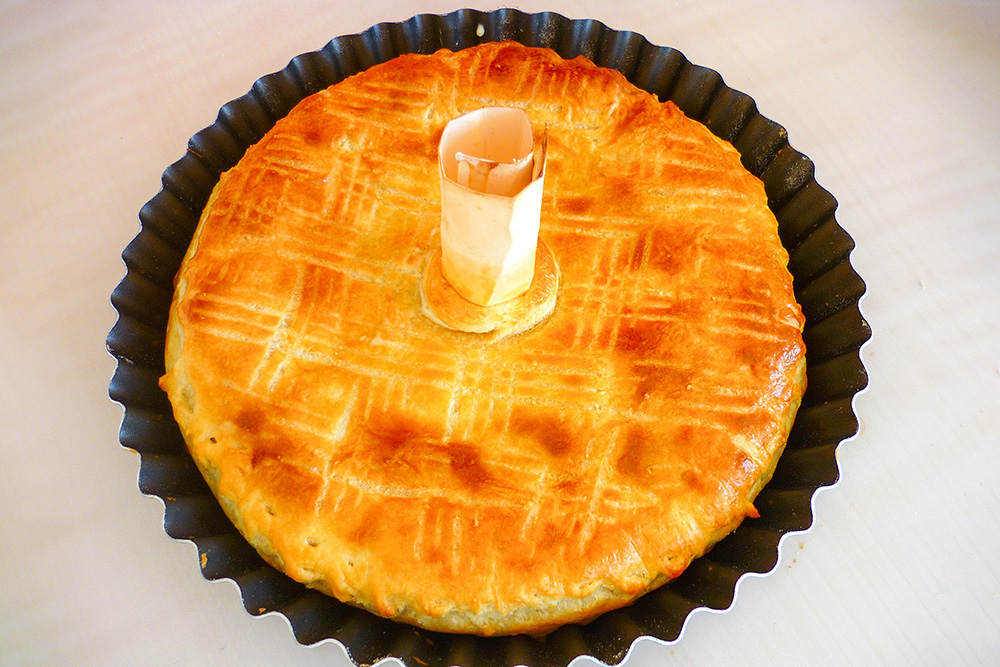
Migaine is a mixture of eggs and cream. It is poured into the pie, often through a little hole in the pastry lid, known as a chimney. As the pie bakes, the migaine slips between the pieces of marinated meat, making the filling softer, richer and more tender.
Without the migaine, you are closer to pâté lorrain.
With the migaine, you enter the wonderful territory of tourte lorraine.
Think of it as the moment when a meat pie decides to become a little more elegant, a little more generous, and unmistakably Lorraine.
Tourte Lorraine, Quiche Lorraine and Pâté Lorrain: A Family Matter
To understand tourte lorraine, it helps to introduce the family.
Quiche Lorraine is an open tart. Traditionally, it is made with pastry, eggs, cream and bacon or lardons. It is famous. It has travelled. It has posed for cookbooks. It knows people.

Pâté lorrain is usually a rectangular or oblong pastry filled with marinated pork and veal. It is more directly meaty, more charcuterie-like, and very much a regional treasure.
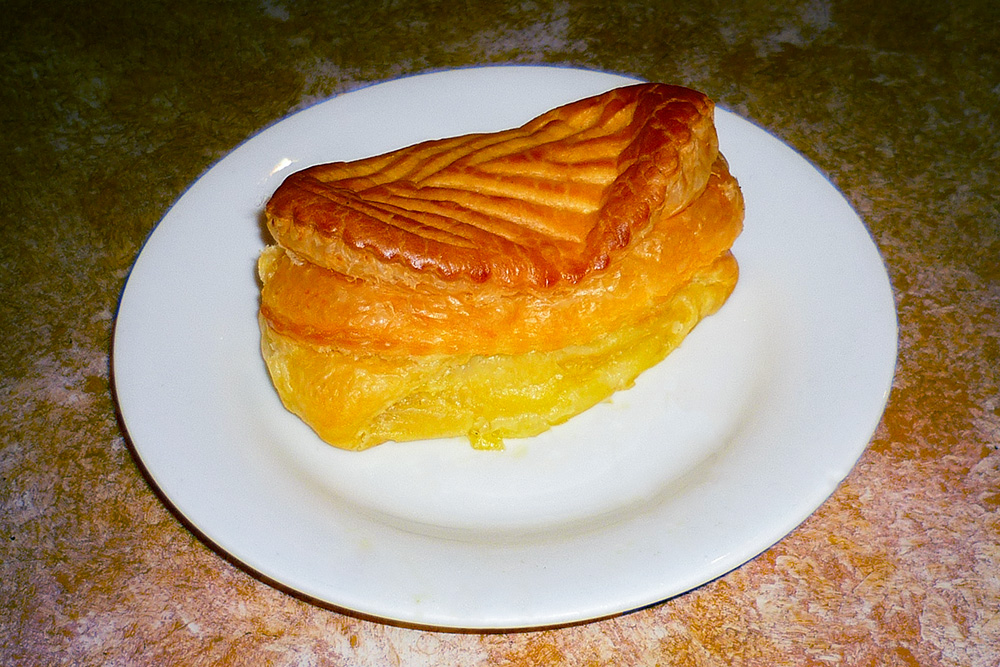
Tourte lorraine sits somewhere between the two.
It has the marinated meat of pâté lorrain.
It has the creamy egg mixture of quiche Lorraine.
And it has its own round, golden, family-table personality.
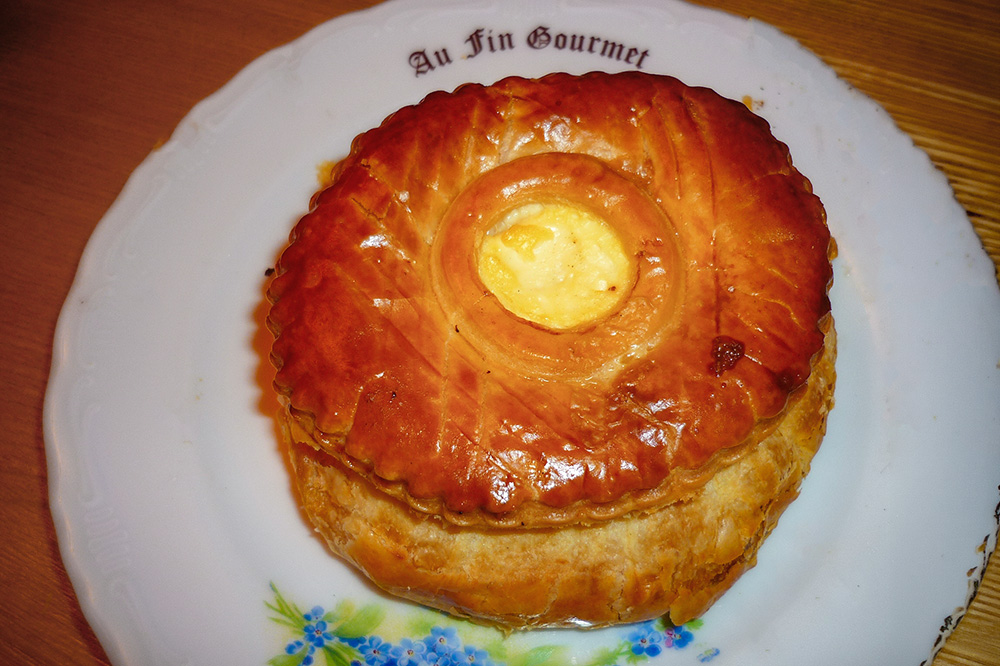
In simple terms:
Quiche Lorraine: open pastry, cream, eggs, bacon.
Pâté lorrain: closed pastry, marinated meat.
Tourte lorraine: closed pastry, marinated meat, cream and eggs.
In even simpler terms:
Lorraine clearly looked at pastry and thought, “We can do several serious things with this.”
And it was right.
My Childhood Confession
I must confess something.
As a child growing up in Lorraine, I did not really like tourte lorraine.
There. I have said it.
To make matters worse, I was not particularly fond of quiche Lorraine either. For a child born in Lorraine, this may sound almost administratively concerning.
But I had my reasons.
In my young mind, tourte lorraine belonged to a deeply suspicious category: savoury pastry.
And I liked my pastry sweet.
Very sweet.
If pastry was involved, I expected fruit, cream, chocolate, sugar, jam, custard, icing, or ideally several of these at once. I did not expect marinated meat, cream, eggs and parsley.
So when someone placed a beautiful golden pie in front of me, and it looked as though it might contain something sweet and delightful, only for me to discover that it was full of meat, I felt mildly betrayed.
It was like opening a Christmas present and finding socks.
Good socks, perhaps.
But socks nonetheless.
It took me years to understand tourte lorraine properly.
In fact, it took leaving Lorraine.
Why I Learnt to Appreciate It Later
This often happens with regional food.
When you grow up with it, you take it for granted. It is just there. In bakeries. On family tables. At the butcher’s. At the local traiteur. It is part of the landscape.
Then one day you move away, and what once seemed ordinary becomes precious.
That is exactly what happened to me with tourte lorraine.
I began to understand that it was not just a savoury pie. It was part of Lorraine’s culinary memory. It belonged to a local world of family recipes, regional traditions, cold-weather cooking and proper food made to be shared.
And when tourte lorraine is well made, it is absolutely delicious.
The pastry is golden and crisp. The meat is tender and fragrant from the marinade. The migaine adds softness and richness. Everything works together.
This was the moment when my childhood suspicion quietly retired.
Why Tourte Lorraine Is Hard to Find Outside Lorraine
One of the interesting things about tourte lorraine is that it is not easy to find outside Lorraine.
And I dare say: perhaps that is a good thing.
In an age when you can find industrial croissants in airports, “French-style” pastries in plastic packaging, and quiches filled with ingredients that would make a traditional Lorraine cook sit down quietly for a moment, there is something reassuring about a dish that has not fully surrendered to globalisation.
Tourte lorraine is still strongly attached to its region.
You may find it from specialist producers or in some regional shops. But walking into a random bakery in Paris, Provence, London or New York and expecting a proper tourte lorraine would require optimism, local knowledge and possibly a small miracle.
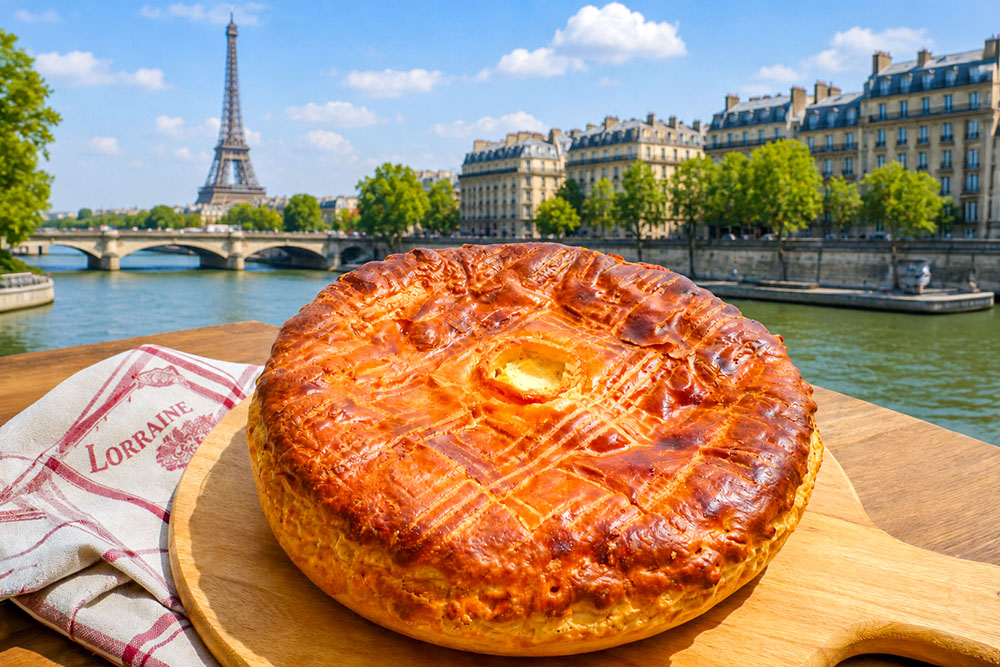
Even when we lived in Alsace, just across the Vosges Mountains from Lorraine, it was not easy to find a good tourte lorraine.
Alsace has its own magnificent food traditions: tarte flambée, kougelhopf, baeckeoffe, pretzels, sausages, pastries and all sorts of wonderful things.
But it is not Lorraine.
The two regions are neighbours, yes. But in food, neighbours can be very different. Sometimes all it takes is a mountain range, a dialect, and several centuries of culinary pride.
So if we wanted a proper tourte lorraine, we either ate it when visiting family in Lorraine, or my mother made it herself from her old recipe.
And that changed everything.
A homemade tourte lorraine is not just food.
It is a smell in the kitchen.
It is a recipe passed down.
It is family memory under a golden pastry lid.
The Frog’s Legs Version
There was also, in my family, one rather unexpected version.
One day, my aunt in Lorraine made us a surprise tourte lorraine.
And it really was a surprise.
Instead of the traditional marinated meat, she had used boned frog’s legs.
No bones, of course. We are civilised people.
Now, was it still tourte lorraine?
Purists may raise an eyebrow.
Possibly both eyebrows.
But in spirit, it still had something very Lorraine about it: pastry, generosity, family cooking, and the confidence to adapt a traditional dish without losing the joy of eating it.
Food traditions are not dusty museum pieces. They live, travel, change and occasionally jump into a pie.
Quite literally, in this case.
Tourte Lorraine in Australia
Years later, my wife Rachel and I lived in Sydney.
Sydney, Australia.
A wonderful city, but not exactly the first place where one expects to find tourte lorraine waiting patiently in a local bakery.
There, Rachel made tourte lorraine herself, using a recipe from Lorraine.
I still remember how extraordinary it felt to eat a real tourte lorraine in Australia.
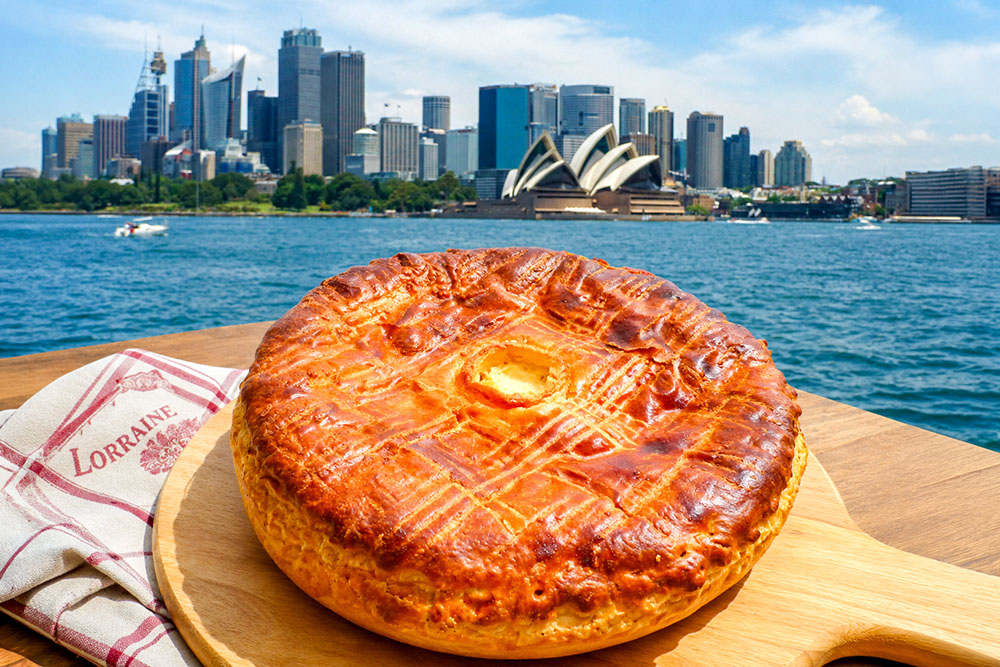
While the Pacific Ocean was not far away, while eucalyptus trees stood outside, while Australian birds made noises that sounded as if someone had invented them for comic effect, there we were, eating a dish that belonged somewhere between Nancy, Metz, Épinal and the Meuse.
I remember wondering whether, at that precise moment, we might have been the only people in Australia eating tourte lorraine.
Impossible to prove, of course.
But I like the thought.
A lonely little piece of Lorraine, bravely holding its own on the other side of the world.
How to Recognise a Good Tourte Lorraine
So, what makes a good tourte lorraine?
First, it should look the part.
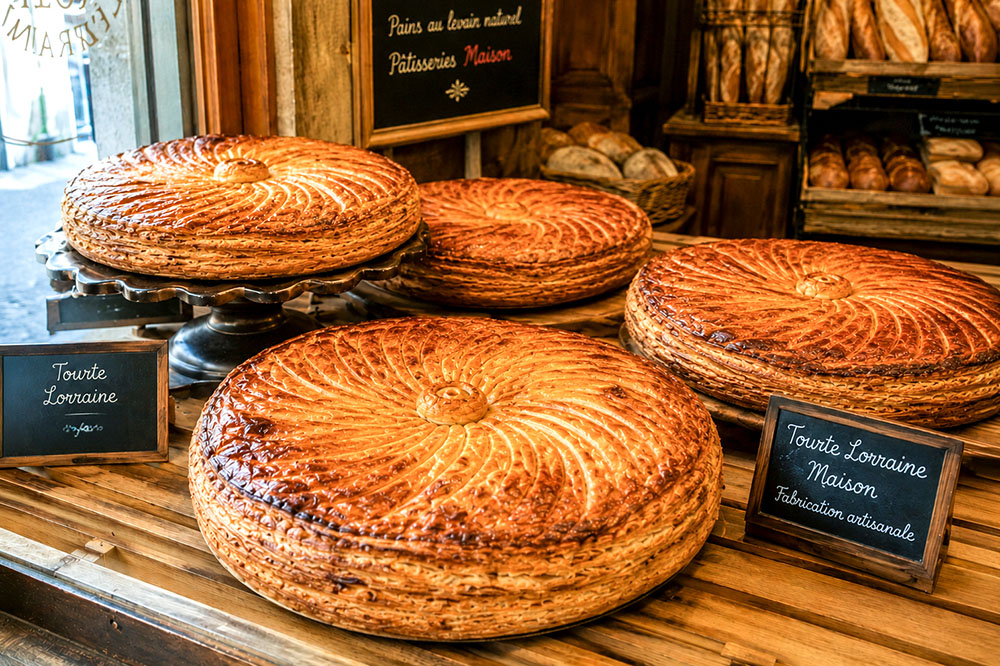
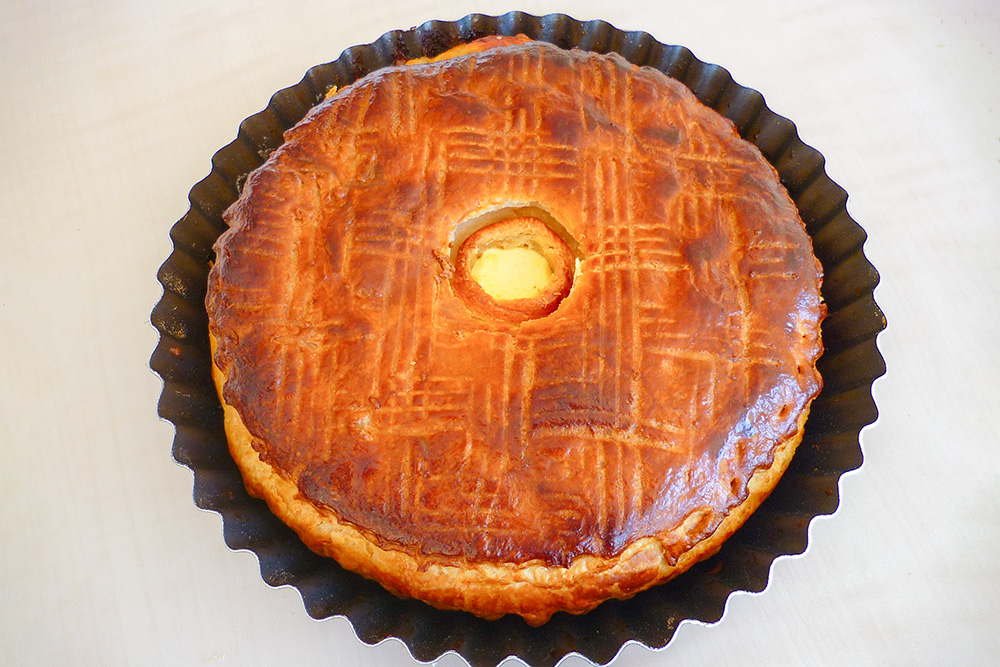
A proper tourte lorraine is round, closed and golden. The pastry should be well baked, not pale, soggy or sad-looking. It should have structure. It should hold its shape when cut.
The little chimney in the pastry lid is also important. This is where the migaine is poured in. It is not just a decorative hat. It has work to do.
Inside, the meat should be in pieces, not reduced to a grey, anonymous paste.
A good tourte lorraine should show that the meat has been prepared, cut, marinated and assembled with care. The filling should be generous, but not heavy. Rich, but not overwhelming.
The migaine should be present, but not excessive. It should bring moisture and softness, not turn the whole thing into a heavy flan.
The flavour should be balanced: meat, wine, cream, eggs, herbs and pastry. If all you taste is salt, something has gone wrong. If you taste nothing, something has gone even more wrong.
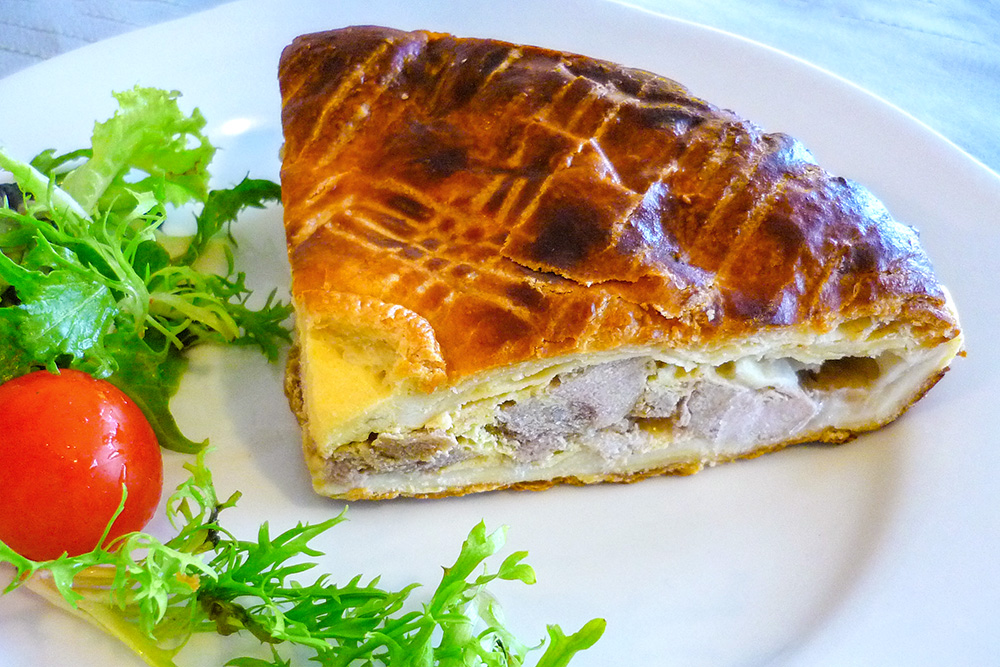
A good tourte lorraine should be rustic but not rough. Generous but not clumsy. Comforting but not dull.
In short, it should make you want another slice.
This is perhaps the most reliable test.
How to Eat Tourte Lorraine
Tourte lorraine can be eaten warm, lukewarm or cold.
Personally, I prefer it warm or slightly warm. That is when the pastry releases its buttery aroma, the filling becomes softer, and the migaine does its quiet work.
Serve it with a simple green salad and, if possible, a glass of white wine from Lorraine, such as gris de Toul or a wine from the Moselle area.

No need to overcomplicate things.
Tourte lorraine does not need twelve side dishes, a theatrical sauce or a dramatic garnish balanced on top.
It has already done the important work.
Why Tourte Lorraine Deserves to Be Discovered
Tourte lorraine deserves to be better known.
Not necessarily globalised.
I am not sure I want to see “Lorraine Meat Pie Bites” in every airport freezer cabinet, or a suspicious “tourte lorraine wrap” served with three dips and a marketing slogan.
Some dishes are better when they remain a little local.
But tourte lorraine deserves to be discovered by people who love French regional food beyond the obvious classics.
It tells a story of Lorraine: a region of hearty cooking, family recipes, butcher-baker traditions, quiet pride and generous tables.
It is not flashy.
It is not fashionable.
It has not been reinvented for every brunch menu in the world.
And that may be exactly why it is so special.
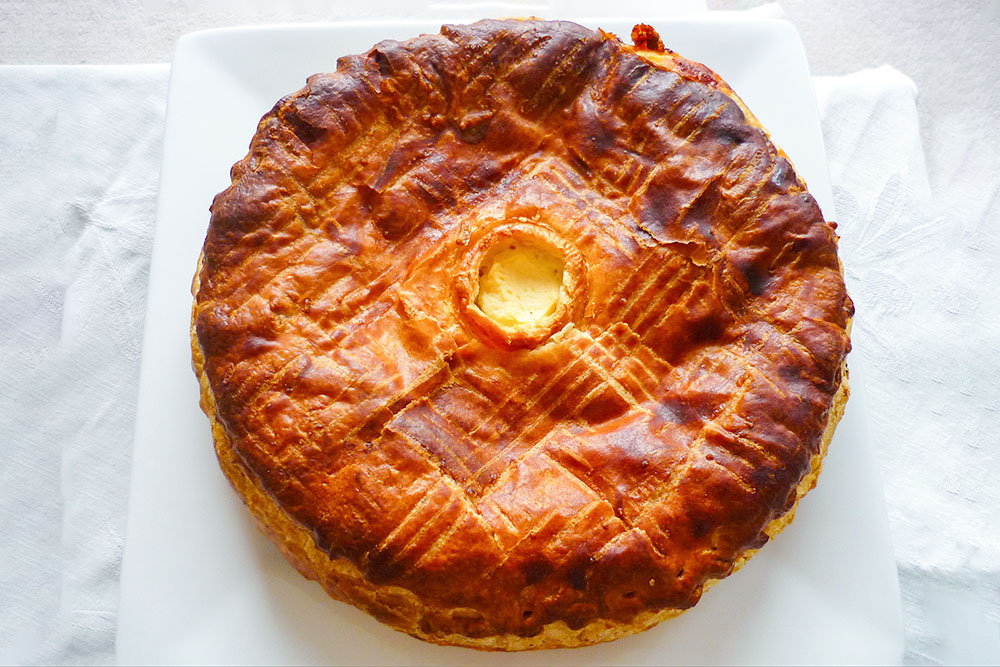
A Little Piece of Lorraine Under Golden Pastry
Tourte lorraine is one of those dishes I learnt to appreciate with time.
As a child, I saw it as a savoury pastry that had taken a wrong turn.
As an adult, I see it as a delicious regional treasure.
It is generous, discreet, deeply local and full of character. It is made with marinated meat, cream, eggs, pastry and patience. And when it is done well, it is far more than a meat pie.
It is a little piece of Lorraine under golden pastry.
You may not find it easily outside Lorraine.
Perhaps that is part of the pleasure.
Some foods are everywhere.
Some foods have to be searched for.
And some foods, when you finally find them, taste even better because they still belong somewhere.
Tourte lorraine belongs to Lorraine.
And that, to me, is exactly what makes it worth discovering.