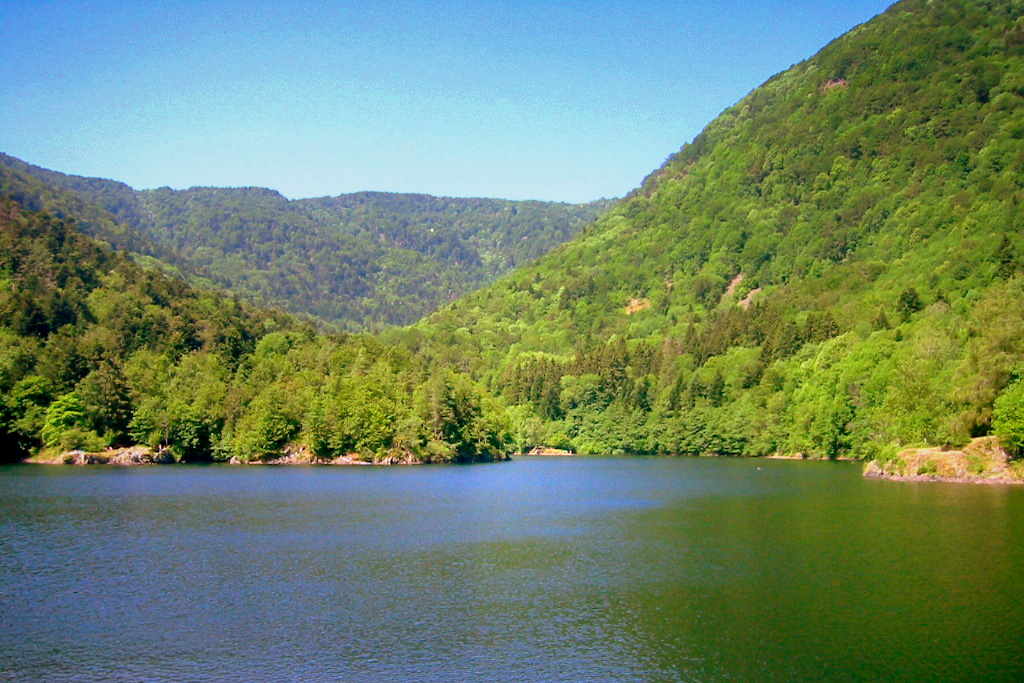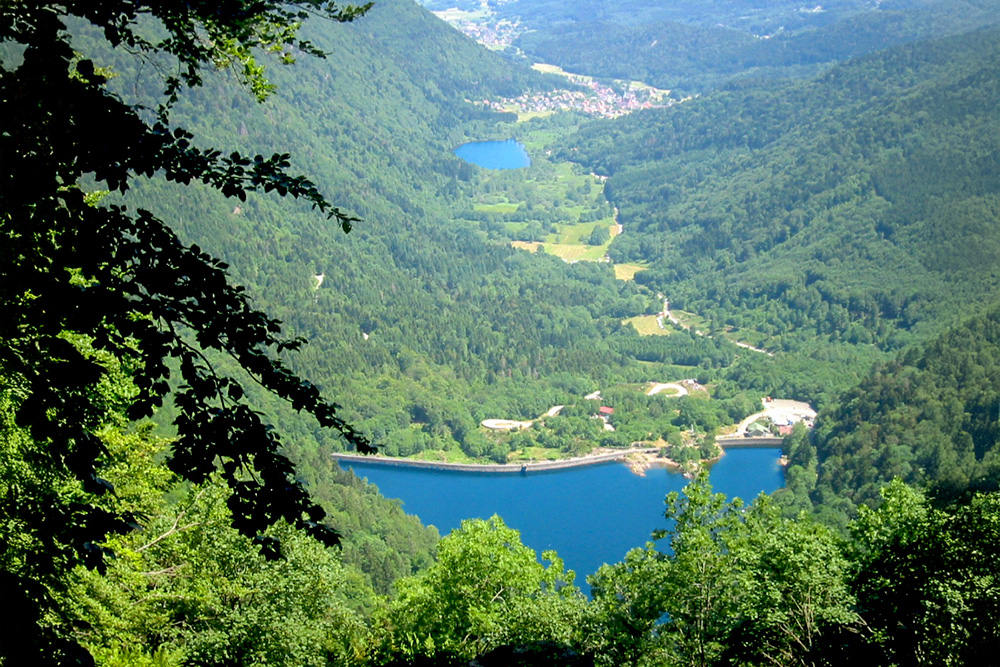

This Vosges Valley guide takes you through some of the most beautiful valleys in the Vosges Mountains, from the Alsatian side of the range to the Lorraine slopes beyond the ridges.
The Vosges are often described through their summits: the Grand Ballon, the Hohneck, the Ballon d’Alsace, the Donon or the Route des Crêtes. And of course, the heights are magnificent. But to understand the Vosges properly, you should not only climb to the tops.
You should follow the Vosges valleys.
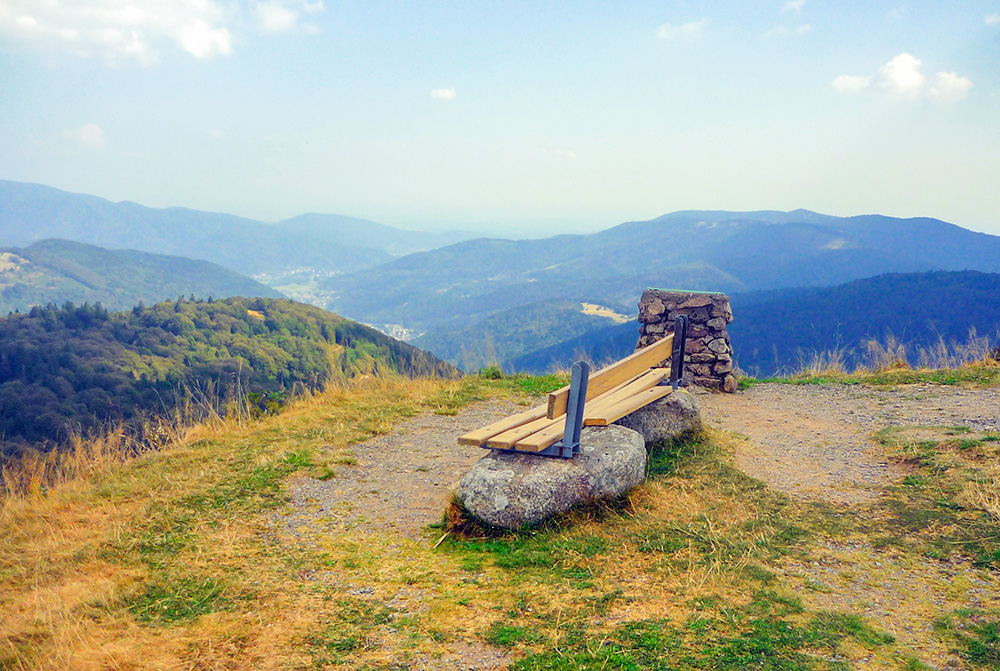
The Vosges valleys are where the mountain becomes lived-in. They are home to towns, villages, churches, farms, rivers, former textile mills, mountain roads, forests, lakes, cheese traditions and long histories of movement between Alsace, Lorraine and Franche-Comté.
Some Vosges valleys are famous, such as the Munster Valley, with its cheese, storks and access to the high ridges. Others are quieter, like the Doller Valley or the Lièpvrette Valley, where the charm is more discreet. Some are deeply associated with lakes and summer holidays, like the Vologne Valley near Gérardmer. Others tell a stronger story of industry, memory and mountain life.
Together, they reveal a more intimate side of the Vosges: not only a range of rounded summits and forested slopes, but a whole world of routes, villages and landscapes waiting to be explored.
Why Explore the Vosges Valleys?
The Vosges Mountains form a long barrier between the Alsatian plain to the east and Lorraine to the west. On one side, the valleys often descend towards vineyards, half-timbered villages and the Rhine plain. On the other, they open towards lakes, spa towns, forests and the softer landscapes of Lorraine.
This is what makes the Vosges so fascinating. The same mountain range can feel very different depending on which Vosges valley you follow.
On the Alsatian side, the Vosges valleys are often narrower and more dramatic. They climb quickly from vineyards and towns towards forests, passes and high pastures. On the Lorraine side, the Vosges valleys tend to feel broader, greener and more deeply forested, with lakes, rivers and mountain towns that have long welcomed summer visitors.
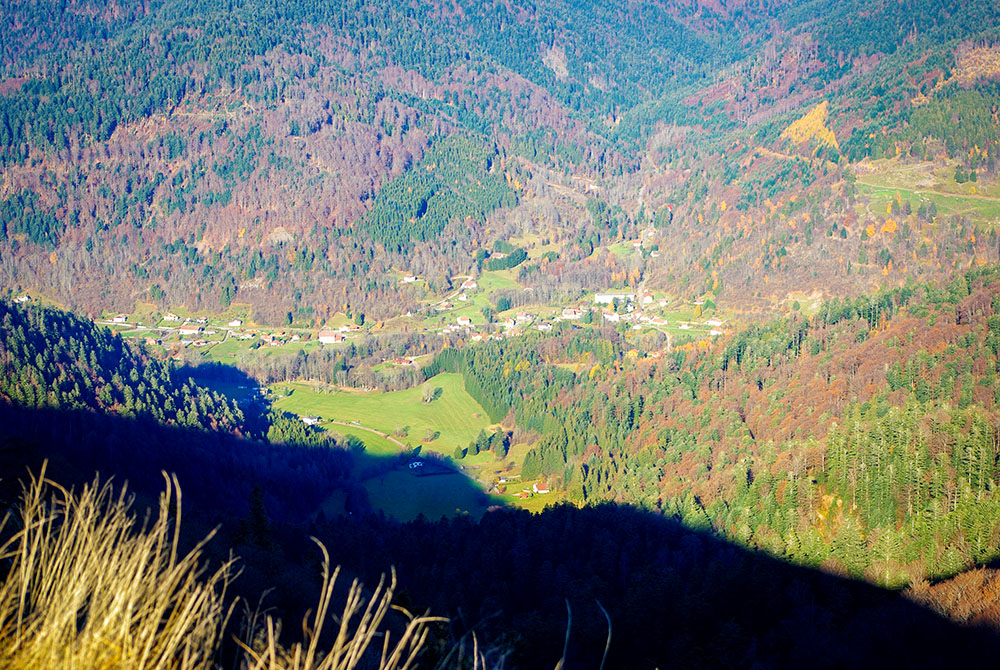
The Vosges valleys also tell the human history of the Vosges. They were routes of trade, pilgrimage, industry, war, farming and seasonal movement. Their rivers powered mills and factories. Their passes linked communities. Their villages kept mountain traditions alive.
So here are ten Vosges valleys that are particularly worth discovering, whether you enjoy walking, cycling, scenic drives, history, food or simply the pleasure of exploring places that are not always on the obvious tourist trail.
1. The Doller Valley
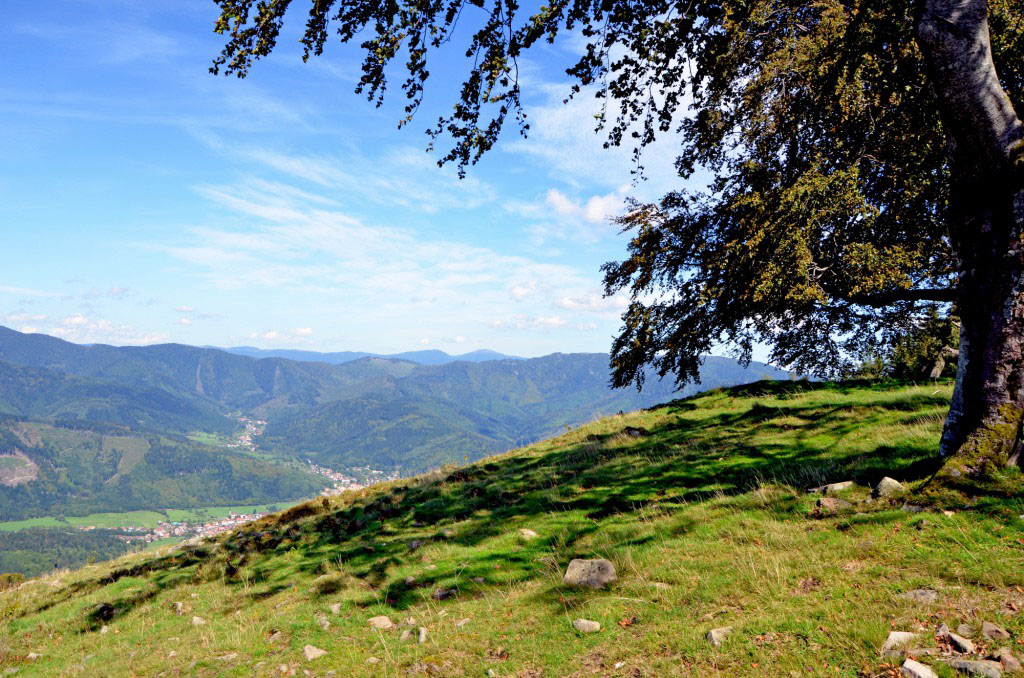
The Doller Valley is one of the most appealing gateways to the southern Vosges.
It begins on the Alsatian side of the mountains and climbs towards Masevaux, Sewen and the Ballon d’Alsace. It is less famous than the Munster Valley or the Thur Valley, and that is part of its charm.
Here, the atmosphere is quiet, green and deeply rural. The valley has villages, churches, meadows, forests and views that become increasingly mountainous as you move upstream. It is a good place to feel the transition between the Alsatian plain and the higher Vosges.
Masevaux is the natural centre of the valley. It has the feel of a small mountain town, with a peaceful rhythm and easy access to surrounding walks. Higher up, the road towards Sewen and the Ballon d’Alsace becomes more dramatic, with forests, slopes and mountain air taking over.
The Doller Valley is particularly interesting if you want to explore the Vosges without following the most obvious routes. It is close to Mulhouse and the southern Alsatian plain, yet it quickly gives you the feeling of entering a different world.
It is also a fine starting point for discovering the Ballon d’Alsace, one of the historic names of the Vosges. For walkers, cyclists and travellers who enjoy quieter valleys, the Doller deserves far more attention than it usually receives.
Learn more about the Doller Valley on our blog.
2. The Thur Valley
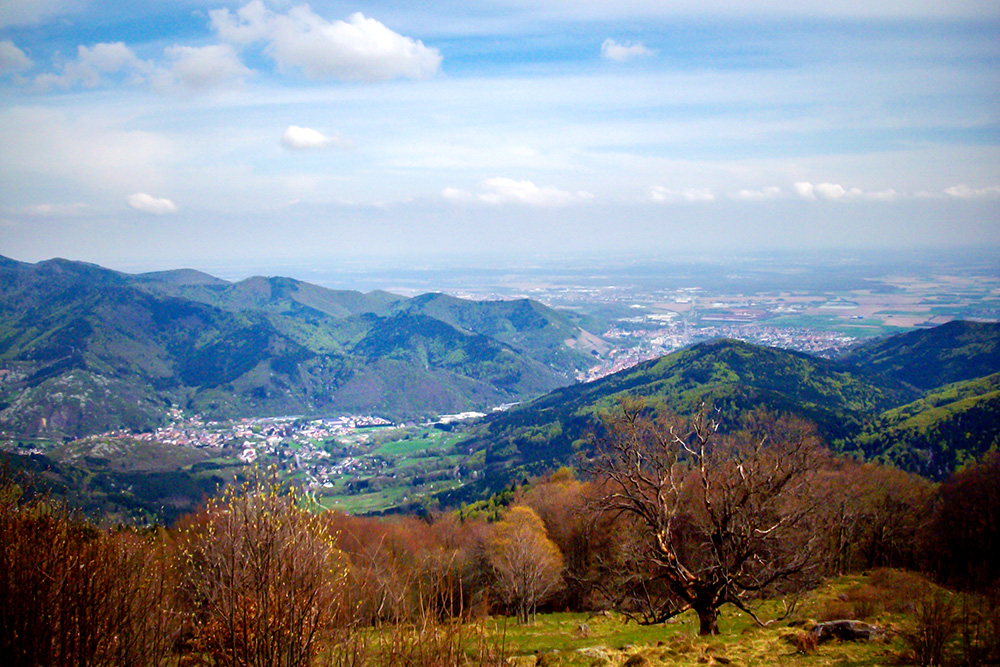
The Thur Valley is one of the great valleys of the southern Vosges.
It stretches from the Alsatian plain towards the high mountains, passing through Cernay, Thann, Saint-Amarin, Fellering and Kruth. It is a valley of contrasts: vineyards and old towns at the entrance, industrial heritage further upstream, then forests, mountain roads and access to the high ridges.
Thann is one of the highlights of the valley. Its historic centre, its Gothic church and its position at the foot of the Vosges make it a very attractive stop. From here, the valley continues deeper into the mountains, following the Thur towards the upper settlements and the roads that climb towards Le Markstein and the Route des Crêtes.
At the far end of the valley, the Lac de Kruth-Wildenstein offers one of the most scenic natural sites in the area. Surrounded by wooded slopes and mountain scenery, it is a good place for walking, relaxing and enjoying a more peaceful side of the Vosges.
The Thur Valley also has a strong industrial story, especially linked to textile production. This gives the valley a particular character: it is not simply picturesque, but inhabited, worked and shaped by generations of local life.
For travellers, the Thur Valley offers one of the best introductions to the southern Vosges: history, industry, riverside towns, mountain roads and access to some of the finest landscapes in the range.
Learn more about the Thur Valley on our blog.
3. The Lauch Valley and the Florival
The Lauch Valley, often associated with the Florival, is another beautiful route into the Vosges from the Alsatian side.
Its main town is Guebwiller, a fascinating place with an important religious and industrial heritage. The valley then rises towards the mountains, linking the vineyards and foothills to the high pastures and routes around the Grand Ballon.
This is one of the great strengths of the Lauch Valley: it connects several worlds in a short distance. At the lower end, you are still close to the Alsatian Wine Route, with vineyards, villages and a warmer atmosphere. Higher up, the landscape becomes more mountainous, with forests, bends, viewpoints and the approach to the highest summit of the Vosges.
The name Florival, meaning “valley of flowers”, gives the area a rather poetic identity. It is not difficult to understand why. The valley has a gentle beauty, especially in spring and summer, when the slopes and villages feel particularly inviting.
For visitors, the Lauch Valley is a good choice if you want to combine culture and landscape. Guebwiller offers churches, museums and town heritage, while the upper valley opens towards hiking, scenic drives and the Grand Ballon area.
It is also a good reminder that the Vosges are not only about deep forests and high ridges. They are also closely connected to the Alsatian vineyards, religious history and the everyday life of valley towns.
4. The Munster Valley
The Munster Valley is probably one of the best-known valleys in the Vosges.
It stretches westwards from Colmar towards Munster, Metzeral, the Col de la Schlucht and the high ridges around the Hohneck. For many visitors staying in Colmar or on the Alsatian Wine Route, this is one of the easiest and most rewarding ways to enter the mountains.

The valley is famous for its cheese, and rightly so. Munster cheese is one of the great flavours of the Vosges, though it is fair to say that its fragrance does not believe in subtlety. It announces itself. Confidently.
But the Munster Valley is much more than cheese.
It is a beautiful mountain valley, with villages, meadows, storks, forested slopes and quick access to some of the most spectacular parts of the Vosges. From the upper valley, roads lead towards the Col de la Schlucht, the Route des Crêtes and the Hohneck area, where the landscape opens onto high pastures and sweeping views.
The valley is also closely linked to the tradition of ferme-auberges, the mountain farm inns where visitors can enjoy local dishes after a walk. This makes it an excellent valley for combining hiking, food and scenery.
The Munster Valley is popular, especially in summer and at weekends, but it remains essential. It is one of the classic doors into the Vosges, and for good reason.
5. The Weiss Valley and the Kaysersberg Valley
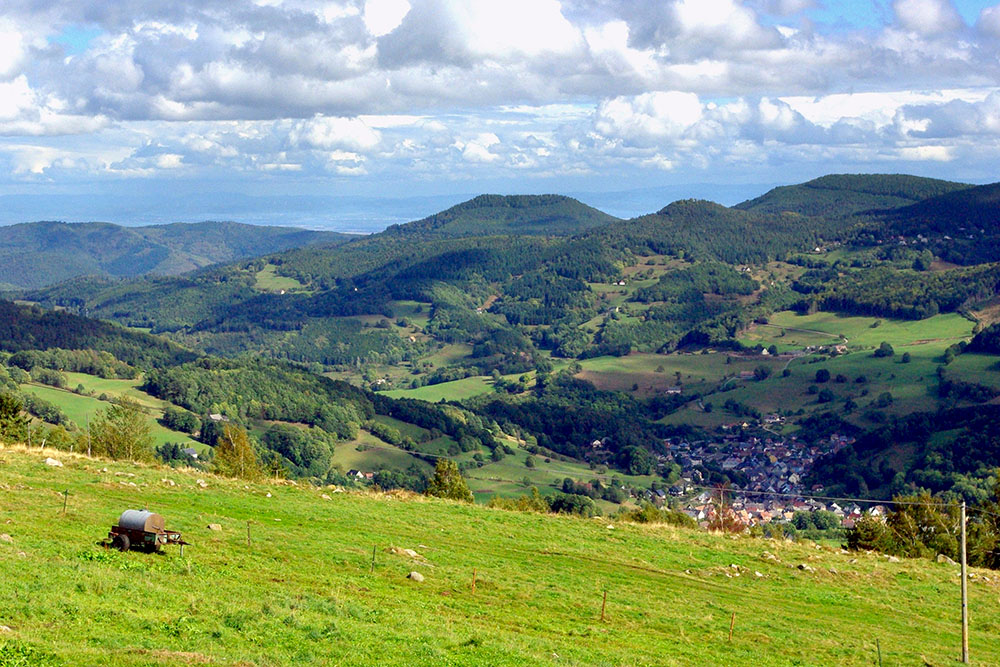
The Weiss Valley, often linked in visitors’ minds with Kaysersberg and Orbey, offers one of the finest contrasts in the Vosges.
At the lower end, you have Kaysersberg, one of the most beautiful and best-known towns on the Alsatian Wine Route. Half-timbered houses, vineyards, a medieval atmosphere and colourful façades create the postcard image that many visitors associate with Alsace.
But follow the valley upwards, and the mood changes.
The road climbs towards Orbey, the Lac Blanc, the Lac Noir and the high Vosges. Vineyards give way to forests, slopes, mountain farms and lakes. In a short distance, you move from wine-country Alsace to a more rugged mountain landscape.
This makes the Weiss Valley particularly rewarding. It allows visitors to experience two sides of the region in one route: the charm of the Alsatian foothills and the freshness of the Vosges heights.
The Lac Blanc area is especially popular for walking, viewpoints and outdoor activities. Nearby, the Lac Noir adds another mountain-lake atmosphere, quieter and more enclosed.
For travellers based around Colmar, Kaysersberg or Riquewihr, the Weiss Valley is one of the most natural ways to escape into the mountains. It proves that in this part of Alsace, the Vosges are never far away. Sometimes they are waiting just beyond the vines.
Learn more about the Weiss Valley on the blog.
6. The Lièpvrette Valley and the Val d’Argent
The Lièpvrette Valley, also known as the Val d’Argent, is one of the most historically interesting valleys in the Vosges.
Its main town is Sainte-Marie-aux-Mines, a place with a remarkable past shaped by mining, textiles, religion and routes across the mountains. The valley links the Alsatian side of the Vosges to the passes leading towards Lorraine, especially the Col de Sainte-Marie.
The name Val d’Argent, or “Silver Valley”, recalls the area’s mining history. For centuries, the valley was known for its silver mines, which brought wealth, workers, skills and outside influences. Later, textile activity became another important part of its identity.
This is not the most polished tourist valley in the Vosges, but it is one of the most fascinating. It has a slightly rugged character, with steep slopes, old industrial traces, mining heritage and a strong sense of being a passage between worlds.
The Lièpvrette Valley also has an important cultural story, including connections with Protestant communities, Mennonites and the wider history of religious diversity in the Vosges. It is a valley where geography and history meet in a very visible way.
For visitors interested in more than pretty scenery, the Val d’Argent is a rewarding stop. It offers mountains, heritage, old routes and a different side of Alsace — less decorative, perhaps, but deeply authentic.
7. The Bruche Valley
The Bruche Valley is one of the great passage valleys of the Vosges.
It runs from the Alsatian plain towards Schirmeck, La Broque, Saales and the higher ground leading towards Lorraine. For centuries, this valley has acted as a corridor between Alsace and the west. Roads, railways, armies, workers and travellers have all passed through it.
The Bruche Valley is not as instantly picturesque as some of the wine-growing valleys further south. Its interest is more layered. It has industrial history, mountain villages, forested slopes, memory sites and access to some very important places in Alsatian and Vosges history.
Schirmeck is a key stop, especially because of the Mémorial Alsace-Moselle, which helps visitors understand the complex history of the region, particularly during the 19th and 20th centuries. Nearby, the former concentration camp of Natzweiler-Struthof, located on the slopes above the valley, gives this area a powerful and solemn dimension.
The Bruche Valley also provides access to the Donon area, one of the most atmospheric summits in the northern Vosges. With its forests, sandstone rocks and ancient associations, the Donon adds a different, almost mysterious character to the region.
This is a valley to explore slowly. It may not always seduce at first glance, but it tells essential stories about borders, identity, war, industry and mountain life.
8. The Moselle Valley
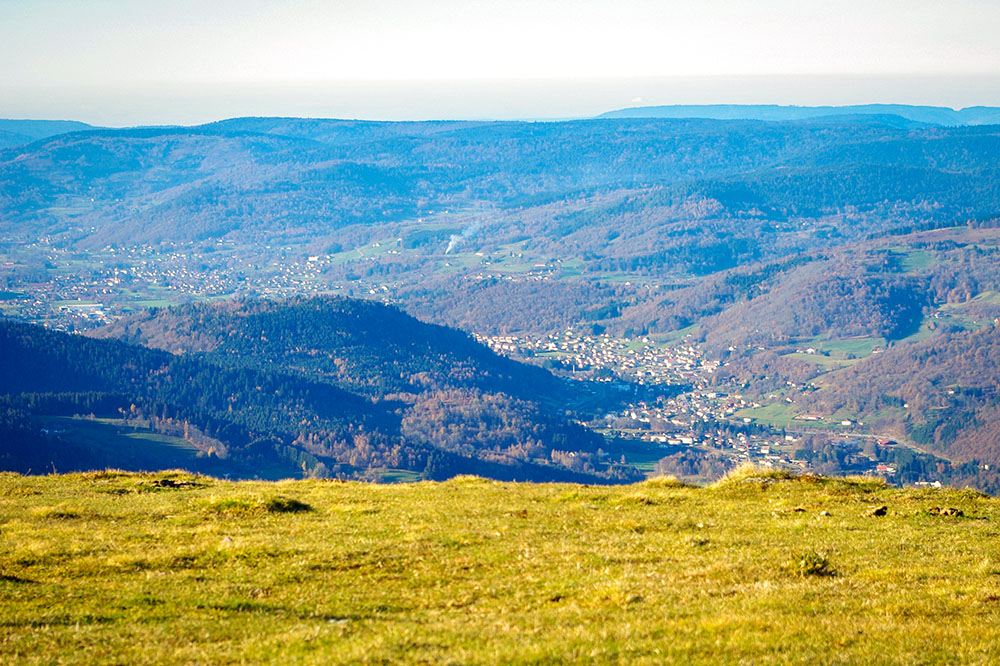
On the Lorraine side of the Vosges, the Moselle Valley is one of the major valleys to understand.
The river Moselle rises near Bussang, close to the Ballon d’Alsace, before flowing north-west through the Vosges. Its upper valley passes through a landscape of forests, mountain towns, roads, old industries and routes towards the high passes.
Bussang is a symbolic starting point, both for the river and for the link between Lorraine and the southern Vosges. From here, roads climb towards the Ballon d’Alsace or lead deeper into the Lorraine side of the mountains.
Further down the valley, places such as Le Thillot, Remiremont and Épinal show different faces of the Vosges: mountain industry, spa heritage, riverside towns and regional identity.
The Moselle Valley is broader than many of the Alsatian valleys. It feels less enclosed, less dramatic perhaps, but very important. It opens the Vosges towards Lorraine and reminds us that the massif is not only viewed from Alsace.
For travellers, the valley is interesting because it combines natural landscapes with towns and cultural heritage. It is also a useful base for exploring neighbouring valleys, lakes and summits.
The Moselle Valley is not always the first name that comes to mind when planning a scenic trip in the Vosges. But it is one of the foundations of the massif’s geography.
Learn more about the Moselle Valley on the blog.
9. The Moselotte Valley
The Moselotte Valley is one of the most attractive mountain valleys on the Lorraine side of the Vosges.
It is closely associated with places such as La Bresse, Cornimont and Saulxures-sur-Moselotte. This is a valley of forests, rivers, slopes, lakes, family resorts and access to some of the highest parts of the Vosges.
La Bresse is perhaps the best-known name in the valley. It is a lively mountain town, popular for skiing in winter, hiking in summer and outdoor activities throughout the year. From here, you can reach the Hohneck area, the Route des Crêtes and some of the most dramatic landscapes in the Vosges.
The Moselotte Valley has a strong mountain identity. It feels more like a holiday and outdoor valley than some of the more industrial or historical valleys on the Alsatian side. Forests, water, slopes and sport play a major role in its appeal.
The Lac des Corbeaux, above La Bresse, is one of the most atmospheric sites in the area. Surrounded by trees and steep slopes, it has the kind of quiet mountain charm that makes the Vosges so endearing.
For visitors who want to hike, ski, enjoy lakes or stay in a mountain town with good access to the high Vosges, the Moselotte Valley is an excellent choice.
10. The Vologne Valley
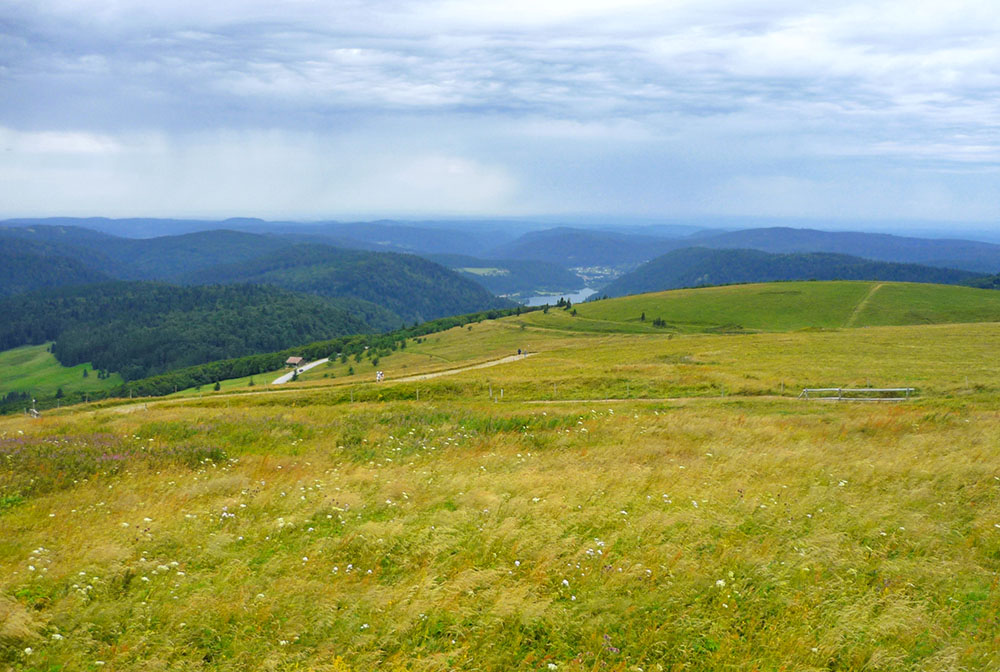
The Vologne Valley is one of the most scenic and romantic valleys in the Vosges.
It is strongly associated with Gérardmer, the famous lake town often described as the “Pearl of the Vosges”. This part of the massif has long attracted visitors, especially those looking for forests, lakes, waterfalls, walking paths and fresh mountain air.
The River Vologne flows through a landscape that feels deeply Vosgian: wooded slopes, clear water, mossy stones, small bridges, lakes and villages. Around Gérardmer, the valley connects easily with the Lac de Gérardmer, the Lac de Longemer and the higher routes towards the ridges.
One of the most famous natural sites in the area is the Saut des Cuves, where the Vologne runs through a rocky gorge. Nearby, the Pont des Fées adds a touch of legend and old-world charm, because no proper mountain valley should be completely without a little mystery.
The Vologne Valley is particularly appealing for families and first-time visitors to the Vosges. It offers accessible scenery, well-known resorts, woodland walks and a strong sense of mountain holiday tradition.
It may be more popular than some of the quieter valleys, but it deserves its place in this list. For many travellers, the Vologne Valley is exactly what they imagine when they dream of the Vosges: lakes, forests, waterfalls and a gentle mountain atmosphere.
Other Vosges Valleys Worth Exploring
Of course, the Vosges do not stop at these ten valleys.
The Meurthe Valley, around Saint-Dié-des-Vosges, is also important, especially for understanding the geography of the northern and central Vosges. The Cleurie Valley, between Gérardmer and Remiremont, offers a quieter link between lake country and the Moselle Valley. The Villé Valley, on the Alsatian side, is another attractive area, with villages, forests and access towards the Champ du Feu.
Each Vosges valley has its own rhythm.
Some are famous for their cheese. Some for their lakes. Some for their factories. Some for their memory sites. Some simply for the pleasure of a quiet road following a river into the mountains.
And that is perhaps the real beauty of the Vosges: the massif is not dominated by one single image. It is made of many small worlds, each with its own entrance.
How to Explore the Vosges Valleys
The best way to explore the Vosges valleys depends on the kind of journey you enjoy.
By car, you can easily link several Vosges valleys in a few days, especially if you use the passes and the Route des Crêtes. This is ideal for scenic drives, photography and flexible stops in villages, viewpoints and mountain inns.
By bicycle, the Vosges valleys offer wonderful routes, but they should not be underestimated. The climbs may not have the altitude of the Alps, but they can still be demanding. The gradients can be irregular, the weather changeable and the final kilometres to a pass surprisingly serious.
On foot, the Vosges valleys become even more rewarding. Many walks begin in the villages and climb towards forests, lakes, ridges or pastures. This is often the best way to feel the landscape rather than simply look at it.
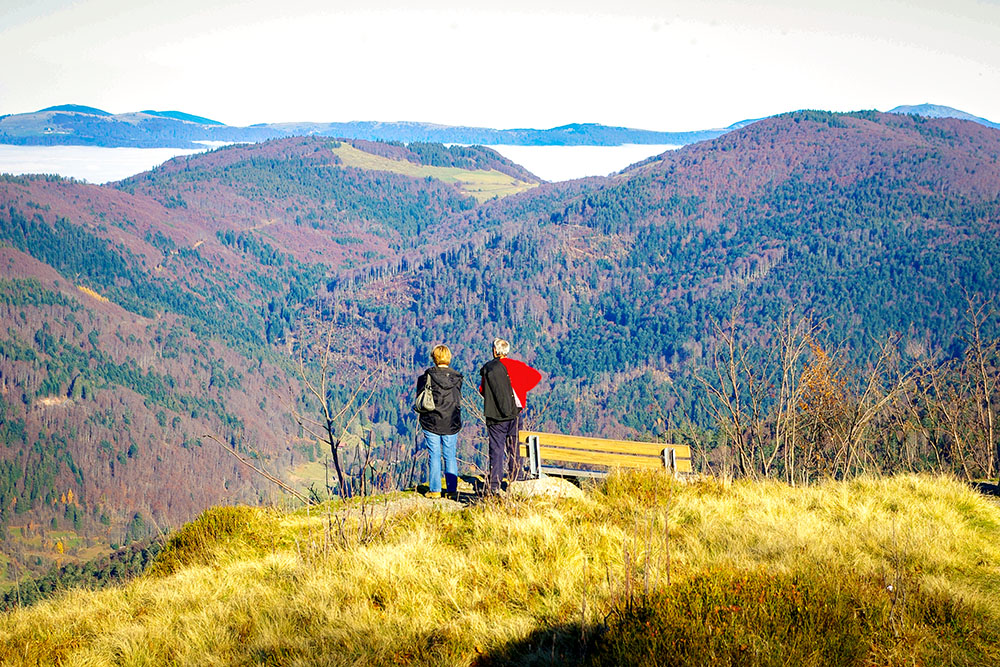
The seasons also matter. Spring brings fresh greens and flowers. Summer is ideal for hiking and high pastures. Autumn is magnificent in the forests and vineyards. Winter transforms some Vosges valleys into snowy gateways to ski areas and quiet mountain walks.
The Vosges are not a mountain range that shouts. They invite you to pay attention.
Why You’ll Love Exploring the Vosges Valleys
The Vosges valleys are not all spectacular in the same way.
Some impress with their lakes and waterfalls. Some with their high roads and mountain views. Some with their villages, churches and old factories. Others with their silence, forests and sense of memory.
Together, they reveal a mountain range that is accessible, varied and deeply human.
To explore the valleys is to understand how the Vosges work. The rivers lead you in. The villages slow you down. The roads tempt you upwards. The passes invite you to cross from one world into another. And the summits, when you finally reach them, make more sense because you have followed the landscape from below.
So yes, climb to the Grand Ballon, walk on the Route des Crêtes, admire the lakes and breathe in the mountain air.
But do not forget the Vosges valleys.
They are where the mountains tell their most intimate stories.