

Villa Majorelle is one of the most fascinating places to visit in Nancy if you love Art Nouveau, Belle Époque architecture, or simply houses with a soul.
And for me, this house has long carried a little mystery.
When I was a child, my grandmother lived in Nancy, and I remember her mentioning the Villa Majorelle. I knew the name before I ever had the chance to step inside.
At the time, the house was not yet properly open to visitors, so it remained one of those places you hear about, pass by perhaps, but never truly discover.
The Villa Majorelle first opened to the public in 1997. But it was after major restoration work and its reopening in February 2020 that the house became a much more immersive visitor experience.
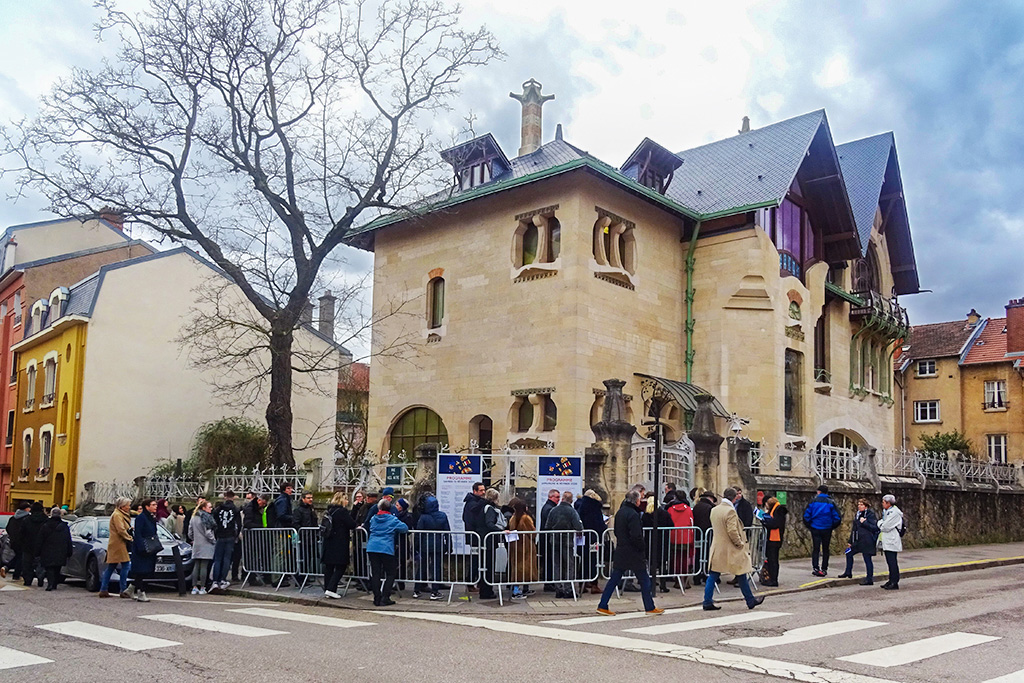
I was fortunate to visit it twice at the invitation of Destination Nancy: first in October 2020, only a few months after its official reopening, and then again in late May 2026.
On both occasions, I left with the same feeling: this is not just a beautiful house. It is a journey into Nancy around 1900, into the private world of a family, and into one of the finest expressions of the École de Nancy.
Table of Contents
Why is Villa Majorelle so important?
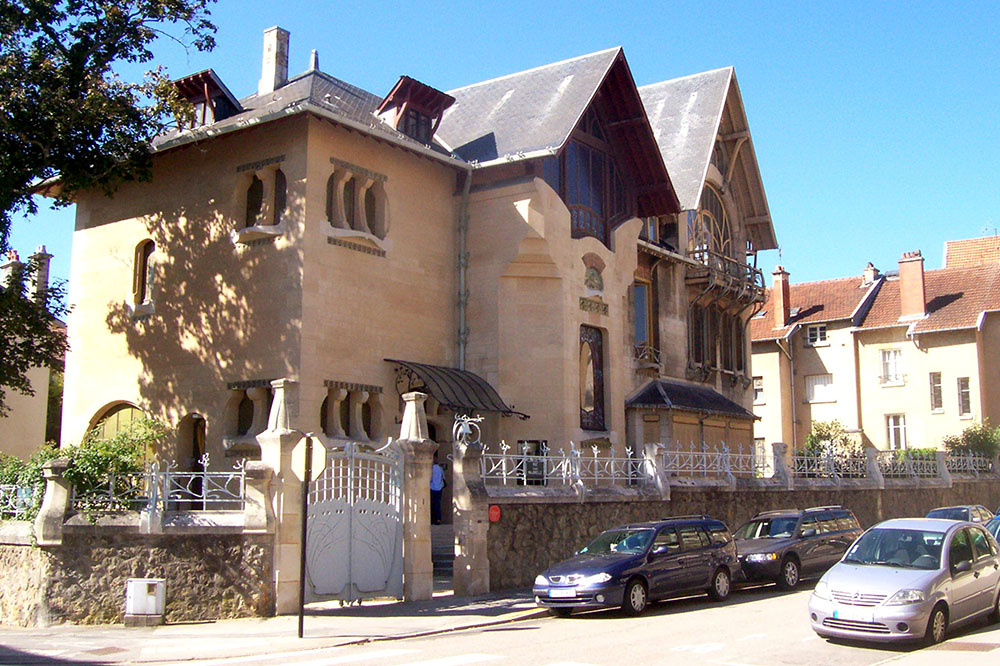
Villa Majorelle is often described as the first fully Art Nouveau house in Nancy.
It was built in 1901-1902 for Louis Majorelle, one of the leading figures of the École de Nancy.
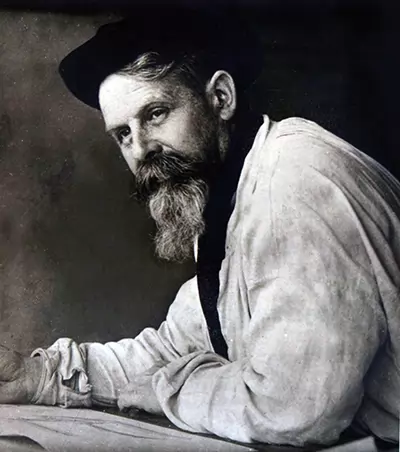
Majorelle was an ébéniste, a furniture designer, an industrialist and an artist. In other words, he was not simply a wealthy owner asking for a fashionable new house.
He was one of the creative minds shaping Nancy’s remarkable artistic identity at the turn of the 20th century.
At that time, Nancy was enjoying an extraordinary period of growth and creativity.
After the annexation of Alsace-Moselle by Germany in 1871, many artists, industrialists, craftsmen and intellectuals settled in Nancy. The city expanded, prospered and developed a distinctive artistic movement inspired by nature, craftsmanship and modernity.
This is the world from which the Villa Majorelle emerged.
For the design of his house, Louis Majorelle turned to the young Parisian architect Henri Sauvage. It was a bold choice. Sauvage was still at the beginning of his career, but he brought freshness, freedom and originality to the project.
Several major artists contributed to the house: Jacques Gruber created the stained-glass windows, Alexandre Bigot produced the flambé stoneware, Francis Jourdain painted decorative panels, and Louis Majorelle himself designed much of the furniture and woodwork.
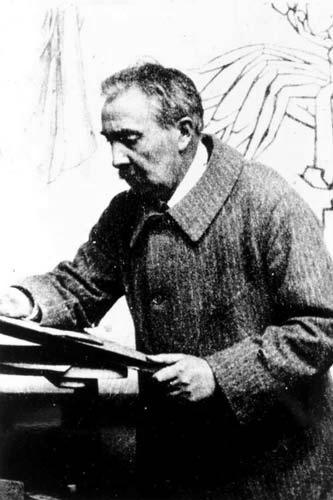
The result is what the French call an œuvre d’art totale: a total work of art.
Architecture, furniture, ironwork, stained glass, ceramics, wood, colour, light and decorative motifs are not treated separately. They work together. The house is not a container for beautiful objects; the house itself is the work of art.
It was also known as Villa Jika, after the initials of Jeanne Kretz, Louis Majorelle’s wife. I like this detail because it immediately makes the place feel less like a monument and more like what it once was: a family home.
An Art Nouveau house that once stood in a greener setting
One of the first things that may surprise you when you arrive at the Villa Majorelle is its setting.
The house stands in the Sacré-Cœur district, west of Nancy city centre. This is not the grand, monumental Nancy of Place Stanislas. It is not the part of town where tourists naturally gather with cameras and guidebooks.
Today, the villa stands in a residential area. At first sight, it can feel almost squeezed into its surroundings. You may expect a grand garden, a wide perspective, or a generous open space allowing you to admire the house from a distance.
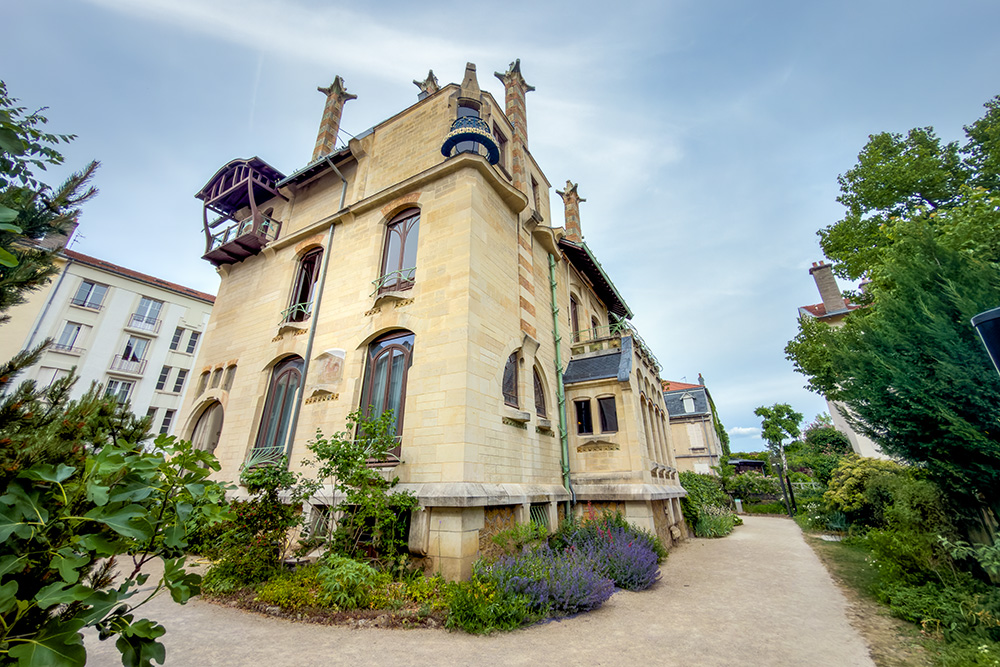
But that is no longer the case.
When it was built, the Villa Majorelle stood in a much more open environment. It had a large garden, and the Majorelle workshops were nearby. It was both close to the world of work and surrounded by enough greenery to feel like a private house on the edge of town.
Over the decades, the land around it was gradually reduced. The neighbourhood was developed, the park almost disappeared, and the creation of Rue Louis Majorelle changed the way we see the house today.
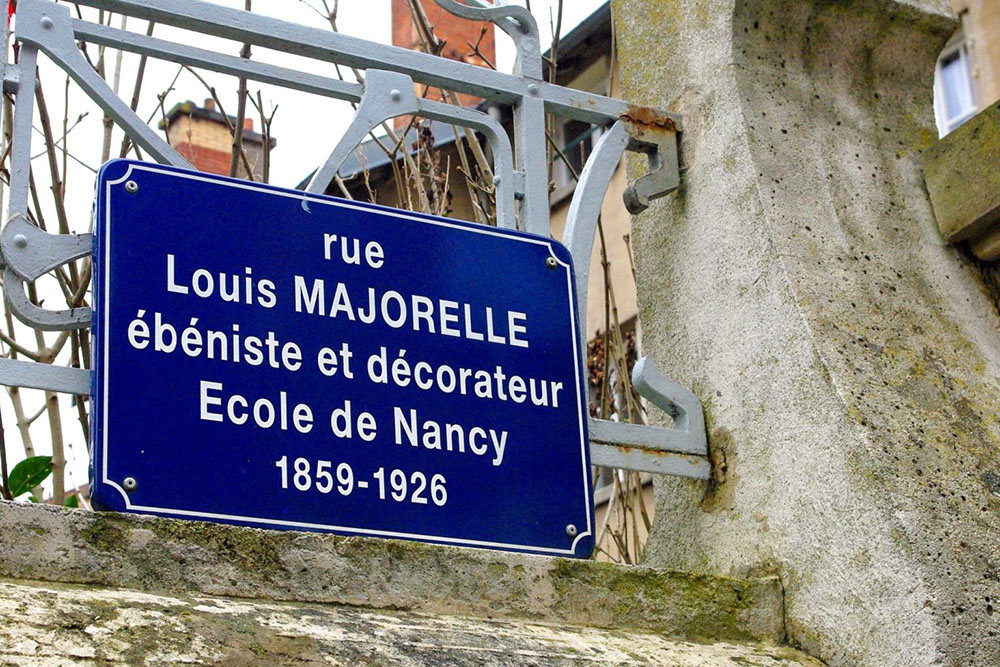
So yes, the plot may feel surprisingly small. I can understand why some visitors might be a little disappointed at first.
But do not stop at that first impression.
Once you begin looking closely, the villa starts to reveal itself.
Walking to Villa Majorelle from Nancy station
On my most recent visit in May 2026, I was staying at Hôtel Stanley by HappyCulture, not far from Nancy railway station. I could have taken a bus, but I chose to walk.
From the station, it takes about 15 minutes on foot to reach the Villa Majorelle. It is an easy walk, and I actually think it is the best way to approach the house.
This is not the postcard version of Nancy. It is quieter, more residential, and less obviously spectacular. But that is part of its charm.
Along the way, you can admire some attractive houses, especially around Avenue Foch.
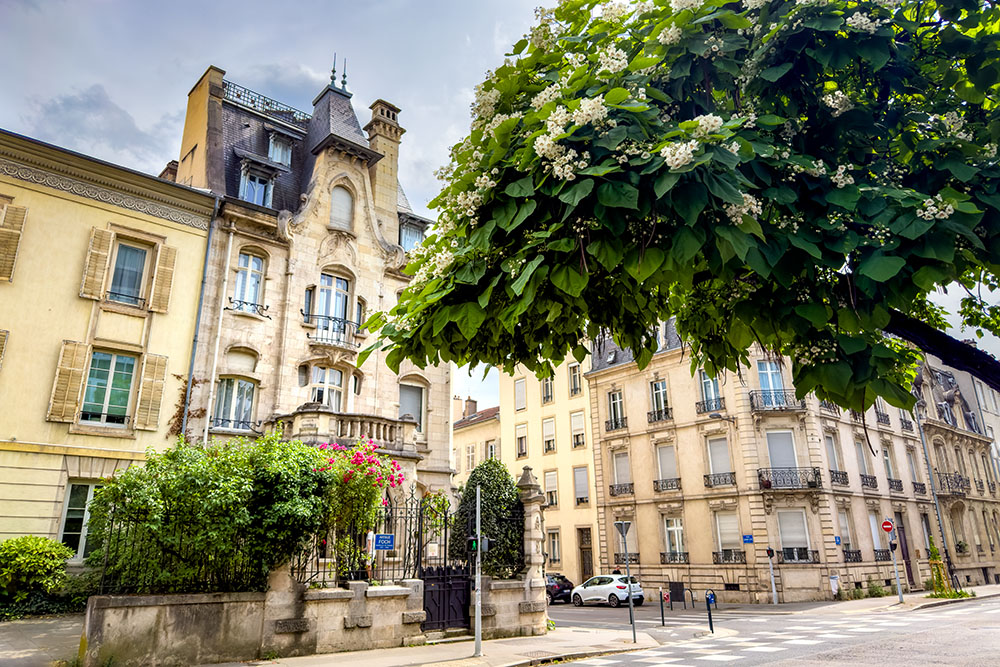
You also pass not far from the Tour de la Commanderie, often described as one of the oldest surviving buildings in Nancy. Then, as you continue towards Rue des Goncourt, you notice rows of pleasant terraced houses with small front gardens.
It is not grand in the way Place Stanislas is grand. But it gives you another view of Nancy: intimate, lived-in and full of architectural traces.
After visiting the Villa Majorelle, you can also continue on foot to the Musée de l’École de Nancy, which is only about ten minutes away.
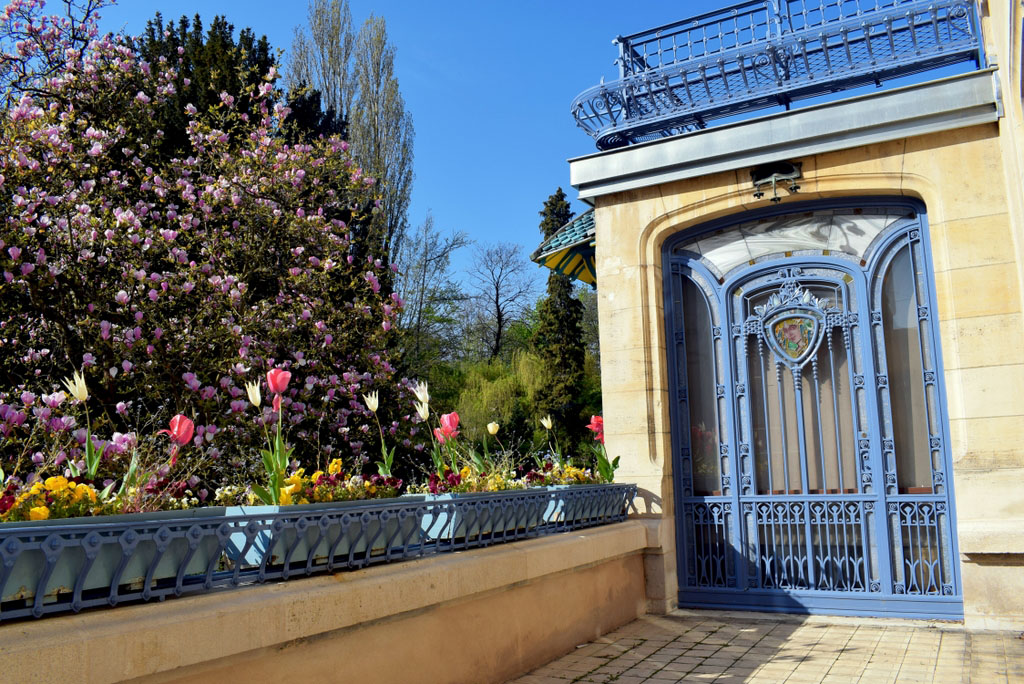
The two places work beautifully together. The villa shows Art Nouveau as a lived domestic experience, while the museum helps you understand the movement in a broader artistic context.
Admiring the outside of Villa Majorelle
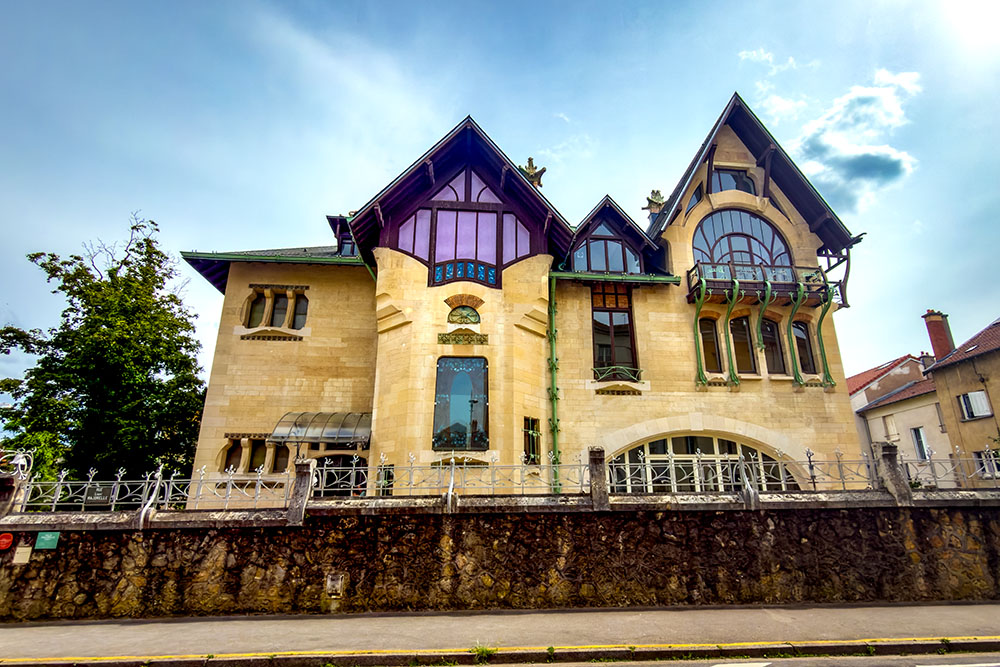
Even without its original garden, Villa Majorelle catches the eye immediately.
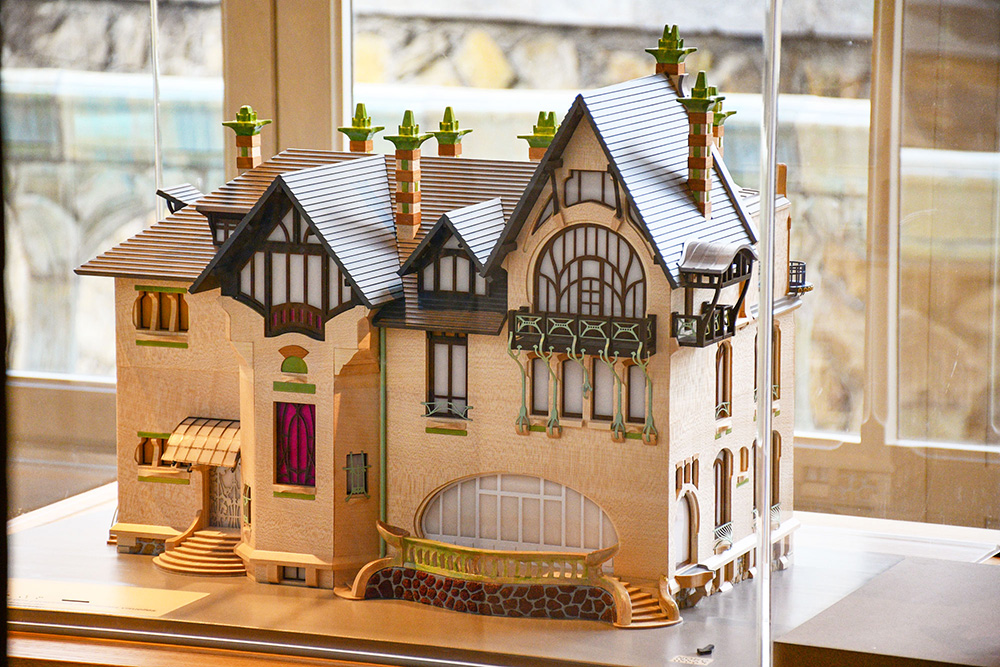
What struck me first was the lack of classical symmetry. This is not a house designed to impress with a rigid, balanced façade. Its shapes seem to follow the life inside: the staircase, the rooms, the terrace, the windows, the needs of the family.
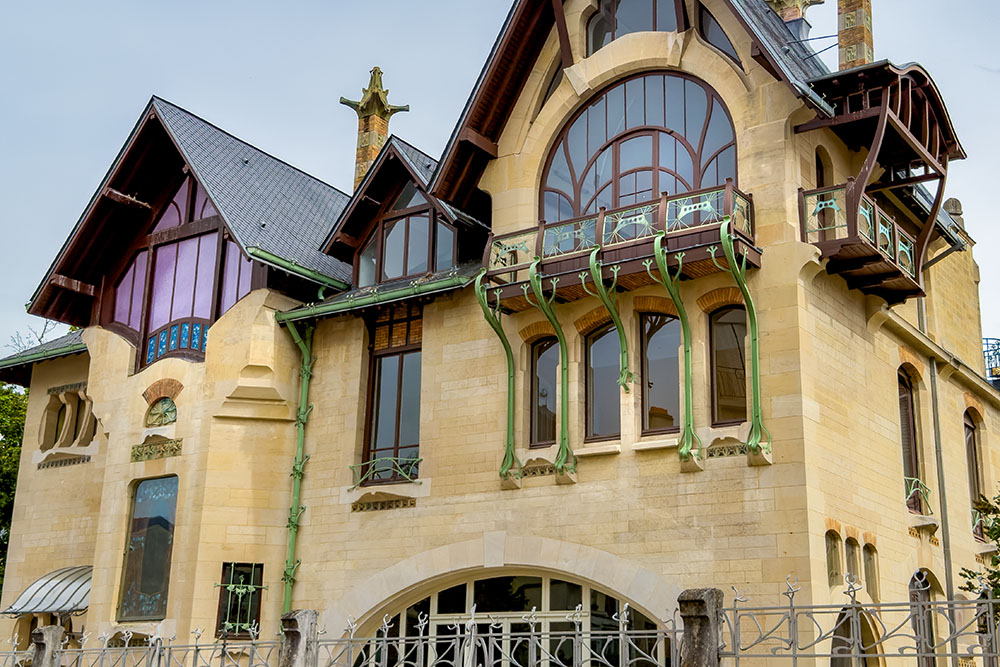
That is part of its charm.
The building feels alive because it was designed from the inside out. The volumes, rooflines, balconies, openings and materials all seem to respond to the way the house was used.
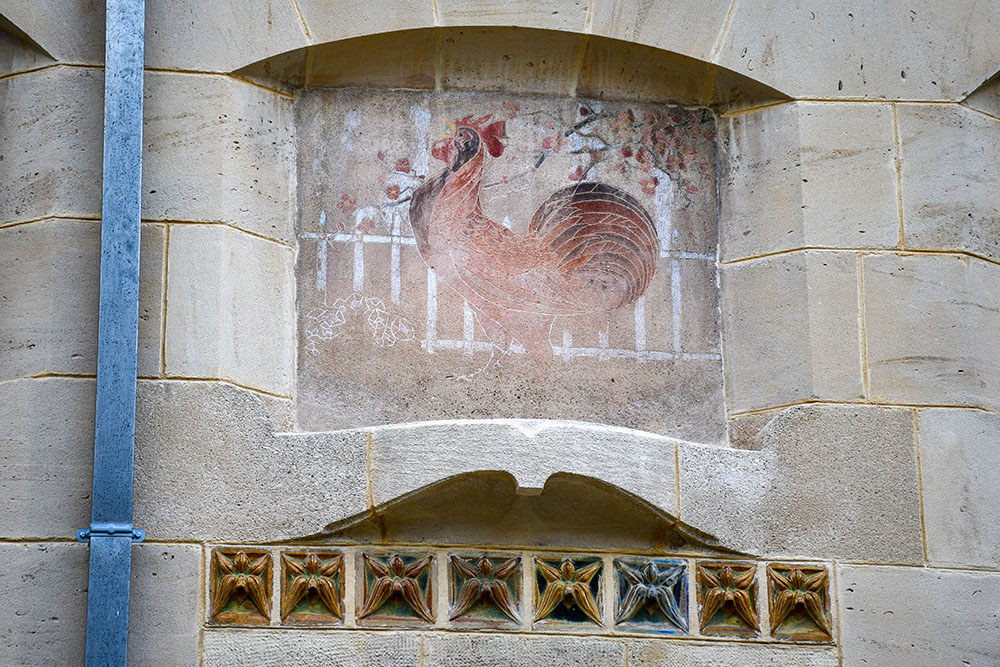
Look closely and you will see the details: the ironwork, the ceramics, the stained glass, the woodwork, the stone, the curves, the plant-inspired motifs. Villa Majorelle is not huge, but it is expressive. It does not overwhelm you. It invites you to slow down and observe.
And that is exactly how Art Nouveau should be experienced.
Not in a rush. Not from a distance. But detail by detail.
Stepping inside: entering the world of the Majorelle family
Before beginning the visit, you have to put protective overshoes over your own shoes to preserve the floors.
It is a small gesture, but it immediately changes the atmosphere. You are not simply entering a museum. You are stepping into a fragile, carefully restored home.
The parquet floors, the woodwork, the furniture, the fabrics, the decorative details: everything reminds you that this house has crossed more than a century of history.
And suddenly, modern Nancy fades away.
You are no longer just standing in a residential district in 2026.
You are entering the world of the Majorelle family.
This is what makes the visit so special. You are not walking through a sequence of anonymous display rooms. You are moving through spaces designed for everyday life: entering, receiving guests, dining, resting, working, climbing the stairs, looking out towards the garden.
The Villa Majorelle does not feel like a house that has been frozen. It feels like a house that has found its voice again.
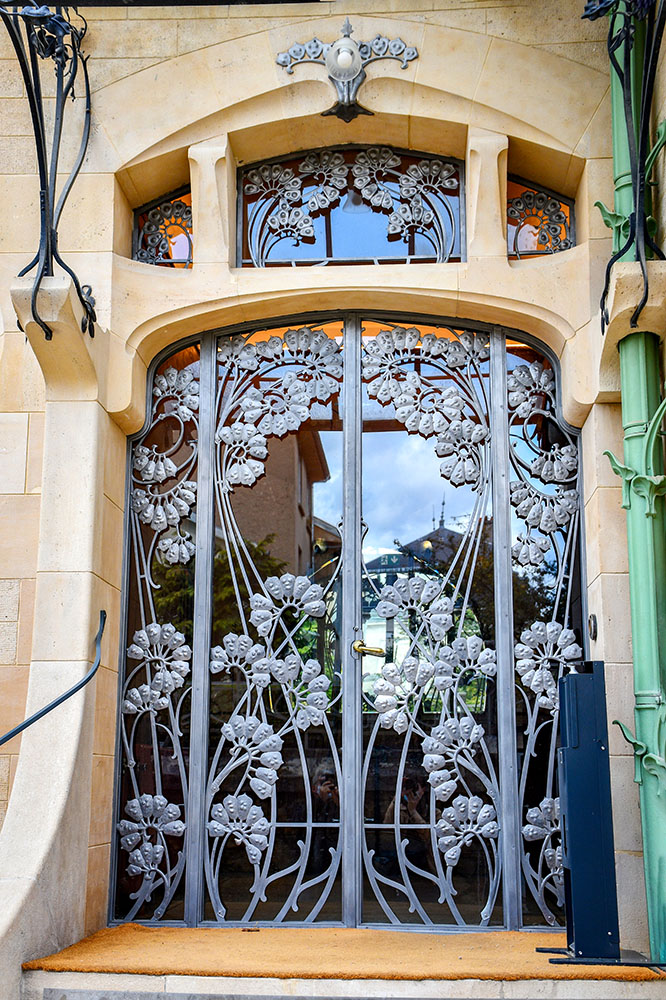
The entrance hall and staircase: nature enters the house
From the moment you step inside, the decorative language is clear.
The entrance hall is marked by the motif of monnaie du pape, or honesty plant, with its round, silvery seed pods. This motif appears in several forms and sets the tone for the entire house.
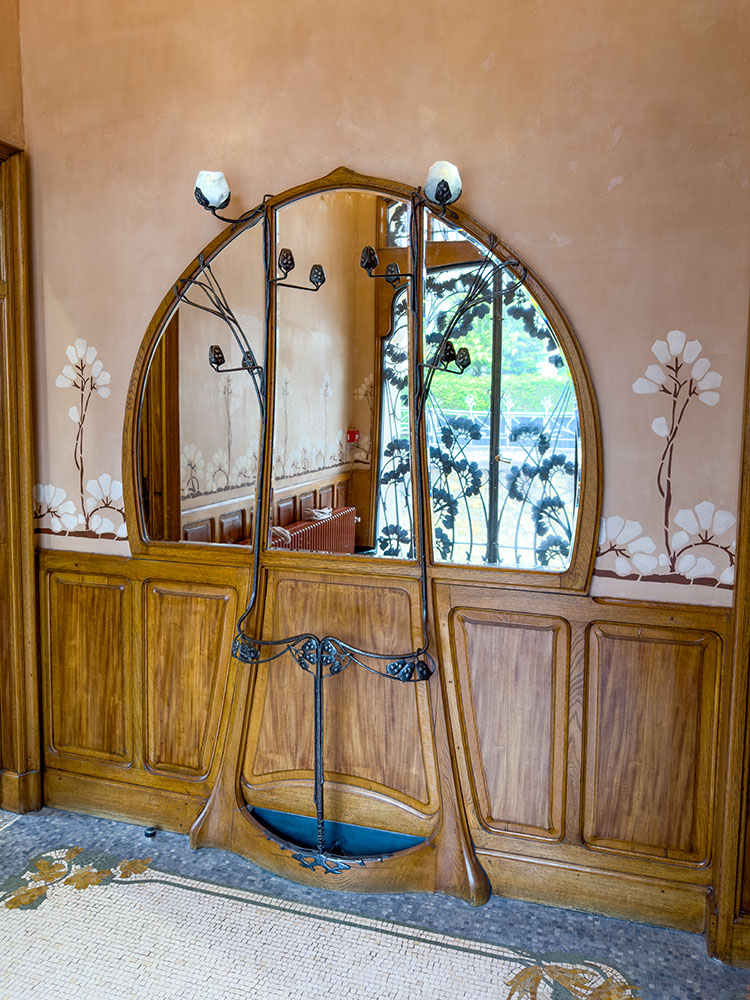
In the world of the École de Nancy, nature is everywhere. But it is not copied in a literal way. It is stylised, transformed and woven into architecture, furniture and decoration.
What I particularly like here is the constant union of beauty and usefulness. A mirror, a coat rack, an umbrella stand, a seat: in an Art Nouveau house, practical objects are never merely practical. They take part in the whole atmosphere.
Then the eye is naturally drawn towards the staircase.
For me, this is one of the great moments of the visit.
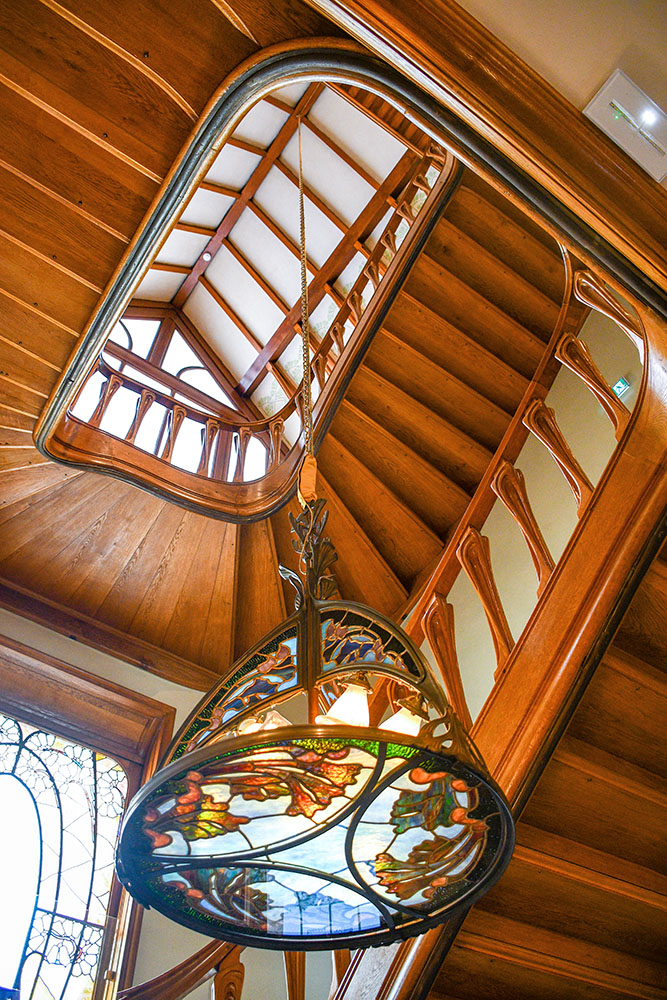
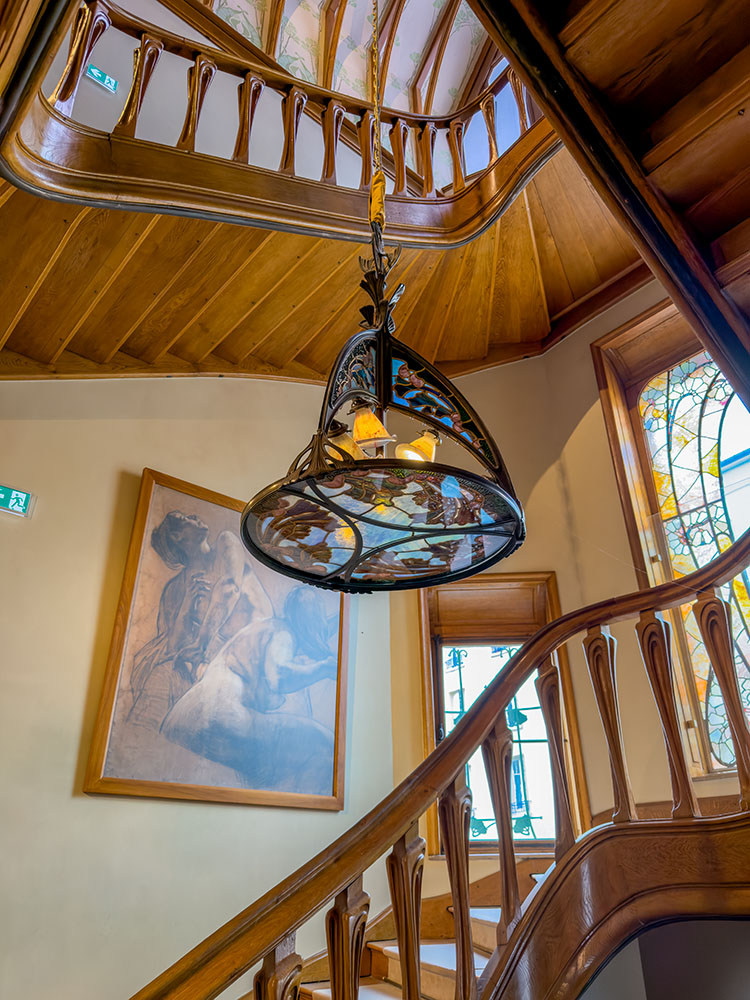
The staircase is not just a staircase. It is a vertical composition full of movement. The handrail, designed by Henri Sauvage and made by Louis Majorelle, evokes the growth of ivy.
As you climb, the motif seems to change and lighten. The stained-glass windows by Jacques Gruber add colour and theatricality to the space.
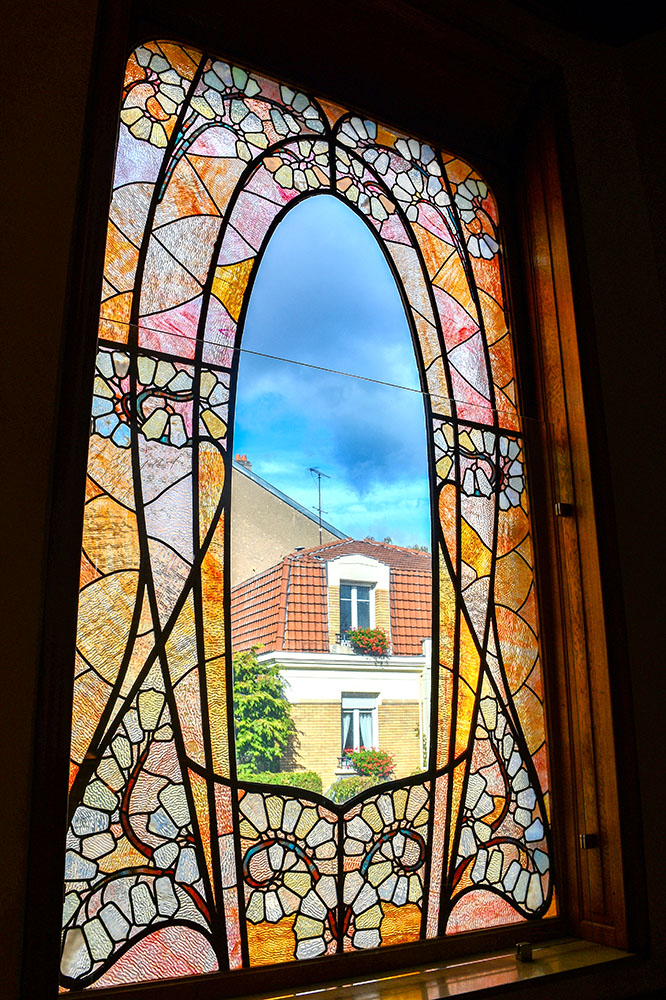
Here, you understand what the idea of a “total work of art” really means.
The staircase is not a functional afterthought. It is an experience.
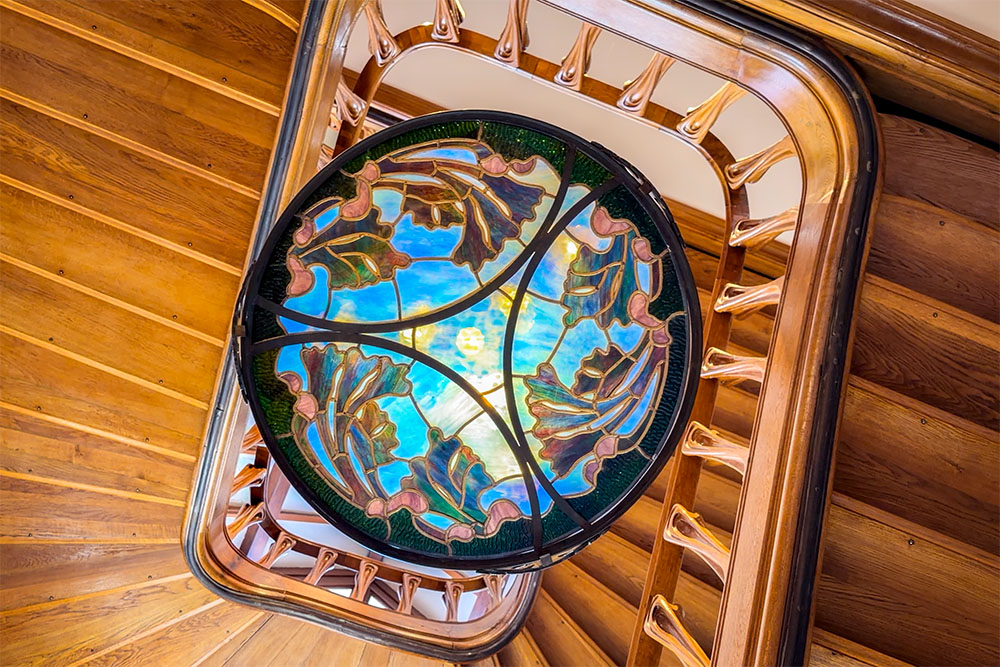
The dining room: the warm heart of Villa Majorelle
The dining room is one of the rooms that made the strongest impression on me.
It feels warm, lively and almost generous. It is easy to imagine conversations around the table, meals being served, voices, laughter, and the rhythm of family life.
This is where the Belle Époque becomes tangible.
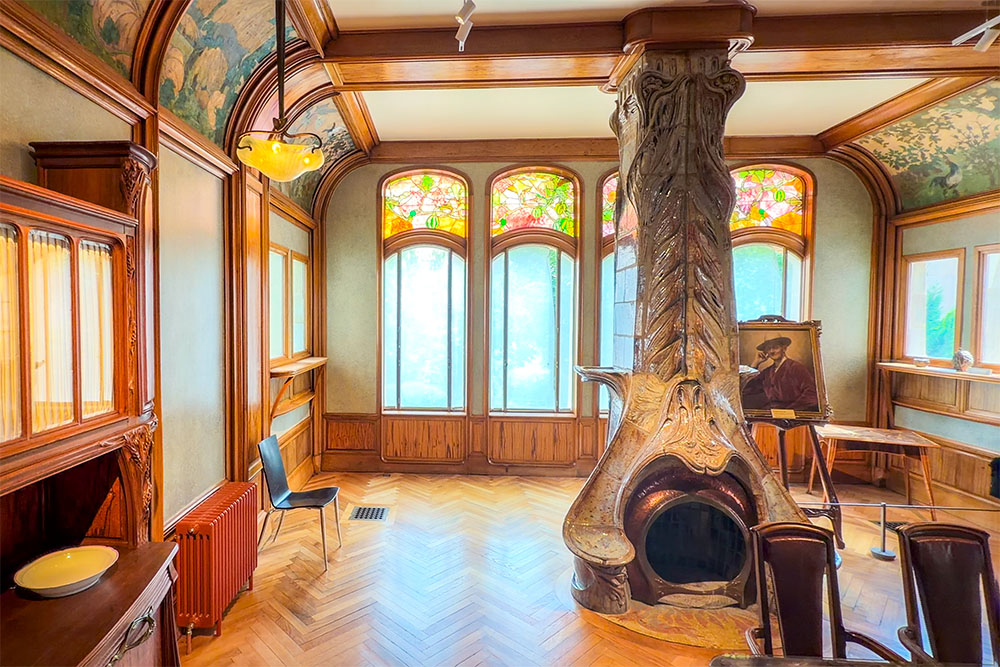
At the centre of the room stands the fireplace in flambé stoneware by Alexandre Bigot. It gives structure to the space without making it feel heavy. Around the room, Francis Jourdain’s painted panels unfold a cheerful procession of farm animals.
I love that detail.
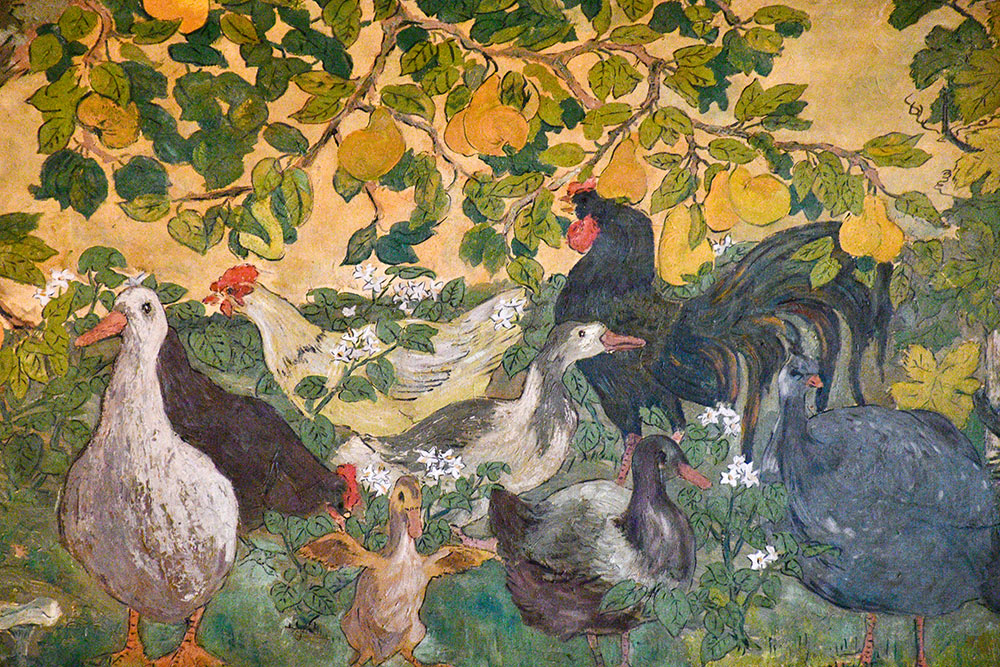
In such an artistic house, one might expect something solemn or grand. Instead, there is life, humour and movement. The room feels refined, yes, but not stiff.
The furniture known as Les Blés, designed by Louis Majorelle, completes the ensemble. The stained-glass windows by Jacques Gruber, with their gourd motifs, continue this atmosphere inspired by plants, fruit, seasons and the natural world.
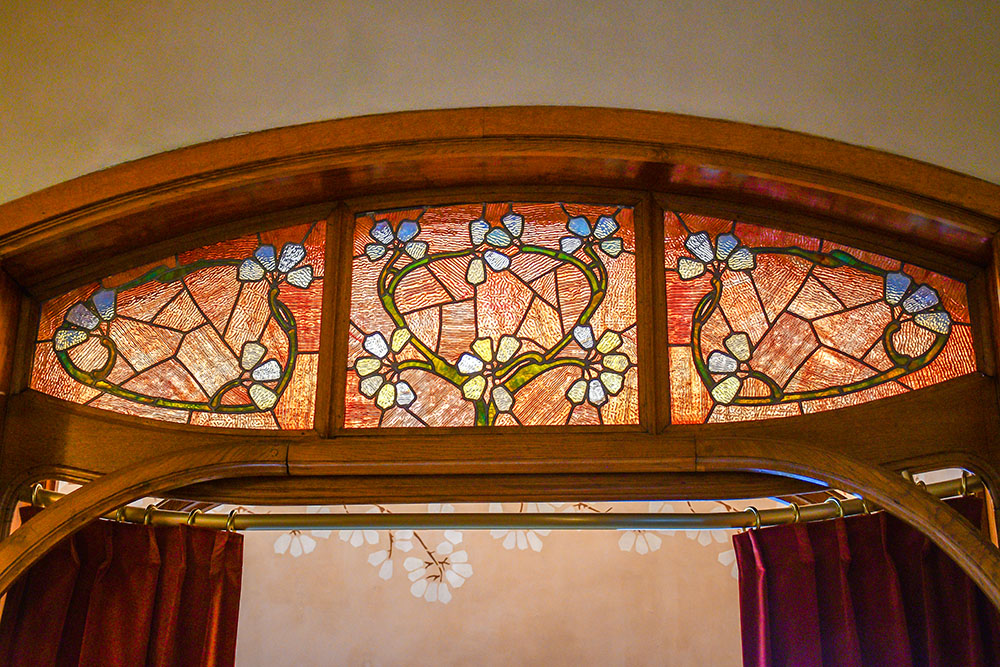
Everything seems to have been designed to work together.
But what I find most appealing is that the harmony is not cold or perfect. It is inhabited. It feels human.
The salon, the terrace and the traces of time
The salon tells a slightly different story: the story of time, loss and restoration.
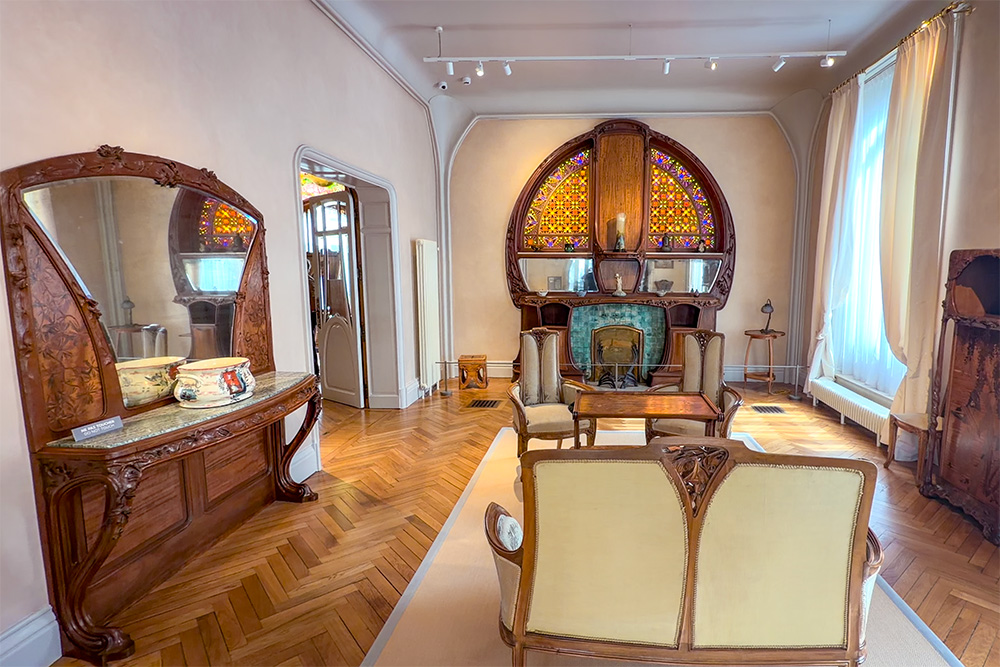
Not everything you see today is exactly as it was in 1902. The villa was damaged during the First World War, particularly during the bombardment of 1916, and some decorative elements disappeared, including one of Jacques Gruber’s stained-glass windows.
This is where the restoration work feels particularly intelligent.
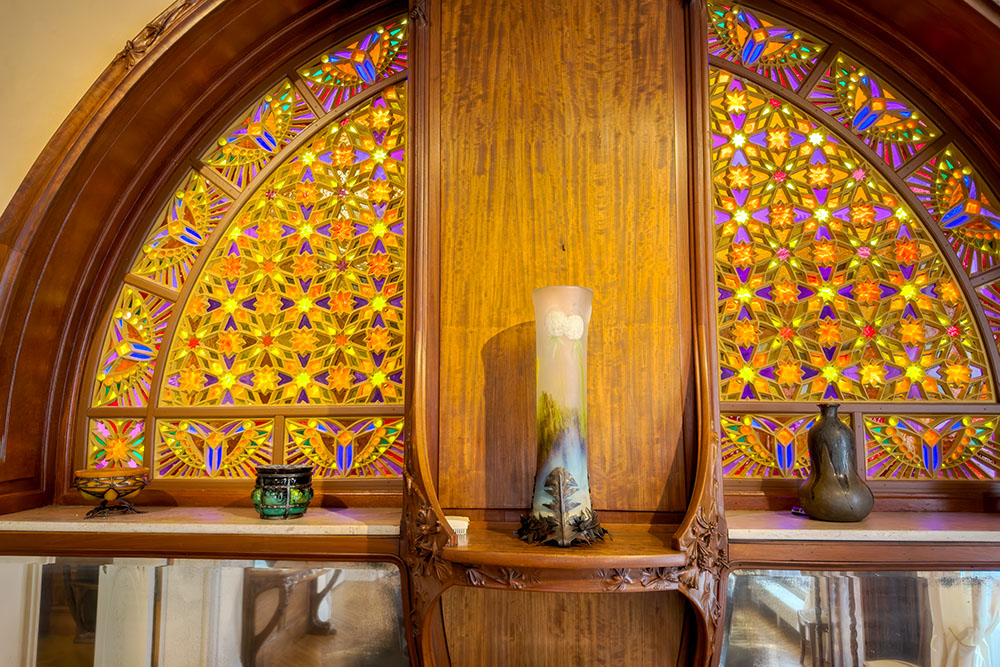
The aim was not to make visitors believe that nothing had ever happened. Nor was it to create an artificial “brand new” version of the house. Instead, the restoration gives coherence and atmosphere while still allowing us to sense that the Villa Majorelle has lived through history.
The terrace is also moving.
Originally, it was imagined as a space opening onto the garden. Later, it was adapted by the Majorelle family and became a place of rest and daily use.
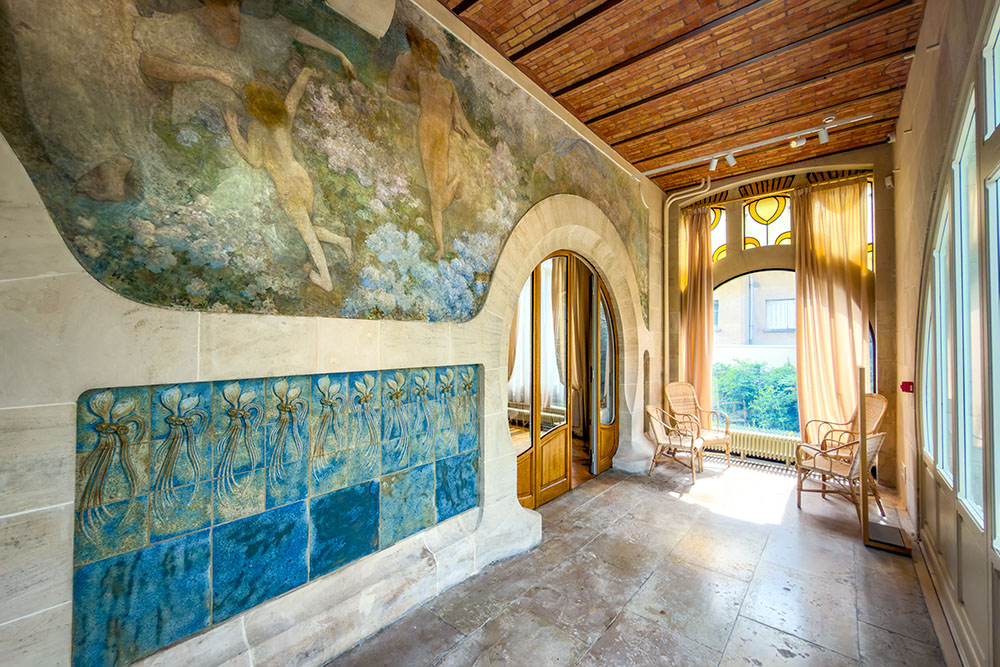
Today, the garden has largely disappeared, but you can still understand the original intention: the house was meant to open towards nature.
This is perhaps where I felt most strongly the quiet melancholy of the place.
The villa has regained much of its beauty, but not the world that once surrounded it.
Upstairs: the Majorelle bedroom and family intimacy
Upstairs, the visit becomes more intimate.
The Majorelle bedroom is one of the most touching spaces in the house. After the entrance hall, dining room and reception areas, you enter a more private world.
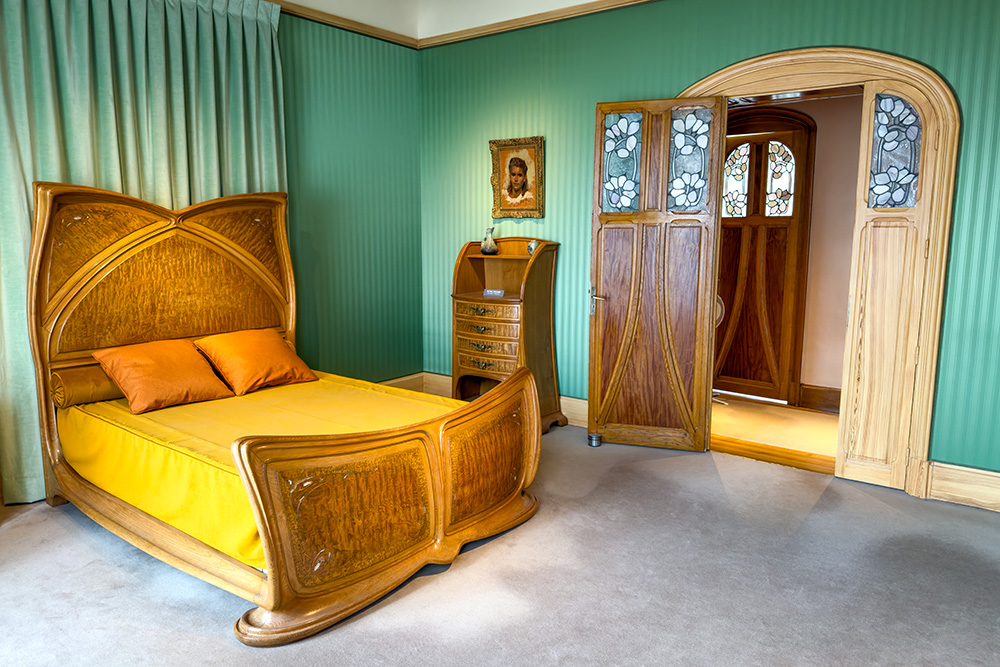
The bedroom furniture is remarkable: pale wood, delicate inlays of mother-of-pearl and brass, soft tones, and an atmosphere that feels calmer than downstairs. It is elegant, but not showy.
Here, it is important to remember that this was a real home.
Behind the famous names and the great artistic principles, there were people: Louis Majorelle, his wife Jeanne, known through the name Jika, and their son Jacques.
Jacques Majorelle would later become famous for his connection with Marrakech, but here in Nancy we meet him in another context: as a child growing up in a house filled with curves, wood, light and plant-inspired forms.
This is what makes Villa Majorelle so different from a traditional museum of decorative arts. The furniture is not simply displayed. It has returned to a setting, a mood and a story.
A restoration that brought Villa Majorelle back to life
After Louis Majorelle’s death in 1926, the house had several lives. It left the private family world and was later used for administrative purposes. Its artistic value was gradually recognised, and the City of Nancy became its owner in 2003.
The major restoration campaigns of the 2010s, especially the work leading up to the 2020 reopening, helped restore the house’s importance in the discovery of Art Nouveau in Nancy.
What I appreciate about this restoration is that it does not try to make everything look as if it had just been completed in 1902. That might have produced a result that was too clean, too smooth, too lifeless.
Instead, the Villa Majorelle still carries a sense of fragility.
You can feel the research, the careful choices, the limits of what can be restored, and the respect for what time has left behind. Some pieces were returned, others were restored, and some atmospheres were recreated through archives, photographs and surviving traces.
The result is not just beautiful.
It is moving.
Practical tips for visiting Villa Majorelle in Nancy
If you want to visit Villa Majorelle, it is best to book in advance. Visits are organised in time slots and the number of visitors is limited. This makes sense: the house is not large, and the experience would lose much of its charm if it were overcrowded.
Once inside, take your time.
The visit can be done fairly quickly, but it would be a shame to rush. Look at the stained glass, the ironwork, the door handles, the fireplaces, the furniture, the painted panels and the plant motifs. Villa Majorelle rewards slow looking.
Protective overshoes are provided to preserve the floors, so bear that in mind when choosing your footwear.
If you are coming from Nancy railway station, walking is a good option. It takes around 15 minutes and gives you a chance to discover a quieter, more residential side of the city. The route via Avenue Foch and Rue des Goncourt is pleasant, especially if you enjoy noticing houses, façades and small gardens along the way.
And if you have time, combine your visit with the Musée de l’École de Nancy. Together, the two sites give a wonderfully rich understanding of Nancy’s Art Nouveau heritage.
Why Villa Majorelle stayed with me
For me, Villa Majorelle is not just another monument to visit in Nancy.
It is connected to childhood memories, to my grandmother, and to a house I heard about long before I could enter it. It is also linked to my two recent visits, in 2020 and 2026, at two different moments in my rediscovery of Nancy and Lorraine.
I love Villa Majorelle because it tells the story of a city at the height of its creative energy. It speaks of a time when artists, craftsmen, architects and industrialists worked together to create something modern, organic and deeply rooted in nature.
Yes, its garden has almost disappeared. Yes, its surroundings no longer allow us to see it exactly as visitors might have seen it in the early 20th century.
But that does not weaken its power.
If anything, it makes the house more moving.
To visit Villa Majorelle is to step into a home that has survived change, loss, restoration and rediscovery. It is to enter a house that has recovered part of its voice — and that still tells the story of Nancy like few other places can.
A warm thank you to Destination Nancy for inviting me to visit the Villa Majorelle and rediscover one of Nancy’s most emblematic Art Nouveau treasures. It was a real pleasure to step inside this remarkable house once again.