

Pâté lorrain may be one of Lorraine’s most delicious specialities, yet almost everyone outside the region has heard of its famous cousin instead: quiche Lorraine.
Quiche Lorraine has travelled the world, appeared on brunch menus, met spinach, salmon, broccoli, and probably a few ingredients it never formally approved of.
Pâté lorrain, however, is different.
It is the quieter cousin. The one who stayed in Lorraine, never hired a public relations team, and still believes that good things should come wrapped in golden puff pastry.
If you have never heard of pâté lorrain, you are not alone. Outside Lorraine, and certainly outside France, it remains surprisingly little known. And frankly, that is part of its charm.
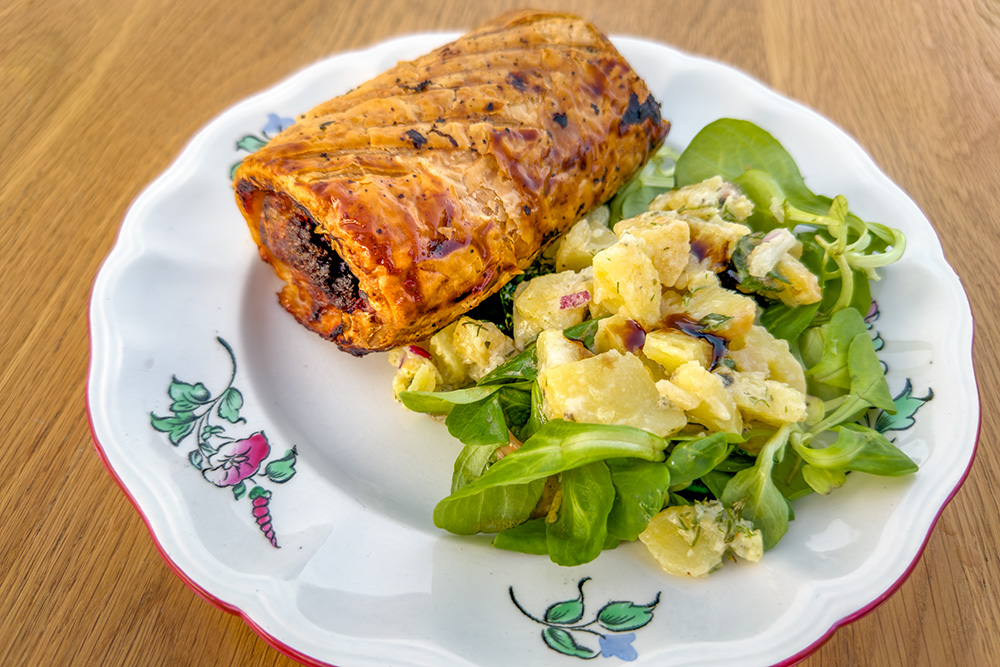
At its simplest, pâté lorrain is a traditional savoury pastry from Lorraine, filled with pieces of marinated meat, usually pork and veal, wrapped in puff pastry and baked until golden. But that description does not quite do it justice.
Because a good pâté lorrain is not just a meat pastry.
It is a little edible postcard from Lorraine. It is bakery, butcher, countryside, family memory and regional pride, all neatly folded into pastry.
And I must confess something: as a child in Lorraine, I did not really like it.
Yes, I know. A serious matter. Possibly the sort of thing that could get one quietly removed from a local food festival.
But I had my reasons.
To my young mind, pastry was supposed to be sweet. Pastry meant apple tart, mirabelle plum tart, chocolate, cream, joy, and possibly sticky fingers. A pastry filled with meat seemed to me like a culinary misunderstanding. It looked as if it belonged to the world of dessert, but then, at the last moment, had chosen a completely different career.
It took me years to understand pâté lorrain.
In fact, it probably took leaving Lorraine.
Table of Contents
What Is Pâté Lorrain?
Pâté lorrain belongs to the wonderful French category of charcuterie pâtissière, which is exactly as deliciously confusing as it sounds.
It is both a charcuterie product and a pastry product.
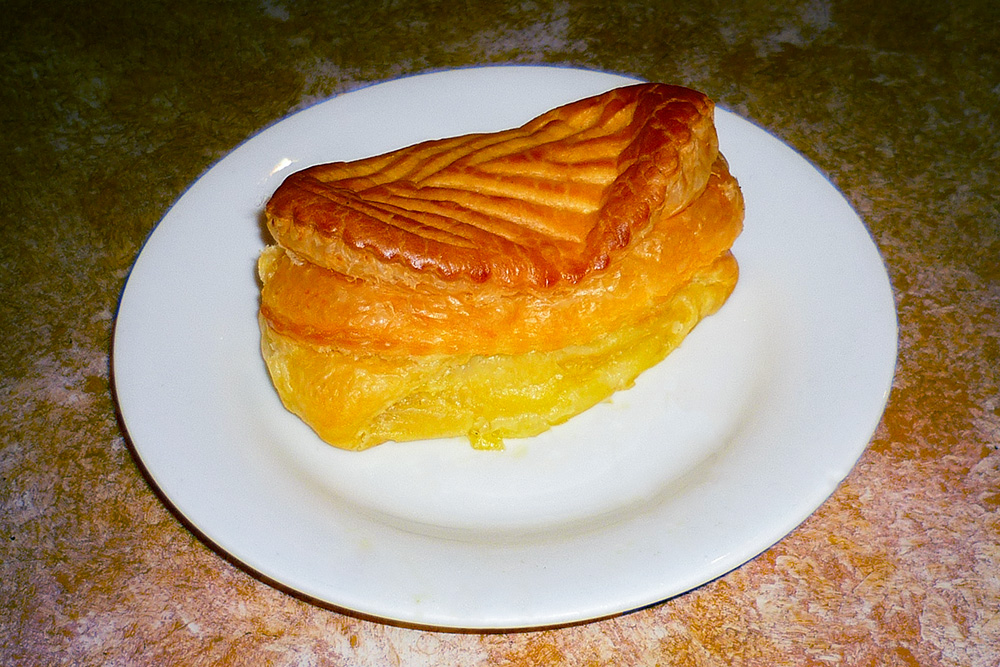
The filling belongs to the butcher’s world: pieces of meat, traditionally pork and veal, marinated with wine, shallots, parsley and seasoning.
The wrapping belongs to the baker’s world: puff pastry, brushed, baked and browned until crisp.
The result is usually rectangular, either in individual portions or larger family-sized pieces. It is often eaten warm or lukewarm, sometimes with a green salad, and it makes the kind of meal that does not need a long speech before being served.
This is not pâté as English speakers might imagine it.
It is not something you spread on toast. It is not a smooth paste in a terrine. It is closer to a savoury meat pastry, but with a very specific Lorraine identity.
And the key word is marinated.
Without the marinade, pâté lorrain loses its soul. Then it becomes merely “meat in pastry”, which may be pleasant enough, but is not the same thing.
The meat should have flavour. It should have spent time with wine, shallots, parsley and perhaps a little thyme or bay leaf. It should taste as if someone planned ahead.
Pâté lorrain is not a last-minute sort of food. It likes to think about things overnight.
A Dish That Does Not Try Too Hard
One of the things I like about pâté lorrain today is that it does not try to impress you.
It does not arrive covered in edible flowers. It does not require tweezers. It does not need to be explained by a waiter using architectural language.
It is golden. It is warm. It smells good.
That is already a strong argument.
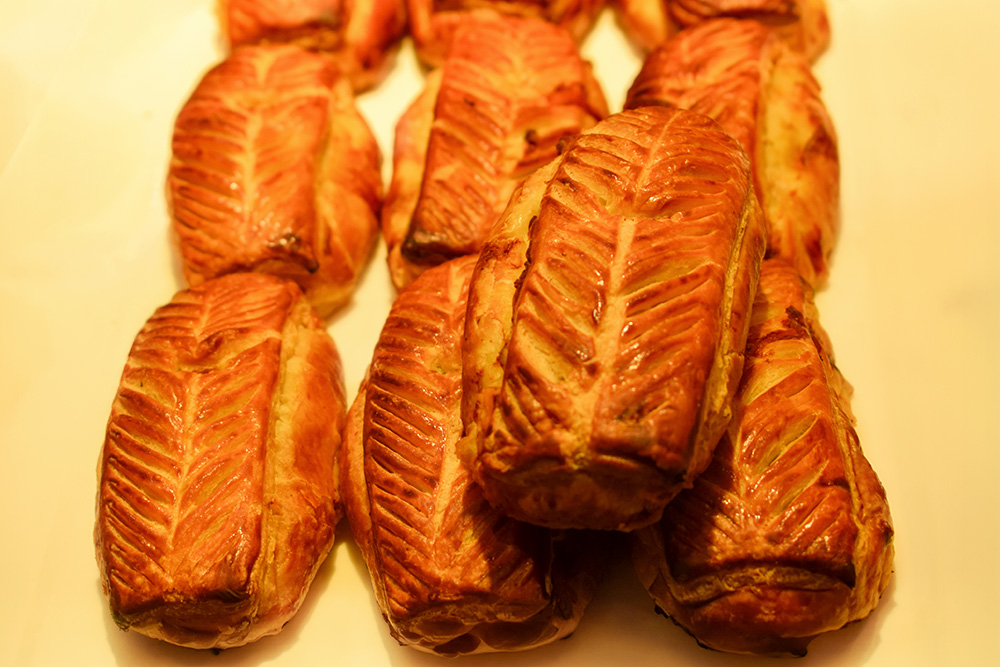
Lorraine cuisine has often been hearty, generous and practical. This is a region of changing borders, cold winters, villages, farms, forests and family tables. Its traditional food tends to be nourishing rather than theatrical.
Pâté lorrain fits that world beautifully.
It is not as internationally famous as quiche Lorraine. Quiche has become a global celebrity. Pâté lorrain has remained more local, more discreet, and perhaps more authentic for it.
In an age when you can find the same coffee, the same sandwich and the same suspiciously cheerful muffin in cities all over the world, there is something rather wonderful about a regional speciality that has not become universally available.
Pâté lorrain has not yet fully surrendered to globalisation.
Good for it.
My Own Pâté Lorrain Story
As I said, I did not fall in love with pâté lorrain as a child.
Growing up in Lorraine, I saw it as a savoury pastry, which felt, at the time, like a breach of contract. Pastry, in my opinion, had a duty to be sweet. If it was golden and flaky, it should contain apples, plums or chocolate. Certainly not marinated meat.
But later, as an adult, I began to understand it differently.
Sometimes you need to leave a region to appreciate what belonged to it. When something is part of your everyday landscape, you do not always see its value. Then one day you find yourself living elsewhere, and suddenly the local things you once took for granted become precious.
That is what happened with pâté lorrain.
I began to see it not simply as something sold in bakeries, but as part of Lorraine’s culinary identity. A good one was not just convenient food. It was a small piece of local culture.
And, of course, I eventually tasted some very good ones.
This matters.
A poor pâté lorrain can put you off the subject for years. Too dry, and it becomes a punishment in pastry. Too greasy, and you start wondering whether a long walk is a pleasant idea or a medical necessity. Too salty, and the glass of water becomes the main course.
But a good pâté lorrain?
That is another matter.
The pastry is crisp. The meat is tender. The marinade is present but not overpowering. It is generous without being heavy. Rustic, but not clumsy.
Suddenly, you understand.
Finding Pâté Lorrain Outside Lorraine
Can you find pâté lorrain outside Lorraine?
In theory, yes.
In practice, let us say it is not always a relaxing hobby.
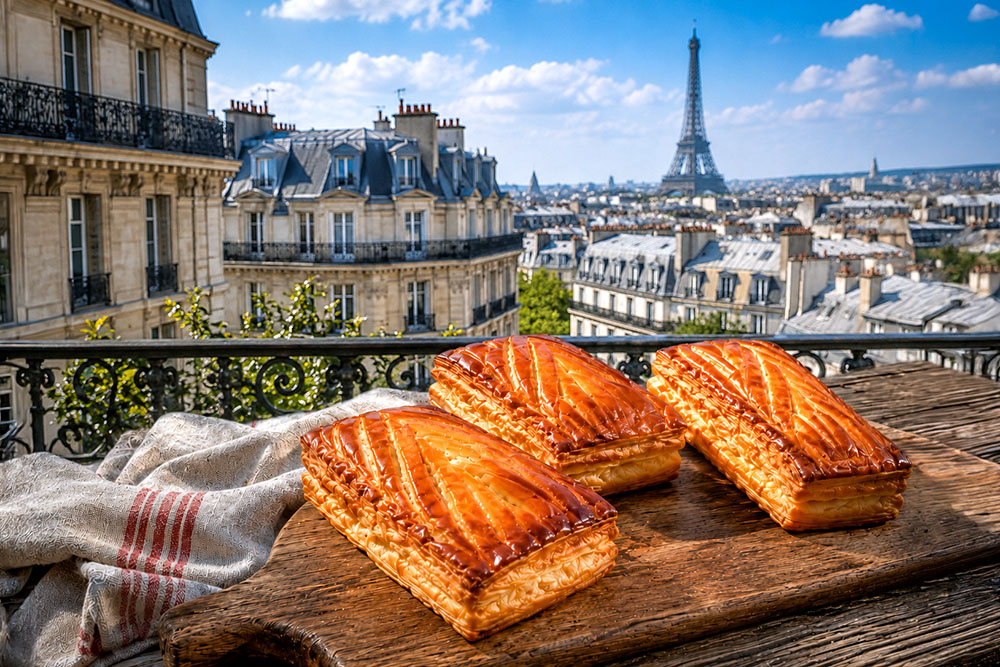
You may find it in a specialist French deli, from an artisan producer online, or in a shop selling regional food. Occasionally, it appears elsewhere in France. But finding a really good pâté lorrain outside Lorraine is another story.
And honestly, I do not mind.
There is something reassuring about a speciality that remains attached to its region. Not everything needs to be available everywhere, at all times, in standardised packaging.
Some foods deserve a journey.
Pâté lorrain is one of them.
It belongs in Lorraine bakeries and charcuterie shops, in towns and villages where people know what it should taste like. It belongs to a place where the customer has expectations, the artisan has habits, and nobody needs a cultural explanation before lunch.
This regional rarity gives pâté lorrain part of its magic.
You do not simply buy it. You look for it. You find it. And if you are lucky, you carry it away in a paper bag that already smells like a very good decision.
The Bussang Pass: My Personal Pâté Lorrain Border
When we lived in Alsace, finding a good pâté lorrain was almost impossible.
This is not a criticism of Alsace. Alsace is magnificent. It has tarte flambée, kugelhopf, pretzels, choucroute, wonderful white wines, and enough charm to make half-timbered houses look as if they are posing for a calendar.
But Alsace is not Lorraine.
The food traditions are different.
In Alsace, you could find cheese friands: little savoury pastries filled with cheese. They were good, certainly. But they were not pâté lorrain. A cheese friand may be a pleasant bakery companion, but it does not tell the same story.
When we returned from visiting family in Lorraine, travelling back to Alsace through the Vosges, we would sometimes stop in Le Thillot, before crossing the Col du Bussang, to buy pâté lorrain from a bakery.
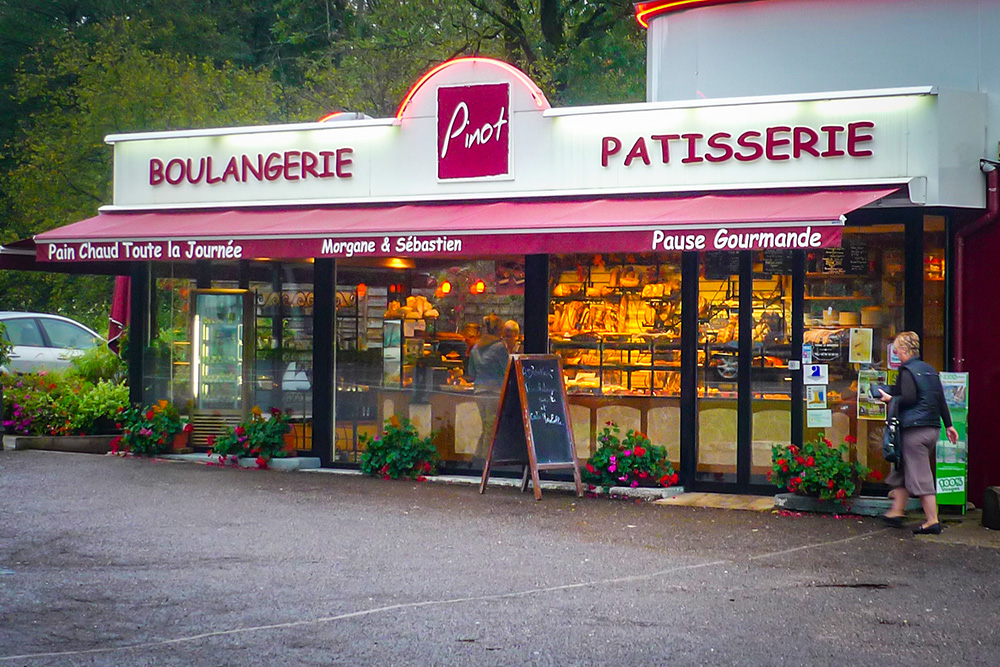
This became, in my memory, almost a strategic operation.
Because once we had crossed the Bussang Pass and reached the Alsatian side, it was too late.
The pâté lorrain frontier had been crossed.
I still think of that mountain pass not only as a geographical boundary, but as a culinary one. Before the pass, there was still hope. After the pass, you had entered another world, delicious in its own way, but no longer the world of pâté lorrain.
That is what regional food can do. It turns a road, a bakery, a village and a mountain pass into memory.
No supermarket label can recreate that.
A Brief History of Pâté Lorrain
Pâté lorrain is often presented as one of Lorraine’s old traditional specialities. As with many regional dishes, its exact origin is difficult to pin down.
Food history rarely behaves neatly. It does not always provide us with a date, a place, and a heroic baker standing beside an oven with a satisfied expression.
We know that meat pies and meat cooked in pastry have existed for a very long time. References are sometimes made to medieval “pastés de lorais”, suggesting that meat-in-pastry preparations connected to Lorraine existed centuries ago.
But we should be cautious.
The medieval versions were not necessarily the pâté lorrain we know today. Ingredients, methods, pastry and eating habits have changed over time. The modern pâté lorrain, with marinated pork and veal wrapped in puff pastry, is the result of a long culinary evolution.
So rather than imagining one perfect pâté lorrain appearing fully formed in the Middle Ages, it is better to see it as part of a broader tradition of meat pies and savoury pastries, gradually shaped by Lorraine’s tastes and ingredients.
It is old in spirit, but still very much alive.
It does not belong in a museum.
It belongs warm, on a plate.
Baccarat: The Birthplace of Pâté Lorrain?
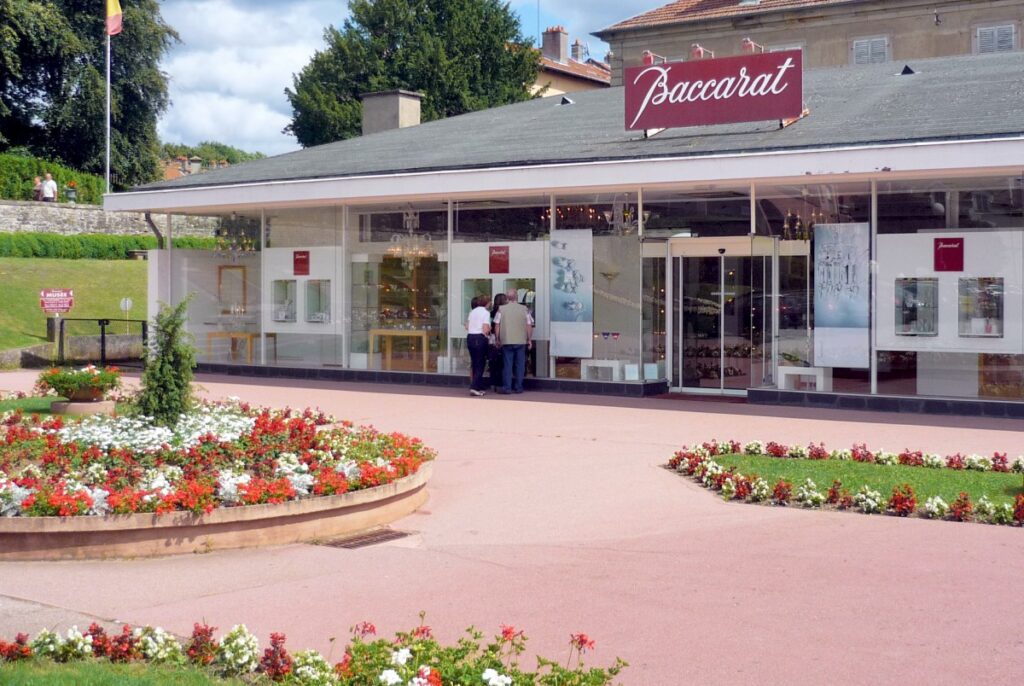
Baccarat, in Meurthe-et-Moselle, proudly claims a special connection with pâté lorrain. The town is often associated with the speciality and presents itself as its birthplace.
Is the claim historically proven beyond all doubt?
Probably not in the strictest academic sense.
The older references point more broadly to Lorraine rather than to one precise town. And, as we have seen, the recipe has evolved. So it is wise to say that Baccarat is traditionally considered, or presents itself, as one of the emblematic homes of pâté lorrain.
That said, traditions do not live only in archives.
They live in festivals, bakeries, recipes, local pride and repeated gestures. Baccarat has played an important role in keeping pâté lorrain in the public eye, and that matters.
Besides, there is something rather satisfying about Baccarat being known both for crystal and for a golden meat pastry.
One for the table.
One on the table.
Lorraine has always understood priorities.
How to Recognise a Good Pâté Lorrain
Not all pâtés lorrains are created equal.
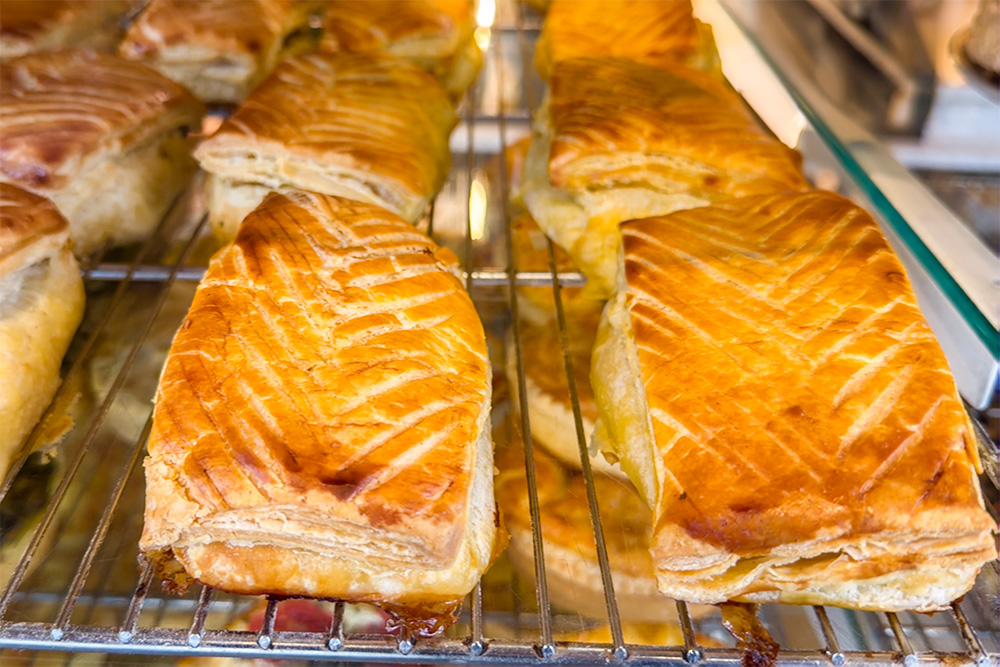
A good one begins with the filling. The meat should be in pieces, not reduced to a smooth, mysterious paste. You should be able to recognise texture. Traditionally, the filling includes pork and veal, cut and marinated before baking.
Then comes the marinade.
This is where the flavour lives. Wine, shallots, parsley, pepper, perhaps a little thyme or bay leaf: these should give the meat depth without overwhelming it. The taste should be savoury and aromatic, not simply salty.
The pastry matters just as much.
It should be golden, flaky and crisp, especially on top. It should hold its shape. It should not be pale, soggy or collapsing under the weight of its own regrets.
A good pâté lorrain is moist, but not greasy. Generous, but not heavy. Well seasoned, but not shouting.
And here is a useful test: ask the artisan about it.
A good baker, butcher or charcutier should be able to tell you what meat is used, how long it is marinated, and how best to serve it. If they speak with quiet confidence, that is promising.
If they look alarmed, perhaps keep walking.
How to Serve Pâté Lorrain
Pâté lorrain is usually best warm or lukewarm.
Cold, it can still be pleasant, especially if well made, but it loses some of its charm. Warmth wakes the pastry, releases the aromas, and reminds the filling why it spent all that time marinating.
Serve it with a green salad and you have a simple, satisfying meal.
And since we are in Lorraine, let us not forget the wine.
A Gris de Toul is a wonderful regional match: fresh, dry and fruity enough to balance the richness of the pastry and the savoury depth of the meat.

From the Moselle vineyards, an Auxerrois or Pinot Gris can also work beautifully. A light Pinot Noir may suit a richer version, provided it does not try to dominate the conversation.
Pâté lorrain does not need a dramatic wine.
It needs a good neighbour.
Serving a Lorraine pastry with a Lorraine wine is not chauvinism. It is geographical common sense in a glass.
Pâté Lorrain and Tourte Lorraine
Before we finish, we should mention tourte lorraine.
The two are related, but not identical.
Pâté lorrain is often rectangular, individual or easy to take away, and very much part of the bakery tradition. Tourte lorraine is usually larger, often round, more of a family dish to share at the table.
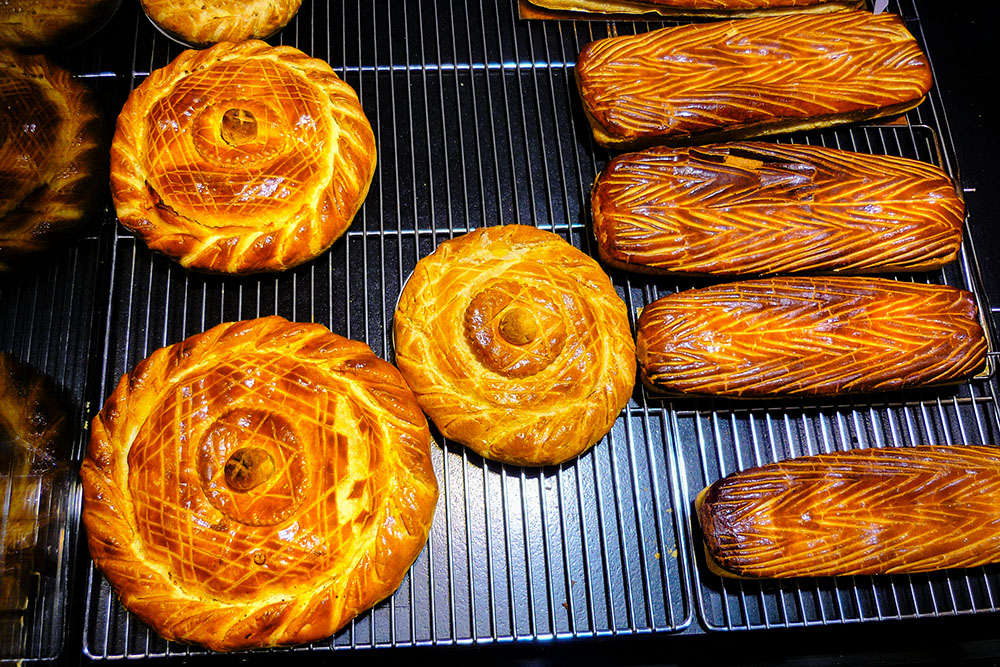
Both involve pastry. Both often involve marinated meat. Both are serious matters in the Lorraine kitchen.
But pâté lorrain is the travelling companion.
Tourte lorraine is the Sunday guest.
And Lorraine, being a sensible region, has room for both.
Final Thoughts
It took me time to appreciate pâté lorrain.
As a child, I saw it as a pastry that had forgotten to be sweet. As an adult, especially after leaving Lorraine, I began to understand it as something far more meaningful: a regional speciality, a memory, a marker of place.
It is not as famous as quiche Lorraine. It does not appear on menus all over the world. It has not been endlessly reinvented with fashionable ingredients.
And that is precisely why I like it.
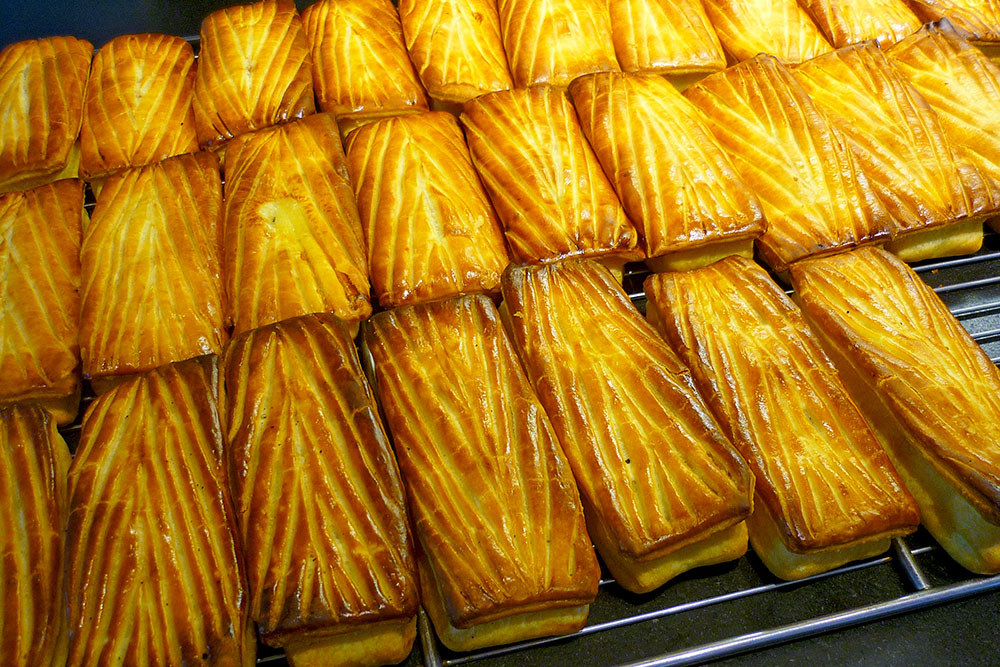
Pâté lorrain remains attached to Lorraine: to its bakeries, its roads, its local habits, its quiet confidence. It is a golden, savoury reminder that not every good thing needs to become global.
Some things are better when they remain a little difficult to find.
So if you ever travel through Lorraine and see pâté lorrain in a good bakery or charcuterie, try it warm. Look for crisp pastry, tender marinated meat and that unmistakable smell of something simple done properly.
You may not have heard of it before.
But if it is a good one, you will remember it.