

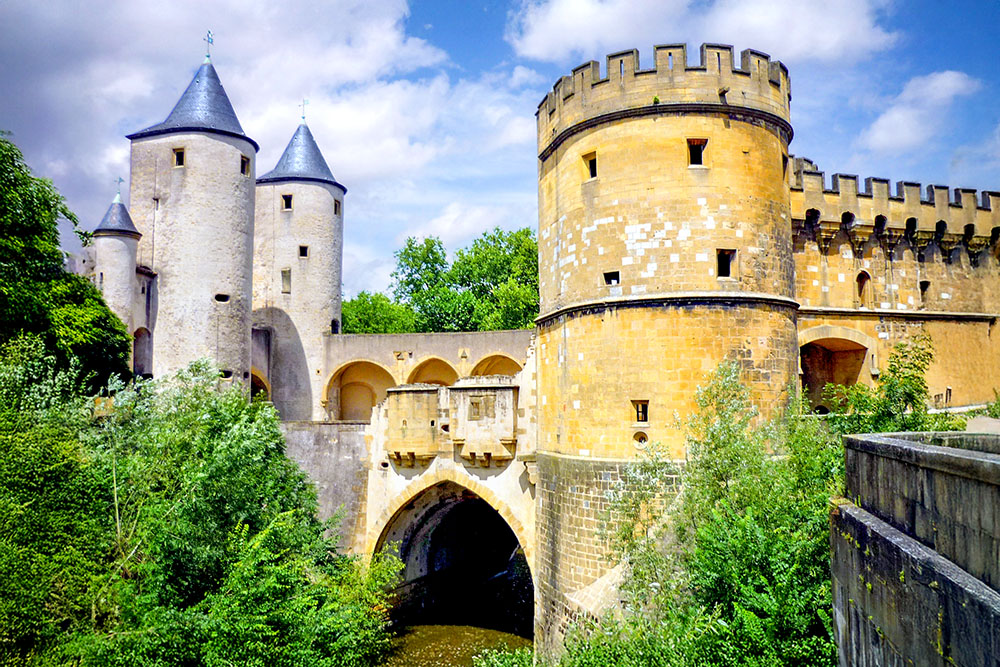
The Porte des Allemands is one of the most spectacular monuments in Metz, and probably the one that best gives you the feeling of stepping into a medieval city.
At first glance, you could almost mistake it for a small fortified castle standing by the water.
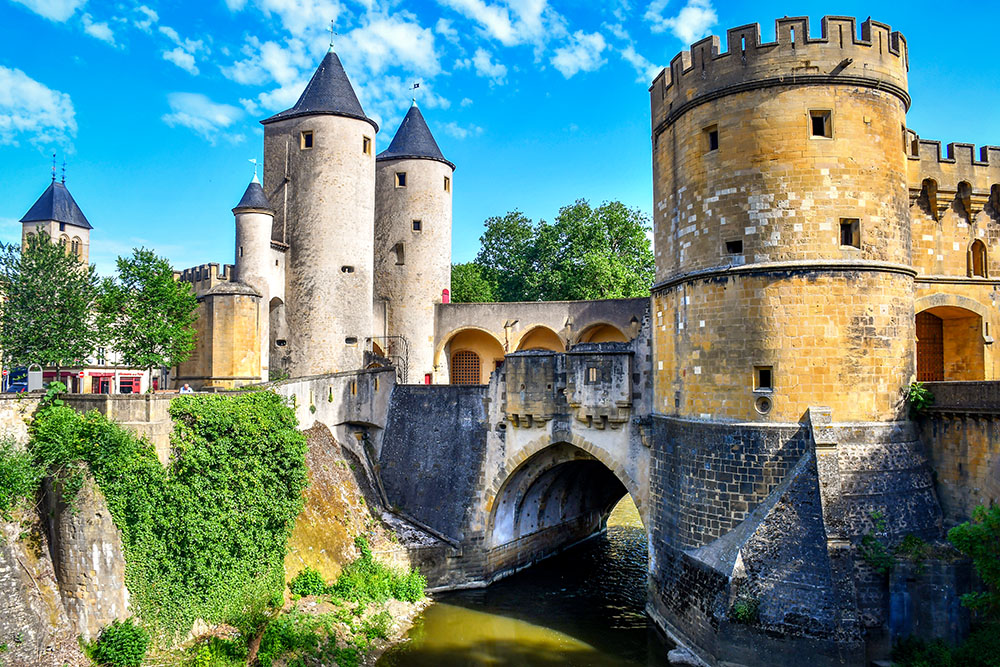
With its massive towers, its bridge, its thick walls and its silhouette reflected in the River Seille, it creates one of the most picturesque scenes in the city.
But the Porte des Allemands is not just photogenic. It is also the most important surviving remnant of the medieval ramparts of Metz.
It takes us back to a time when the city was protected by a powerful defensive wall, watched over its entrances, and asserted its role as a stronghold in the heart of Lorraine.
Even today, as you approach it, you quickly understand why this monument fascinates visitors so much. In one single place, it brings together the military history of Metz, the charm of a postcard scene, and that very special atmosphere of places that seem to have crossed the centuries without losing their character.
Table of Contents
My First Encounter with the Porte des Allemands
For a long time, the Porte des Allemands was, to me, a postcard image.
I knew what it looked like, of course. You would see it in books, on tourist brochures, and sometimes on old postcards of Metz. With its towers, its bridge and its little-castle appearance, it was one of those monuments immediately associated with the city… without necessarily being a place I had actually visited.
And yet, during my childhood and teenage years, I never went there.
We lived in the western suburbs of Metz, while the Porte des Allemands stands to the east of the city centre. At the time, it was not somewhere we would naturally go for a Sunday walk. The city had its familiar routes, its usual neighbourhoods, its well-trodden habits… and this part of Metz simply was not one of them for us.
So it took me more than 35 years to finally discover it up close.
And what a surprise it was!
The surroundings have changed a great deal. Today, the Porte des Allemands is no longer just an isolated monument on the banks of the Seille — the small tributary of the Moselle that flows through Metz at this point.
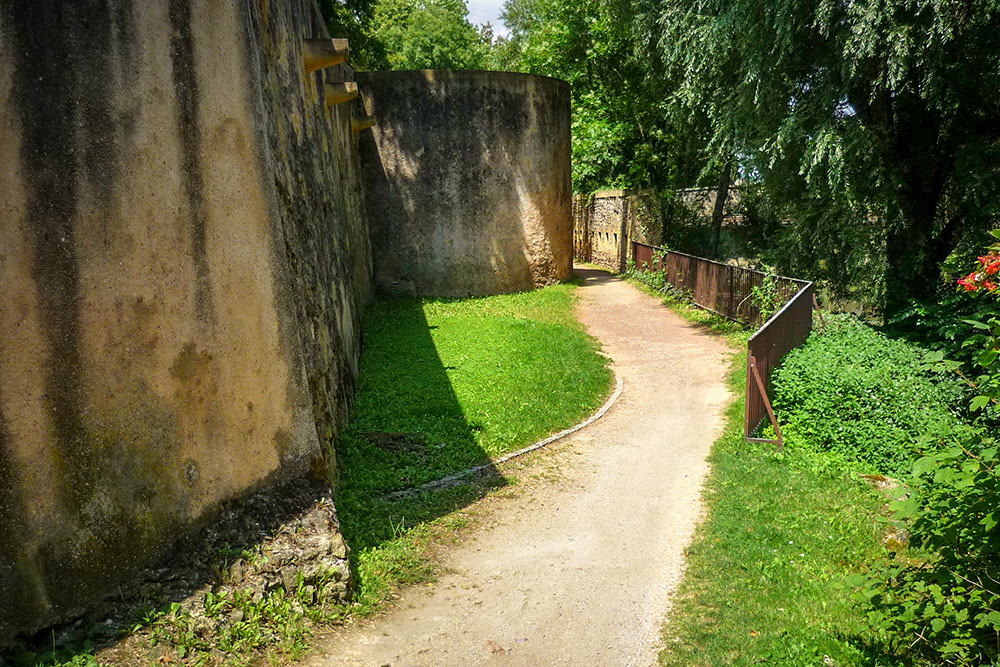
It is also the starting point for a beautiful walk along the old ramparts, in a setting that is historic, peaceful and wonderfully photogenic.
When I saw it for the first time, I had the feeling of stumbling upon a little treasure I had somehow left aside for all those years. A familiar monument, almost obvious, but one I was only now truly discovering.
So here is my photo report around the Porte des Allemands and the old ramparts of Metz.
A Little History
Where does its name come from?
From its position on the road leading towards Germany? From the German occupation between 1871 and 1918?
Not at all!
The Porte des Allemands takes its name from the Teutonic Order, also known as the Brothers Hospitallers.
In the 13th century, they had established a hospice in a nearby street.
That building no longer exists today, as it was destroyed in 1552 during the Siege of Metz by Charles V.
Construction of the Porte des Allemands began in 1230 and continued, in different stages, until around the 16th century.
The gate was built to defend the entrance to the city of Metz from the road coming from the Saar to the east — in other words, from the direction of Germany.
The fortified gateway was therefore part of the formidable defensive system of Metz.
The city walls stretched for seven kilometres and included 18 gates and 38 towers.
It was also a prestigious point of entry into the city. In 1473, Holy Roman Emperor Frederick III arrived in Metz through the Porte des Allemands, greeted by the cheers of the inhabitants.
In the 16th century, a portcullis was installed at the base of the bridge to prevent boats from passing under the gate.
The Many Lives of the Porte des Allemands
Like many ancient monuments, the Porte des Allemands has not had just one life, but several.
In the Middle Ages, it first fulfilled its primary mission: defending Metz.
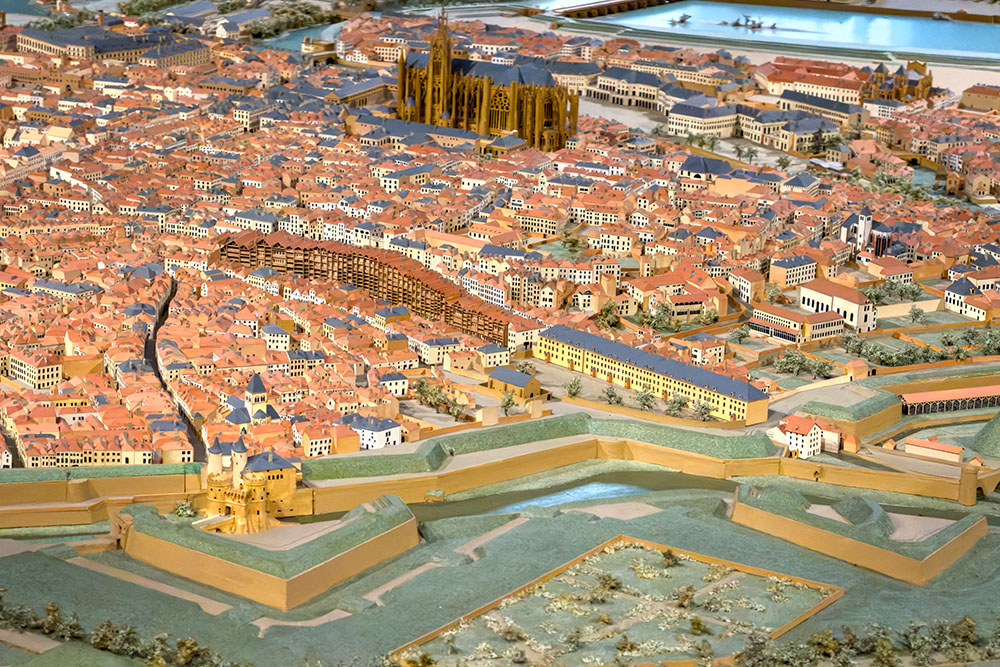
Standing on one of the city’s strategic entrances, on the road coming from the Saar, it controlled movement in and out of Metz, filtered passage, impressed visitors… and, in times of danger, protected the inhabitants.
But the centuries passed, military techniques evolved, and the gate gradually lost its defensive role.
By the modern period, it was no longer truly useful as a fortification. It could easily have disappeared, like so many other parts of the old ramparts of Metz. Fortunately, it survived without too much damage.
A Fortified Gate Saved from Demolition
In the 19th century, at a time when many cities were demolishing their old fortifications in order to expand and modernise, the Porte des Allemands owed much to the first historians and scholars of Metz.
These lovers of local history already understood the exceptional value of the monument and helped prevent its destruction. Without them, perhaps all we would have today would be a few old engravings to remind us that it once existed.
A restoration carried out by the German architect Paul Tornow in 1892 restored some of its former grandeur. We owe to him the neo-Gothic decoration of the battlements.
The Fortified Gate Becomes a Museum
In 1900, the city of Metz became the owner of the Porte des Allemands. Part of the monument was then turned into a museum.
Archaeological collections were displayed there, many of them coming from vanished neighbourhoods, as well as from old gates and ramparts demolished during the transformation of the city.
On the upper floors, visitors could discover documents, printed works and engravings tracing the history of Metz from Roman times onwards.
The museum also contained a wide variety of objects: seals, coins, medals connected to the War of 1870, as well as Lorraine furniture and costumes.
Even more surprisingly, it also housed a guillotine nicknamed “La Louise”, which is said to have been used on the Place de la Comédie in 1793. Quite a striking presence in a monument already so full of history!
The Porte des Allemands During the Second World War
The Porte des Allemands also experienced a much darker episode in the 20th century.
On 23 September 1940, after the de facto annexation of Moselle by Nazi Germany, Gauleiter Josef Bürckel made his solemn entry into Metz through this gate.
The choice was obviously not accidental. The Porte des Allemands was used for its strong symbolic value, as the backdrop for a political staging intended to make a lasting impression.
The Porte des Allemands Today
The monument was restored in 2013–2014 during a 15-month programme of works, before reopening to the public on 7 and 8 June 2014.
Today, when you walk through the Porte des Allemands, you are not simply passing under an old fortified gate.
You are crossing several layers of the history of Metz: the medieval city, the vanished ramparts, the 19th-century scholars, the former museum, and also the more troubled hours of the 20th century.
That is probably what makes this monument so fascinating. It is not frozen in the past. It still bears the marks of all the periods it has lived through.
What Does the Porte des Allemands Look Like?
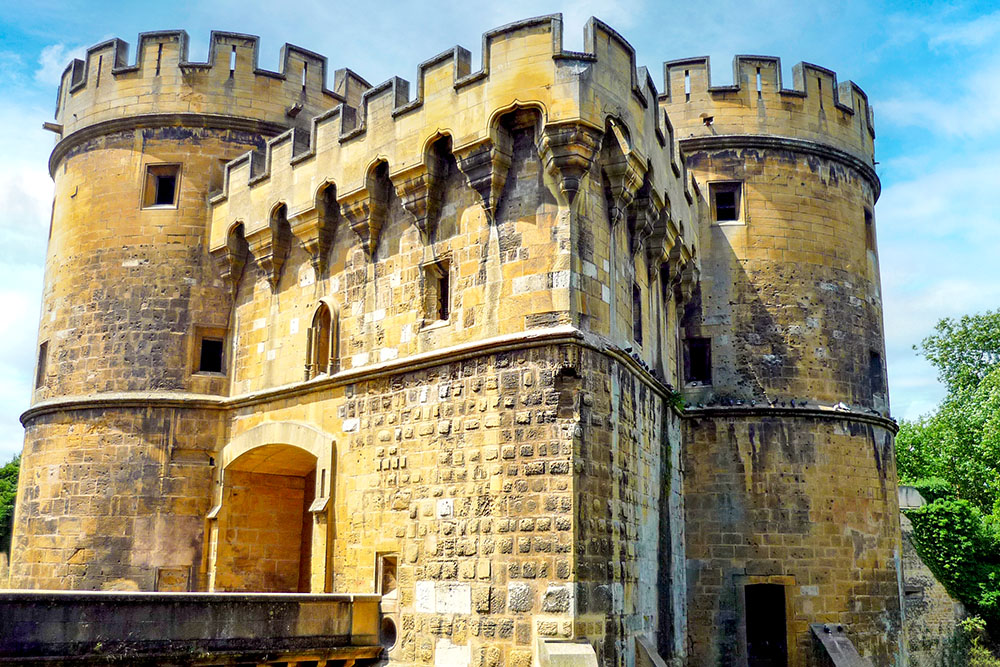
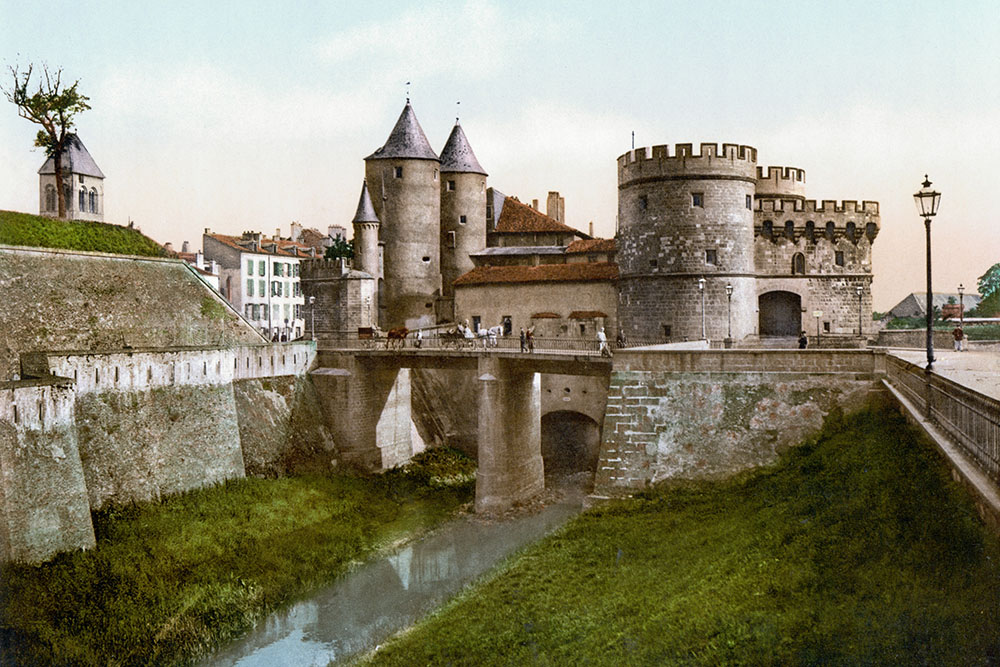
What makes the iconic Porte des Allemands so unusual is that it is both a fortified bridge and a fortified gate.
The gate is flanked by two entrances and four round towers.
On the city side, the two towers are topped with slate-covered pepperpot roofs. They date from the 13th century.
On the countryside side — today the Bellecroix district — the two massive towers are crowned with machicolations. They were built in the 15th century by Henry de Raconval. They are more powerful than the towers on the city side because they had to withstand the impact of metal cannonballs.
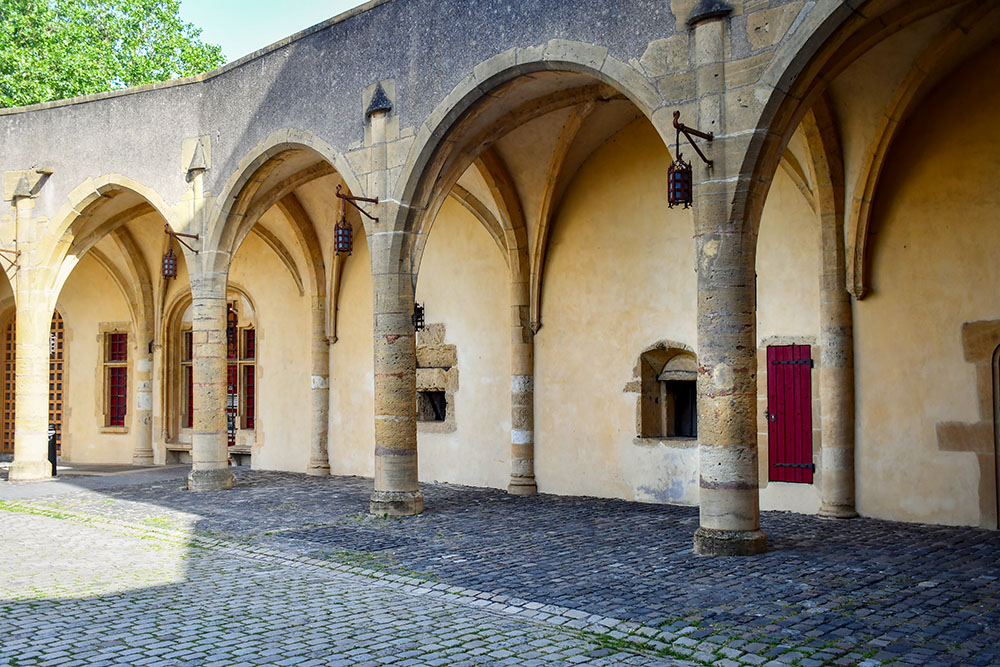
Between the two pairs of towers, the terrace was used for artillery. On the right-hand side runs a vaulted gallery with ribbed vaulting. It gives access to vaulted rooms.
The towers of the Porte des Allemands rise 28 metres above the Seille, giving the monument its massive and imposing appearance.
As for the walls, they can reach 3.50 metres in thickness. This strength was no accident: the builders already had to take into account the arrival of artillery and the growing power of cannons.
The building still looks wonderfully impressive today, with its powerful buttresses and dark vaults spanning the River Seille.
Practical Information
The Porte des Allemands is located on Boulevard André Maginot.
Paid parking spaces can be found along Boulevard André Maginot, both upstream and downstream from the monument.
Since the restoration of the gate in 2014, it has been possible to visit the monument freely and free of charge.
It is usually open in the afternoon, from 2 pm to 6 pm — and until 7 pm in summer — from Tuesday to Sunday.
From the Porte des Allemands, you can enjoy a peaceful walk along the city’s fortifications by following the ramparts trail.